Het Panbos

A former dune-forest pancake institution in Katwijk aan Zee, Het Panbos is mid-transition under new ownership, guided by Dutch culinary figure Robert Kranenborg. The menu now reaches beyond its traditional roots toward seasonal Dutch ingredients with Asian inflections, placing a kimchi pancake alongside skrei with samphire mousse and hare stew with parsnip. The forest setting remains; the cooking ambitions have shifted considerably.
 Discover on Pearl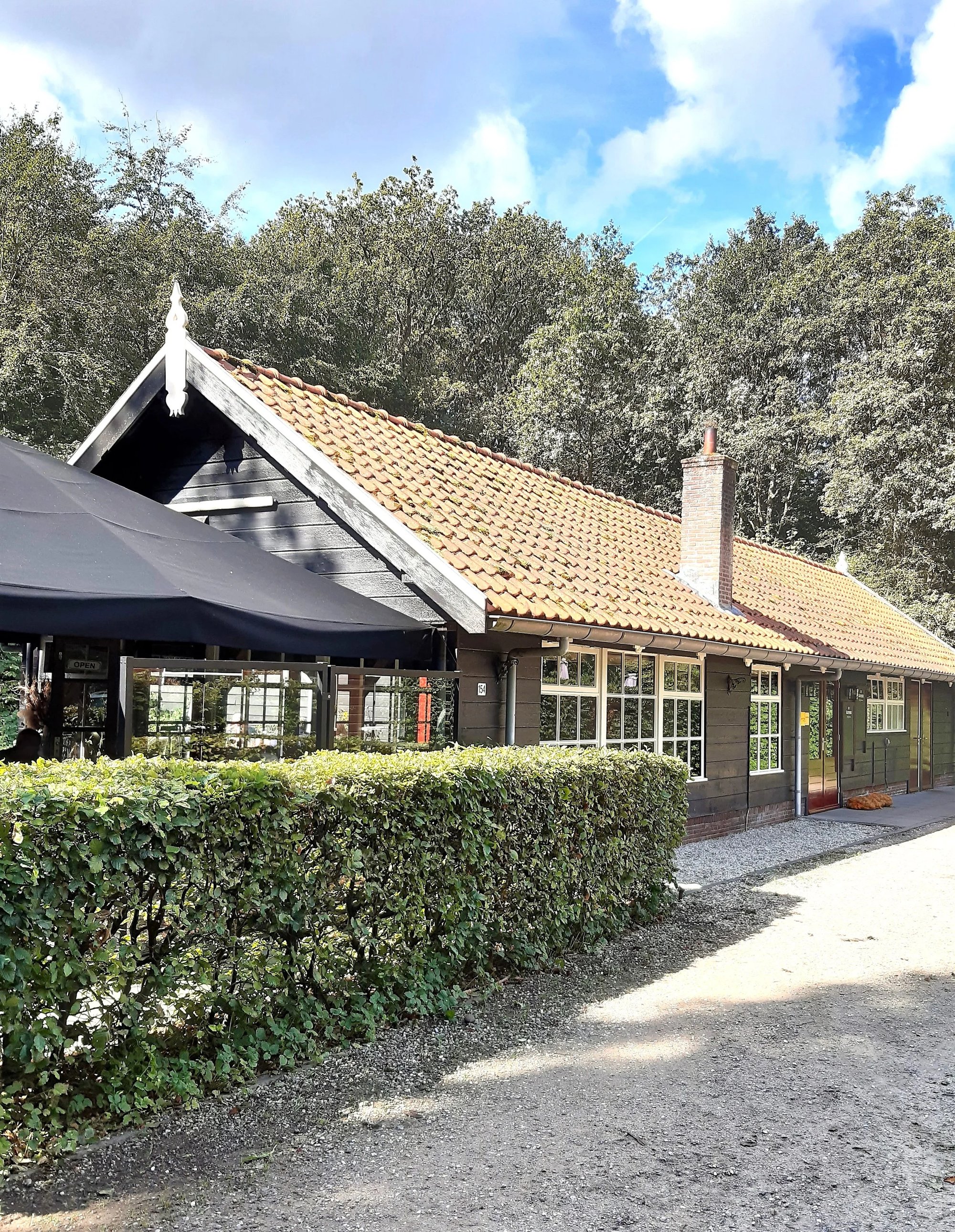
Dunes, Forest, and a Kitchen in Motion
The drive to Het Panbos tells you something about what Dutch coastal dining can look like away from the harbour-front crowds. Wassenaarseweg 154 sits inside a forested dune landscape between Katwijk aan Zee and Wassenaar, where the road narrows and the pine canopy thickens before the building appears. The setting is not incidental. For decades, this location made Het Panbos a reliable family destination, the kind of place where generations arrived for Dutch pancakes on a Sunday afternoon and left without consulting a menu too carefully. That version of the restaurant still exists in the cultural memory of the area. What the new owners are building is something more considered, and the tension between those two identities is exactly what makes Het Panbos worth watching right now.
Where the Ingredients Do the Talking
Dutch coastal and dune-adjacent cooking has a specific larder to draw from, and the current kitchen at Het Panbos is beginning to work with it more deliberately. Skrei, the migratory winter cod that Norwegian fishermen have sent to Dutch tables for centuries, appears on the menu in a preparation that pairs it with a mousse of samphire — the salt-tolerant plant that grows along the North Sea coast — alongside slices of Jerusalem artichoke and a mushroom jus. That combination is worth pausing on. Samphire has the mineral salinity of the coastal environment it comes from; Jerusalem artichoke brings an earthiness that cuts against the clean white flesh of the skrei; the mushroom jus grounds the plate without overwhelming it. This is cooking that uses place as an argument.
The shortlist, unlocked.
Hard-to-book tables, cellar releases, and concierge-planned trips.
Get Exclusive Access →The same logic shows up in a chicory soup with beetroot tartare, a pairing that leans into the bitterness and sweetness of two vegetables that Dutch growers have cultivated through cold-weather seasons for generations. A stew of hare with parsnip puree, kale, and mashed potato reads as a seasonal Dutch classic handled without self-consciousness. These are not dishes designed to signal ambition through obscure technique. They are dishes that trust the source materials and ask the kitchen to get out of the way at the right moments.
The kimchi pancake with algae and an Asian sauce of soja and yuzu is a different register entirely, and it is the clearest signal of where the new owners want to take this place. Robert Kranenborg, who has advised on the menu direction, is a figure whose influence on Dutch fine dining spans a long career, and his guidance here seems aimed at opening the menu's vocabulary without erasing its identity. Introducing fermented Korean cabbage and Japanese citrus into a restaurant that built its name on Dutch pancakes is not a small editorial decision. It is an attempt to extend the tradition rather than abandon it, though whether the longtime regulars will follow that extension is an open question.
The Transition Kitchen as a Critical Category
Among Dutch restaurants that have changed hands in recent years, the challenge of managing continuity alongside ambition is a recurring tension. The €€€€-tier restaurants of the Netherlands, places like De Librije in Zwolle, 't Nonnetje in Harderwijk, and Aan de Poel in Amstelveen, operate in a context where the kitchen's identity is fully formed and the audience already self-selected. Het Panbos is doing something harder: it is attempting to shift the identity of a beloved local institution gradually enough that the existing audience stays engaged while a new audience discovers what the kitchen is becoming. That is a genuinely difficult act, and the current menu suggests the kitchen is handling the balance thoughtfully.
For comparison, restaurants such as De Nieuwe Winkel in Nijmegen and De Bokkedoorns in Overveen , the latter also coastal-adjacent , have built their identities around hyper-local seasonal sourcing as a consistent editorial position. Het Panbos is not there yet. It is a restaurant in motion, which means any visit captures a kitchen at a specific point in a longer arc rather than a fully resolved proposition. That is not a criticism. It is a description of what a considered transition looks like from the outside.
Visitors who have followed Dutch restaurants with a longer lens may also find it worth comparing the direction here to what Brut172 in Reijmerstok or De Lindehof in Nuenen have done with regional identity, or to look internationally at how restaurants such as Le Bernardin in New York City have held a singular ingredient focus across decades of change. Het Panbos is operating at a different scale and price point, but the underlying question of how a kitchen defines its relationship to its ingredients is the same.
The Setting and What It Implies
The forest-and-dunes location shapes the experience in ways that go beyond visual context. The dune range of the South Holland coast is one of the few genuinely quiet zones within easy reach of The Hague and Leiden, and arriving at Het Panbos feels like a deliberate exit from urban density. Restaurants that occupy this kind of setting tend to attract a specific kind of guest: people who have made a small journey, who have arrived with time rather than against a schedule. That dynamic changes the room in subtle ways. Conversations at neighbouring tables tend to run longer. Meals are not rushed.
Planning a visit here is leading done with a half-day in mind rather than a quick lunch slot. Katwijk aan Zee itself offers enough of interest to frame a full afternoon, and the coastal character of the town rewards exploration before or after a meal. For a broader sense of what the area offers, our full Katwijk aan Zee restaurants guide maps the local dining options, while the hotels guide, bars guide, experiences guide, and wineries guide fill out the rest of the picture. Booking directly through the restaurant is the standard approach; given the location's appeal and the growing attention to what the kitchen is doing, checking ahead on availability for weekend sessions is advisable.
The shortlist, unlocked.
Hard-to-book tables, cellar releases, and concierge-planned trips.
Get Exclusive Access →Frequently Asked Questions
At-a-Glance Comparison
These are the closest comparables we have in our database for quick context.
| Venue | Cuisine | Price | Awards | Notes |
|---|---|---|---|---|
| Het Panbos | Het Panbos is beautifully situated in the middle of a forest area in the dunes.… | This venue | ||
| De Librije | €€€€ · Modern Cuisine | €€€€ | Michelin 3 Star | €€€€ · Modern Cuisine, €€€€ |
| 't Nonnetje | €€€€ · Creative | €€€€ | Michelin 2 Star | €€€€ · Creative, €€€€ |
| De Lindehof | Contemporary Dutch, Creative | €€€€ | Michelin 2 Star | Contemporary Dutch, Creative, €€€€ |
| De Nieuwe Winkel | €€€€ · Organic | €€€€ | Michelin 2 Star | €€€€ · Organic, €€€€ |
| Fred | €€€€ · Creative French | €€€€ | Michelin 2 Star | €€€€ · Creative French, €€€€ |
Need a table?
Our members enjoy priority alerts and concierge-led booking support for the world's most difficult tables.
Get Exclusive AccessThe shortlist, unlocked.
Hard-to-book tables, cellar releases, and concierge-planned trips.
Get Exclusive Access →