Haozhan
On Gerrard Street at the heart of London's Chinatown, Haozhan has spent two decades refining its position as one of the strip's more ambitious kitchens, moving well beyond the neighbourhood's standard Cantonese playbook. The menu draws on broader Chinese regional traditions and has accumulated steady critical attention. For Soho dining at this price point, it represents a considered alternative to the area's more formulaic options.
Pearl is the En Primeur Club membership app — saves, bookings, and concierge access live there. Same editors, same standards.
- Address
- 8 Gerrard St, London W1D 5PJ, United Kingdom
- Phone
- +44 20 7434 3838
- Website
- haozhan.uk
- Directions
- Get directions
 Saves & bookings on Pearl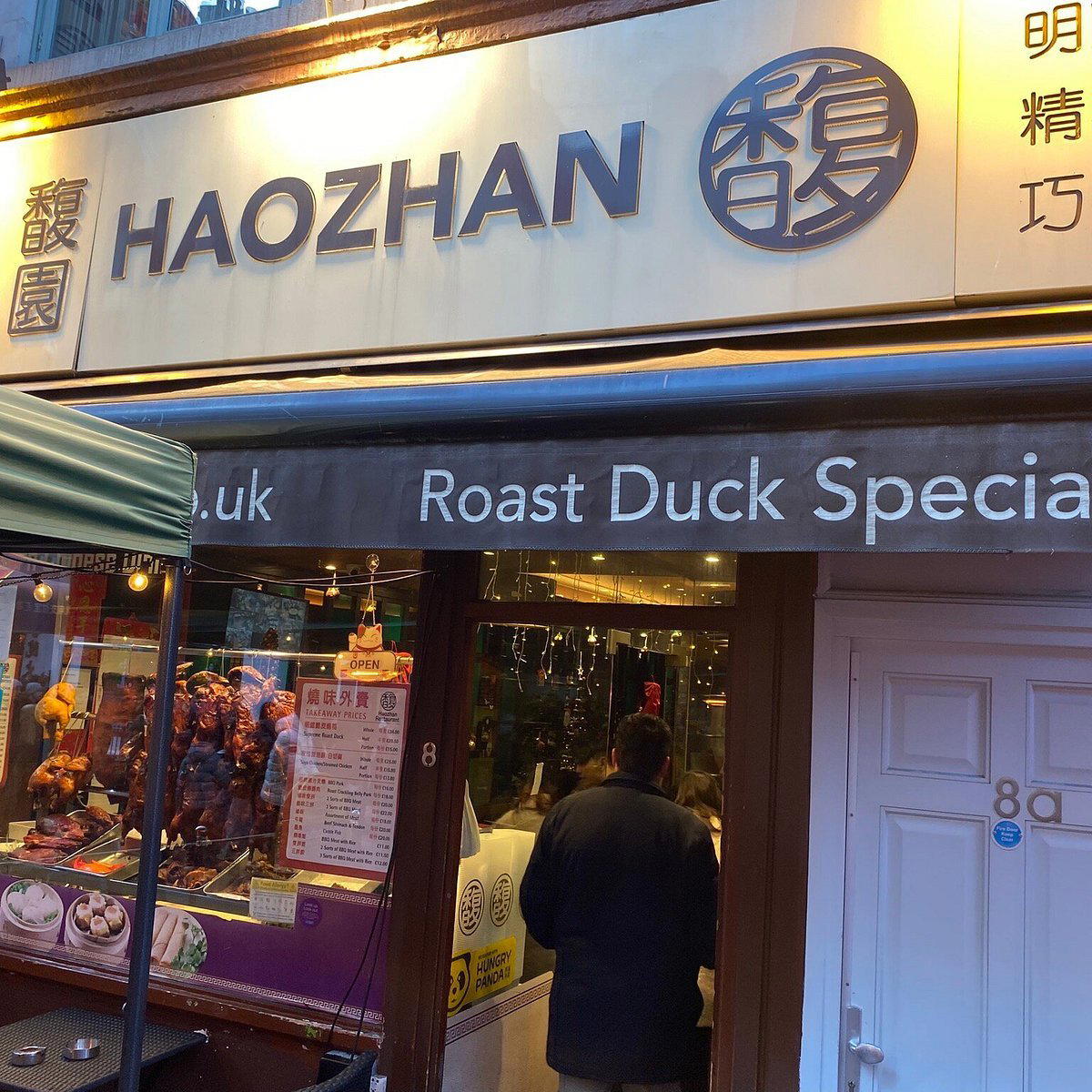
Gerrard Street and the Question of Ambition
London's Chinatown is one of the city's most scrutinised restaurant corridors, and also among the more misread. Gerrard Street and its immediate tributaries attract millions of visitors annually, but the critical conversation around the area has long separated into two camps: the perfunctory tourist trade and the handful of kitchens that have pushed against that gravity. Haozhan is a restaurant at 8 Gerrard St, London, serving Cantonese Dim Sum & Roast Meats. Haozhan, at 8 Gerrard Street, belongs to the second group. It has occupied the same address for years, and the story of that tenure is largely about how a Chinatown restaurant can evolve without abandoning the neighbourhood that gave it its audience.
That evolution matters because the broader context has shifted considerably. London's Chinese restaurant scene in the early 2000s was dominated by large-format Cantonese dining rooms oriented around dim sum, roast meats, and banquet tables. The conversation about regional Chinese cuisine, Sichuanese, Hunanese, the dishes of Fujian or Yunnan, had not yet gathered the critical mass it would find in the following decade. Haozhan's early positioning, which emphasised a more creative approach to Chinese cooking at a time when that phrase still read as eccentric in this postcode, placed it ahead of a shift that has since reshaped the category across London.
How the Menu Has Moved
The evolution of Haozhan's kitchen reflects a pattern visible across London's better Asian restaurants over the past fifteen years: a gradual move from fixed-format menus built around familiar comfort dishes toward a more fluid approach that borrows across regional traditions. Where Chinatown kitchens once competed almost entirely on price and familiarity, a smaller cohort has shifted the competition toward technique and sourcing. Haozhan sits in that cohort.
The menu draws on Cantonese foundations while incorporating influences from other Chinese culinary traditions, and the kitchen has periodically refreshed its direction rather than calcifying around a fixed identity. This responsiveness to changing expectations, from a dining public increasingly fluent in the distinctions between, say, a Sichuan dry-fried preparation and a Cantonese stir-fry, is part of what has kept Haozhan relevant across two decades on a street where turnover is high and attention is short.
For context, the Soho and Chinatown corridor sits well below the price tier occupied by London's multi-starred rooms. Restaurants like CORE by Clare Smyth, Restaurant Gordon Ramsay, Sketch's Lecture Room and Library, and The Ledbury, all operating at the ££££ ceiling, define one end of the London dining spectrum. Dinner by Heston Blumenthal occupies a similar tier. Haozhan operates in a different register entirely: accessible neighbourhood dining where the measure of quality is consistency, range, and the ability to cook with more care than the surrounding competition.
Chinatown's Competitive Dynamics
Understanding Haozhan's position requires understanding what Gerrard Street actually is as a dining environment. It is not a street of destination restaurants in the sense that Mayfair or Notting Hill are destination restaurant neighbourhoods. The foot traffic is high, the margins are tight, and the audience is mixed between local regulars, theatre-goers, tourists, and the smaller cohort of food-focused diners who visit specifically for the cooking. Sustaining a kitchen with genuine culinary ambition inside that commercial environment over two decades is not a minor achievement.
The restaurants that have managed it tend to share certain characteristics: a menu that gives experienced diners a reason to return beyond convenience, service that functions at a pace suited to a Soho evening, and a willingness to operate at a slightly higher price point than the surrounding commodity kitchens without pricing out the neighbourhood's broader audience. Haozhan has operated within these constraints throughout its run on Gerrard Street.
For travellers building a London itinerary around serious eating, Haozhan is worth placing alongside the city's wider restaurant picture. Beyond the starred rooms referenced above, the UK's broader fine dining geography includes The Fat Duck in Bray, L'Enclume in Cartmel, Moor Hall in Aughton, Gidleigh Park in Chagford, Hand and Flowers in Marlow, and hide and fox in Saltwood. Internationally, the comparison class for serious urban Chinese cooking at the accessible end of the market includes restaurants in New York operating in a similar register: Le Bernardin and Atomix represent the city's most precise technical cooking, but the neighbourhood-anchored Chinese restaurants feeding informed diners daily are a different and equally valid category.
Planning a Visit
Haozhan's address at 8 Gerrard Street places it at the centre of London's Chinatown, accessible on foot from Leicester Square and Piccadilly Circus stations.
| Venue | Neighbourhood | Category | Price Tier | Booking Difficulty |
|---|---|---|---|---|
| Haozhan | Chinatown / Soho | Chinese (creative) | ££-£££ | Moderate |
| CORE by Clare Smyth | Notting Hill | Modern British | ££££ | High (Michelin 3★) |
| The Ledbury | Notting Hill | Modern European | ££££ | High (Michelin 3★) |
| Dinner by Heston Blumenthal | Knightsbridge | Modern British | ££££ | High (Michelin 2★) |
Comparison Snapshot
Comparable venues nearby, for context on price, style, and recognition.
| Venue | Cuisine | Price | Notes |
|---|---|---|---|
| HaozhanThis venue — the venue you are viewing | Cantonese Dim Sum & Roast Meats | $$ | Not listed |
| Sichuan Fry and Dumpling Shack | Sichuan Fried Chicken & Dumplings | $$ | London Fields |
| Meeting Noodles | Authentic Szechuan & Cantonese | $$ | Bloomsbury |
| Beijing Dumpling | Authentic Chinese Dumplings | $$ | Chinatown |
| Hong Kong restaurant | Halal Cantonese Dim Sum | $$ | Canonbury |
| Pearl Liang | Cantonese Dim Sum | $$ | Paddington |
Continue exploring
More in London
Restaurants in London
Browse all →
Bars in London
Browse all →
Hotels in London
Browse all →



At a Glance
- Cozy
- Lively
- Casual Hangout
- Group Dining
- Open Kitchen
- Street Scene
Current opening hours
- Monday
- 12–10:45 PM
- Tuesday
- 12–10:45 PM
- Wednesday
- 12–10:45 PM
- Thursday
- 12–10:45 PM
- Friday
- 12–10:45 PM
- Saturday
- 12–10:45 PM
- Sunday
- 11 AM–9:45 PM
Hours can change for holidays and private events. Last verified .
Cozy black wood decor split over two floors, lively and busy with a lively Chinatown feel overlooking red lanterns.