Hangar 815
Our verdict
Hangar 815 occupies the terminal at John Glenn Columbus International Airport, placing it in the specific category of airport dining that aims above its surroundings. For travelers moving through Columbus, it represents the city's broader push toward a more serious food identity, positioned alongside a dining scene that includes venues like Alqueria and Agni in the wider Columbus market.

Pearl is the En Primeur Club membership app — saves, bookings, and concierge access live there. Same editors, same standards.
- Address
- Airport Terminal, Columbus, OH 43219
- Phone
- (614) 927-9745
- Hours
- Daily 11 AM–7 PM
- Website
- opentable.com
- Directions
- Get directions
- Booking
- Book on OpenTable
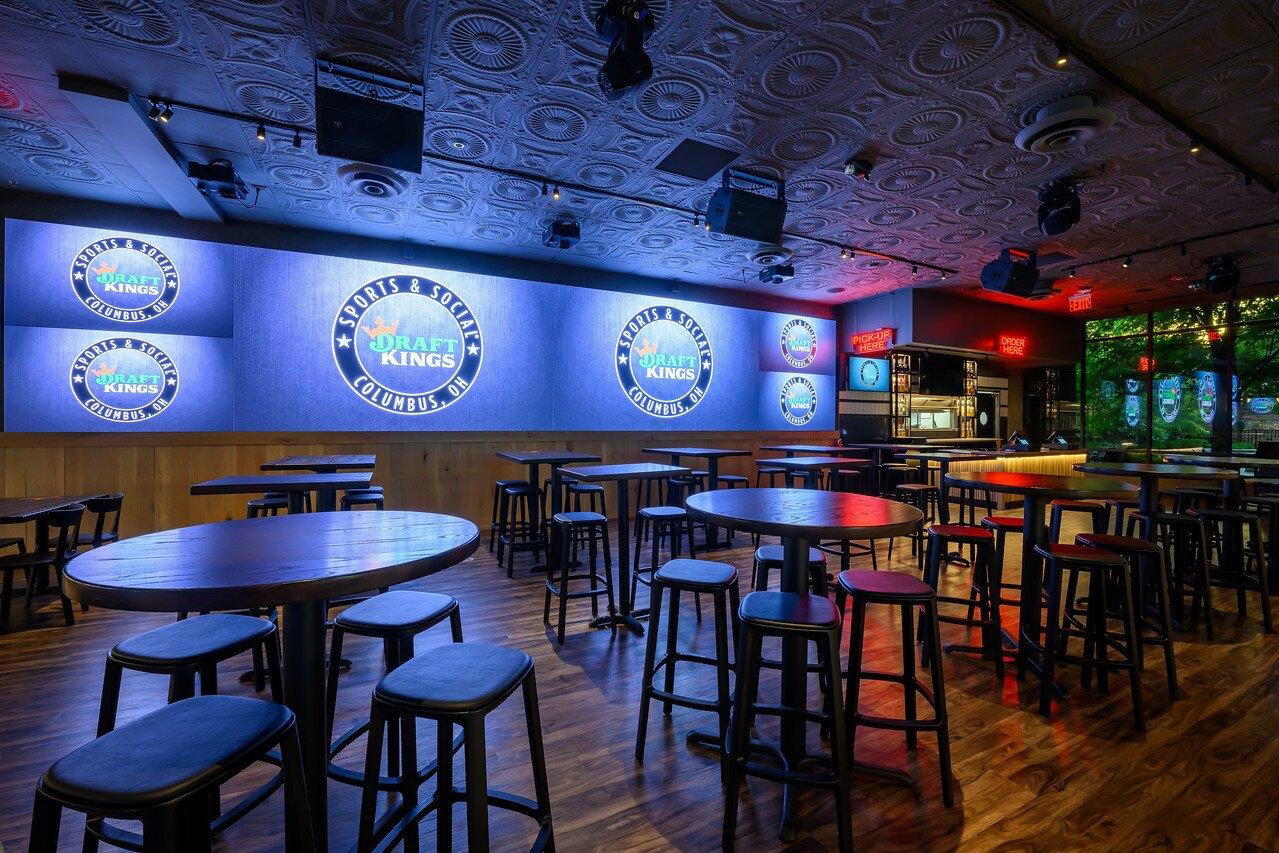
Departures and Dining: Airport Food in a City That Takes Eating Seriously
There is a particular quality of light inside airport terminals — flat, fluorescent, indifferent to time zones or appetites. Most airport dining exists within that logic, calibrated for speed and captive audiences rather than considered eating. Hangar 815, located inside the terminal at John Glenn Columbus International Airport, sits at the intersection of that institutional reality and Columbus's increasingly deliberate restaurant culture, a city that has spent the better part of a decade building a dining identity that extends well beyond its downtown core.
The name itself is a spatial cue. Hangars are functional structures, built around clearance and movement rather than comfort. Whether the space delivers on warmth within that framework is the central question any terminal restaurant faces, and it is a question Columbus's food scene — with its emphasis on local sourcing, neighborhood-level specificity, and genuine craft, has made more pressing. Travelers who have eaten at Agni or Alqueria before a flight arrive with calibrated expectations.
The Airport Dining Category and Where Hangar 815 Fits
Airport restaurants occupy a specific competitive tier that operates differently from city dining. In that context, the relevant comparisons are internal. Does the food hold up against a traveler's knowledge of what the city does well elsewhere? Does the room offer enough sensory coherence to make a layover feel less transactional?
Columbus has developed a dining culture that makes this standard harder to meet. The city's restaurant scene now includes venues that draw serious regional attention, from the approachable Mexican-American cooking at Agave & Rye Grandview to the more composed, technique-driven work at 2110 and [['plas]. Against that backdrop, an airport venue carries the city's reputation as much as it serves individual meals. Hangar 815 inherits that responsibility whether or not it was designed with it in mind.
Sensory Realities of Terminal Eating
The sensory conditions of airport dining are worth naming directly because they shape every aspect of the experience. Sound is the first challenge: gate announcements, rolling luggage, the ambient hum of a building that never fully sleeps. Restaurants that succeed in this environment tend to do so through deliberate insulation, acoustic materials, booth configurations, or service rhythms that create a buffer between the traveler and the terminal's constant motion. The degree to which Hangar 815 addresses these conditions places it on a spectrum that runs from functional holding pen to genuine pause in the journey.
Smell is the second axis. Airport food courts are often defined by a composite aroma that belongs to no single cuisine, the cumulative effect of fryers, coffee stations, and packaged goods operating simultaneously. A restaurant that controls its own kitchen atmosphere, through the smell of a proper stock, roasting proteins, or fresh bread, signals a different level of operational intention. These are not decorative details; they are functional signals about where a kitchen's priorities sit.
Light, finally, matters more in airports than in most dining contexts because travelers are often disoriented about time. A room that uses warmer light temperatures, even within a terminal's constraints, can meaningfully shift the psychological experience of a meal. These are the practical levers that distinguish airport dining worth seeking from airport dining worth tolerating.
Columbus as a Dining City: The Context That Travels
Any honest account of Hangar 815 requires an honest account of Columbus as a food city, because the airport is where that city makes its first and last impression. Columbus has moved well past its reputation as a Midwestern college town with limited culinary ambition. The restaurant community here has genuine range: internationally trained chefs, neighborhood-level diversity, and a food culture that supports both casual excellence and more ambitious formats.
For reference points at the top of American restaurant ambition, travelers familiar with Alinea in Chicago, Le Bernardin in New York City, or The French Laundry in Napa will recognize the gap that still exists between Columbus's leading and the country's most decorated rooms. But the relevant comparison for most visitors is not those rooms, it is whether Columbus's everyday dining standard has risen to a point where the airport experience feels coherent with the city. On that measure, the gap has narrowed considerably.
Venues like Lazy Bear in San Francisco, Blue Hill at Stone Barns in Tarrytown, and Single Thread Farm in Healdsburg represent a regional-sourcing and hospitality-driven model that has influenced American dining broadly, including in cities like Columbus that are building toward that standard without the coastal infrastructure. Addison in San Diego, Providence in Los Angeles, Atomix in New York City, The Inn at Little Washington, Emeril's in New Orleans, and 8 1/2 Otto e Mezzo Bombana in Hong Kong each represent a version of the same question: what does serious dining look like in a specific place? Columbus is working through its own answer to that question, and the airport is part of the answer whether the industry pays attention or not.
For a fuller picture of where Columbus stands, the EP Club Columbus restaurants guide maps the city's dining range across neighborhoods and formats.
Practical Considerations for the Traveling Diner
John Glenn Columbus International Airport is a mid-sized facility, which means access to Hangar 815 is subject to standard terminal entry requirements. Travelers without a boarding pass will not reach airside options, so the question of whether the restaurant sits landside or within the secured gates determines who can actually use it. For those with time before a flight, the general principle at most mid-tier American airports is to allow at minimum 90 minutes between arrival at the terminal and a seated meal, gate-change variables and security timing make tighter windows uncomfortable. Seasonal travel periods, particularly the late-November and late-December holiday peaks, compress service speeds across all terminal food options; earlier arrivals are the practical hedge. The venue's location within the Columbus airport terminal is the primary logistical fact any diner needs to verify before planning around it.
Frequently asked questions
Is Hangar 815 a family-friendly restaurant?
Hangar 815 sits inside the terminal at John Glenn Columbus International Airport, which means the guest mix skews toward travelers of all kinds — solo business passengers, couples, and families in transit. The airport setting naturally accommodates families moving through, though the terminal environment is not purpose-built for extended family dining. Expect a functional, accessible space shaped by the rhythms of departures rather than a dedicated family dining room.
Is Hangar 815 formal or casual?
The address alone answers the question: Hangar 815 is inside the Columbus airport terminal at 43219, which places it firmly in casual territory. Airport dining operates on the logic of convenience and time pressure, not dress codes or ceremony. Come as you are — you likely have a gate to catch.
Is Hangar 815 accessible to non-ticketed guests visiting John Glenn Columbus International Airport?
Hangar 815 is located inside the terminal at John Glenn Columbus International Airport (address: Airport Terminal, Columbus, OH 43219), which means access is subject to standard airport security requirements. Non-ticketed visitors cannot pass through the security checkpoint in most U.S. terminals, so the restaurant's guest base is effectively limited to departing passengers and, where TSA policy permits, those with gate passes. Confirm current access policies directly with the airport before planning a visit without a boarding pass.
What's Hangar 815's location?
Hangar 815 is located at Airport Terminal, Columbus, OH 43219, Columbus.
Do they take walk-ins at Hangar 815?
Given its position inside the Columbus airport terminal, Hangar 815 operates in an environment where walk-in traffic is essentially the only model — travelers don't book airport restaurants weeks in advance. Availability will depend on flight schedules and peak departure windows, so arriving with a time buffer is the practical approach.
What's the defining dish or idea at Hangar 815?
The more useful frame is the venue's position: it sits at the intersection of Columbus's increasingly serious food identity and the functional constraints of terminal dining. That tension — between a city that takes eating seriously and a format that rarely rewards it — is the central idea the restaurant has to resolve.
Peers in This Market
Comparable venues nearby, for context on price, style, and recognition.
| Venue | Cuisine | Price | Notes |
|---|---|---|---|
| Hangar 815This venue — the venue you are viewing | Modern American | Not listed | Not listed |
| Three Creeks Kitchen + Cocktails | New American | $30–50 | Wonderland |
| The Pearl | American Gastropub with Seafood | $30–50 | Short North |
| The Guild House | Creative American Gastropub | $30–50 | Short North |
| Bodega | American Gastropub | $20–30 | Short North Arts District |
| Jack & Benny's | Classic American Diner | $10–20 | South Clintonville |


Details
- Modern
- Trendy
- Industrial
- Casual Hangout
- After Work
- Standalone
- Craft Cocktails
- A La Carte
Current opening hours
- Monday
- 11 AM–7 PM
- Tuesday
- 11 AM–7 PM
- Wednesday
- 11 AM–7 PM
- Thursday
- 11 AM–7 PM
- Friday
- 11 AM–7 PM
- Saturday
- 11 AM–7 PM
- Sunday
- 11 AM–7 PM
Hours can change for holidays and private events. Last verified .
Modern airport atmosphere with aviation history elements and efficient service.