
1 Michelin Star
Our verdict
On Quai Voltaire, behind a black façade with no signage, HANADA runs one of Paris's most disciplined omakase counters. Ten seats, a single menu, and a program built around French-sourced fish — Mediterranean tuna, Brittany catch, Auvergne trout — treated with the precision of Tokyo's upper-tier sushi tradition. The no-photography rule signals where the priorities lie: entirely at the counter.

Pearl is the En Primeur Club membership app — saves, bookings, and concierge access live there. Same editors, same standards.
- Address
- 15 quai Voltaire
- Phone
- +33 7 44 31 80 70
- Hours
- Mon–Fri 7 PM–12 AMSat–Sun Closed
- Website
- sushihanada.com
- Directions
- Get directions
- Booking
- Book on Zenchef
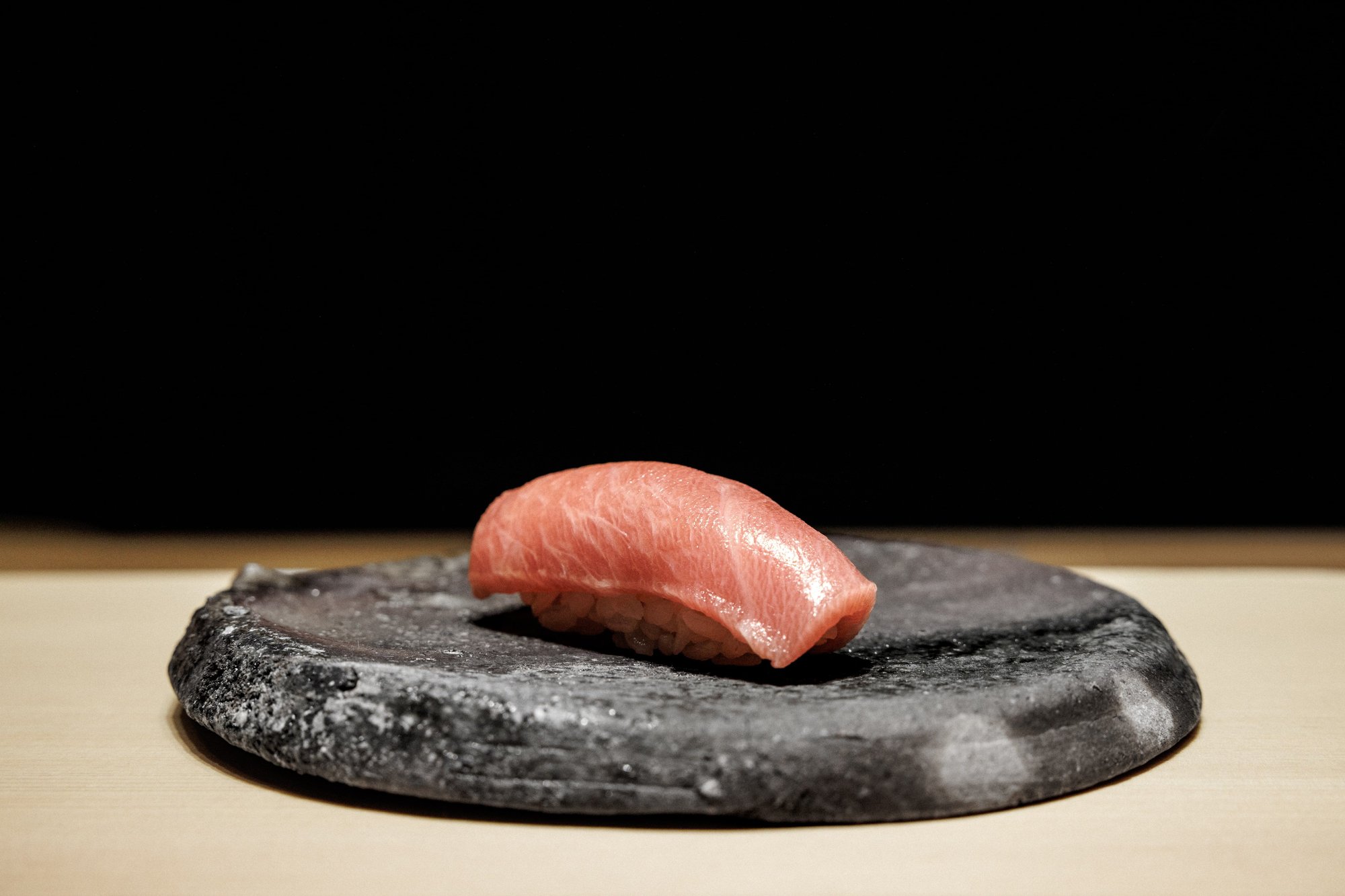
A Counter on the Left Bank
Paris has accumulated a credible tier of Japanese fine dining over the past two decades, but the city's omakase counters occupy a specific, narrow band within that scene. They tend toward small formats, long menus, and sourcing arrangements that privilege French-grown or French-caught fish over air-freighted Japanese product. HANADA, at 15 quai Voltaire on the Left Bank, sits at the upper end of this bracket. The building offers a black façade and nothing beyond the street number — no menu board, no name plate — which places it in the company of counters that have moved past the need to advertise at street level.
The quai Voltaire address is itself a statement of positioning. The stretch runs along the Seine opposite the Tuileries, a few minutes from Arpège and within the same Left Bank arc that contains some of the city's most deliberate fine dining. Unlike the 8th arrondissement, where Alléno Paris au Pavillon Ledoyen and Le Cinq at the Four Seasons George V operate inside grand institutional architecture, HANADA's address is residential and unannounced. That contrast is deliberate. The counter is not competing for passing trade.
Inside the Counter
Ten seats run along a solid hinoki counter, Japanese cypress, the material standard in serious Tokyo and Osaka sushi-ya. The wood choice is functional as much as aesthetic: hinoki has a neutral grain and faint natural fragrance, and a counter built from it signals a degree of investment in sourcing that extends beyond the fish. Guests face the chef and their assistants directly, which is the format's defining characteristic. There is no intermediate service layer. Every element of the preparation, the slicing, the temperature control, the sequencing, is visible from every seat.
The no-photography rule reinforces what the format already implies: the meal is the event, not the record of it. Across Paris's most precise restaurant operations, from L'Ambroisie to Kei, the move toward restricting or discouraging photography during service reflects a wider recalibration of what premium hospitality means at this price level. HANADA's approach sits squarely within that shift.
The Menu: French Sourcing, Japanese Technique
The single omakase menu draws its fish from French sources, Mediterranean red tuna, trout from Auvergne, catch from Brittany, and applies Japanese technique across the full range: nigiri, maki, soups, and binchotan-grilled preparations. Binchotan, the dense white charcoal used in yakitori and high-end Japanese grilling, produces a radiant, even heat that does not impart smoke; it is the preferred tool for any preparation where the ingredient's own character needs to remain legible.
Sourcing logic connects HANADA to a broader movement in French-Japanese cooking that has developed over the past fifteen years. Rather than replicating a Tokyo counter with imported product, the approach treats French regional fish as the primary material and Japanese technique as the method of transformation. Mediterranean tuna handled with the cutting precision of Edomae tradition, Brittany seafood sequenced through a menu built around texture and temperature progression, this is a distinct cooking position, not a compromise. The tableware, which moves between Japanese craft forms and contemporary European design, is part of the same argument: the meal sits at an intersection, not in one tradition or the other.
A concise wine and sake list completes the menu. The restraint in list length is consistent with the format. An omakase counter at this level is not the place for a cellar-depth wine program; the drinks list exists to support the food's arc, not to function as a separate attraction.
Service Rhythm and the Lunch-Dinner Question
HANADA's format does not reconfigure itself dramatically between day and night service, because the omakase structure does not easily accommodate that kind of split. The menu, the sequence, and the counter experience remain largely consistent across both sittings. What changes is context. A lunch sitting at a ten-seat counter on the quai Voltaire carries a different character than the same meal after dark: the light off the Seine, the relative quiet of a Left Bank afternoon, the way natural daylight renders the fish and the hinoki differently than candlelight or directed spot lighting.
This is worth noting for booking strategy. Lunch sittings at this type of counter are often easier to secure than evening slots, and they tend to attract a slightly different guest composition, fewer celebratory tables, more solo diners or small groups who have come specifically for the food rather than the occasion. For a counter where the interaction with the chef is central, a less festive atmosphere can be an advantage. Paris's comparable omakase operations, and the wider tier of French fine dining destinations including Flocons de Sel in Megève and Mirazur in Menton, show a similar pattern: lunch often delivers the more focused version of the experience.
Within Paris, HANADA's nearest peers are the handful of Japanese counters operating at the same price tier and format discipline. Chef Masayoshi Hanada came from Sushi B, another Paris omakase address, which places the lineage within the city's own sushi tradition rather than as a direct transfer from Japan. That local provenance matters: the counter has developed its French-sourcing approach from within the Paris market, not imported it. For comparison, consider where HANADA sits against the French-technique end of the city's upper-tier dining: L'Ambroisie on the Place des Vosges and Kei near the Palais-Royal each represent the assimilation of non-French traditions into a Parisian fine-dining register. HANADA operates on a parallel track but in the opposite direction: Japanese technique absorbing French produce.
Further afield, the same sourcing logic appears at French regional addresses with strong local-ingredient commitments: Bras in Laguiole and Auberge de l'Ill in Illhaeusern anchor their menus to specific French geography. HANADA does the same, with the difference that the technique applied to that geography comes from a separate tradition entirely. For readers comparing Paris's upper-tier sushi options against global reference points, Le Bernardin in New York offers a useful contrast: French technique applied to seafood at the highest level, but from within the French tradition rather than across it.
Planning a Visit
The counter seats ten, which makes availability the central planning variable. At this format and price point in Paris, advance booking is standard operating procedure, typically several weeks out for dinner, potentially less for lunch sittings. The address at 15 quai Voltaire is direct to reach from central Paris, close to the Rue du Bac Métro stop and walking distance from Saint-Germain-des-Prés. Given the no-signage exterior, first-time visitors should confirm the address before arriving rather than relying on a prominent street presence. The meal is the commitment; the practical logistics are secondary to that.
For broader Paris dining context, EP Club's full Paris restaurants guide covers the city's full range of options across categories and price tiers. Readers planning a wider trip can also consult our Paris hotels guide, Paris bars guide, and Paris experiences guide for a complete picture of what the city offers at this level.
Frequently asked questions
What's the address for HANADA?
HANADA is located at 15 quai Voltaire, Paris.
Has HANADA won any awards?
HANADA has received recognition including: On the Left Bank, along Quai Voltaire, a discreet black façade with no signage apart from the number 15, is the HQ of a Parisian temple of sushi. Inside, Masayoshi Hanada (formerly Sushi B) orchestrates a single omakase menu starring except….
What should I eat at HANADA?
There is no menu selection to make — HANADA runs a single omakase program. The sequence moves through nigiri, maki, soups, and binchotan-grilled courses, built around French-caught fish including Mediterranean red tuna, Auvergne trout, and Brittany seafood. A concise wine and sake list accompanies the meal.
Do I need a reservation for HANADA?
Yes, and advance planning is advisable. The counter at 15 quai Voltaire holds just ten seats, and the omakase format draws both Parisian and international diners. Evening slots at Paris counters of this format and price tier typically fill well ahead.
What is HANADA known for?
HANADA is known for its ten-seat hinoki counter on quai Voltaire and a single omakase menu built on French regional fish — a sourcing approach that separates it from Paris counters relying on Japanese imports. Chef Masayoshi Hanada, formerly of Sushi B, operates behind a no-signage black façade with a strict no-photography policy during service.
Can HANADA handle vegetarian requests?
The omakase at HANADA is structured around fish and seafood from start to finish, including nigiri, maki, soups, and grilled courses. Vegetarian accommodation falls outside the format's design, so contact the restaurant at 15 quai Voltaire directly before booking if dietary requirements apply.
At a Glance
Comparable venues nearby, for context on price, style, and recognition.
| Venue | Cuisine | Price | Awards | Notes |
|---|---|---|---|---|
| HANADAThis venue — the venue you are viewing | French-Japanese Fusion | $30–50 | 1 Michelin Star | Not listed |
| Taisho ken | Authentic Japanese Izakaya | $20–30 | Not listed | 8th Arr. - Élysée, Authentic Japanese Izakaya |
| Ramen Wagaya | Authentic Japanese Ramen | $20–30 | Not listed | Oberkampf, Authentic Japanese Ramen |
| Savarin | Classic French Bistro | $30–50 | Michelin Bib Gourmand | 9th Arrondissement (Pigalle), Classic French Bistro |
| Montcalm | Modern French Bistro | $30–50 | Michelin Plate | 18th Arrondissement - Butte-Montmartre, Modern French Bistro |
| Le Paris | Classic French Bistro | $30–50 | Michelin Plate | 6th arrondissement (Saint-Germain), Classic French Bistro |
Recognition history
Dated appearances from independent guides and award organizations, with the underlying list record or original source where available.
Michelin 1 Star
Michelin
Continue exploring
More in Paris
Restaurants in Paris
Browse all →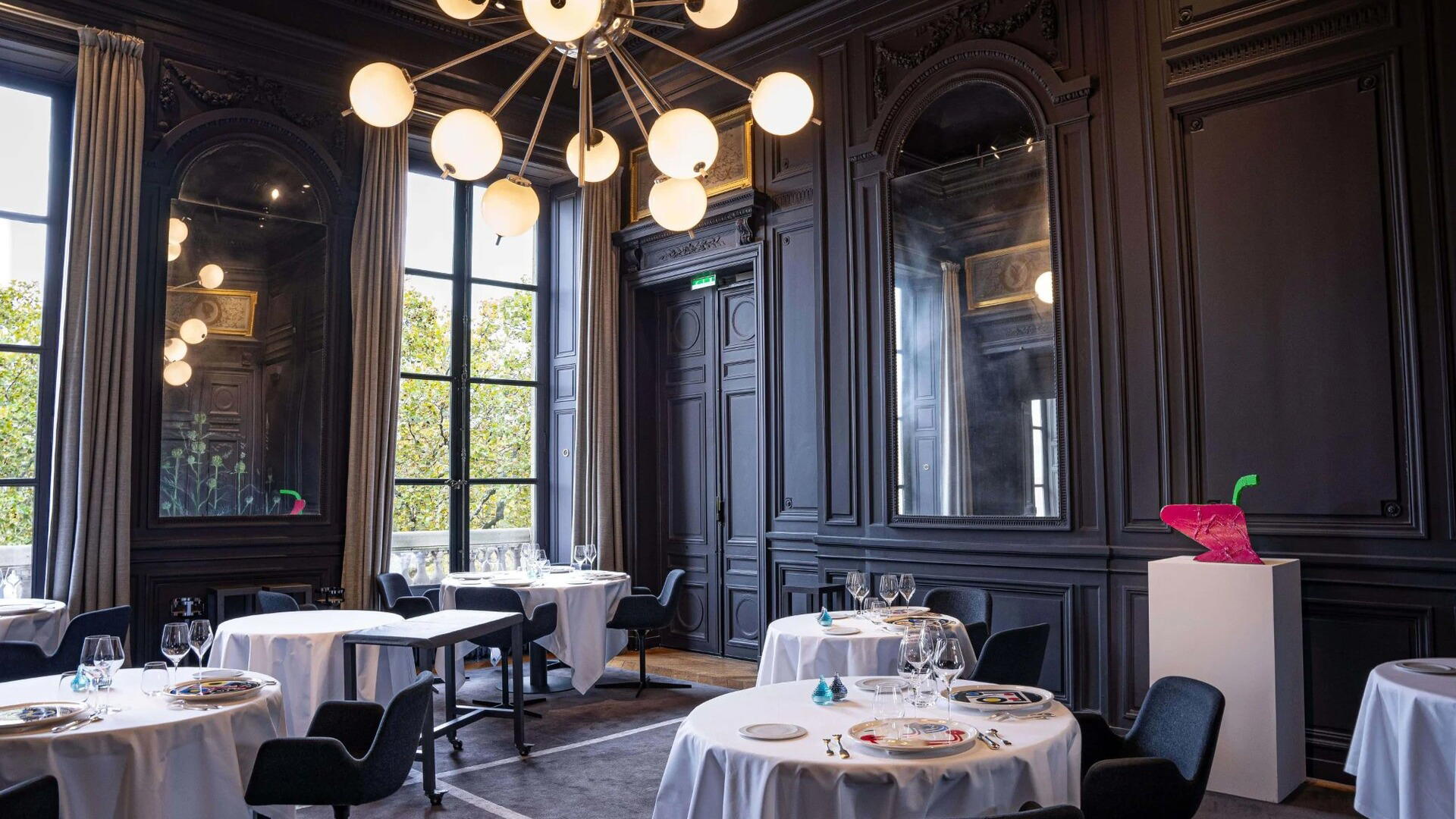
Bars in Paris
Browse all →
Hotels in Paris
Browse all →
Details
- Modern
- Cozy
- Business Dinner
- Casual Hangout
- Open Kitchen
- Sake Program
- Local Sourcing
- A La Carte
Current opening hours
- Monday
- 7 PM–12 AM
- Tuesday
- 7 PM–12 AM
- Wednesday
- 7 PM–12 AM
- Thursday
- 7 PM–12 AM
- Friday
- 7 PM–12 AM
- Saturday
- Closed
- Sunday
- Closed
Hours can change for holidays and private events. Last verified .
Warm and welcoming atmosphere with a modern bistro feel.