Hamburguesa Bar
Hamburguesa Bar brings the American burger tradition into San Francisco's comfort food conversation, pairing handcrafted patties with poutine and casual plates in a city better known for Michelin-starred tasting menus. The format sits at the accessible end of SF's dining spectrum, where the craft-casual tier has grown steadily alongside the fine dining scene. Check the venue directly for current hours and booking availability.
Pearl is the En Primeur Club membership app — saves, bookings, and concierge access live there. Same editors, same standards.
- Address
- 78 2nd St, San Francisco, CA 94105
- Phone
- (628) 316-1131
- Website
- hamburguesabar.com
- Directions
- Get directions
 Saves & bookings on Pearl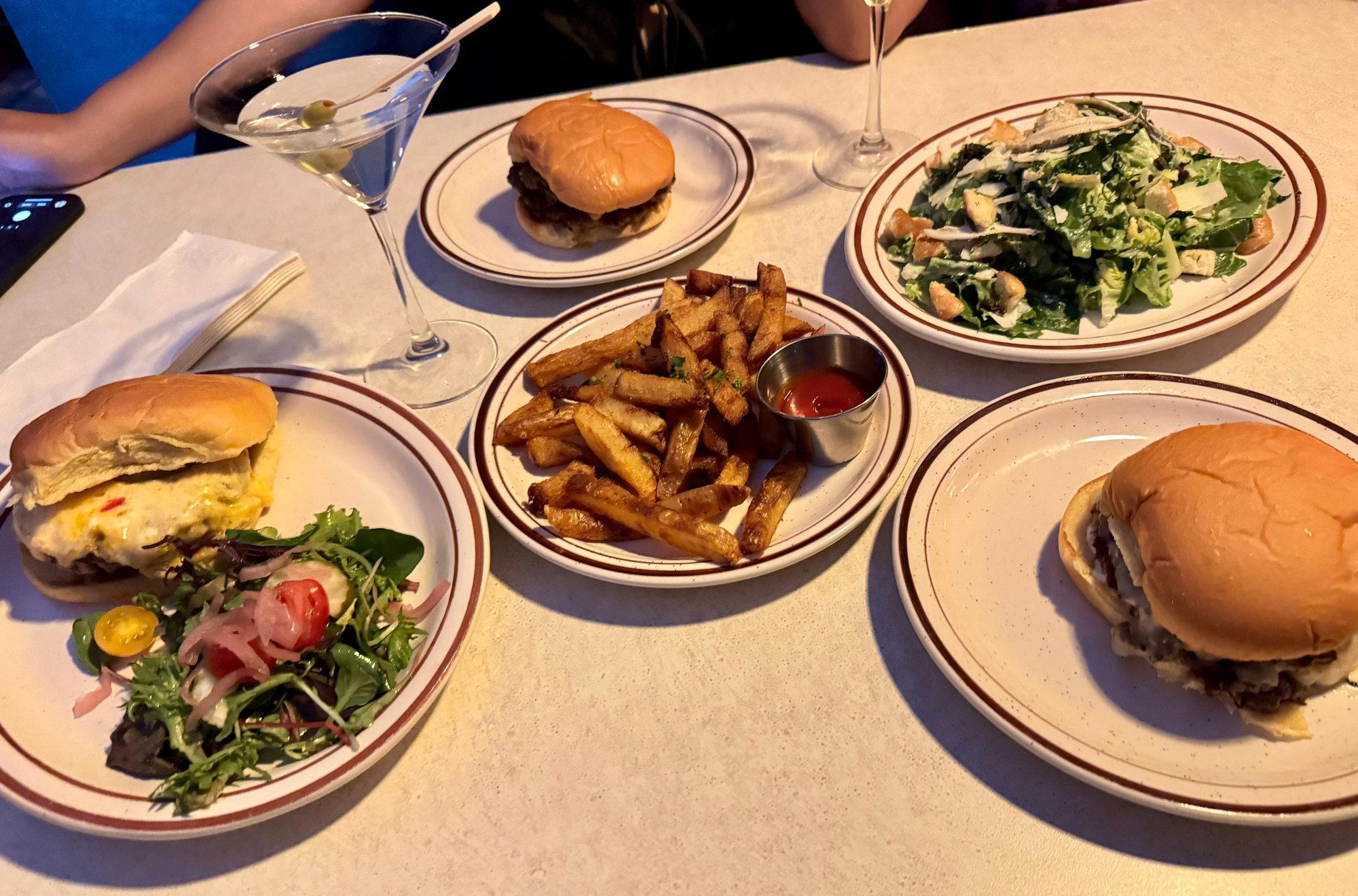
Where the Burger Sits in San Francisco's Dining Order
Hamburguesa Bar is a smashburger restaurant at 78 2nd St in San Francisco. The city's dining press cycle tilts toward the tasting-menu tier: the wood-fire temples, the French-inflected omakase counters, the farm-driven progressive tables at places like Lazy Bear and Saison. Against that backdrop, a burger-and-poutine format reads less like a concession and more like a deliberate counterpoint. The comfort food tier in San Francisco is not a gap in the market so much as an underreported layer of it, one that keeps pace with the city's working population regardless of where restaurant criticism happens to be looking.
That context matters when placing Hamburguesa Bar. It operates in a city where the fine dining conversation is dominated by multi-course monuments like Atelier Crenn, Benu, and Quince, but also a city where the demand for well-executed, unfussy food is constant and not particularly well-documented. The burger, in this context, is not a lesser dining choice. It is a distinct one, with its own craft logic and its own quality ceiling.
The Cultural Roots of the American Burger Format
The hamburger's American identity is well established, but its cultural trajectory is more complicated than its reputation suggests. The format arrived via German immigration in the nineteenth century, was industrialized through the twentieth, and was then reclaimed by independent operators beginning in the 1990s and accelerating sharply through the 2000s and 2010s. What the craft burger movement produced was not just a better patty: it was a re-examination of sourcing, fat content, bun-to-meat ratio, and the role of condiments as flavour architecture rather than afterthought.
San Francisco was not the epicenter of that reclamation, that credit falls more to New York, Los Angeles, and the broader counter-service wave that swept American cities. But the Bay Area absorbed the shift thoroughly. The region's proximity to Northern California's ranching and dairy infrastructure gave local operators access to beef and cheese at a quality tier that other American cities had to work harder to reach. A burger in San Francisco, even at the casual end, exists within a regional food supply that skews toward quality by default.
Poutine introduces a Canadian variable into the equation. The dish, originating in Quebec in the late 1950s, pairs fries with cheese curds and brown gravy in a combination that resists refinement: every attempt to make it elegant tends to undermine what makes it work. Its appearance on American menus increased significantly after 2010, partly through the spread of Canadian-inflected gastropubs and partly through the broader rehabilitation of comfort food as a legitimate dining category. Pairing it with burgers is a logical combination, both formats share the same register of directness, portion generosity, and the expectation that the eating experience should be satisfying without being effortful.
Comfort Food as a Serious Category
One of the more durable shifts in American dining over the past fifteen years is the critical legitimacy that comfort food has accumulated. The tasting menu remains the dominant format for awards and editorial attention, cities like San Francisco, New York, and Chicago define their dining identities partly through the number of Michelin stars they hold. But the conversation around what constitutes skilled cooking has broadened. Alinea in Chicago and Le Bernardin in New York City represent one end of that spectrum. The craft burger counter represents another, and both ends now receive more serious treatment than was common a generation ago.
San Francisco's comfort food tier benefits from the same talent pipeline that feeds the fine dining scene. Cooks who train under demanding kitchen cultures often bring those habits into more casual formats, and the result is a quality floor that sits higher than the category's reputation might suggest. Hamburguesa Bar fits within this broader pattern: a comfort food format operating in a city with high culinary literacy and an ingredient supply that supports quality at any price point.
For readers exploring the wider food and travel picture across the city, the full San Francisco restaurants guide maps the range from the accessible to the formal. The San Francisco bars guide and experiences guide round out the picture for those spending more than a day in the city. Day trips into the wine country are also well worth planning: Single Thread Farm in Healdsburg and The French Laundry in Napa represent the formal end of Northern California dining, while the San Francisco wineries guide covers the regional wine context.
Planning Your Visit
The restaurant is at 78 2nd St, San Francisco, CA 94105. It is walk-in friendly, priced around $20 per person, and is open Mon to Fri from 12 PM to 12 AM, Sat from 5 PM to 12 AM, and closed on Sun. The restaurant's format, burgers, poutine, comfort food, places it in the casual dining tier, where walk-in availability is generally higher than at the reservation-heavy tasting menu tables that dominate the city's awards conversation. San Francisco's comfort food spots tend to see peak demand at lunch on weekdays and through the early-to-mid evening on weekends. Arriving outside those windows typically improves your chances of a seat without a wait.
Price Lens
Comparable venues nearby, for context on price, style, and recognition.
| Venue | Cuisine | Price | Notes |
|---|---|---|---|
| Hamburguesa BarThis venue — the venue you are viewing | Not listed | $$ | Not listed |
| Black Bark BBQ | Fillmore, Texas-Style BBQ | $$ | Not listed |
| Ironwoods | Presidio, New American | $$ | Not listed |
| The Plant Cafe Organic | Not listed | $$ | Financial District/South Beach, Organic Contemporary California with Asian Influences |
| Cafe Sebastian | Not listed | $$ | Chinatown, Californian Neighborhood Bistro |
| Brenda's Meat & Three | Western Addition, Southern Meat & Three | $$ | Not listed |
Continue exploring
More in San Francisco
Restaurants in San Francisco
Browse all →
Bars in San Francisco
Browse all →
Hotels in San Francisco
Browse all →
At a Glance
- Trendy
- Lively
- Retro
- After Work
- Late Night
- Casual Hangout
- Open Kitchen
- Beer Program
Current opening hours
- Monday
- 12 PM–12 AM
- Tuesday
- 12 PM–12 AM
- Wednesday
- 12 PM–12 AM
- Thursday
- 12 PM–12 AM
- Friday
- 12 PM–12 AM
- Saturday
- 5 PM–12 AM
- Sunday
- Closed
Hours can change for holidays and private events. Last verified .
Retro ambiance with classic rock tunes and lively, nostalgic vibe.