.png)
Hakkasan Istanbul brings Cantonese cooking to the Mandarin Oriental Bosphorus in Kuruçeşme, where the kitchen holds a Michelin Plate for 2024 and 2025. At the ₺₺₺₺ tier, it sits alongside Istanbul's top Modern Turkish addresses but argues a different case: that a global Chinese fine-dining format, rooted in premium Cantonese technique, earns its place on a European waterfront.
Cantonese on the Bosphorus: A Different Argument for Fine Dining
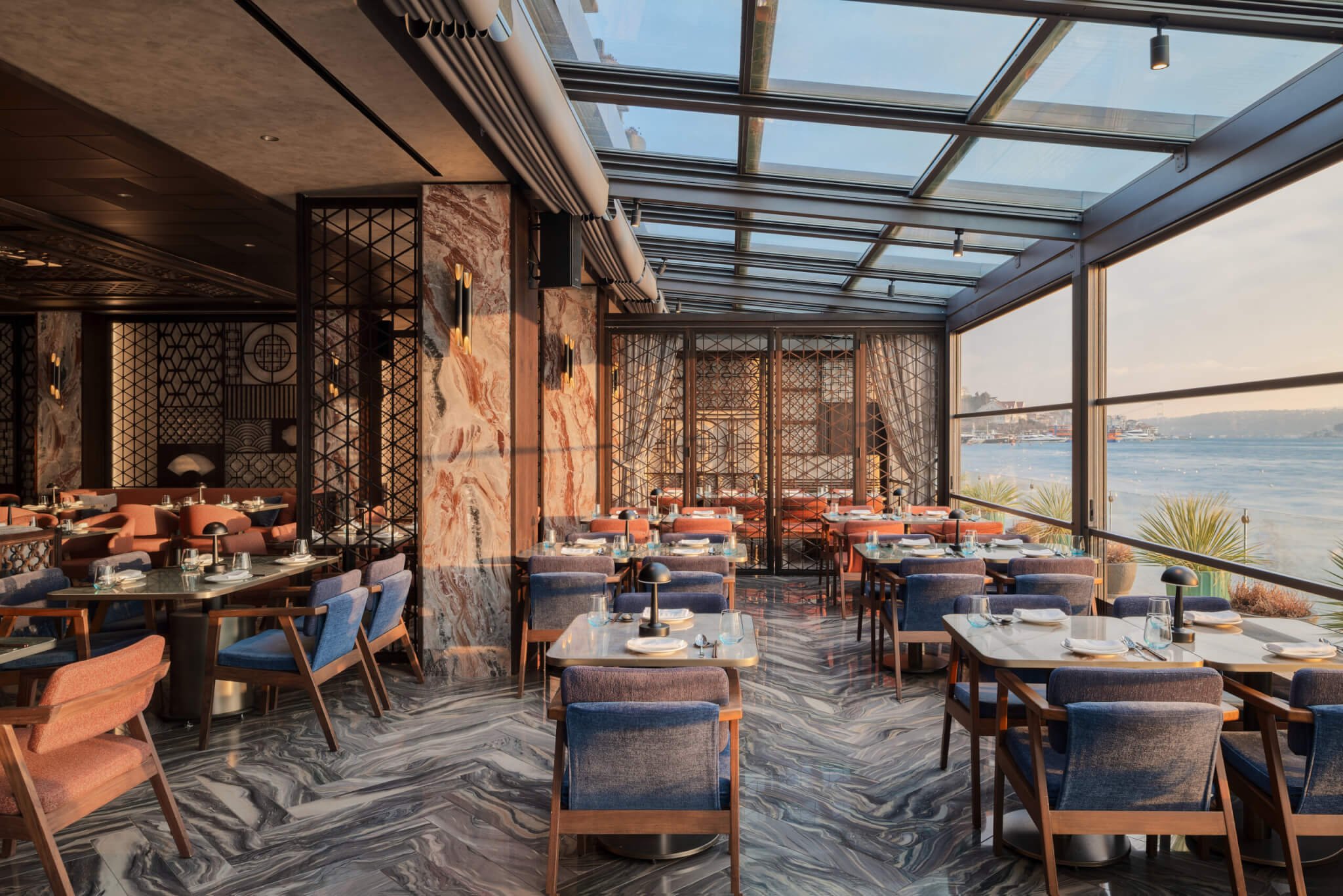
Istanbul's ₺₺₺₺ restaurant tier is almost entirely occupied by Modern Turkish and Mediterranean addresses. Turk Fatih Tutak, Mikla, and Neolokal anchor that conversation, each building their menus around Anatolian sourcing and local identity. Hakkasan Istanbul occupies a structurally different position: a Cantonese kitchen operating inside the Mandarin Oriental Bosphorus in Kuruçeşme, on a stretch of the European shore where the water is close enough to read as part of the room. The setting is deliberate. Mandarin Oriental properties in this network tend to place Hakkasan where the address compounds the restaurant's claim to premium positioning, and Istanbul's waterfront does exactly that.
How Cantonese Sourcing Logic Works in This Context
Cantonese cooking is more ingredient-dependent than almost any other Chinese regional tradition. The cuisine developed in Guangdong, where access to the Pearl River Delta, the South China Sea, and highly specific produce from subtropical farms shaped a cooking philosophy built on restraint and material quality rather than sauce complexity or spice accumulation. The logic is direct: if the ingredient is good enough, it requires minimal intervention. That principle travels with the cuisine wherever Hakkasan plants a kitchen, and Istanbul is no exception.
What changes city to city is where those ingredients come from and how the kitchen balances global Hakkasan standards with local supply. In Istanbul, the surrounding geography is not incidental. The Bosphorus and the Sea of Marmara produce seafood that has supplied Ottoman and Byzantine kitchens for centuries. Cantonese technique applied to locally caught fish and shellfish is a different proposition than the same dishes made entirely from imported product. The Michelin inspectors who awarded consecutive Plates in 2024 and 2025 were evaluating that balance, among other things. A Michelin Plate signals a kitchen operating at a consistently competent level within its category, not merely a well-branded address.
For comparison, Cantonese fine-dining programs at addresses like 102 House in Shanghai and Chef Tam's Seasons in Macau draw on hyperlocal sourcing networks built over decades in Chinese coastal regions. Hakkasan Istanbul works within a different supply geography but draws on one that is no less serious: Turkish produce and Turkish waters have their own distinct premium tier.
The Crispy Duck and the Pomegranate: Reading the Menu's Logic
The crispy duck salad is one of Hakkasan's most documented dishes across its global network, and its construction reveals how the kitchen navigates the gap between Cantonese tradition and local sourcing. Duck prepared to Cantonese specifications requires precise lacquering, controlled drying, and high-heat roasting to achieve skin with that particular texture: a thin, brittle shell that shatters rather than bends. The fat renders almost entirely, leaving the meat underneath with a specific sweetness that develops during the hanging and drying process.
The pomegranate component in the Istanbul version is worth noting. Pomegranate is not a Cantonese ingredient. It is, however, deeply embedded in Turkish culinary culture, particularly in the southeast and in Aegean cooking where it functions as a souring and sweetening agent simultaneously. Its appearance in the salad is not a gimmick; it is a structurally sound substitution that performs a similar function to the plum-based elements often used in Cantonese duck preparations. Sweet, acidic, and slightly astringent, pomegranate creates the same contrast against rich duck fat that a well-calibrated Chinese plum sauce would. That kind of considered adaptation is how serious Cantonese kitchens operate outside their home geography.
Where Hakkasan Istanbul Sits in the City's Dining Picture
₺₺₺₺ pricing tier in Istanbul now covers a considerable range of formats and ambitions. Arkestra works in fusion territory. Casa Lavanda operates in traditional cuisine. Hakkasan Istanbul is the only address at this price tier in the city offering classical Cantonese fine dining within a globally recognised format. That is not a marketing claim; it is a category fact. Istanbul has strong Chinese restaurants in various price brackets, but Cantonese cooking at this level of structural investment (kitchen training, product standards, room design) occupies a near-empty slot in the city's current restaurant map.
Mandarin Oriental Bosphorus address in Kuruçeşme places the restaurant in Istanbul's European shore hospitality corridor, an area that has concentrated luxury hotel and restaurant development over the past decade. For guests staying at the property, this is a same-building option that avoids the logistics of crossing the city. For guests staying elsewhere, Kuruçeşme is reachable by ferry from several European shore points or by taxi from central Beyoğlu. The waterfront location means that the approach to the building, whether from the water or from Muallim Naci Caddesi, registers the Bosphorus as a constant presence before you reach the room itself.
Istanbul's broader dining picture extends well beyond the city. Turkey has a serious restaurant scene across its coast and interior: Kitchen by Osman Sezener in Bodrum, Narımor in Izmir, 7 Mehmet in Antalya, Agora Pansiyon in Milas, Ahãma in Göcek, and Aravan Evi in Ürgüp all represent the range of serious cooking happening outside the capital. But for Cantonese at the Hakkasan standard, Istanbul remains the only Turkish address.
Planning Your Visit
Hakkasan Istanbul operates within the Mandarin Oriental Bosphorus at Muallim Naci Caddesi No. 62 in Kuruçeşme, Beşiktaş. The ₺₺₺₺ price bracket puts it in the same tier as Istanbul's Michelin-recognised Modern Turkish restaurants, so budget accordingly for a full dinner with wine. The wine list draws on international selections and, reportedly, includes options worth examining beyond the standard choices; Cantonese food's affinity for aromatic whites and lighter reds means the list benefits from careful reading rather than defaulting to familiar bottles.
Reservations through the Mandarin Oriental Bosphorus are the most reliable channel. For broader context on where Hakkasan fits in Istanbul's full dining and hospitality offer, see our full Istanbul restaurants guide, our Istanbul hotels guide, our Istanbul bars guide, our Istanbul wineries guide, and our Istanbul experiences guide.
Frequently Asked Questions
- What should I eat at Hakkasan Istanbul?
- The crispy duck salad is the most documented dish in the house and illustrates the kitchen's approach directly: Cantonese roasting technique applied to high-quality duck, balanced with pomegranate in place of traditional plum-based acidity. It is the most useful single dish for reading how the kitchen adapts sourcing to its Istanbul context. The broader menu follows classical Cantonese structure, so dim sum formats and seafood preparations are the logical areas to explore. The consecutive Michelin Plates for 2024 and 2025 indicate the kitchen is consistent across its range, not built around a single showpiece.
- What is the leading way to book Hakkasan Istanbul?
- Hakkasan Istanbul is located within the Mandarin Oriental Bosphorus, and booking through the hotel's reservation system is the most direct route. At the ₺₺₺₺ tier, demand at waterfront hotel restaurants in Istanbul tends to concentrate on weekends and during summer months, so advance booking of at least a week is advisable for those periods. The Michelin Plate recognition for two consecutive years means the restaurant carries a verified quality signal that draws guests from beyond the hotel itself, adding to booking pressure during peak season.
Need a table?
Our members enjoy priority alerts and concierge-led booking support for the world's most difficult tables.
Access the Concierge