Our verdict
GURU Indisches Restaurant sits in Munich's eastern suburbs at Wasserburger Landstraße, representing a category of Indian dining that operates well outside the city's fine-dining corridor. For those tracking the development of South Asian cuisine in a city better known for its Bavarian and French-influenced restaurant scene, GURU offers a neighbourhood anchor worth understanding in its broader urban context.

Pearl is the En Primeur Club membership app — saves, bookings, and concierge access live there. Same editors, same standards.
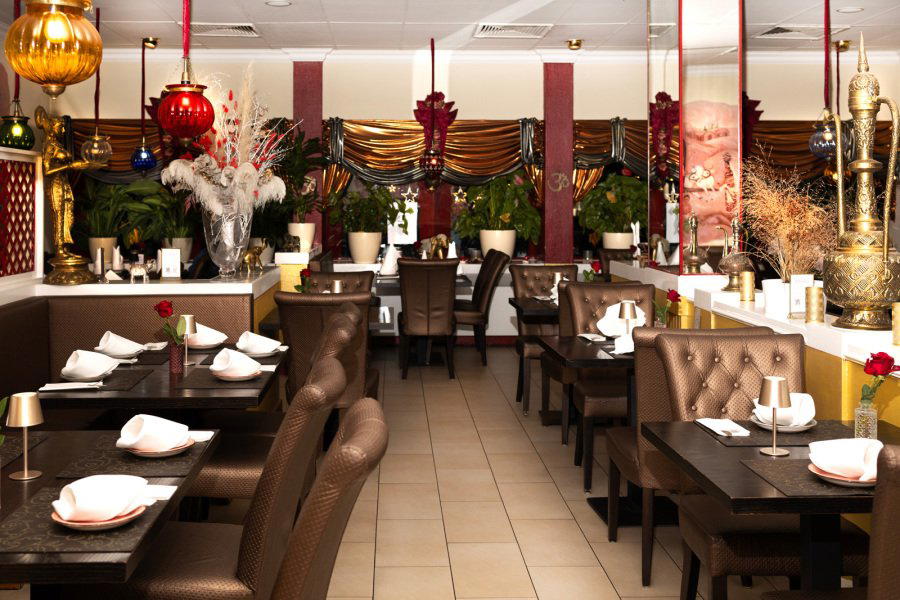
The menu
What to order
- Lamb Karhai
- Dum Biryani
- Chicken Tikka Masala
Indian Dining on Munich's Eastern Edge
The eastern suburbs of Munich do not attract the same restaurant coverage as the Maxvorstadt galleries, the Schwabing dining strip, or the cluster of Michelin-starred rooms that have made the city one of Germany's most decorated dining destinations. Wasserburger Landstraße sits in Trudering-Riem, a residential district where the dominant dining logic is neighbourhood loyalty rather than destination traffic. It is precisely this kind of address that tends to sustain Indian restaurants in German cities: embedded in local communities, serving repeat customers rather than chasing review cycles, and evolving quietly over years without the spotlight that falls on the city's more prominent kitchens.
GURU Indisches Restaurant occupies that position in Munich's eastern corridor. The address at Wasserburger Landstraße 204A places it firmly in the fabric of the neighbourhood rather than in the tourist-accessible centre, which shapes both its clientele and its pace of change. Understanding what GURU represents requires setting it against the broader arc of how Indian cuisine has developed in Munich as a whole.
How Indian Cuisine Has Developed in Munich
Germany's Indian restaurant scene underwent a visible shift between the 1990s and the 2010s. The first wave of Indian restaurants in cities like Munich, Frankfurt, and Hamburg operated on a broadly pan-Indian menu template: familiar curries, tandoor-grilled proteins, and a house bread selection that functioned as a reliable signal to customers of what to expect. These rooms served an important role in introducing Indian cooking to a broader German audience, but they operated with limited regional specificity and a format designed for accessibility rather than depth.
The second wave, which accelerated through the 2010s, brought greater regional articulation. Restaurants began identifying by sub-cuisine: Keralan seafood preparations, Punjabi dhaba-style cooking, Hyderabadi biryani traditions, and South Indian vegetarian formats each found more specific representation. At the same time, a smaller tier of upmarket Indian dining emerged in several German cities, with tasting-menu formats and wine pairing programs that repositioned Indian cooking within fine-dining expectations. Munich's version of this evolution has been slower than in London or Berlin, where the Indian dining category is more densely competitive, but the city's Indian restaurants have nonetheless tracked these broader shifts.
Neighbourhood restaurants like GURU tend to represent the resilient middle tier of this evolution: operations that outlast trend cycles by serving consistent, locally valued food rather than chasing reinvention. Their longevity is itself a form of editorial evidence. In a city where Tantris and Atelier anchor the French-influenced fine-dining category, and where Tohru in der Schreiberei represents the modern German-Japanese fusion tier, Indian dining occupies a different register entirely — one defined less by awards architecture and more by sustained neighbourhood trust.
The Eastern Suburbs as a Dining Context
Trudering-Riem's dining character is shaped by its residential density and its distance from Munich's central restaurant corridors. The district developed substantially after the city's 1992 Olympic expansion and subsequent urban growth pushed eastward. Restaurants here do not benefit from the foot traffic of Marienplatz or the gallery-adjacent positioning of Maxvorstadt; instead, they build custom over years through the kind of consistency that earns a regular weeknight following.
For a cuisine like Indian cooking, this geography has historically been practical: lower rent costs than central Munich allow for broader menu ranges and larger dining rooms than would be viable in the city centre. The trade-off is reduced visibility in the editorial coverage that tends to cluster around the inner districts. In Munich's broader restaurant context, the venues that attract national and international attention, from JAN to Alois - Dallmayr Fine Dining, sit in the city's more central and well-trafficked zones. Neighbourhood Indian restaurants in the eastern suburbs operate in a different, quieter economy of reputation.
Germany's broader fine-dining circuit extends well beyond Munich, with reference points including Aqua in Wolfsburg, Schwarzwaldstube in Baiersbronn, and Vendôme in Bergisch Gladbach. These operate in a fundamentally different register to neighbourhood Indian cooking, but they define the competitive and critical context within which all Munich and German dining is ultimately assessed. The contrast clarifies what GURU is and is not: it is a local dining anchor, not a destination room.
Planning a Visit
The Trudering-Riem location is accessible by Munich's U-Bahn network; the U2 line serves the eastern districts and reduces the need for a car trip from the city centre, though journey times from Marienplatz will run approximately 20 to 30 minutes depending on connections. Those combining the visit with a broader Munich dining itinerary should note that the eastern suburbs offer a genuinely different perspective on the city's restaurant culture compared to the Michelin-dense centre. Our full Munich restaurants guide maps the city's dining across all districts and price tiers.
| Venue | Category | Price Tier | District |
|---|---|---|---|
| GURU Indisches Restaurant | Indian | Not confirmed | Trudering-Riem (East) |
| Tantris | Modern French | €€€€ | Schwabing |
| Atelier | Creative French | €€€€ | City Centre |
| Alois - Dallmayr Fine Dining | Creative | €€€€ | Altstadt |
| Tohru in der Schreiberei | Modern German-Japanese | €€€€ | City Centre |
Frequently asked questions
Where exactly is GURU Indisches Restaurant?
GURU Indisches Restaurant is located at Wasserburger Landstraße 204 A, 81827 München, Germany, Munich.
Is GURU Indisches Restaurant suitable for a sit-down dinner in Munich's eastern suburbs, and how does it compare to city-centre Indian options?
GURU operates in Trudering-Riem, a residential district on Munich's eastern edge that sits well outside the Maxvorstadt and Schwabing corridors where most reviewed Indian restaurants are concentrated. That positioning makes it one of the few Indian dining options serving the 81827 postal area directly. For travellers or locals based east of the Mittlerer Ring, it removes a significant commute that a city-centre visit would otherwise require.
What do people recommend at GURU Indisches Restaurant?
For current menu highlights, contacting the restaurant directly before visiting is the most reliable approach, given its location at Wasserburger Landstraße 204 A in Munich's Trudering-Riem district rather than the city centre, where coverage tends to be thinner.
What's the best way to book GURU Indisches Restaurant?
No online booking platform or phone number is publicly listed for GURU Indisches Restaurant at Wasserburger Landstraße 204 A, Munich.
Reputation Context
Comparable venues nearby, for context on price, style, and recognition.
| Venue | Cuisine | Price | Notes |
|---|---|---|---|
| GURU Indisches RestaurantThis venue — the venue you are viewing | Traditional Indian Curry House | $20–30 | Not listed |
| Bombay Indien Grill | Indian Grill | Not listed | Schwabing |
| Swaad Restaurant Pasing | Authentic Maharashtrian & Regional Indian | Not listed | Pasing |
| Indian Bites | Authentic Indian Punjabi | $20–30 | Sendling-Westpark |
| The Indian Room Munich | Modern Indian Fine Dining | Not listed | Schwabing |
| Marstall Festzelt | Traditional Bavarian Oktoberfest | $30–50 | Theresienwiese |
Continue exploring
More in Munich
Restaurants in Munich
All restaurants in Munich →
Bars in Munich
All bars in Munich →
Details
- Cozy
- Classic
- Family
- Casual Hangout
- Standalone
- A La Carte
- Vegetarian Friendly
- Vegan Options
Current opening hours
- Monday
- 11:30 AM–2:30 PM, 5:30–11 PM
- Tuesday
- 11:30 AM–2:30 PM, 5:30–11 PM
- Wednesday
- 11:30 AM–2:30 PM, 5:30–11 PM
- Thursday
- 11:30 AM–2:30 PM, 5:30–11 PM
- Friday
- 11:30 AM–2:30 PM, 5:30–11 PM
- Saturday
- 5:30–11 PM
- Sunday
- 11:30 AM–2:30 PM, 5:30–11 PM
Hours can change for holidays and private events. Last verified .
Pleasant atmosphere with friendly service, ideal for cozy dining.