
White Guide Baltic Restaurants - Recommended
Our verdict
In Jõhvi, a town more often defined by Soviet-era architecture than dining ambition, Gruusia trahter Mimino brings the warmth and weight of Georgian cuisine to Estonia's Ida-Viru county. The kitchen draws on a culinary tradition rooted in walnut pastes, slow-braised meats, and herb-forward sauces that have sustained the Caucasus for centuries. For northeastern Estonia, it fills a genuine gap in the region's restaurant offering.

Pearl is the En Primeur Club membership app, where members save venues, book tables and use the concierge.
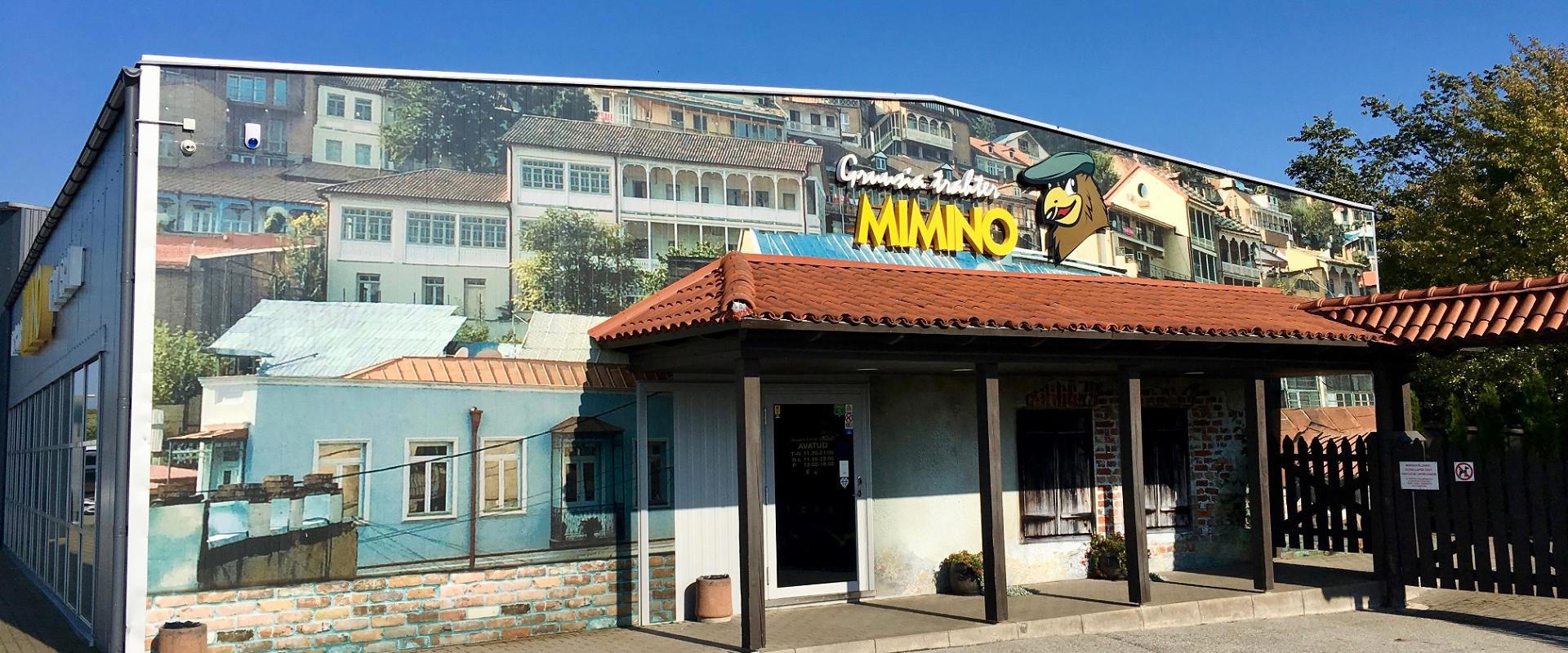
Georgian Cooking at the Edge of Estonia's Industrial Northeast
Jõhvi sits in Ida-Viru maakond, Estonia's northeastern county and one of the country's most ethnically mixed regions, where Russian, Estonian, and a scatter of other post-Soviet identities have coexisted since the collapse of the USSR. Dining options here have historically tracked that demographic complexity without necessarily reflecting it at any depth. The town is a functional hub rather than a culinary destination: it processes transit rather than attracting it. Against that backdrop, a Georgian tavern operating under the name Mimino occupies a specific and somewhat unexpected position in local dining. Georgian food is not incidental to post-Soviet culture; it was the prestige cuisine of the Soviet era, the food that everyone from Tallinn to Vladivostok associated with abundance, festivity, and the warmth of the Caucasus. In that sense, Gruusia trahter Mimino is less a foreign import than a reclamation of a shared memory.
The Georgian Table: What the Cuisine Actually Is
Georgian cuisine is one of the more ingredient-specific food traditions in the wider European and Caucasian orbit. It does not abstract its flavors through extended technique; it works from a fixed set of raw materials applied with precision. Walnuts appear in almost every category: ground into pastes for sauces like satsivi and bazhe, pressed into tkemali's sour plum base, or used to stuff vegetables in the pkhali tradition. Herbs arrive in volume rather than as garnish, coriander, fenugreek, and blue fenugreek (utskho suneli) anchor the spice logic of the cuisine in a way that distinguishes it sharply from Russian or Baltic cooking traditions. Meat preparations lean toward slow braise and clay-pot cooking, with chakapuli (lamb with tarragon and white wine) and chakhokhbili (chicken with tomatoes and herbs) representing the kind of dishes that reward good sourcing at the ingredient level. The bread tradition is equally central: khachapuri, the cheese-filled bread that has become Georgian cuisine's most recognizable export globally, exists in several regional variants, with the Adjarian boat-shaped version topped with egg and butter now the form most visible across Eastern European Georgian restaurants.
Where ingredient sourcing matters most in this tradition is in the dairy and the spice blend. Georgian cuisine is heavily dependent on sulguni, a brined, slightly elastic cheese that does not translate well if substituted with generic eastern European equivalents. The complexity of khmeli suneli, the core spice mix, also degrades quickly if assembled from old or poorly sourced components. For a Georgian restaurant operating in Jõhvi rather than Tbilisi, the practical question is always supply chain: how close can the kitchen get to the raw materials that give the cuisine its character? This is a challenge faced by every Georgian restaurant operating outside the Caucasus, from the dense cluster of Georgian eateries in Berlin's Prenzlauer Berg to the scattered outposts across the Baltic states. The answer usually depends on whether the kitchen has access to specialist importers or community supply lines that have developed through diaspora networks.
Ida-Viru County as a Dining Region
The northeastern corner of Estonia receives far less dining attention than Tallinn or even Tartu, but it has a food culture shaped by factors absent elsewhere in the country. The region's large Russian-speaking population has preserved Soviet-era food customs more intact than in the capital, meaning that Georgian cuisine here operates inside a community that already knows the reference points. A table ordering khinkali (the soup dumplings traditionally eaten by hand) in Jõhvi is likely to do so with more contextual fluency than tourists encountering the dish for the first time in a Tallinn old-town restaurant. That familiarity shapes what a kitchen can cook toward: dishes can assume knowledge rather than explain themselves. This is a meaningfully different operating condition from the Georgian restaurants in Estonia's western cities, where the cuisine is often presented in a more simplified or internationally legible format. For those exploring northeastern Estonia's dining, our full Johvi restaurants guide maps the broader range of options across the town.
Within Estonia's wider restaurant tier, the point of reference for technically ambitious cooking remains Tallinn, where 180° by Matthias Diether and similar addresses have established the upper bracket of the national scene. That tier is far removed from what Jõhvi offers, and the comparison is less useful than looking at peer addresses operating in similarly sized Estonian towns. Kohvik Kaar in Narva, about 50 kilometres east, and Franzia in Narva Jõesuu represent the kind of regional dining that serves local communities rather than positioning against national benchmarks. Kolm. Restoran in Võru and Kohvik in Viljandi offer additional comparisons from Estonia's smaller-city dining tier.
Planning a Visit
Gruusia trahter Mimino is located at Lääne 1b in Jõhvi, Ida-Viru maakond, with a postcode of 41533. Jõhvi is accessible by bus from Tallinn (roughly two hours) and from Narva (under an hour), and the town functions as the county's administrative and transport hub, which makes it a logical stopover rather than a dedicated destination for most visitors to the region. Specific hours, booking arrangements, and pricing were not available at the time of publication; contacting the restaurant directly or checking local listings before visiting is advisable. For those building a longer itinerary across eastern Estonia, the region's dining options are spread thinly enough that planning around confirmed operating hours matters more here than in Tallinn or Tartu. Elsewhere in Estonia, Eva Sushi in Tartu, KABE Beach in Kaberneeme, Wana Kala Kõrts in Neeme, Kuur in Vihtra, Burger Bros in Rakvere, Kalana ÄÄR in Kalana, Kärme Küülik in Haapsalu, Ilmaveere in Obinitsa, and Valgeranna Veinitall in Audru round out a regional picture of how Estonia's non-capital dining has developed. For international reference points at the technical ceiling, Le Bernardin in New York City and Atomix illustrate the distance between regional tavern cooking and the global fine dining tier, a distance that is neither a criticism nor a deficit, but simply a different set of priorities. Georgian tavern cooking at its finest is not trying to be restrained or technically elaborate; it is trying to be generous, which is a different and equally demanding standard. Everest Thai/Nepalese Restaurant in Pärnu offers an interesting parallel: another non-Baltic cuisine finding its footing in an Estonian regional town, serving a community for whom the food carries cultural as well as culinary weight.
Frequently asked questions
Is Gruusia trahter Mimino a family-friendly restaurant?
Georgian tavern culture is built around communal eating rather than individual plates, which makes the format naturally accommodating for groups of mixed ages. Large-format dishes like khinkali and khachapuri are designed to be shared, and the tavern tradition across the Caucasus does not separate adult dining from family dining. Jõhvi's position as a residential rather than tourist-driven town reinforces that the clientele skews local and community-oriented.
What should I expect atmosphere-wise at Gruusia trahter Mimino?
Georgian taverns in the post-Soviet space follow a recognisable register: warm, unminimalist interiors, a dining pace built around conversation, and hospitality that prioritises quantity and generosity over ceremony. The address at Lääne 1b puts the restaurant within Jõhvi's residential fabric rather than a tourist corridor, which tends to shape a room toward regulars rather than passing trade. Expect a practical, lived-in dining room rather than a designed one.
Is Gruusia trahter Mimino the only Georgian restaurant in Ida-Viru County?
Georgian restaurants are sparse across northeastern Estonia, a region where the dining scene reflects Soviet-era food traditions and a predominantly Russian-speaking population rather than specialist Caucasian cuisine. The name 'Gruusia trahter' translates directly as 'Georgian tavern', signalling a deliberate identity in a county where that category has almost no competition. Jõhvi, as the administrative centre of Ida-Viru maakond, is a logical location for a venue serving a cuisine that would otherwise require a trip to Tallinn.
What should I order at Gruusia trahter Mimino?
Khachapuri, the cheese-filled bread that varies by regional style across Georgia, and khinkali, the pleated meat dumplings eaten by hand, are the two dishes that anchor nearly every Georgian tavern menu in the post-Soviet world. Walnut-based sauces, bean dishes like lobiani, and grilled meats round out what a kitchen of this type typically produces.
How do I find Gruusia trahter Mimino?
Gruusia trahter Mimino is located at Lääne 1b, Jõhvi, 41533 Ida-Viru maakond, Estonia, Johvi.
How hard is it to get a table at Gruusia trahter Mimino?
Jõhvi does not draw the tourist volumes that strain restaurant bookings in Tallinn or Tartu, and no awards or national press recognition data exists that would create destination demand. Walk-in access is plausible for most visits, though weekend evenings in a town of this size can fill a small dining room quickly among local regulars. Calling ahead is sensible if visiting as a larger group.
Quick Comparison
Comparable venues nearby, for context on price, style, and recognition.
| Venue | Cuisine | Price | Awards | Notes |
|---|---|---|---|---|
| Gruusia trahter MiminoThis venue (the venue you are viewing) | Authentic Georgian | Not listed | White Guide Baltic Restaurants - Recommended | Not listed |
| RØST Bakery | Scandinavian Sourdough Bakery & Specialty Coffee | Not listed | Not listed | Rotermann Quarter |
| Tulivee | Estonian Coastal Seafood | Not listed | White Guide Baltic Restaurants - Fine Level | Liimala |
| Soo Uulits Tänavagurmee | Estonian Street Gourmet Burgers | $10–20 | Not listed | Kalamaja |
| Mack Bar-B-Que Beachclub | American BBQ Beach Club | $20–30 | Not listed | Beach Area |
| Kanuti Fusion Kitchen | Authentic Japanese Ramen | $10–20 | Not listed | Old Town |
Recognition history
Dated appearances from independent guides and award organizations, with the underlying list record or original source where available.
White Guide Baltic Restaurants - Recommended
White Guide
Continue exploring
More in Johvi
Restaurants in Johvi
All restaurants in Johvi →
Details
- Rustic
- Cozy
- Family
- Date Night
- Business Dinner
- Terrace
- Private Dining
- Natural Wine
- A La Carte
Current opening hours
- Monday
- Closed
- Tuesday
- 11:30 AM–8 PM
- Wednesday
- 11:30 AM–8 PM
- Thursday
- 11:30 AM–8 PM
- Friday
- 11:30 AM–9 PM
- Saturday
- 11:30 AM–9 PM
- Sunday
- 12–6 PM
Hours can change for holidays and private events. Last verified .
Warm and rustic interior reminiscent of old Tbilisi streets featuring a terrace, wine barrels, and fireplace.