Our verdict
On Oststraße in Leipzig's Reudnitz-Thonberg district, Globus Döner sits within a city that has developed one of eastern Germany's more considered street food cultures. The döner format here belongs to a longer German-Turkish tradition that has shaped urban eating across the country for decades. For visitors orienting themselves in Leipzig's food scene, it represents the quick-service end of a dining spectrum that elsewhere includes fine dining at Stadtpfeiffer and modern cuisine at Kuultivo.

Pearl is the En Primeur Club membership app — saves, bookings, and concierge access live there. Same editors, same standards.
- Address
- Oststraße 56, 04317 Leipzig, Germany
- Phone
- +4934124801651
- Hours
- Daily 11 AM–10:30 PM
- Website
- globusdoener.de
- Directions
- Get directions
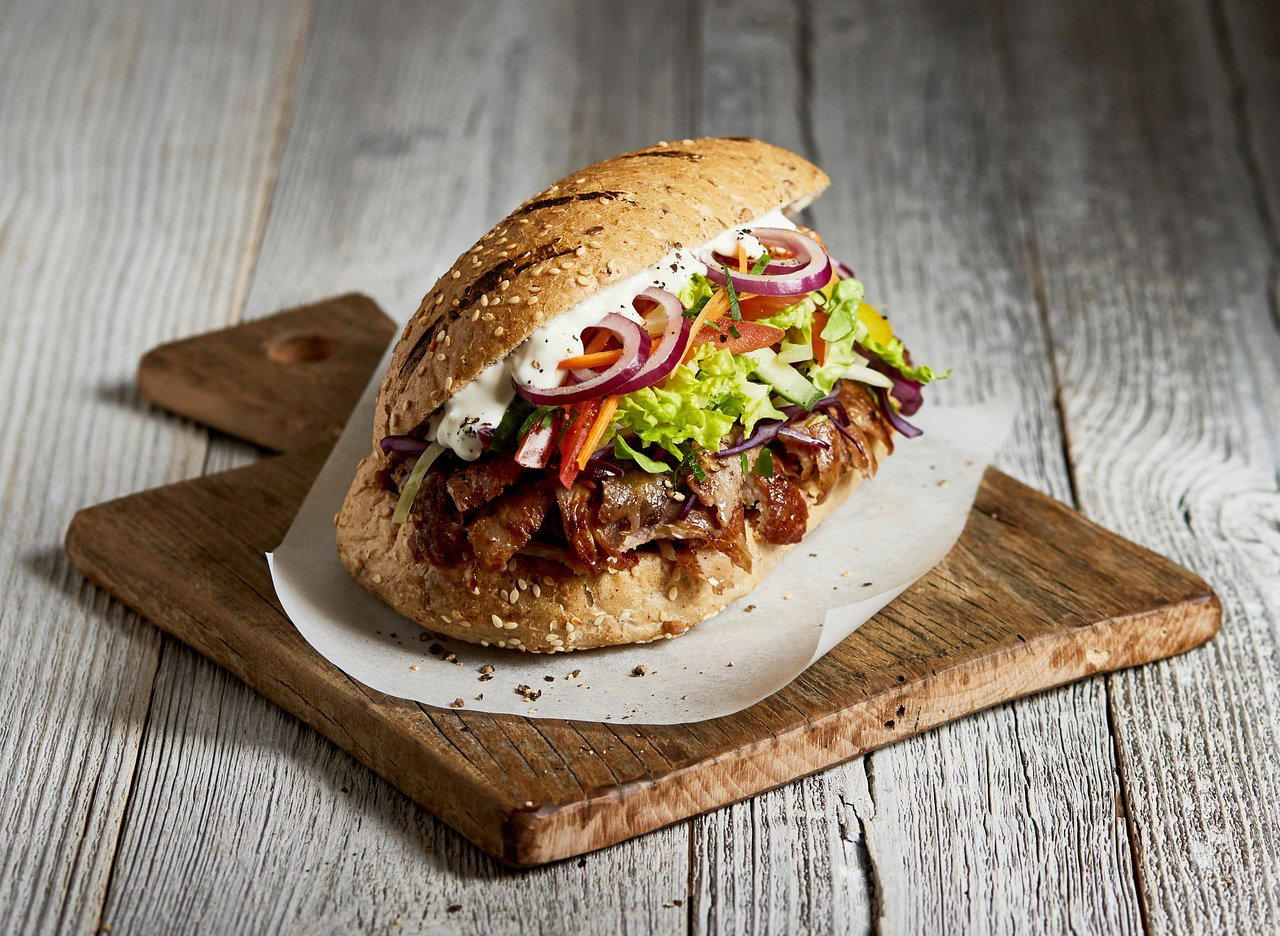
The menu
What to order
- Vegan Döner
- Falafel Burger
- Seitan Burger
Street Level: What Leipzig's Döner Scene Actually Looks Like
Germany's relationship with the döner kebab is not incidental. The format arrived with Turkish guest workers in the early 1970s, took root in Berlin, and spread through every major German city over the following decades until it became, by most measures, the country's most consumed fast food by volume. Leipzig joined that story later than western cities — the GDR years meant a different demographic pattern — but since reunification the city has built a street food culture that reflects both its eastern character and its rapid post-1990 diversification. Globus Döner, at Oststraße 56 in the Reudnitz-Thonberg district, sits inside that history rather than apart from it.
Reudnitz-Thonberg is not the neighbourhood that draws most visitors on their first trip to Leipzig. The tourist pull runs toward the Innenstadt, the Musikviertel, and the area around Karl-Liebknecht-Straße. But the eastward streets around Oststraße are residential in character, with a local-facing commercial strip that includes the kind of quick-service eating that sustains a neighbourhood rather than performing for an audience. A döner counter in this context functions differently from one positioned near a train station or a central market: it serves the same people repeatedly, which tends to create a different set of expectations around consistency.
The Format and What It Implies
The döner kebab as a category has fragmented considerably since its German popularisation. At one end sits the mass-market version: pre-formed meat, industrially produced bread, standard sauce selections. At the other, a smaller tier of operators has moved toward vertically cut lamb or beef with visible provenance, house-made flatbread, and fresher vegetable components. Where Globus Döner sits within that spectrum is not something the available record resolves with precision, the venue's data does not include menu specifications, price points, or sourcing details, but the address and neighbourhood context suggest a local-frequency model rather than a destination-seeking one.
For the traveller arriving in Leipzig with a broader dining itinerary in mind, it helps to understand how street food like this relates to the city's wider restaurant register. Leipzig's upper tier includes Stadtpfeiffer, a creative fine dining address that operates at €€€€ price levels, and Kuultivo, which brings modern cuisine technique to a €€€ bracket. Further out, restaurants like Addis Café and Alfa Restaurant fill the mid-range international category, while 997 Sushi Restaurant represents the city's growing appetite for Asian formats. Quick-service stops like Globus Döner occupy a different register entirely: they are not destinations for the evening meal but practical anchors for afternoons, post-transit hunger, or the kind of eating that happens around rather than as the main event.
Planning Around It: Logistics and Expectations
The editorial angle most relevant to Globus Döner is not discovery but planning: how does this kind of venue fit into a trip, and what does the traveller need to know before arriving at Oststraße 56?
Döner counters in German cities do not operate on reservation systems. Walk-in is the format, and queue length rather than booking availability is the variable to manage. Timing matters in a direct way: midday and early evening are typically the busiest windows at street food operations in residential districts, while mid-afternoon often sees shorter waits. This is not unusual for the category, many quick-service operators in Germany maintain minimal web presences.
For context on how this compares to the planning effort required elsewhere in the German dining scene: three-Michelin-starred addresses like Schwarzwaldstube in Baiersbronn or Aqua in Wolfsburg require weeks or months of advance booking and specific dress considerations. The same is true of Vendôme in Bergisch Gladbach, JAN in Munich, and Victor's Fine Dining by Christian Bau in Perl. At the other end of the planning spectrum, venues like CODA Dessert Dining in Berlin blend casual format with serious technique in ways that require some advance awareness of their booking windows. Globus Döner requires none of that infrastructure. You arrive, you order, you eat.
Getting to Oststraße 56 from central Leipzig is manageable by tram, Reudnitz-Thonberg is connected to the city's well-maintained public transit network, and the journey from the Hauptbahnhof area takes under fifteen minutes on most routes. The neighbourhood itself is compact on foot once you arrive.
Where This Fits in a Leipzig Food Day
Leipzig rewards the kind of itinerary that moves across price tiers deliberately. A morning at the Markthalle or a coffee stop in the Südvorstadt, a midday döner in Reudnitz, and an evening reservation at one of the city's more serious addresses represents a genuine cross-section of what the city offers. For the full picture of how those options connect, our full Leipzig restaurants guide maps the scene across neighbourhoods and price brackets.
For those whose Leipzig visit connects to a broader German itinerary, the contrast between quick-service eating here and the formal dining available at addresses like ES:SENZ in Grassau, Schanz in Piesport, Waldhotel Sonnora in Dreis, or Restaurant Haerlin in Hamburg illustrates how wide the German dining register actually runs. The döner counter and the three-star tasting menu coexist within the same national food culture, addressing completely different needs. Internationally, that same spectrum extends to addresses like Le Bernardin in New York City or Lazy Bear in San Francisco, where the planning requirements and format expectations are categorically different.
Frequently asked questions
What dish is Globus Döner famous for?
Globus Döner is, as the name signals, a döner kebab specialist. The döner format, rotisserie-cooked meat served in flatbread with salad and sauce, is the core offering at venues of this type across Germany.
Should I book Globus Döner in advance?
No advance booking is needed or expected. Quick-service döner counters in German cities operate entirely on a walk-in basis, and Globus Döner at Oststraße 56 is no exception to that category norm. Unlike Leipzig's formal dining addresses, where planning windows of several weeks apply, the relevant variable here is queue length rather than reservation availability. Visiting outside peak midday and early-evening hours typically means a shorter wait.
Is Globus Döner suitable for visitors staying in central Leipzig?
The Oststraße 56 address in Reudnitz-Thonberg is accessible from central Leipzig by tram in under fifteen minutes, making it a viable stop for visitors who want to move beyond the immediate tourist centre. The neighbourhood has a residential, local-facing character that differs from the Innenstadt's busier commercial streets. For travellers building a full-day itinerary across Leipzig's dining tiers, a midday stop in Reudnitz sits naturally alongside an evening reservation at a more formal address in the city centre.
Where the Accolades Land
Comparable venues nearby, for context on price, style, and recognition.
| Venue | Cuisine | Price | Notes |
|---|---|---|---|
| Globus DönerThis venue — the venue you are viewing | Turkish Döner Kebab | $10–20 | Not listed |
| Haci Baba Döner | Turkish Döner Kebab | $10–20 | Neustadt-Neuschönefeld |
| Deli | Vegan Deli | $10–20 | Connewitz |
| Gorillas Döner | Turkish Döner | $10–20 | Zentrum-Nordwest |
| Taksim Bistro | Turkish Döner & Pide Bistro | $10–20 | Volkmarsdorf |
| Olive Tree | Mediterranean Döner & Pizza | $1–10 | Zentrum-Süd |
Continue exploring
More in Leipzig
Restaurants in Leipzig
Browse all →
Bars in Leipzig
Browse all →
Hotels in Leipzig
Browse all →
Wineries in Leipzig
Browse all →
Details
- Casual
- Trendy
- Casual Hangout
- A La Carte
- Vegetarian Friendly
- Vegan Options
Current opening hours
- Monday
- 11 AM–10:30 PM
- Tuesday
- 11 AM–10:30 PM
- Wednesday
- 11 AM–10:30 PM
- Thursday
- 11 AM–10:30 PM
- Friday
- 11 AM–10:30 PM
- Saturday
- 11 AM–10:30 PM
- Sunday
- 11 AM–10:30 PM
Hours can change for holidays and private events. Last verified .
Casual fast-food atmosphere with a busy street corner vibe and limited indoor seating.