.png)

A Michelin Plate holder on Calle Méndez, Ginés Peregrín brings contemporary Mediterranean cooking to Almería with influences drawn from Japan, Mexico, Peru, and the Netherlands. The 5- or 7-course tasting menus, including the plant-forward Verde menu, sit alongside an à la carte that spotlights local produce such as red gambas from the Almería coast. Google reviewers rate it 4.7 from 275 reviews, placing it among the most consistent contemporary tables in the province.
 Discover on Pearl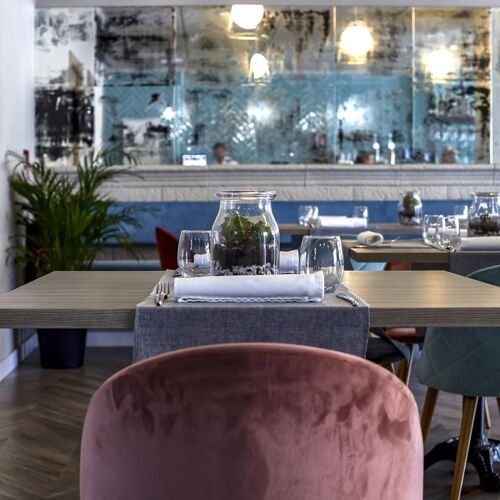
Where Almería's Produce Meets a Wider World
Almería is one of Spain's most productive agricultural regions, yet its fine-dining scene has historically lagged behind the recognition its raw materials deserve. That gap has been narrowing. On a quiet stretch of Calle Méndez, the contemporary restaurant Ginés Peregrín has become one of the clearest arguments that the province can sustain serious, technique-driven cooking — not simply because local ingredients are available, but because there is now a kitchen putting them into genuine dialogue with broader culinary traditions.
The city sits within a broader resurgence of Spanish regional cooking, a movement that has seen chefs in less-heralded provinces build reputations independently of the country's established fine-dining capitals. Restaurants like Arzak in San Sebastián, El Celler de Can Roca in Girona, and Disfrutar in Barcelona defined what Spanish contemporary cooking could accomplish at the highest register. What is happening in Almería is different in scale, but the underlying logic — rooting ambitious technique in specific local ingredients , is continuous with that tradition.
The Cultural Architecture of the Menu
Spain's Mediterranean coast has always absorbed external influence: Moorish, Italian, North African. What distinguishes the contemporary approach at Ginés Peregrín is the deliberate layering of further reference points , Japan, Mexico, Peru, and the Netherlands , into a foundation that remains recognisably Andalusian. This is not fusion in the tired sense of the word. It is more accurately a form of translation, where technique and flavour logic from elsewhere are applied to local materials rather than imported wholesale.
The risotto of homemade gurullos , a pasta-like form traditional to Almería's inland kitchens , with wild cep mushrooms and red gambas from the Almería coast is an example of that method made visible. Gurullos themselves carry a long regional history, shaped partly by Moorish culinary influence and common in the province's traditional cocido. Using them in a risotto format brings a northern Italian technique to a distinctly Andalusian ingredient, producing something that reads as local but operates by different structural rules. Spain's broader contemporary scene, from Quique Dacosta in Dénia to Aponiente in El Puerto de Santa María, has long worked in this register , Almería is now entering that conversation on its own terms.
The Verde Menu and the Vegetable Question
The plant-forward Verde tasting menu at five courses makes a specific editorial argument: that vegetables, not protein, are the defining ingredient of this region. Almería's greenhouses supply a significant proportion of Europe's winter vegetables, yet that fact has rarely translated into fine-dining recognition. The Verde menu addresses that directly.
We're Smart, the international guide focused on vegetables and fruit in professional kitchens, recognised this with an ambassador designation for the restaurant , a trust signal that carries weight in this specific niche. The Verde menu offers five courses of plant-based cooking, and the We're Smart designation suggests those dishes are operating at a level coherent enough to stand alongside peer programmes internationally. For context on how plant-forward fine dining has developed globally, the contemporary templates set by restaurants like Azurmendi in Larrabetzu , where agricultural sourcing is integral to the kitchen's identity , are useful reference points. The Almería context is materially different, but the underlying commitment to presenting vegetables as primary rather than supplementary is shared.
Format and the Almería Contemporary Scene
The restaurant operates on a two-track format: à la carte alongside 5- or 7-course tasting menus described as surprise formats, meaning the specific dishes are not disclosed in advance. This approach is common at the contemporary end of the Spanish market and places the kitchen's decision-making at the centre of the experience rather than the diner's selection. It works leading when the kitchen's sourcing is seasonal and responsive , which, given the agricultural geography of Almería, it has obvious conditions to be.
Within Almería's contemporary dining tier, the restaurant sits alongside Tony García Espacio Gastronómico and Travieso at the €€ price point , a peer set that has collectively shifted Almería's dining conversation toward more technically considered cooking. Those looking for grilled and meat-focused formats at the same price tier have options at Asador Marino Tinta Negra and VIVO Gourmet, but the contemporary tasting-menu format occupies a distinct lane. Internationally, the cross-cultural contemporary approach recalls how kitchens like Jungsik in Seoul and César in New York City have used Western fine-dining structures to frame regional or personal culinary identities , a model that travels.
A Google rating of 4.7 from 275 reviews is a credible signal at a venue operating in a mid-sized Spanish city, where the review base is less inflated than in Madrid or Barcelona. The 2025 Michelin Plate recognition confirms the restaurant is within the Michelin assessors' sightlines, even if a star has not yet followed. At the €€ price point, the expectation-to-delivery ratio is a key part of the proposition, and a sustained 4.7 suggests the kitchen is meeting it consistently.
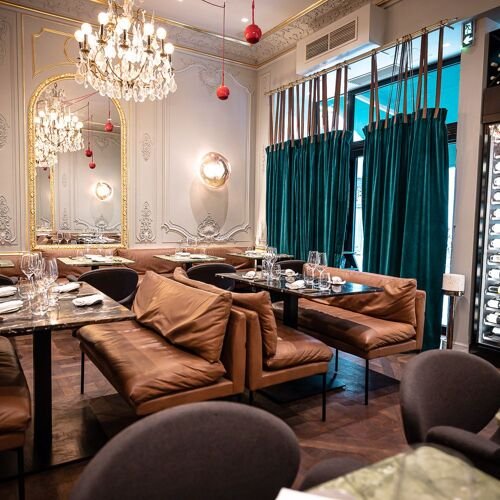
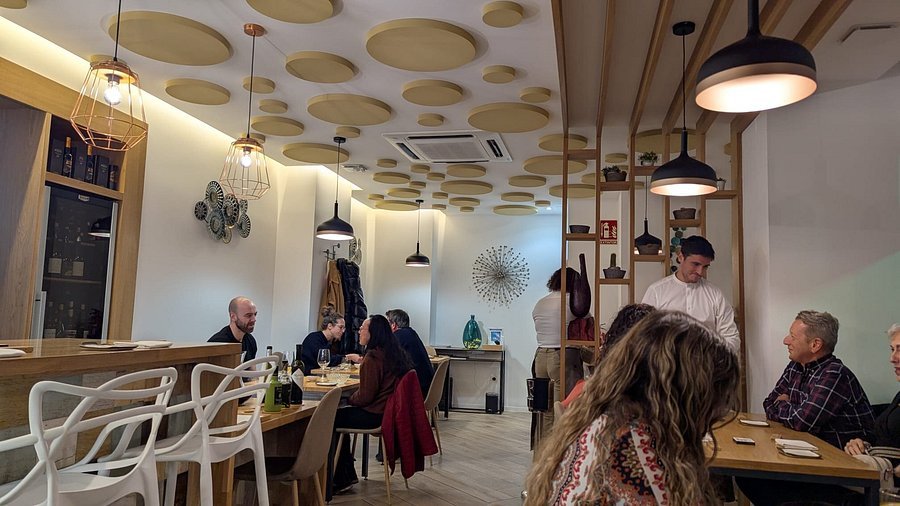
The room itself is compact on entry, with additional seating upstairs , a layout that is common in older Andalusian buildings where ground-floor frontage is narrow and upper floors provide relief. The physical scale keeps table counts low enough that the kitchen can exercise control over the meal's pacing, which matters for tasting-menu formats.
Planning a Visit
Ginés Peregrín sits at C. Méndez, 6, 04003 Almería. The €€ pricing puts it within reach as a serious dinner without the planning overhead of the country's starred multi-course institutions. Both tasting-menu formats (5 or 7 courses) and à la carte are available, making it workable for a group with mixed appetites for commitment. For those building a broader Almería itinerary, the full picture of where to eat, drink, and stay is covered in our full Almería restaurants guide, alongside our full Almería hotels guide, our full Almería bars guide, our full Almería wineries guide, and our full Almería experiences guide. Those coming specifically for the Verde menu should treat it as the starting point, not an afterthought: in a region where vegetables are the primary agricultural output, a kitchen that treats them as the main event is making a statement that is both locally grounded and editorially coherent.
Price and Positioning
A quick look at comparable venues, using the data we have on file.
| Venue | Price | Awards | Notes |
|---|---|---|---|
| Ginés Peregrín | €€ | Through the mantra “A love for cooking”, an expression that encapsulates Ginés P… | This venue |
| Asador Marino Tinta Negra | €€ | Grills, €€ | |
| Travieso | €€ | Modern Cuisine, €€ | |
| VIVO Gourmet | €€ | Meats and Grills, €€ | |
| Tony García Espacio Gastronómico | €€ | Contemporary, €€ |