Genghis Cohen
Our verdict
A Fairfax Avenue institution since the 1980s, Genghis Cohen has occupied a particular niche in Los Angeles dining: Chinese-American food served in a room that doubles as a live music venue. Located at 448 N Fairfax Ave in the heart of the Fairfax District, it draws a neighborhood crowd that arrives early for dinner and stays late for the acts, placing it firmly outside the city's tasting-menu circuit.

Pearl is the En Primeur Club membership app — saves, bookings, and concierge access live there. Same editors, same standards.
- Address
- 448 N Fairfax Ave, Los Angeles, CA 90036
- Phone
- (323) 653-0640
- Hours
- Mon–Thu 4–10 PMFri 4 PM–2 AMSat 12 PM–2 AMSun 12–10 PM
- Website
- genghiscohen.com
- Directions
- Get directions
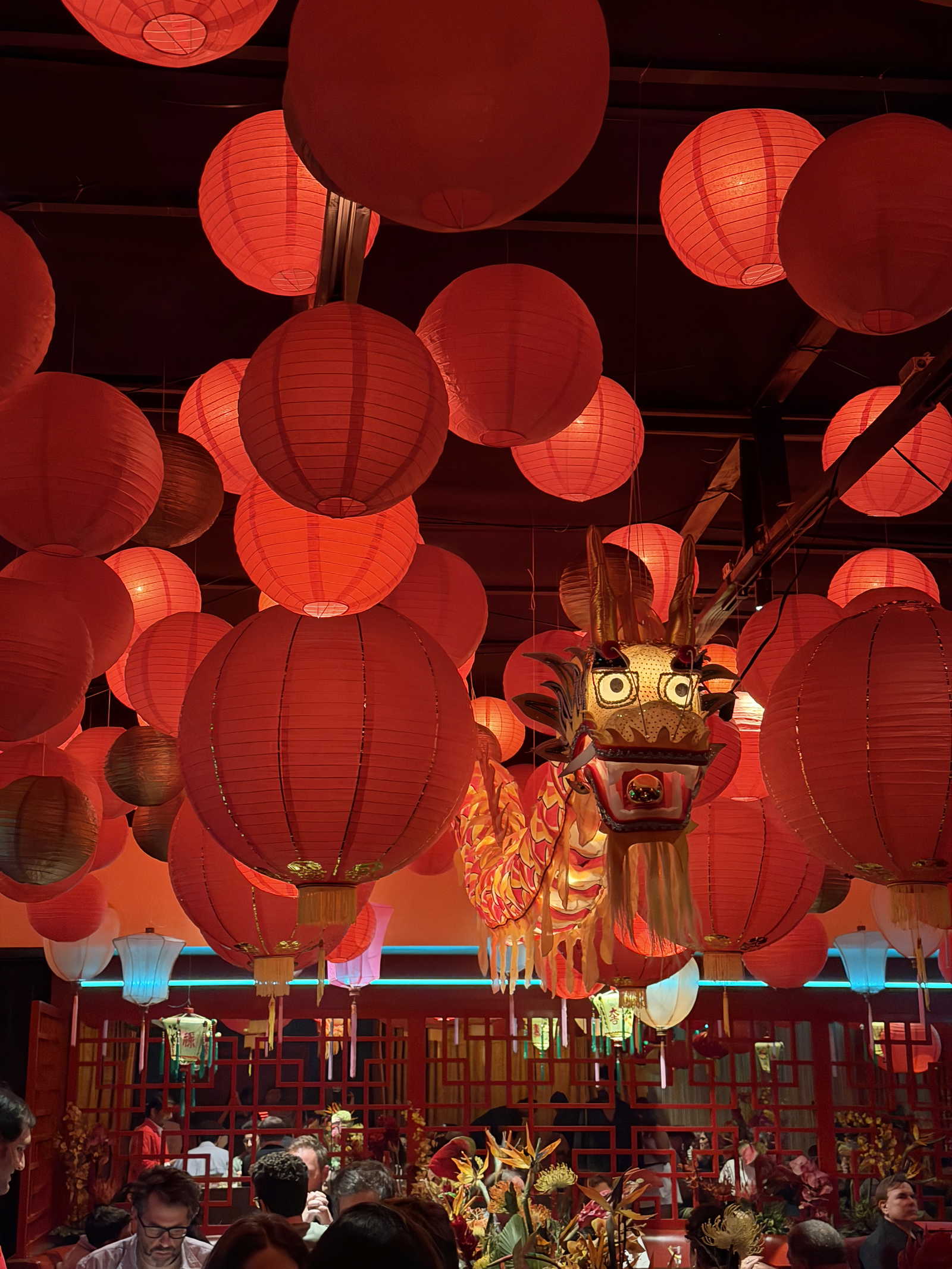
Fairfax Avenue After Dark — and Before It
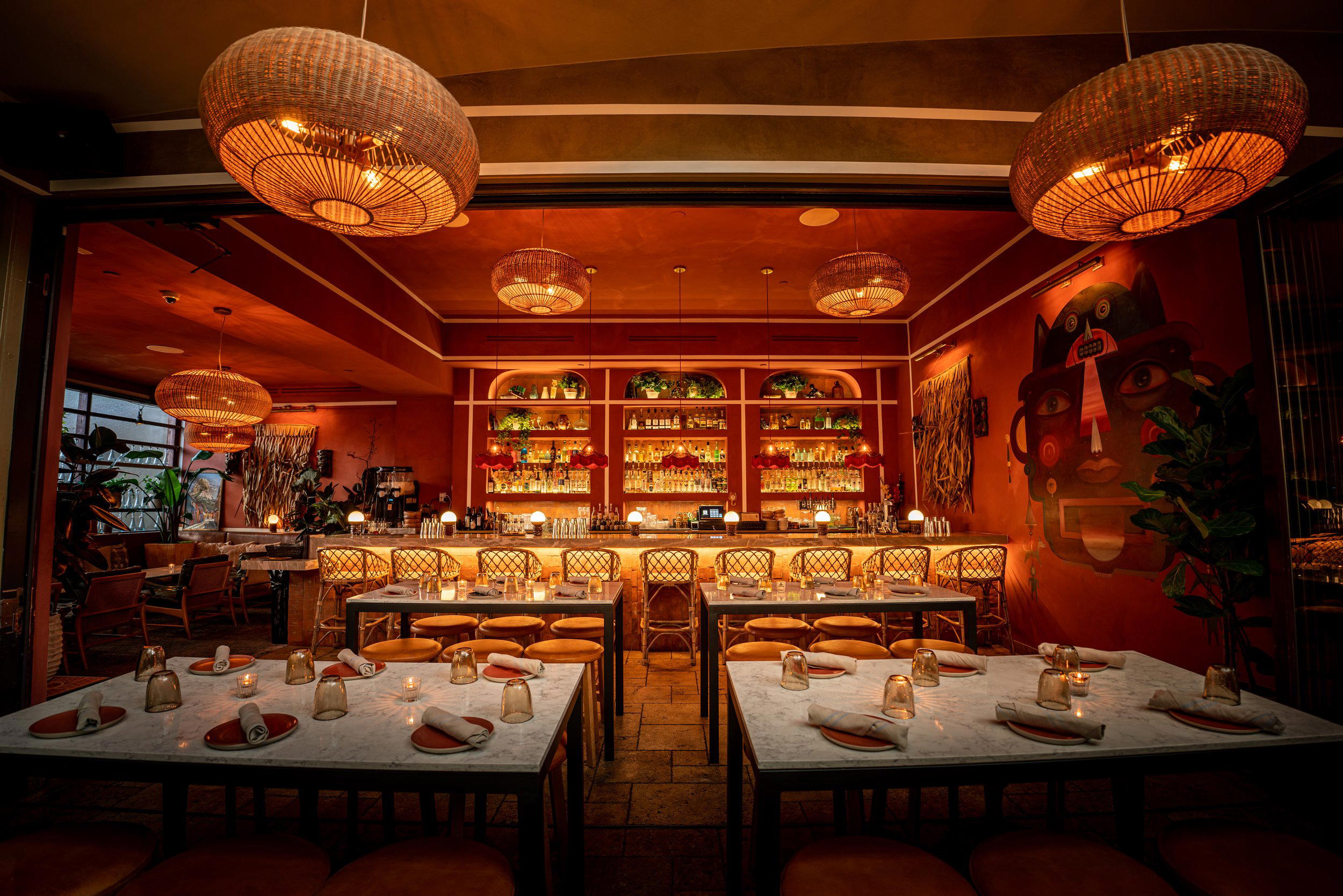
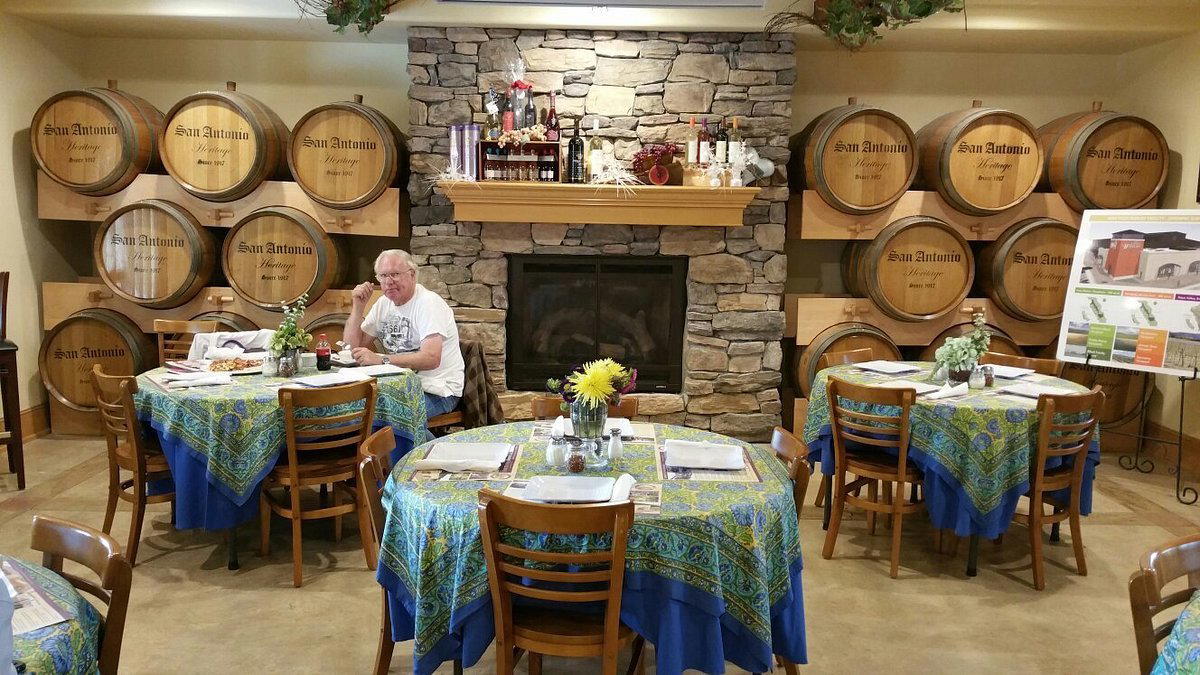
The stretch of Fairfax Avenue between Melrose and Beverly has long operated as one of Los Angeles's most compressed cultural corridors: kosher delis, vintage clothing, a farmers market a few blocks south, and a residential density that keeps the foot traffic human-scale even when the rest of the city sprawls. Genghis Cohen, at 448 N Fairfax Ave, sits inside that fabric. The building presents modestly from the street, and the interior runs to the kind of low-lit warmth that signals a room built for lingering rather than turnover. Arriving before the evening music program starts, when the space still belongs to the dinner crowd, gives a different read on the place than showing up mid-set, when the room's energy shifts toward the stage and the kitchen recedes into supporting role.
The Lunch-to-Dinner Arc on Fairfax
The Fairfax District's dining rhythm reflects a neighborhood where daytime belongs to locals running errands and the evening crowd is more deliberate. At Genghis Cohen, that divide is sharper than at most restaurants in its price tier, because the evening program introduces a live music component that changes the acoustic and social temperature of the room. Dinner service here operates on two tracks simultaneously: the table that came to eat, and the table that came to hear. The kitchen has to function as the primary draw in the earlier hours, before the amplification begins and the balance shifts.
This kind of dual-purpose venue is relatively rare in Los Angeles, where dedicated concert rooms and dedicated dining rooms have largely separated into distinct businesses. The economics of running both under one roof on Fairfax — a neighborhood with real estate pressure and a sophisticated local palate, have historically required a menu that earns repeat visits on its own terms. Chinese-American cooking occupies an interesting position in that context: it carries broad familiarity, which lowers the barrier to entry, but the category's range from perfunctory to genuinely considered is wide enough that positioning matters. For a venue that also operates as a music room, the food has to be good enough that guests arrive hungry rather than just arriving.
For visitors mapping out an evening in this part of the city, the practical implication is timing. An early dinner at Genghis Cohen, before the music program takes over the room's attention, functions differently from a later arrival. The former is a meal with atmosphere; the latter is closer to a club night with food service. Neither is wrong, but they are distinct experiences, and choosing between them is a real decision rather than a trivial one.
Where It Sits in the Los Angeles Dining Map
Los Angeles's restaurant scene has split visibly over the past decade into a high-investment tasting-menu tier and a more casual, neighborhood-anchored middle. The tasting-menu tier is well-documented: venues like Providence in the Contemporary Seafood category, Kato with its New Taiwanese format, Somni in the molecular space, and Hayato on the Japanese kaiseki side all operate at price points and booking depths that place them in a different competitive set entirely. Genghis Cohen does not compete in that tier, and the comparison is not useful.
In that context, the Fairfax location matters. The neighborhood has a long history of Jewish deli culture, and a Chinese-American restaurant that has persisted here across multiple decades speaks to how well it has absorbed into the local identity. It is not a destination restaurant in the sense that Osteria Mozza draws visitors from outside the city; it is a destination in the sense that people in Los Angeles know it and return to it. That is a different and arguably more durable form of recognition.
For visitors looking at the broader Los Angeles scene, our full Los Angeles restaurants guide covers the range from neighborhood staples through to the tasting-menu circuit. The Los Angeles bars guide, hotels guide, wineries guide, and experiences guide round out the city picture.
Chinese-American Food in a City That Has Both
Los Angeles has one of the most extensive Chinese and Chinese-American dining ecosystems in North America. The San Gabriel Valley corridor alone runs from Cantonese dim sum to Shanghainese soup dumplings to Sichuan hotpot at a depth that rivals any non-mainland city in the world. Chinese-American cooking in the classical sense, a cuisine that developed in the United States, adapted to local ingredients and palates, and produced its own idiom over generations, occupies a different position in that landscape: nostalgic for some, genuinely satisfying for others, and commercially durable in ways that more fashionable formats are not.
A venue that has maintained that positioning on Fairfax for decades has done so by understanding what its neighborhood actually wants rather than chasing what food media celebrates at any given moment. The tasting-menu wave that produced venues like Alinea in Chicago or The French Laundry in Napa or, at the edge of New York's Korean fine-dining scene, Atomix, runs on a different logic entirely from a neighborhood room that books a singer-songwriter on a Tuesday. Both are legitimate. They answer different questions.
Planning a Visit
Genghis Cohen is located at 448 N Fairfax Ave, Los Angeles, CA 90036, in the Fairfax District between Melrose Avenue and Beverly Boulevard. The neighborhood is walkable from several West Hollywood hotels, and street parking on the side streets off Fairfax is generally available in the earlier part of the evening. Timing: Arriving for an early dinner, before the live music program begins, gives the kitchen the room's full attention and makes for a quieter meal; later arrivals should expect higher ambient volume and a more performance-oriented atmosphere. Booking: Check current reservation availability directly, as policies for music nights may differ from standard dinner service. Context: For travelers comparing this room against the city's formal dining tier, the frame of reference should be neighborhood institutions rather than tasting-menu destinations.
Frequently asked questions
Is Genghis Cohen child-friendly?
Genghis Cohen's Fairfax Avenue setting and Chinese-American format make it a reasonable choice for families. The neighborhood corridor context — running between Melrose and Beverly — draws a mixed local crowd across age groups.
What kind of setting is Genghis Cohen?
Genghis Cohen occupies a spot on N Fairfax Ave in the Fairfax District, a stretch that has historically mixed kosher delis, independent shops, and neighborhood restaurants within a short walkable corridor. The setting reads as a classic Los Angeles neighborhood restaurant rather than a high-concept tasting-menu destination. It sits in the tier of places that anchor a block rather than define a trend cycle.
How does Genghis Cohen fit into Los Angeles's Chinese-American dining history?
Los Angeles has one of the most extensive Chinese and Chinese-American dining ecosystems in North America, with the San Gabriel Valley alone representing decades of regional Chinese cooking alongside older Chinese-American establishments. Genghis Cohen on Fairfax Avenue represents the latter tradition — a neighborhood-anchored Chinese-American restaurant operating in a district more associated with Jewish delis and indie culture than Cantonese cooking. That positioning, in a culturally compressed corridor between Melrose and Beverly, gives it a context distinct from the SGV cluster.
What should I eat at Genghis Cohen?
Genghis Cohen serves Chinese-American food, a format with deep roots in Los Angeles, where the broader Chinese dining ecosystem spans everything from San Gabriel Valley regional specialists to mid-century Cantonese-American institutions.
What's Genghis Cohen's location?
Genghis Cohen is located at 448 N Fairfax Ave, Los Angeles, CA 90036, Los Angeles.
Awards and Standing
A quick peer check to anchor this venue’s price and recognition.
| Venue | Cuisine | Price | Awards | Notes |
|---|---|---|---|---|
| Genghis CohenThis venue — the venue you are viewing | New York-style Chinese-American | Not listed | Not listed | Not listed |
| Kato | Modern Taiwanese Fine Dining | $300–500 | 2 Michelin Stars · World's 50 Best #49 | New Taiwanese, Asian |
| Hayato | Traditional Japanese Kaiseki | $300–500 | 2 Michelin Stars · La Liste Top Restaurants | Japanese |
| Vespertine | Avant-Garde Tasting Menu | $200–300 | 2 Michelin Stars · La Liste Top Restaurants | Progressive, Contemporary |
| Camphor | Modern French with Southeast Asian influences | $150–200 | Michelin Plate · World Best Burgers World's 101 Best Burgers #15 | French-Asian, French |
| Gwen | Contemporary American Steakhouse | $50–100 | Michelin Plate · Wine Spectator Best of Award of Excellence | New American, Steakhouse |