Gaée
Our verdict
On the working quayside at Quai Louis Prunier, Gaée occupies a stretch of La Rochelle's Atlantic-facing harbour where the smell of brine and the sound of rigging carry through open windows. The address places it in one of France's most seafood-saturated dining cities, where the competition runs from market-stall plateaux de fruits de mer to three-Michelin-star tasting counters. Understanding where Gaée sits in that range is the starting point for any visit.

Pearl is the En Primeur Club membership app, where members save venues, book tables and use the concierge.

The menu
What to order
- Truffle pasta in parmesan wheel
- Mussels
Harbour Light and the Weight of Atlantic Tradition
La Rochelle's old port does not ease you in gently. The light off the water is sharp and white even in autumn, the stone towers at the harbour mouth catch it and throw it back, and by the time you reach Quai Louis Prunier the full sensory register of the Atlantic coast is already working on you: salt air, fishing-boat diesel, the low creak of moored hulls. It is the kind of approach that sets an expectation, and in a city where seafood dining is not an option but a defining condition, any restaurant on this quay is immediately measured against that expectation. Gaée sits at this address, which is less a postcode than a statement of intent.
The Charente-Maritime has built one of France's most coherent regional food identities around what comes out of the water. Oysters from the Marennes-Oléron basin, which carry appellation-level status comparable to wine appellations in Bordeaux, set the baseline. Line-caught sea bass, sole, and the full range of Atlantic shellfish move through the quayside market and into kitchen supply chains that stretch from simple brasseries to the starred rooms. In this context, a restaurant's position on the water is not incidental decoration; it is a claim about sourcing proximity and product priority.
Where Gaée Sits in La Rochelle's Dining Hierarchy
La Rochelle's restaurant scene divides into a few clear tiers. At the apex, Christopher Coutanceau holds two Michelin stars and operates a seafood-focused tasting format that prices and positions itself against France's most serious coastal dining rooms, the kind of address that draws comparison to Le Bernardin in New York City for its singular commitment to marine produce. Below that register, a cluster of creative and modern-cuisine addresses fills the mid-market: Annette operates in the modern cuisine bracket at a more accessible price point, while Arco and Arkham each carve distinct identities. André adds further range to a city that, for its size, runs a genuinely varied dining programme.
Within this competitive set, Gaée's quayside location on Quai Louis Prunier places it in a neighbourhood where tourist footfall and serious local dining interest overlap. That overlap is not a disadvantage; in port cities like La Rochelle, the leading harbour-front addresses have historically served both audiences without compromising for either. The broader French tradition supports this: houses like Auberge de l'Ill in Illhaeusern and Bras in Laguiole demonstrate how a strong regional address, one rooted in place and product, can hold critical respect across decades without retreating from its geography.
The Sensory Architecture of Eating on the Water
Dining at or near the water in a working Atlantic port operates differently from a Paris or Lyon room. The environment does part of the sensory work before a plate arrives. The quality of natural light changes through a meal as the sun moves off the water; the background noise shifts from lunchtime quay activity to a quieter evening register. These are not trivial ambient details. They shape how food reads on the plate and how a meal is remembered. France's most serious coastal dining addresses have always understood this: the relationship between room, view, and produce is a compositional decision, not a fortunate accident of real estate.
At the level of the plate, Atlantic coastal French cuisine in this region tends toward a discipline of restraint. The Marennes-Oléron oyster served simply with mignonette and rye bread is a harder act to sustain than a constructed dish, because there is nowhere to hide if the product is not at its peak. The seasonal calendar matters acutely here: summer brings the full range of shellfish and line-caught fish to their most visible prominence, while autumn and winter shift emphasis toward deeper preparations, bisques, and the stouter flavours of the Charentais kitchen. Visitors timing a trip around the harbour should note that September and October represent a transition point when the summer crowds thin and the produce quality for autumn species is ascending.
Regional Tradition and the Wider French Frame
La Rochelle exists in a French dining geography that includes some of the country's most durable and discussed addresses. The Loire valley and Poitou-Charentes corridor connects this Atlantic port to a broader gastronomic region that prizes produce identity and classical technique. In the wider French frame, the discipline that produces starred rooms like Flocons de Sel in Megève, Mirazur in Menton, or Les Prés d'Eugénie in Eugénie-les-Bains shares a root assumption with even the most unpretentious quayside room: that French cooking earns its authority through product quality and technical honesty, not through novelty or spectacle. Houses like Troisgros in Ouches, Alléno Paris au Pavillon Ledoyen, Georges Blanc in Vonnas, and La Table du Castellet represent the institutional end of that tradition. Coastal addresses like those along Quai Louis Prunier represent its more vernacular expression, no less serious for operating at a different register.
The Atlantic coast's contribution to French cuisine specifically is a long-documented chapter: from the butter and cream traditions of the Charentes to the Bordeaux wine influence on sauce culture, this stretch of coastline has shaped French kitchen language in ways that extend well beyond the obvious seafood category. A meal in La Rochelle, at any serious address, is always at least partly a meal inside that history.
Planning a Visit
Quai Louis Prunier runs along the old port's inner basin, reachable on foot from the centre of La Rochelle in under ten minutes from the main market square. The harbour is walkable from the train station, which connects directly to Paris Montparnasse on TGV services running roughly two hours, making La Rochelle a practical short-break destination from the capital. For those combining a meal at Gaée with a wider exploration of the city's dining options, our full La Rochelle restaurants guide maps the range from the starred tier down through creative mid-market addresses. Given the seasonal character of Atlantic coastal cooking, advance planning around what is in peak season during your travel window is worth the effort: the difference between an oyster at its finest and one caught at the wrong point in the tidal and seasonal cycle is measurable in the glass and on the plate.
Frequently asked questions
What's the address for Gaée?
Gaée is located at Quai Louis Prunier, 17000 La Rochelle, France, La Rochelle.
Where exactly is Gaée located in La Rochelle, and is it walkable from the city centre?
Gaée is at Quai Louis Prunier, 17000 La Rochelle, on the inner basin of the old port. The quay is reachable on foot from La Rochelle's central market square in under ten minutes, making it accessible without a car or taxi. The harbour towers at the port mouth are visible from this stretch, which orients the address firmly within the historic centre rather than any outlying neighbourhood.
What's the must-try dish at Gaée?
Given the restaurant's position on Quai Louis Prunier at La Rochelle's old port, the surrounding Atlantic fishing tradition makes seafood the logical focus of any visit. Ask the room what arrived that morning, working port kitchens on this stretch rotate according to the catch.
Do they take walk-ins at Gaée?
Quai Louis Prunier addresses along La Rochelle's inner basin tend to fill during summer months and weekend evenings, when the port draws significant foot traffic. Contacting the venue directly before arriving is advisable.
What's the standout thing about Gaée?
Location is the first fact. Gaée sits on Quai Louis Prunier, directly on La Rochelle's old port inner basin, putting it within the city's most historically charged waterfront stretch. La Rochelle's dining hierarchy is anchored nearby by two-Michelin-star Coutanceau, and restaurants on this quay operate in that competitive frame, the harbour itself sets a high baseline expectation for Atlantic produce.
Do they accommodate allergies at Gaée?
Allergy and dietary accommodation details for Gaée are not in current editorial records. French restaurant law requires allergen information to be available on request, so any member of the floor team at Quai Louis Prunier should be able to advise before ordering.
Is Gaée worth the price?
In La Rochelle's old port context, waterfront dining on Quai Louis Prunier generally commands a premium tied to location rather than cuisine tier alone. The reference point for the city's upper end is Coutanceau at two Michelin stars; where Gaée sits relative to that benchmark is worth checking before booking.
Comparable Venues
Comparable venues nearby, for context on price, style, and recognition.
| Venue | Cuisine | Price | Notes |
|---|---|---|---|
| GaéeThis venue (the venue you are viewing) | Bistronomic French with Maritime Influences | $30–50 | Not listed |
| Le Mail | French Bistronomique Seafood Brasserie | $50–100 | Allée du Mail |
| Prao | Modern French Bistro with Local Seasonal Focus | $30–50 | Saint-Nicolas |
| Lerouge aux Lèvres | French Bistro with Natural Wine Focus | $30–50 | La Rochelle |
| La Fleur de Sel | French Coastal Bistro | $30–50 | Saint Jean du Pérot |
| Verre Bouteille | Modern French Bistro | Not listed | Saint-Nicolas |
Continue exploring
More in La Rochelle


Details
- Modern
- Elegant
- Scenic
- Sophisticated
- Brunch
- Date Night
- Special Occasion
- Rooftop
- Terrace
- Panoramic View
- Open Kitchen
- Craft Cocktails
- Extensive Wine List
- Local Sourcing
- Waterfront
- Street Scene
- A La Carte
- Cocktails
- Wine
- Vegetarian Friendly
Current opening hours
- Monday
- 12–2 PM, 7–10 PM
- Tuesday
- 12–2 PM, 7–10 PM
- Wednesday
- 12–2 PM, 7–10 PM
- Thursday
- 12–2 PM, 7–10 PM
- Friday
- 12–2 PM, 7–10 PM
- Saturday
- 12–2 PM, 7–10 PM
- Sunday
- 12–2 PM, 7–10 PM
Hours can change for holidays and private events. Hours as of .
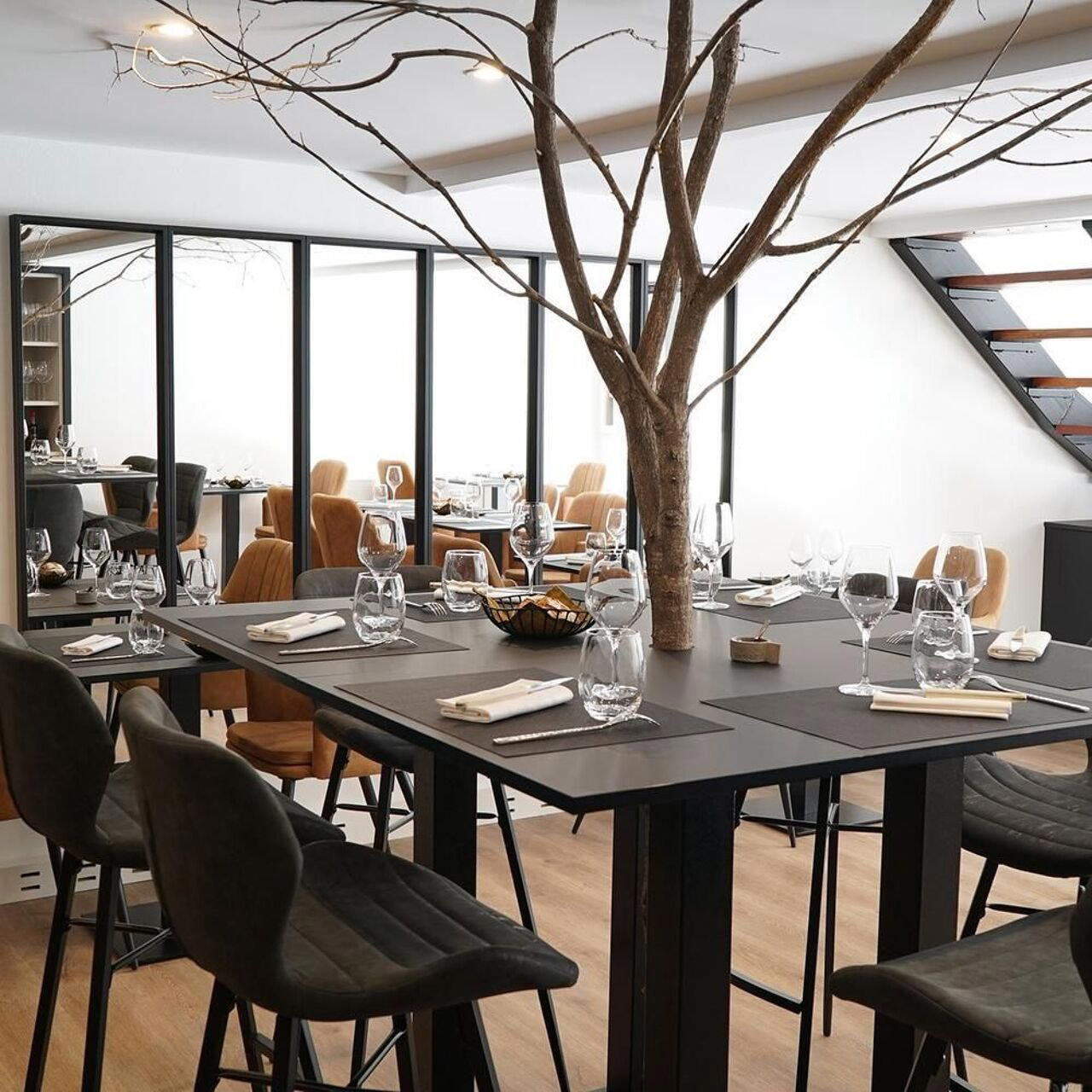
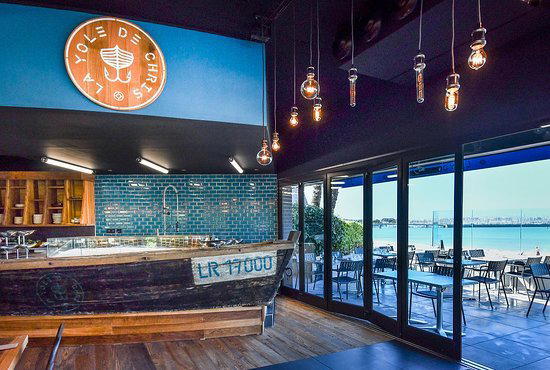
Bright and scenic with panoramic views, convivial atmosphere enhanced by a vast flowered south-facing terrace.