
A Michelin Plate-recognised ramen address on Avenue Jean Jaurès, Fujiyama 55 brings disciplined Japanese broth craft to Lyon's 7th arrondissement. In a city whose dining identity is defined by classical French technique, this single-price-range spot holds consecutive Michelin Plate recognition (2024 and 2025), positioning it as the reference point for Japanese noodle culture in the region.
Pearl is the En Primeur Club membership app — saves, bookings, and concierge access live there. Same editors, same standards.
- Address
- 40 Av. Jean Jaurès, 69007 Lyon, France
- Phone
- +33 6 52 95 55 62
- Website
- fujiyama55-ramen.com
- Directions
- Get directions
 Saves & bookings on Pearl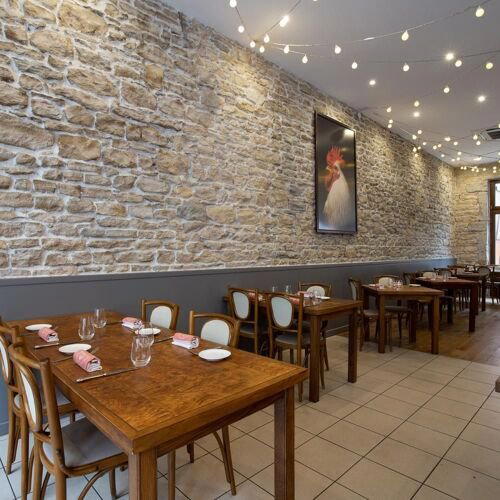
Where Lyon's Bouchon Tradition Meets Japanese Broth Discipline
Avenue Jean Jaurès in the 7th arrondissement moves at a different register from the tourist-dense Presqu'île. The street is wide and residential, lined with the kind of businesses that serve locals rather than visitors passing through. Along this stretch, Fujiyama 55 occupies the kind of modest frontage that ramen shops in Japan treat as a point of principle: the signal is inside, in the bowl, not on the facade. That restraint places it immediately within a particular tradition of Japanese counter dining, where the architecture of the broth carries the entire argumentfor the kitchen's competence.
Ramen in Japan evolved as a category defined less by single recipes than by regional schools, each with a distinct relationship to fat, salt, fermentation, and time. Tonkotsu from Fukuoka differs categorically from the soy-forward shoyu of Tokyo's old shacks or the miso-heavy bowls that Sapporo made standard. What those schools share is an obsessive investment in stock-building, often running pots for twelve hours or more to extract collagen, depth, and a specific textural weight from the broth. That investment is what separates ramen from simpler noodle preparations and what gives a well-executed bowl its structural complexity.
Consecutive Michelin Recognition in a City That Takes Cooking Seriously
Lyon's dining reputation is built on institutions. La Mere Brazier defines the classical French anchor; Le Neuvième Art represents contemporary creative ambition at the two-star level; Takao Takano brings Japanese technique to French fine dining in a way that has earned consistent critical attention. Within that context, the Michelin Plate is not a consolation credential. The Guide awards the Plate to restaurants where inspectors judge the cooking to be good, and in Lyon, where the inspector pool is experienced and the reference set is dense with serious kitchens, holding that designation in consecutive years carries weight.
Fujiyama 55 received the Michelin Plate in both 2024 and 2025. That two-year continuity matters. A single-year Plate could reflect a good visit on a good day; consecutive years signal a kitchen operating with consistent standards, which in broth-led cooking means consistent sourcing, consistent timing, and consistent discipline in the stock process. For a single-price-range (€) address on an avenue in the 7th, that is a meaningful credential against the broader Lyon dining field, which includes Burgundy by Matthieu at the one-star level and Au 14 Février in the creative tier.
Ramen as a Seasonal and Structural Practice
The editorial angle that tends to frame Japanese cuisine in the West defaults to sushi or kaiseki, but ramen deserves its own structural reading. Like kaiseki, a great ramen bowl is built through layered decisions: the base stock (tare and broth are developed separately and combined at service), the fat component, the noodle specification, and the toppings, each element chosen for how it functions within the whole rather than how it performs on its own. Autumn and winter are the natural seasons for broth-heavy ramen: the fat content that would feel heavy in July becomes exactly right when the temperature drops. Lyon's climate, with genuine cold from October through March, creates the seasonal conditions under which this style of cooking lands with full force.
For those building a wider picture of Japanese ramen culture, the contrast with purpose-built ramen operations like Afuri in Tokyo or its Portland outpost, Afuri Ramen in Portland, is instructive. Afuri built its reputation on a yuzu-inflected shio (salt-based) style, lighter and more citrus-forward than the richer tonkotsu school. Both approaches demand technical precision, but they occupy different positions on the richness spectrum. What Fujiyama 55 represents in Lyon is not a franchise model or a concept export but a locally embedded kitchen applying Japanese broth standards to a French city with its own strong food culture.
The 7th Arrondissement Context
The 7th is one of Lyon's more residential and culturally mixed arrondissements, a neighbourhood where local institutions serve regular clientele rather than rotating tourist traffic. That context shapes the experience: a queue or a full room at Fujiyama 55 reflects neighbourhood adoption, not viral marketing.
Getting to Avenue Jean Jaurès is direct from central Lyon via the T1 tram line, which runs along the avenue itself. The address is accessible from the Presqu'île in under fifteen minutes, making it a practical option for an evening that begins or ends elsewhere in the city. For a full picture of what the city offers across dining, accommodation, and experience, see our full Lyon restaurants guide, our full Lyon hotels guide, our full Lyon bars guide, our full Lyon wineries guide, and our full Lyon experiences guide.
France's Broader Fine Dining Reference Set
Placing Fujiyama 55 within French culinary geography requires acknowledging how unusual a Michelin-recognised ramen address is. The Guide's French attention concentrates heavily on classical and contemporary French cooking: Alléno Paris au Pavillon Ledoyen in Paris, Flocons de Sel in Megève, Mirazur in Menton, Troisgros in Ouches, Auberge de l'Ill in Illhaeusern, and Bras in Laguiole. Within that field, a €-bracket ramen shop earning consecutive Plate recognition represents an argument that the Guide's French operation is reading broth-led Japanese cooking with genuine attention rather than treating it as a category footnote. That is the context that makes Fujiyama 55 worth understanding beyond its neighbourhood footprint.
Planning Your Visit
Fujiyama 55 sits at 40 Avenue Jean Jaurès, Lyon 69007, in the 7th arrondissement. The price range sits at the single-€ bracket, making it among the most accessible Michelin-recognised addresses in the city. Given the neighbourhood following and the modest physical scale typical of specialist ramen shops, arriving early or during off-peak hours is a practical measure rather than optional advice.
FAQs
- What should I order at Fujiyama 55?
- Specific menu items are not confirmed in available records, so no single dish can be named here with accuracy. What the kitchen's consecutive Michelin Plate recognition (2024, 2025) signals is that its broth-based preparations are the reason the address holds its position in Lyon's dining field. In ramen cuisine broadly, the bowl type that reflects the kitchen's core technique, whether tonkotsu, shoyu, shio, or miso, is generally the entry point that leading reveals what a given shop does at its highest level.
- Do I need a reservation for Fujiyama 55?
- Specific booking policy is not confirmed in available records. Contacting the venue directly before visiting is the prudent approach, especially during Lyon's autumn and winter months when broth-heavy ramen draws higher demand.
- What's the signature at Fujiyama 55?
- No signature dish is confirmed in available data. What distinguishes Fujiyama 55 within Lyon's dining field is its position as a Michelin Plate-recognised ramen address in consecutive years, which in a city whose food identity is defined by classical French cooking represents a specific credential. The broader ramen tradition the kitchen works within, Japanese broth-building, regional noodle styles, careful stock development, is the frame through which its output should be read.
- tonkotsu ramen
- miso ramen
- gyoza
- karaage
- braised pork
- Japanese curry
Peers You’d Cross-Shop
| Venue | Cuisine | Price |
|---|---|---|
| Fujiyama 55This venue — the venue you are viewing | Ramen | € |
| Le Neuvième Art | Contemporary French, Creative | €€€€ |
| Rustique | Creative | €€€€ |
| La Mere Brazier | French | French |
| Burgundy by Matthieu | Modern Cuisine | €€€ |
| Miraflores | Peruvian | €€€€ |
Recognition history
Dated appearances from independent guides and award organizations, with the underlying list record or original source where available.
Michelin Plate
Michelin
Michelin Plate
Michelin
Michelin Plate
Michelin
Continue exploring
More in Lyon
Restaurants in Lyon
Browse all →
Bars in Lyon
Browse all →
Hotels in Lyon
Browse all →

At a Glance
- Modern
- Minimalist
- Cozy
- Intimate
- Casual Hangout
- Group Dining
- Family
- Open Kitchen
- Standalone
- Sake Program
- Local Sourcing
- Farm To Table
Current opening hours
- Monday
- 12–1:30 PM, 7–9:30 PM
- Tuesday
- 12–1:30 PM, 7–9:30 PM
- Wednesday
- 12–1:30 PM, 7–9:30 PM
- Thursday
- 12–1:30 PM, 7–9:30 PM
- Friday
- 12–1:30 PM, 7–9:30 PM
- Saturday
- 12–1:30 PM, 7–9:30 PM
- Sunday
- Closed
Hours can change for holidays and private events. Last verified .
Utilitarian-style space with waxed red floors, long wooden tables, and hanging wooden structure; simple, modern décor with a cozy, unpretentious atmosphere that emphasizes the food over ambiance.
Know Before You Go
- Getting there
- 40 Av. Jean Jaurès, 69007 Lyon, France