Frank Pepe Pizzeria Napoletana


James Beard Award America's Classics
Our verdict
Ranked by Opinionated About Dining among North America's top cheap eats in 2024 and.

Pearl is the En Primeur Club membership app, where members save venues, book tables and use the concierge.
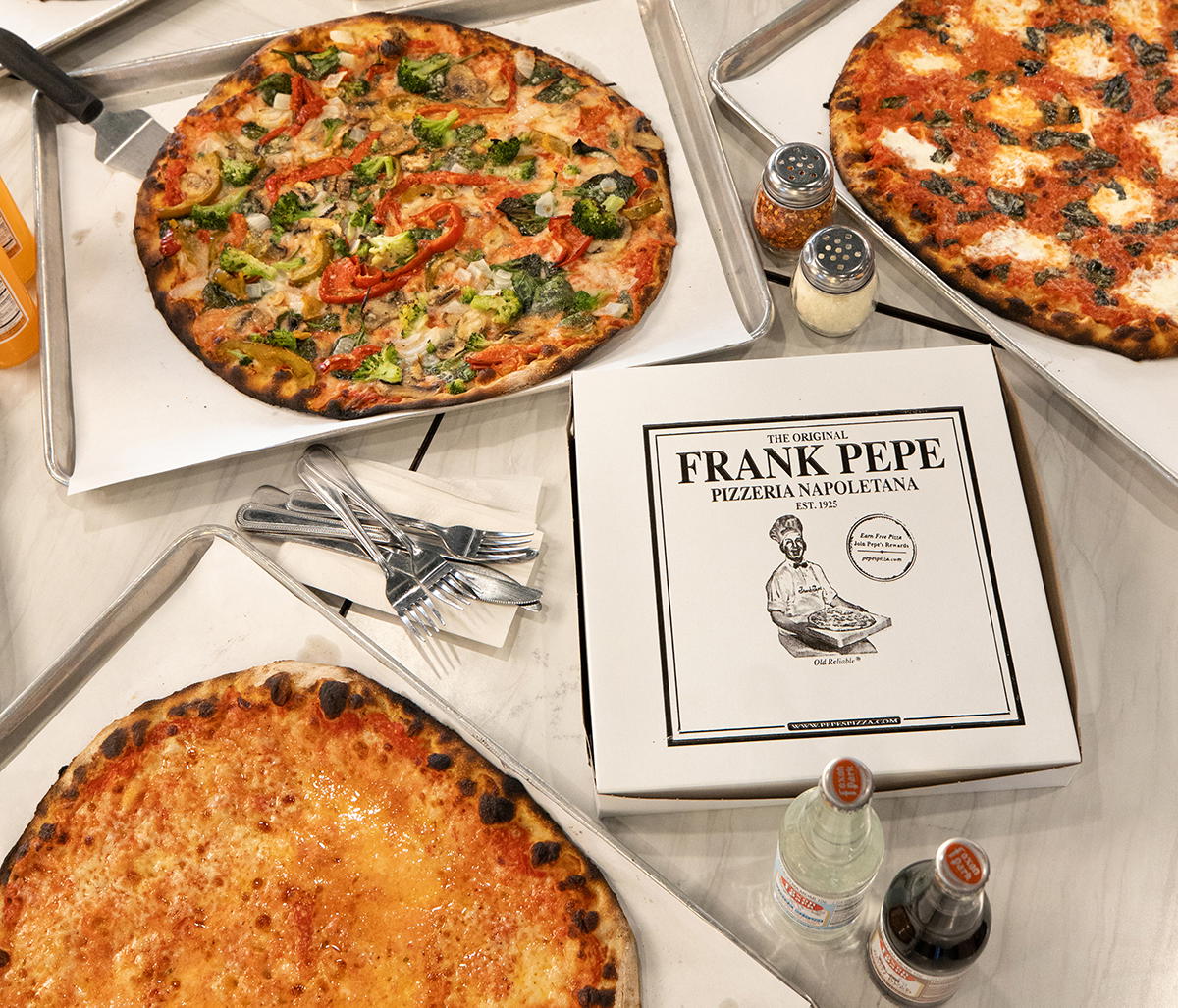
New Haven apizza, the local spelling that marks a genuine regional distinction, is a style that developed separately from New York's Neapolitan tradition and from the thick-crusted variants that spread across the American Midwest. The crust here is thinner and more charred than most American pizzas, with a pronounced cornicione that blisters and blackens at the edges from a coal-fired oven running at temperatures that gas cannot replicate cleanly. The char is not incidental; it is the flavour argument. Pepe's, which opened in 1925, is the address most credited with establishing that argument at an institutional level.
The Coal-Fired Method in Context
Coal-fired pizza occupies a narrower technical category than wood-fired, and New Haven became its American capital by accident of geography and immigration timing. The Italian immigrants who settled in this part of Connecticut in the early twentieth century brought with them baking traditions that required extreme heat, and coal was the available fuel. The ovens they built, and that places like Pepe's have maintained, sustain temperatures well above what a conventional deck oven produces. The result is a crust with structural rigidity at the base but audible crispness at the edges, different in character from the leopard-spotted, floppy centre of a Neapolitan pie, and different again from the chewy New York slice.
What the coal-fired method demands from the dough is worth understanding before you order. The fermentation has to be calibrated to survive the oven's speed. A dough that works at lower temperatures collapses under coal heat; one tuned for it emerges with a particular tightness of crumb. Pepe's has been calibrating that relationship for a century. Comparing it directly to Modern Apizza or The French Laundry in Napa or Alinea in Chicago, or the seafood formalism of Le Bernardin in New York City. It belongs instead to a category that American food culture has historically undervalued in formal rankings but actually visits with far greater frequency: the regional institution that defines a style. In that category, alongside places like Ken's Artisan Pizza in Portland or 11th Street Pizza in Miami, Pepe's occupies the founding-document position. It is not imitating a tradition; it substantially created one.
Gary Bimonte, the current steward of the operation, represents the family continuity that has kept Pepe's in the same lineage since 1925. That continuity matters here not as a heritage story but as a technical claim: the dough formula, the oven management, and the sourcing relationships have been maintained rather than reinvented, which is the reason the coal-fired result tastes consistent across decades of visitor accounts. Pepe's anchors the pizza end of that street. Nearby, Atticus Market covers the American deli format. Louis' Lunch, a short distance away, makes its own founding-document claim in the hamburger category. The pattern is consistent: New Haven has several restaurants that are not merely good at what they do but are cited as having done it first, or done it in a way that defined how others would do it. That concentration of origin-point venues in a mid-sized college city is unusual and worth treating as a reason to plan a proper visit rather than a detour. Our New Haven bars guide includes BAR, which operates its own brewery and coal-fired oven and functions as a useful comparison point for the style. Our New Haven hotels guide, wineries guide, and experiences guide round out the city picture for those planning longer stays. New Haven rewards that kind of planned visit more than its reputation as a day-trip pizza destination suggests.
Planning Your Visit
Pepe's opens daily at 11 am and runs through to 10 pm every day of the week. The kitchen does not take reservations in the traditional sense, which means the sidewalk queue is a genuine feature of the experience rather than an occasional inconvenience. Arriving before the lunch or dinner rush begins, particularly on weekdays, reduces wait time substantially. Weekend afternoons draw the heaviest traffic. The operation runs at high volume and the room is not designed for lingering; this is a place that rewards focused eating rather than extended-evening dining. For a longer evening in New Haven, Lazy Bear in San Francisco, Emeril's in New Orleans, or Single Thread Farm in Healdsburg represent the opposite end of the format spectrum for comparison.
What to Order at Frank Pepe Pizzeria Napoletana
The white clam pizza is the dish most associated with Pepe's in the food press and among returning visitors. It uses no tomato sauce, instead relying on fresh clams, olive oil, garlic, oregano, and grated cheese on that coal-fired crust. It is the dish that consistently appears in accounts of what makes New Haven apizza distinct from every other American pizza tradition. Beyond the clam pie, the tomato-sauce pies here operate in a stripped-down register where the quality of the dough and the oven management carry the weight that ingredient complexity might carry elsewhere.
Frequently asked questions
What should I eat at Frank Pepe Pizzeria Napoletana?
The white clam pizza is the starting point. It is the dish that most food writers cite when explaining what differentiates the New Haven coal-fired style from other American pizza traditions: fresh clams, olive oil, garlic, and no tomato sauce on a crust that the coal oven chars and blisters in a way gas ovens cannot replicate. Beyond the clam pie, the tomato-based pizzas let the dough quality and oven character speak directly, which is the cleaner way to understand what a century of coal-fired practice produces.
Cuisine and Credentials
| Venue | Cuisine | Price | Awards |
|---|---|---|---|
| Frank Pepe Pizzeria NapoletanaThis venue (the venue you are viewing) | New Haven-Style Apizza | $20–30 | James Beard Award America's Classics |
| Louis Lunch | Classic American Hamburger | $10–20 | Not listed |
| Modern Apizza | New Haven-Style Apizza | $20–30 | Not listed |
| Union League Cafe | Contemporary French Brasserie | $50–100 | Wine Spectator Award of Excellence |
| Atticus Market | American Bakery Cafe | $10–20 | Not listed |
Recognition history
Dated appearances from independent guides and award organizations, with the underlying list record or original source where available.
James Beard Award America's Classics
James Beard Award
Opinionated About Dining Cheap Eats in North America Ranked #88
Opinionated About Dining
Full recognition history (4 entries)
Opinionated About Dining Cheap Eats in North America Ranked #105
Opinionated About Dining
Opinionated About Dining Cheap Eats in North America in Recommended
Opinionated About Dining