Food City
Food City at 3202 E Greenway Rd sits within Phoenix's dense network of independent grocers and international markets that define how much of the city actually eats. Part working-class supermarket, part cultural crossroads, it draws shoppers seeking ingredients unavailable at mainstream chains, a practical lens into the culinary traditions that quietly shape the Valley's food identity.
Pearl is the En Primeur Club membership app — saves, bookings, and concierge access live there. Same editors, same standards.
- Address
- 3202 E Greenway Rd, Phoenix, AZ 85032
- Phone
- +16022530087
- Website
- myfoodcity.com
- Directions
- Get directions
 Saves & bookings on Pearl
Where Phoenix Actually Shops
Instructive food experiences in any American city are rarely the ones with reservation queues. Phoenix's food identity has long been shaped less by its fine-dining corridor and more by the infrastructure of everyday eating: the carnicerías along Van Buren, the panadería counters in South Mountain, the sprawling international supermarkets scattered across the East Valley and the North Phoenix suburbs. Food City, at 3202 E Greenway Rd, belongs to that infrastructure. It is a working grocery store, and understanding what that means in this city reveals more about Phoenix's culinary foundations than most restaurant visits will.
Phoenix sits at the intersection of Sonoran food culture, an expanding Southeast Asian diaspora, and a growing roster of Central American communities, all of whom depend on supply chains that mainstream grocery chains do not always serve. Stores like Food City function as the connective tissue between those traditions and the home kitchens that keep them alive. The prepared foods, the produce selections, and the butcher counters at markets across this category reflect what communities cook rather than what restaurant menus decide to celebrate. That distinction matters for anyone trying to understand how the city's food culture actually operates below the surface.
The Cultural Weight of the International Market
In cities with strong Mexican-American populations, the full-service Hispanic supermarket occupies a role that goes well beyond groceries. The tortillería at the back of the store, the bakery case stacked with pan dulce, the butcher counter offering cuts, like cabeza, tripa, or nopales, that a Safeway or Kroger would not stock: these are the material evidence of a food tradition that predates the city's rapid Anglo-American expansion. Sonoran cuisine, which shapes the dominant Mexican-American food culture across Phoenix and Tucson, carries its own grammar: the flour tortilla (not corn) as the regional staple, the emphasis on beef and pork prepared simply over intense heat, and a sensibility that prizes freshness over complexity.
That culinary grammar is most legible not in a restaurant but in a market. The availability of specific chiles, the variety of dried legumes on the shelves, the presence of fresh masa or Mexican crema, these are indicators of how deeply embedded a food tradition is in a given neighborhood. Food City's position on the Greenway corridor places it within reach of communities that have shaped North Phoenix's demographic character over the past two decades, and the store's offerings reflect that accordingly.
For visitors trying to map Phoenix's food culture beyond the obvious restaurant circuit, the international grocery is an underused reference point. Compare the produce section of a market serving a predominantly Latino clientele against a Thai-focused market like those that supply restaurants in the Lom Wong orbit, the gap in ingredients tells you something no restaurant menu fully communicates. For a window into the more formal end of Sonoran food culture as it appears on a plate, Bacanora does one rigorous version of that tradition in a restaurant setting, and Vincent Guerithault on Camelback shows what happens when French technique is applied to Southwestern ingredients over decades of iteration.
Phoenix's Grocery Ecosystem and What It Signals
American cities tend to be read through their restaurant scenes, but grocery infrastructure tells a parallel story about who lives where and what they cook. Phoenix's spread of Hispanic supermarkets, Southeast Asian food halls, and Middle Eastern grocers across its vast suburban grid reflects a city that has absorbed multiple waves of immigration without concentrating them into a single ethnic enclave. That dispersal means food traditions are embedded throughout the metro rather than contained in a single neighborhood, which makes the city's culinary character harder to map but richer in aggregate.
The coexistence of markets serving dramatically different pantry needs, the Mexican supermarket alongside the Vietnamese grocery alongside the halal butcher, is characteristic of Sun Belt cities that grew rapidly in the late twentieth century. Phoenix is the clearest example of this pattern at scale.
For travelers accustomed to culinary tourism as a restaurant activity, this is worth sitting with. The prepared food counter at a well-stocked Hispanic supermarket often represents a more direct line to the food culture than a restaurant designed to translate that culture for an outside audience. Tamales sold by the dozen at a grocery counter, carnitas priced by the pound at a market butcher, fresh horchata made on-site, these are the formats in which food traditions reproduce themselves day to day. Restaurants like Pane Bianco or 5 & Diner occupy a different register entirely, offering their own versions of Phoenix's casual food culture but operating at a remove from the market-floor immediacy that defines this type of experience.
Planning a Visit
The restaurant's Greenway Road location sits in the northern Phoenix grid, accessible by car from both the 51 and 101 corridors. Weekend mornings typically see the highest foot traffic, when families shop in volume and prepared food counters are at full production. For anyone building an itinerary that reads Phoenix's food culture seriously, pairing a market visit with a meal at one of the city's more editorially recognized spots gives a fuller picture: the grocery tells you what the community eats, the restaurant tells you how the city is beginning to frame it for a wider audience.
Specific hours, pricing, and prepared food availability are best confirmed directly with the location, as these vary by season and staffing. For a broader orientation to where Phoenix eats and drinks across price points and cuisines, our full Phoenix restaurants guide covers the city's most editorially significant venues, from the Thai counter at Lom Wong to the tasting-menu tier anchored nationally by destinations like The French Laundry, Le Bernardin, Smyth, Providence, Addison, Lazy Bear, Atomix, Blue Hill at Stone Barns, Emeril's, Single Thread Farm, The Inn at Little Washington, and Atelier Moessmer Norbert Niederkofler, restaurants that define what fine dining looks like at its most committed, wherever you happen to be eating next.
Nearby-ish Comparables
Comparable venues nearby, for context on price, style, and recognition.
| Venue | Cuisine | Price | Notes |
|---|---|---|---|
| Food CityThis venue — the venue you are viewing | American Deli | $ | Not listed |
| Long Wong's | American Wings & Burgers | $ | Squaw Peak Terrace |
| 5 & Diner | Classic American Diner | $ | Midtown Phoenix |
| Marcia's Long Wongs | American Wings & Burgers | $ | South Phoenix |
| Hearsay | American Casual Dining | $$ | Biltmore Villas |
| Carcara | Native American and Sonoran-Inspired Southwestern | $$$ | Copper Square |



At a Glance
- Casual Hangout
Current opening hours
- Monday
- 6 AM–10 PM
- Tuesday
- 6 AM–10 PM
- Wednesday
- 6 AM–10 PM
- Thursday
- 6 AM–10 PM
- Friday
- 6 AM–10 PM
- Saturday
- 6 AM–10 PM
- Sunday
- 6 AM–10 PM
Hours can change for holidays and private events. Last verified .
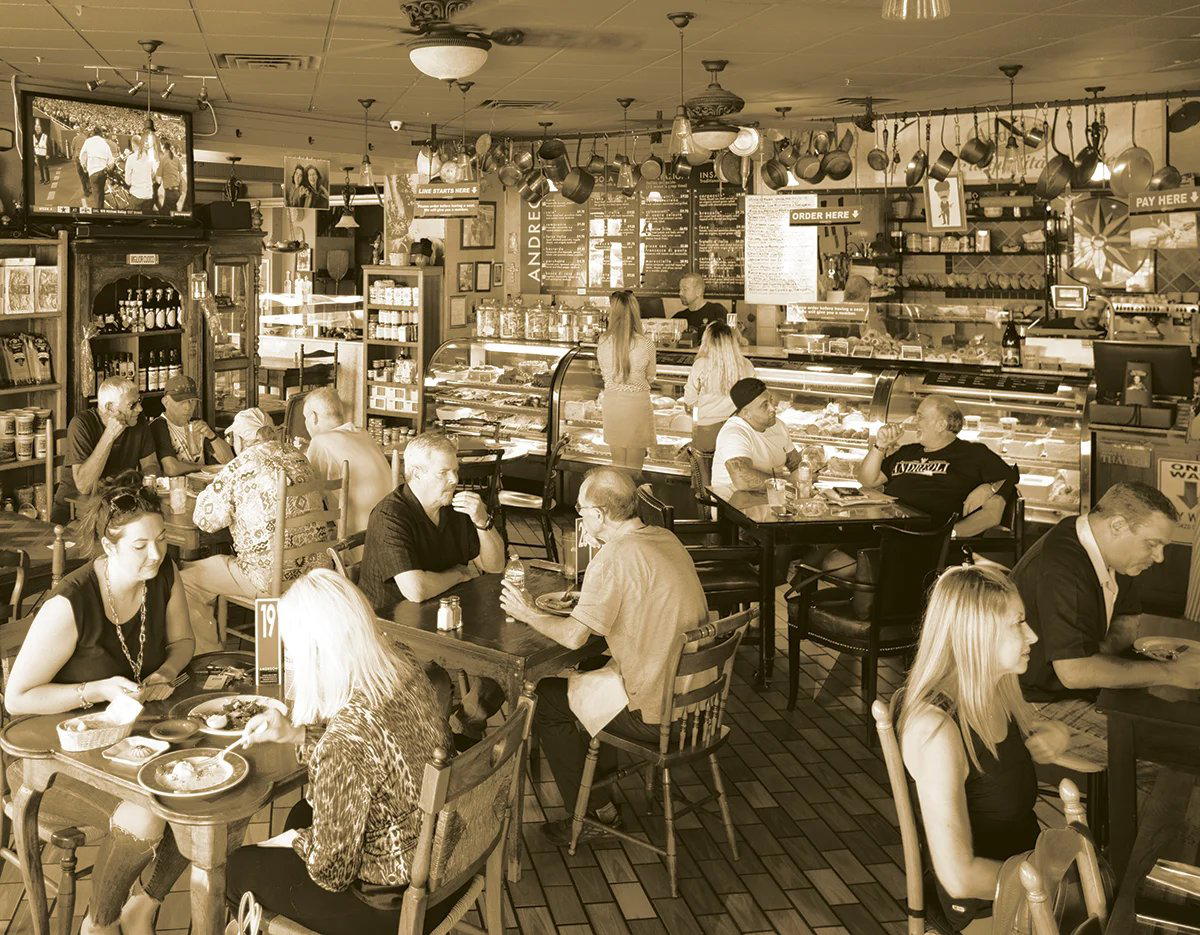
Functional, no-frills shopping center deli atmosphere.