Flor de Lis

The Best Chef One Knife
Our verdict
Flor de Lis occupies a notable position in Guatemala City's evolving fine dining conversation, operating out of the Casa del Aguila address in Zona 4 under chef Diego Telles. For travellers building a considered itinerary in the capital, it warrants attention.

Pearl is the En Primeur Club membership app, where members save venues, book tables and use the concierge.
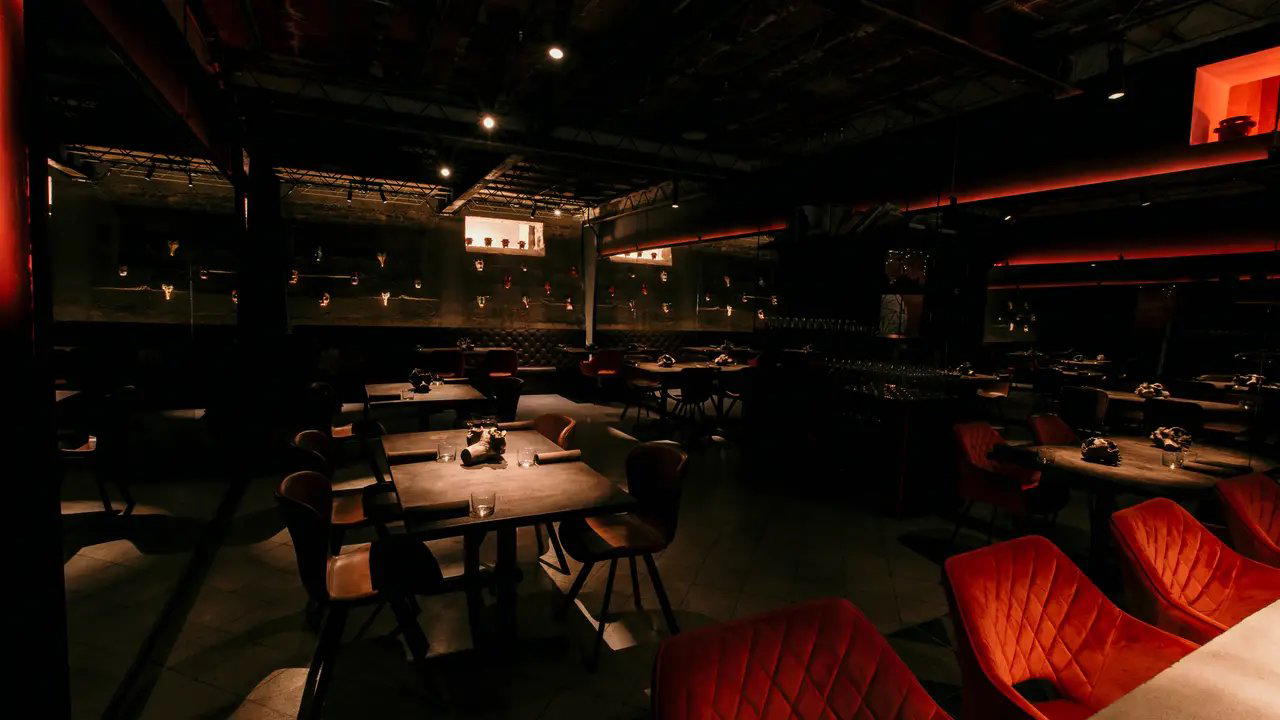
Zona 4 and the Shape of Guatemala City's Fine Dining Scene
Guatemala City's serious restaurant scene has reorganised itself around a handful of neighbourhoods, with Zona 4 and the adjacent Zona Viva functioning as the axis for restaurants operating at the upper end of the market. The shift away from Zona 10 as the sole address for ambitious cooking has created more varied contexts for dining, and Casa del Aguila, the address that houses Flor de Lis, represents that newer geography. The building itself carries a formality that sets expectations before you cross the threshold: this is not the stripped-back industrial aesthetic that defines a generation of casual fine dining openings elsewhere in Latin America, but something closer to the colonial institutional register that still governs the city's more considered hospitality spaces.
Guatemala City sits at roughly 1,500 metres above sea level, and the altitude shapes the dining experience in ways that rarely appear on menus. The cool evenings that characterise the capital year-round make interior dining rooms feel more appropriate than terrace-led concepts, and the Casa del Aguila space plays to that tendency. The result is a setting that lends Flor de Lis a different character from lakeside properties like 6.8 Palopó in Santa Catarina Palopó, where the landscape is the primary frame for the meal.
What Chef Diego Telles Represents in the Broader Kitchen Conversation
Guatemala's fine dining sector has produced a small cohort of chefs who are beginning to attract regional attention. Chef Diego Telles, who leads the kitchen at Flor de Lis, is among the names that appear in that conversation. The more useful editorial frame here is not biographical, chef origin stories are common currency in every city, but structural: Telles represents a generation of Guatemalan cooks who are working within a local context rather than importing a European format wholesale.
This matters because the alternative model, which dominated Central American fine dining for two decades, produced restaurants that read as outposts of international cuisine with regional ingredients dropped in as garnish. The shift toward kitchens that treat Guatemalan produce and tradition as primary material rather than decorative has changed what a reservation in the capital actually delivers. Flor de Lis positions itself within that shift. Whether the execution fully commits to that position is a question the room answers plate by plate, but the orientation is distinct from contemporaries that still lead with a European grammar.
For comparative context, consider how kitchens at very different scales, from Atomix in New York City to DIACÁ here in Guatemala City, have built their reputations on a similar premise: that the cuisine's cultural roots should be the primary lens, not a secondary narrative applied after the technique has been established. DIACÁ has become one of the more discussed examples of this approach in the capital, and Flor de Lis occupies adjacent territory in that conversation.
Guatemala's Culinary Roots and Why They Matter to the Menu
Guatemalan cuisine is one of the more complex and underexplored traditions in the Americas. It draws on Maya agricultural foundations, corn, black beans, chiles, squash, and cacao, that predate the colonial period by centuries, then layers in Spanish, Caribbean, and German influences that arrived in distinct waves between the sixteenth and nineteenth centuries. The result is a cuisine that resists easy categorisation. It is not Mexican, though it shares border ingredients. It is not Central American fusion, a category that tends to flatten regional distinctions. It is specifically Guatemalan, which means it carries the weight of a highland Maya tradition that is still practised in the markets of Chichicastenango and the comedores of Quetzaltenango.
When a restaurant like Flor de Lis operates in Guatemala City at the formal end of the market, it is working against this backdrop. The question any serious kitchen in this city has to answer is how it positions itself relative to that tradition: does it excavate and reframe it, does it use it as flavour reference, or does it treat it as context for something else entirely? The restaurants in Guatemala City that have generated the most sustained critical attention, including Ana and the aforementioned DIACÁ, have tended to answer that question with specificity. Flor de Lis enters that same frame of assessment.
Cacao is worth particular mention in this context. Guatemala is among the world's significant cacao-producing countries, with the Polochic Valley and the Alta Verapaz region supplying beans to some of the most recognised chocolate makers internationally. A restaurant operating at the formal tier in Guatemala City that does not engage seriously with cacao in some form is missing one of the most direct connections between fine dining and the country's agricultural identity. Whether Flor de Lis makes that engagement explicit is part of what a reservation tests.
Placing Flor de Lis in its competitive context requires looking at the full range of serious restaurants now operating in Guatemala City. Mercado 24 approaches the city's food culture from a different angle, using a market format to aggregate producers and vendors rather than presenting a single kitchen's vision. Sublime Restaurant (Latin) operates with a Latin-inflected menu that positions it toward international visitors as much as local clientele. Flor de Lis, by contrast, reads as a restaurant with a more specific local identity, which places it closer to the cohort of kitchens that are building reputations with Guatemala City's own serious dining public rather than leading with an export-facing proposition.
Internationally, the restaurants that have generated sustained attention by anchoring their menus in deep cultural specificity, Lazy Bear in San Francisco, Alinea in Chicago, or at the institutional end, Alain Ducasse at Louis XV in Monte Carlo, demonstrate that the strongest fine dining identities are always rooted in a specific place and tradition, not assembled from generic technique. The Guatemala City restaurants that will have staying power are likely to be those that make the same bet. Flor de Lis appears to be making it.
Planning a Visit
Flor de Lis is located at the Casa del Aguila in Zona 4 (Ciudad de Guatemala Zona 4 01004). Booking in advance is advisable given the limited scale typical of serious kitchens at this tier in the capital, and arriving by private transfer or taxi is the practical approach given that Zona 4's street-level character can be variable in the evenings. Guatemala City's restaurant scene concentrates its strongest activity from Thursday through Saturday, which is when tables at the more discussed restaurants are hardest to secure. For travellers building a broader itinerary around the capital's food and drink scene, the full Guatemala City restaurants guide provides the widest current view of the market. The Guatemala City hotels guide, bars guide, and experiences guide complete the picture for a structured visit to the capital.
For those extending beyond the city, the contrast between Guatemala City's formal dining circuit and the more atmospheric, landscape-driven dining at places like 6.8 Palopó on Lake Atitlán is itself a useful frame for understanding how Guatemala's culinary identity is being expressed across different registers. Flor de Lis belongs firmly in the capital's version of that conversation.
Frequently asked questions
Is there a head chef associated with Flor de Lis?
The chef associated with Flor de Lis is Diego Telles.
What distinctions does Flor de Lis have?
Flor de Lis has received recognition including: Chef: Diego Telles.
What's the signature dish at Flor de Lis?
Flor de Lis does not publish a fixed signature dish, and the menu under chef Diego Telles is understood to draw from Guatemala's Maya agricultural traditions, corn, black beans, and native chiles among the foundations. Given the kitchen's orientation toward local sourcing in a city where menus shift with seasonal availability, the more reliable constant is approach rather than a single plate. check the venue's official channels at the Casa del Aguila address in Zona 4 for current menu details.
Where do I go for Flor de Lis?
Flor de Lis is located at Ciudad de Guatemala Zona 4 01004 Casa del Aguila Guatemala City, 01004, Guatemala, Guatemala City.
Is Flor de Lis reservation-only?
For a restaurant of Flor de Lis's scale and positioning in Zona 4, booking ahead is strongly advisable. Guatemala City's more serious dining rooms at this level operate with limited covers, and walk-in availability is not guaranteed. Reaching out in advance through the Casa del Aguila in Zona 4 (Ciudad de Guatemala 01004) is the practical approach.
What's the signature at Flor de Lis?
Chef Diego Telles leads the kitchen, and his work sits within a small cohort of Guatemala City chefs drawing regional attention for reframing indigenous ingredients through a contemporary fine dining lens.
Cuisine and Awards Snapshot
Comparable venues nearby, for context on price, style, and recognition.
| Venue | Cuisine | Price | Awards | Notes |
|---|---|---|---|---|
| Flor de LisThis venue (the venue you are viewing) | Modern Mayan Fusion Tasting | $50–100 | The Best Chef One Knife | Not listed |
| Clio's | French Fusion | $30–50 | Not listed | Zona 10 |
| Hacienda Real Zona 10 | Guatemalan Steakhouse | $20–30 | Not listed | Zona 10 |
| Donde Mikel | Basque-Style Seafood & Grilled Meats | $30–50 | Not listed | Zona 10 |
| Ana | Modern Latin Fusion Tasting Menu | $100–150 | World's 50 Best #94 · The Best Chef One Knife | Zona 14 |
| Casa Escobar... Paseo Cayalá | Guatemalan Steakhouse | $30–50 | Not listed | Paseo Cayalá |
Recognition history
Dated appearances from independent guides and award organizations, with the underlying list record or original source where available.
The Best Chef One Knife
The Best Chef
Continue exploring
More in Guatemala City
Restaurants in Guatemala City
All restaurants in Guatemala City →
Hotels in Guatemala City
Browse all →
Details
- Intimate
- Elegant
- Cozy
- Sophisticated
- Special Occasion
- Date Night
- Open Kitchen
- Local Sourcing
- Tasting Menu
- Vegetarian Friendly
Current opening hours
- Monday
- 6–10 PM
- Tuesday
- 6–10 PM
- Wednesday
- 6–10 PM
- Thursday
- 6–10 PM
- Friday
- 6–10 PM
- Saturday
- 6–10 PM
- Sunday
- Closed
Hours can change for holidays and private events. Hours as of .
Cozy, intimate basement setting with immersive low-tempo music, beautiful plating, and a cultural atmosphere evoking precolonial times.