Fish & Bird Sousaku Izakaya


Fish & Bird Sousaku Izakaya brings the creative izakaya format to Berkeley's Shattuck Avenue corridor, earning consecutive Michelin Plate recognition in 2024 and 2025 alongside an Esquire Best New Restaurants nod in 2021. The mid-price point positions it well below the Bay Area's fine-dining tier, making Michelin-recognized Japanese cooking accessible without the tasting-menu commitment. The drink program's alignment with izakaya tradition gives sake, shochu, and wine equal footing on the list.
- Address
- 2451 Shattuck Ave., Berkeley, CA 94704
- Phone
- (510) 705-1539
- Website
- fishbirdizakaya.com
- Directions
- Get directions
Berkeley's Izakaya Register
The izakaya format has always lived between categories, part bar, part kitchen, governed by neither the formality of kaiseki nor the brevity of a ramen counter. In California, that ambiguity has played out differently depending on the city. Los Angeles built a recognizable izakaya corridor years before the Bay Area caught pace, and venues like Budonoki in Los Angeles illustrate how the format can anchor a neighborhood dining culture. San Francisco's version skews toward smaller, independently operated rooms that resist easy classification. Fish & Bird Sousaku Izakaya is a modern Japanese izakaya in Berkeley, California, with a $50 per-person price point. On Shattuck Avenue, it operates in that independent tradition: the sousaku designation signals creative or original cooking, separating it from strict-tradition izakaya houses and placing it closer to the chef-driven end of the Japanese small-plates spectrum.
Shattuck Avenue carries a dining reputation that predates the current Bay Area moment. The corridor has housed serious kitchens for decades, and the neighborhood draws a crowd that expects depth rather than novelty. In that context, a mid-price recognition profile reads as a neighborhood anchor rather than a destination outlier.
Walking In: What the Room Signals
Izakaya rooms in Japan are typically dense, acoustic, and lit at a register that sits between bar and dining room. The format translates unevenly to American spaces, which often run larger and quieter than the Tokyo originals. The better American izakaya interpretations compensate by tightening the menu structure and leaning harder on the drink program to set the room's tempo. At a moderate price tier, Fish & Bird operates in a bracket where the per-head spend stays accessible without sacrificing the range of a proper izakaya list: multiple rounds, varied small plates, and a drink progression that should pace the meal rather than just accompany it.
The address on Shattuck puts the restaurant in Berkeley, which matters practically for anyone planning an evening built around sake or wine. Berkeley's dining culture has always leaned more residential than tourist-facing, meaning the room on most nights runs with a local regulars dynamic rather than the reservation-trophy atmosphere that defines some of the Bay Area's headline rooms. That contrast is worth naming: San Francisco's upper tier, from Benu and Atelier Crenn to Quince and Lazy Bear, operates at price points four to five times higher and requires weeks of advance planning. Fish & Bird sits at the other end of that spectrum, closer in register to a neighborhood fixture than a special-occasion destination, though the Michelin recognition closes some of that gap.
The Drink List as the Frame
The editorial angle most useful for understanding an izakaya is not the food menu in isolation. The izakaya format is organized around drinking, with the kitchen as support rather than centerpiece. That means the drink list's architecture reveals more about a room's identity than almost any other single element. A serious izakaya drink program should hold sake across multiple production styles, from junmai to daiginjo, with enough regional range to let the list function as a map of Japan's brewing geography. Shochu should appear not as a single-bottle afterthought but as a category with its own range of base ingredients and regional producers. Wine is where American izakaya operations tend to diverge most sharply from the Japanese model: the leading domestic examples treat it as a full category rather than a concession to non-sake drinkers.
Sousaku framing at Fish & Bird implies a kitchen willing to work across flavor registers, which in turn creates room for a drink list that can range more widely than a strict-tradition izakaya would permit. This is where the Tokyo comparison is instructive: venues like Flippers in Tokyo demonstrate how the creative izakaya format can sustain a drink program that moves fluidly between Japanese and European categories without losing coherence. The Bay Area's Japanese dining scene, bolstered by proximity to California wine country, carries a structural advantage here. Producers from Healdsburg and the Napa corridor, including estates near The French Laundry's Yountville base, regularly appear on Bay Area Japanese restaurant lists in a way that would read as incongruous in most other American cities.
At this price tier, the drink list should be priced to support multiple rounds without forcing the per-head cost toward fine-dining territory. That remains one of the format's structural arguments over the Bay Area's tasting-menu rooms, where wine pairings alone can push the bill past $300 per person.
Creative Japanese Cooking in the Bay Area Context
The Bay Area has never been short of Japanese dining options across price tiers, but the sousaku category occupies a specific space that the omakase boom and the ramen expansion both leave underserved. Creative izakaya cooking draws on the same Japanese culinary discipline that underlies kaiseki and omakase but deploys it in smaller, more casual increments. The result is a format that can absorb local ingredients and seasonal California produce without becoming a fusion exercise: the technique stays Japanese while the sourcing reflects the Northern California context.
That positioning gives Fish & Bird a different competitive comparable set than the Bay Area's headline Japanese rooms. Its relevant comparison is less with the high-end omakase counters of the city and more with the category of regionally serious, independently operated izakaya that has gained critical traction nationally. In that national frame, its Esquire recognition in 2021 placed it alongside restaurants operating at significantly higher price points, which speaks to the kitchen's ability to generate critical interest without requiring fine-dining investment from the diner.
Planning the Visit
Fish & Bird sits at 2451 Shattuck Avenue in Berkeley, accessible from the Downtown Berkeley BART station, which makes it practical for visitors based in San Francisco proper who want to combine an East Bay evening with a meal that won't require a tasting-menu budget. Current hours are Monday and Thursday 5:00 to 8:30 PM, Friday and Saturday 5:00 to 9:00 PM, and Sunday 5:00 to 8:30 PM; Tuesday and Wednesday are closed. For comparison with other American Japanese izakaya operations of note, Budonoki in Los Angeles and the Tokyo reference point of Flippers offer useful calibration. Broader fine-dining reference points across the country include Le Bernardin in New York, Emeril's in New Orleans, Alinea in Chicago, Providence in Los Angeles, and Saison in San Francisco.
Recognition Snapshot
Comparable venues nearby, for context on price, style, and recognition.
| Venue | Cuisine | Price | Awards | Notes |
|---|---|---|---|---|
| Fish & Bird Sousaku IzakayaThis venue — the venue you are viewing | Modern Japanese Izakaya | $$$ | Michelin Plate | Not listed |
| Ken | Modern Edomae Omakase | $$$$ | Michelin Plate | Haight Ashbury |
| Shizen | Modern Vegan Sushi | $$$ | Michelin Plate | Mission |
| Elephant Sushi | Craft Japanese Sushi | $$$ | Not listed | Western Addition |
| Oma San Francisco Station | Japanese Omakase | $$$ | Michelin Plate | Japantown |
| Prospect | Contemporary American | $$$ | Michelin Plate | Financial District/South Beach |
Recognition history
Dated appearances from independent guides and award organizations, with the underlying list record or original source where available.
Michelin Plate
Michelin
Michelin Plate
Michelin
Esquire Best New Restaurants #41
Esquire
Continue exploring
More in San Francisco
Restaurants in San Francisco
Browse all →
Bars in San Francisco
Browse all →
Hotels in San Francisco
Browse all →
At a Glance
- Lively
- Modern
- Trendy
- Industrial
- Date Night
- Casual Hangout
- After Work
- Open Kitchen
- Sake Program
- Craft Cocktails
- Local Sourcing
- Sustainable Seafood
- Organic
Current opening hours
- Monday
- 5–8:30 PM
- Tuesday
- Closed
- Wednesday
- Closed
- Thursday
- 5–8:30 PM
- Friday
- 5–9 PM
- Saturday
- 5–9 PM
- Sunday
- 5–8:30 PM
Hours can change for holidays and private events. Last verified .
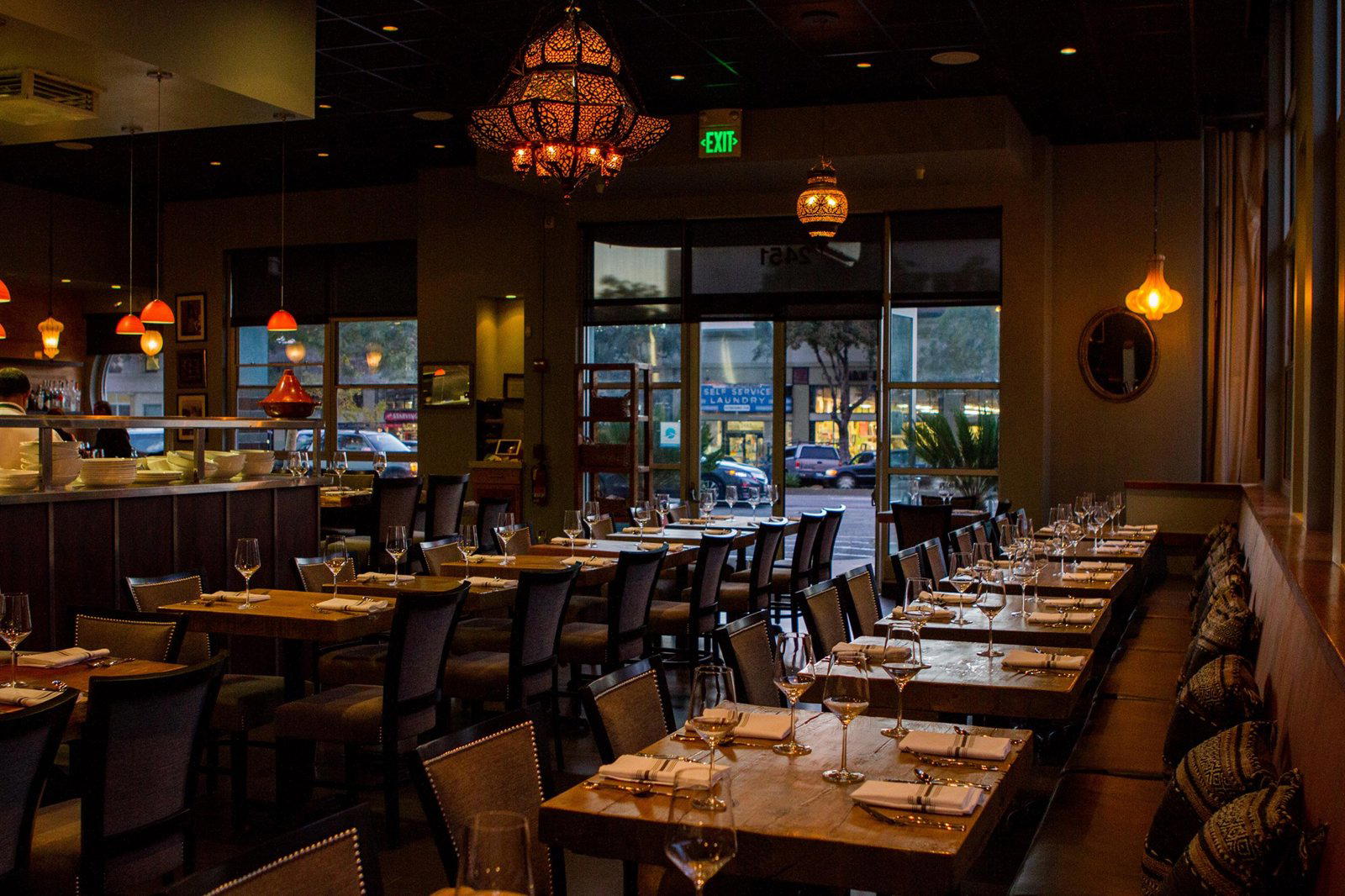
Beautiful clean industrial decor with shimmering open kitchen, bar with floating shelves of bottles, and a relaxing charcoal-dominant palette.