Fernando's Mexican & Brazilian Cuisine
Fernando's Mexican & Brazilian Cuisine sits on the north side of Indianapolis at 834 E 64th St, bringing together two distinct Latin American culinary traditions under one roof. The dual-cuisine format is relatively rare in the Midwest, placing Fernando's in a niche that few Indianapolis restaurants occupy. It draws a neighborhood crowd looking for something beyond the city's more familiar dining patterns.
Pearl is the En Primeur Club membership app — saves, bookings, and concierge access live there. Same editors, same standards.
- Address
- 834 E 64th St, Indianapolis, IN 46220
- Phone
- +13173774779
- Website
- fernandosindy.com
- Directions
- Get directions
 Saves & bookings on Pearl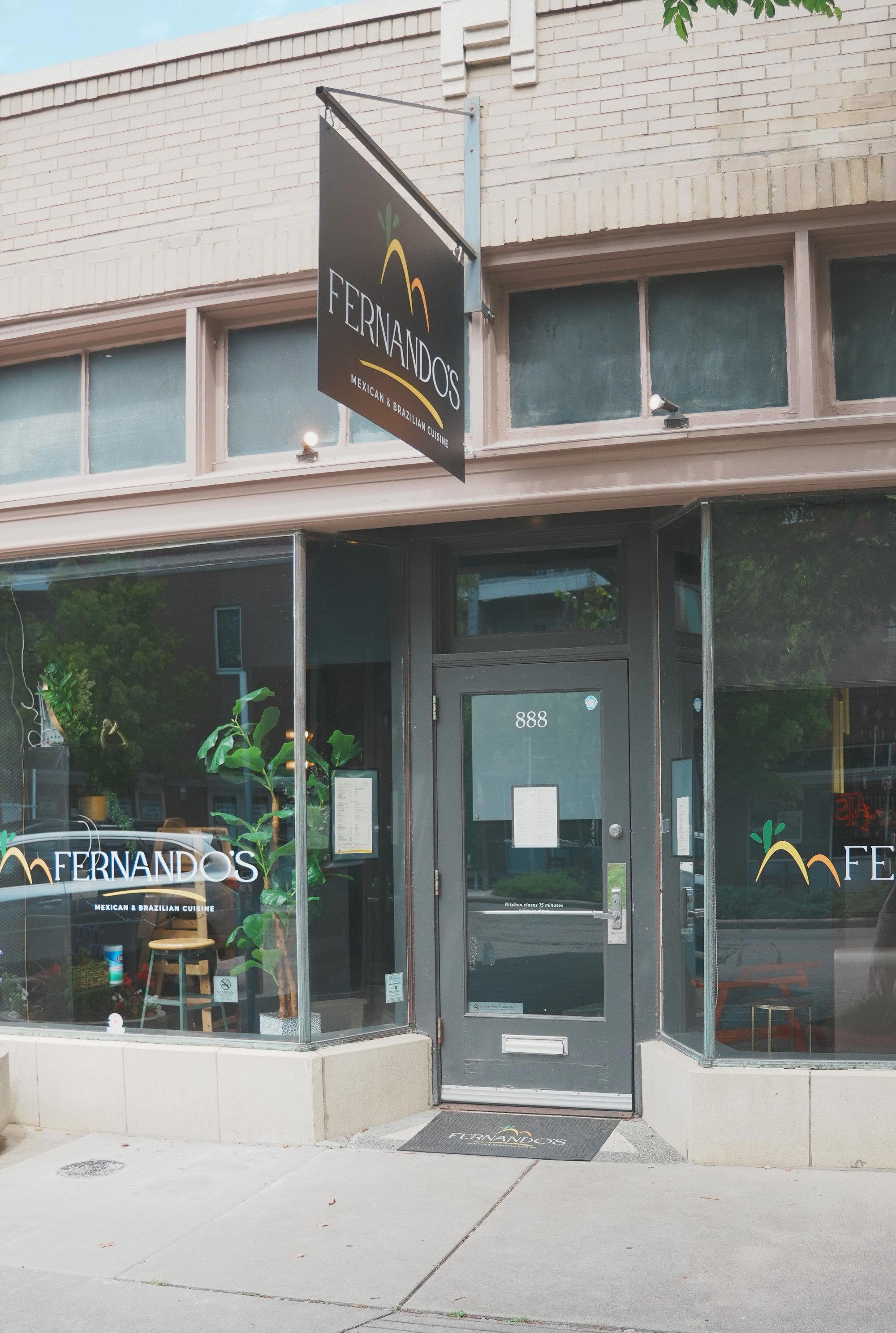
Where Two Latin Traditions Meet on Indianapolis's North Side
The stretch of 64th Street on Indianapolis's north side runs through a residential corridor that doesn't announce itself as a dining destination. There are no marquee signs, no valet lanes, no clusters of competing restaurants vying for the same foot traffic. Fernando's Mexican & Brazilian Cuisine sits at 834 E 64th St, Indianapolis, IN 46220, and draws. Approaching from the street, the scale is domestic rather than institutional, a neighborhood premise with a dual-country proposition that immediately raises a question most diners in the Midwest don't often encounter: what does it mean to eat Mexican and Brazilian food at the same table, under the same roof, on the same menu?
That dual-cuisine format is worth pausing on. Mexican cooking and Brazilian cooking share deep Indigenous and colonial histories, but their flavor grammars diverge considerably. Mexican cuisine builds around chili heat, masa, and complex mole-style layering. Brazilian cooking, particularly the traditions that survive in churrascos and feijoadas, operates on a different axis: wood-fire intensity, slow-cooked legumes, farofa, and the interplay of cured meats with rice. Placing both traditions on one menu is an editorial act, it invites comparison, cross-referencing, and a particular kind of meal pacing that a single-cuisine menu doesn't require.
The Logic of the Dual-Cuisine Ritual
In cities where Latin American dining has deep roots, Los Angeles, Miami, Chicago, the Mexican and Brazilian categories tend to develop separately, with their own neighborhood anchors and specialist followings. Indianapolis operates on a smaller scale, which means Fernando's occupies a position that would be more crowded in a larger market. For context, the Indianapolis dining scene has produced strong individual operators in other categories: Aberdeen Social House holds its own on the American gastropub register, and Ambrosia has staked out its territory in a different direction. ATHENS ON 86th covers the Greek end of the international spectrum. But a kitchen attempting to hold two distinct Latin American traditions simultaneously is a rarer thing in this market.
That rarity carries both opportunity and risk. The ritual of eating at a dual-cuisine restaurant differs from the ritual of eating at a specialist. At a dedicated Mexican counter, a diner follows a relatively legible grammar: antojitos lead to mains, salsas arrive at the table, tortillas anchor the protein. At a Brazilian churrascaria, the logic is abundance and rotation, proteins come in succession, sides are communal, the pace is set by the passadores rather than the diner. Combining those rituals requires the kitchen to define its own house logic: which tradition leads, which plays support, and how the diner is guided through a menu that draws from both.
This is the kind of meal that rewards a deliberate approach. Ordering narrowly, staying on one side of the menu, misses the point of the format. Ordering expansively, across both traditions, is how the kitchen's range becomes legible. Indianapolis diners accustomed to the structured cadence of places like Bakersfield Mass Ave or the Italian logic of Balena Cucina Italiana will find Fernando's operates on a different internal clock, one that benefits from a slower, more exploratory pace.
Indianapolis and the Midwest's Evolving Latin American Scene
The broader context here matters. The Midwest's relationship with Latin American cuisine has historically been underwritten by Mexican-American communities concentrated in specific urban corridors, producing family-run taquerias and regional specialists that rarely attract the kind of critical attention lavished on, say, Le Bernardin in New York City or The French Laundry in Napa. Brazilian cuisine has had an even narrower footprint outside of coastal markets and cities with significant Brazilian diaspora populations. The result is that a restaurant like Fernando's operates in a context where the competition for this specific culinary niche is thin, but so is the educated diner base that knows what to expect from each tradition.
That matters for how the meal unfolds. At a specialist destination, a James Beard-recognized kitchen like Smyth in Chicago or a farm-to-table institution like Blue Hill at Stone Barns in Tarrytown, the diner arrives with a shared vocabulary. At Fernando's, the kitchen does more cultural work, introducing two distinct culinary traditions to a diner population that may be more familiar with one than the other, or unfamiliar with both at the level of their regional specifics. That's not a criticism; it's a structural feature of operating this kind of concept in Indianapolis rather than Miami.
Planning Your Visit
Fernando's is located at 834 E 64th St, Indianapolis, IN 46220, on the city's north side. The address sits in a neighborhood grid that is easier to reach by car than on foot, and street parking is the practical default. One reliable approach is to call ahead or arrive with flexibility on timing, particularly for groups larger than two. The format of a dual-cuisine menu at this scale typically runs better when the table is ready to spend time on it rather than treating it as a fast-turnover stop.
Price and Positioning
Comparable venues nearby, for context on price, style, and recognition.
| Venue | Cuisine | Price | Notes |
|---|---|---|---|
| Fernando's Mexican & Brazilian CuisineThis venue — the venue you are viewing | Not listed | $$ | Not listed |
| Rusty Bucket - 86th & Ditch | Not listed | $$ | 86th & Ditch, American Tavern Comfort Food |
| Flatwater | Broad Ripple, American Gastropub | $$ | Not listed |
| Root & Bone - Indianapolis | Broad Ripple, Polished Southern Comfort | $$ | Not listed |
| ATHENS ON 86th | Not listed | $$ | St. Vincent-Greenbriar, Authentic Greek Mediterranean |
| PIEDRA MEXICAN STEAKHOUSE | Not listed | $$$ | Mass Ave/Bottleworks District, Modern Mexican Steakhouse |
Continue exploring
More in Indianapolis
Restaurants in Indianapolis
Browse all →
Bars in Indianapolis
Browse all →

At a Glance
- Cozy
- Family
- Casual Hangout
- Craft Cocktails
Current opening hours
- Monday
- 11 AM–9 PM
- Tuesday
- 11 AM–9 PM
- Wednesday
- 11 AM–9 PM
- Thursday
- 11 AM–10 PM
- Friday
- 11 AM–10:30 PM
- Saturday
- 11 AM–10:30 PM
- Sunday
- 11 AM–9 PM
Hours can change for holidays and private events. Last verified .
Family-focused with nice outdoor space and casual, comfortable setting.