Farmhouse kitchen Thai cuisine
On West Adams Boulevard, Farmhouse Kitchen Thai Cuisine plants a regional Thai approach in a Los Angeles neighbourhood more accustomed to soul food institutions than Southeast Asian cooking. The menu reads as a structured argument for the breadth of Thai regional tradition rather than a checklist of familiar exports. It sits in a price bracket and postal code that rewards the curious over the habitual.
Pearl is the En Primeur Club membership app — saves, bookings, and concierge access live there. Same editors, same standards.
- Address
- 5560 W Adams Blvd, Los Angeles, CA 90016
- Phone
- (323) 592-3999
- Website
- farmhousethai.com
- Directions
- Get directions
 Saves & bookings on Pearl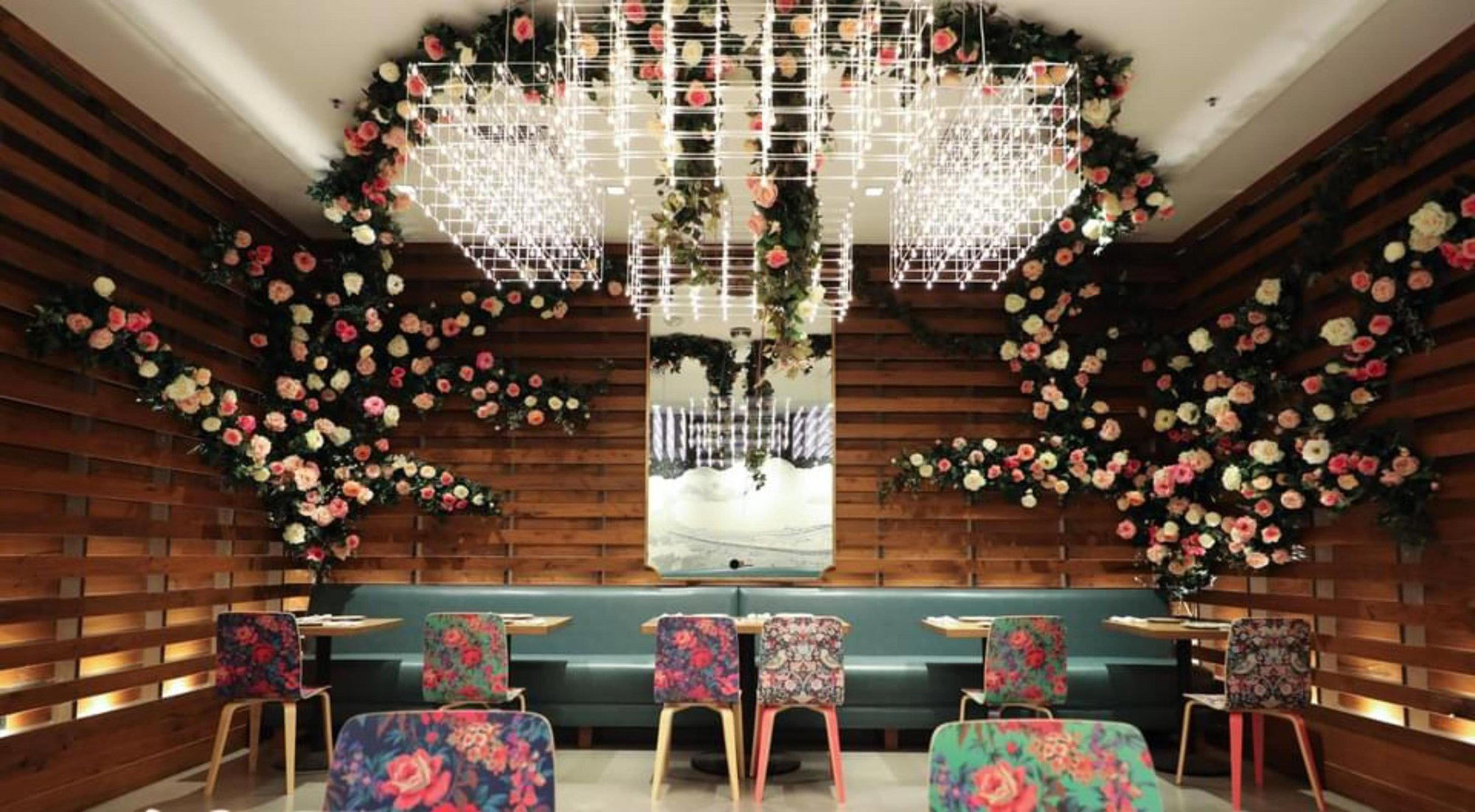
West Adams is a neighbourhood that has spent the last decade being rediscovered rather than invented. Its dining character is shaped by decades of African American culinary tradition, with newer arrivals filling in around that foundation rather than replacing it. Farmhouse Kitchen Thai Cuisine, at 5560 W Adams Blvd, arrives in that context as something specific: a Thai kitchen that reads as a regional project rather than a general-purpose introduction to the cuisine. The building itself sits along a stretch of the boulevard where the commercial rhythm is still irregular enough that a deliberate restaurant feels genuinely placed rather than dropped.
How the Menu Frames the Kitchen
Thai restaurant menus in Los Angeles tend to follow a familiar architecture: a cluster of shared starters, a curries section, a noodles section, and a column of stir-fries that functions as a catch-all. The more interesting kitchens in the city have begun to move away from that structure, letting regional identity or seasonal discipline shape what appears on the page. Farmhouse Kitchen Thai Cuisine operates within the "farmhouse" framing that has become a shorthand across multiple cuisines for a menu organised around provenance and restraint rather than maximum coverage.
That framing carries specific implications. A farmhouse-oriented Thai menu typically foregrounds the herb-heavy, fermentation-inflected dishes of northern and northeastern Thailand, the larbs and jaews and somtams that rarely translate well into high-volume operations because they require freshness and calibration that cannot be batched. When a Thai kitchen in an American city commits to that register, the menu architecture tends to be narrower and more internally coherent than a multi-regional survey. Dishes that would appear as novelties on a broader menu become the central argument.
This matters because it changes how a reader should approach the page. Rather than scanning for familiar anchors, the productive move is to read the menu sequentially, noting which regions are represented and which are absent. The presence of nam prik-style condiment dishes, herb salads, and grilled proteins without heavy sauce work signals a kitchen oriented toward the upper north. The absence of certain Bangkok-style preparations, if that is indeed the case, is as informative as what is included.
West Adams and the Broader LA Thai Scene
Los Angeles has the largest Thai community outside Thailand, concentrated historically in Thai Town along East Hollywood, which gives the city a baseline of Thai cooking that most American cities cannot match. That depth means the bar for seriousness is set by neighbourhood restaurants rather than by fine dining alone. A Thai kitchen opening in West Adams rather than Thai Town is making a locational argument: it is pitching to a different audience, in a different cultural moment, and pricing and formatting accordingly.
The Thai restaurant tier in Los Angeles currently splits between the Thai Town institutions that have been operating for twenty or thirty years, newer fast-casual formats riding the same regional wave in Silver Lake and Echo Park, and a smaller number of higher-commitment operations that sit closer to the tasting-menu price range occupied by Kato and Hayato. Farmhouse Kitchen's West Adams address and its farmhouse positioning place it in a middle tier that is genuinely underserved: more considered than fast-casual, less theatrical than the format restaurants operating at the price point of Somni.
For comparison, the kind of menu discipline that distinguishes the serious end of LA dining, present in Italian form at Osteria Mozza and in seafood form at Providence, is less common in Southeast Asian formats in the city. When a Thai kitchen applies that same structural seriousness to its menu, it occupies a relatively open position in the competitive set.
Regional Thai Cooking as a Critical Framework
Understanding what a Thai kitchen is doing requires some literacy about the four major regional traditions. Central Thai cooking, most familiar to Western diners, is sauce-forward, coconut-heavy, and built around the sweet-salty-sour triangle that exported well globally. Northern Thai cooking from Chiang Mai and its surrounds is earthier, with more bitter herbs, fermented preparations, and pork-forward proteins. Northeastern Thai (Isan) cooking is the sparest and most austere, relying on lime, fish sauce, toasted rice powder, and fresh herbs rather than cooked pastes. Southern Thai cooking brings turmeric and different chili profiles, with longer-cooked curries that differ fundamentally from the central versions.
A kitchen committed to the farmhouse register is most likely drawing on northern and northeastern traditions, which means the menu functions as an education in the parts of Thai cooking that most American diners have not encountered through takeout. That educational quality is a genuine service in a city where the Thai diaspora has maintained the full spectrum but the broader dining public has largely only accessed one corridor of it.
Planning a Visit
West Adams is accessible from the 10 freeway, and the boulevard-facing location means street parking is available, though the neighbourhood's recent restaurant activity has made weekends more competitive for spots. The farmhouse format and neighbourhood positioning suggest a casual-to-mid register for dress and reservation expectations, though the increased attention West Adams has received since the mid-2010s means that arriving without a plan on a Friday or Saturday evening carries risk. Checking current booking availability before visiting is advisable.
Visitors with a wider interest in Los Angeles dining can extend the trip east toward Mid-City or west toward Culver City, both of which have developed enough restaurant density to build a full itinerary. For a broader picture of what the city offers across formats and price points, our full Los Angeles restaurants guide maps the current terrain, alongside our Los Angeles bars guide, hotels guide, wineries guide, and experiences guide.
For those building a longer dining trip that reaches beyond Southern California, points of reference include Lazy Bear in San Francisco, Single Thread Farm in Healdsburg, The French Laundry in Napa, Le Bernardin in New York, Alinea in Chicago, Emeril's in New Orleans, 8 1/2 Otto e Mezzo Bombana in Hong Kong, and Alain Ducasse at Louis XV in Monte Carlo.
How Farmhouse kitchen Thai cuisine Los Angeles: Hours and Casual Dress compares with similar nearby venues.
| Venue | Cuisine | Price |
|---|---|---|
| Mizlala West Adams | Middle Eastern | Not listed |
| Alta Adams | Southern | $$ |
| Bee Taqueria | Mexican | $$ |
| Wally’s | Wine Bar | Not listed |
| Picala | Spanish-California | Not listed |
Continue exploring
More in Los Angeles
Restaurants in Los Angeles
Browse all →
Bars in Los Angeles
Browse all →
Hotels in Los Angeles
Browse all →
Wineries in Los Angeles
Browse all →
At a Glance
- Lively
- Trendy
- Rustic
- Energetic
- Group Dining
- Celebration
- Casual Hangout
- Open Kitchen
- Craft Cocktails
- Local Sourcing
Current opening hours
- Monday
- 11 AM–2 PM, 5–8:15 PM
- Tuesday
- 11 AM–2 PM, 5–9 PM
- Wednesday
- 11 AM–2 PM, 5–9 PM
- Thursday
- 11 AM–2 PM, 5–9 PM
- Friday
- 11 AM–2 PM, 5–9:30 PM
- Saturday
- 12–3 PM, 5–10 PM
- Sunday
- 12–3 PM, 5–9 PM
Hours can change for holidays and private events. Last verified .
Lively and campy with pink and purple lighting, over-the-top floral decor, and a lively party atmosphere.
Know Before You Go
- Getting there
- 5560 W Adams Blvd, Los Angeles, CA 90016