張記九份傳統魚丸

Michelin Plate
Our verdict
On Jishan Street in Jiufen, 張記九份傳統魚丸 represents the kind of ingredient-driven street food that defines northern Taiwan's coastal snack culture. The shop's fish ball tradition draws on the same cold-water catch that has shaped Ruifang District's food identity for generations. For visitors tracing Taiwan's everyday culinary heritage, this address belongs on the itinerary alongside the old town's tea houses and staircase vendors.

Pearl is the En Primeur Club membership app, where members save venues, book tables and use the concierge.
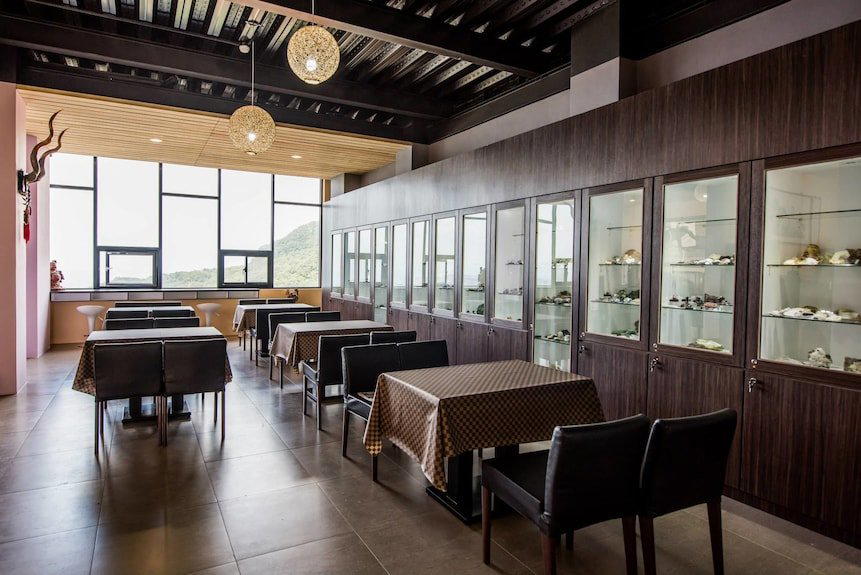
The menu
What to order
- 綜合魚丸湯
- 福州丸
- 魯肉飯
Jishan Street and the Fish Ball Tradition
Jiufen's Jishan Street is one of the most walked food corridors in northern Taiwan, a narrow lane where red lanterns diffuse afternoon light and the smell of broth drifts between shopfronts. The crowds that arrive by bus from Taipei or on the train to Ruifang Station come for the view, the nostalgia, and the food, roughly in that order. What they find is a street that still operates on a pre-tourism logic in places: small producers, single-product shops, and techniques passed down rather than reinvented. 張記九份傳統魚丸 at No. 25 Jishan Street sits inside that older model. The shop makes fish balls (魚丸, yú wán), a preparation so embedded in northern Taiwanese coastal food culture that it functions less as a menu item and more as a regional identity marker.
Fish balls in Taiwan are not a uniform product. The version made along the northeastern coast, where proximity to the Pacific translates directly into access to fresh catch, tends toward a firmer, cleaner texture than the softer Cantonese-influenced variants found further south. The key variable is the fish paste itself: the ratio of fish protein to starch, the freshness of the source material, and whether the balls are hand-shaped or machine-formed all produce meaningfully different results. At shops like 張記, the word 傳統 (traditional) in the name is a sourcing and method claim as much as a marketing word. It signals a commitment to the hand-made process and to raw material that reflects the geography of Ruifang and the fishing ports that supply it.
Where the Ingredient Comes From
Ruifang District occupies the northeastern corner of New Taipei City, running from the mountain ridgelines of Jiufen and Jinguashi down to the coast at Shuinandong and the fishing harbour at Badouzi. The sea access here is not incidental to the food. Northeastern Taiwan faces the Kuroshio Current, which pushes cold, nutrient-dense water along the coast and supports species like mackerel, wolf herring, and various demersal fish that have historically supplied the region's fish paste industry.
Traditional fish ball production in this area relies on those local catches rather than imported or frozen fish, and the difference is perceptible in the finished product: less filler, more pronounced ocean flavour, and a texture that holds its shape in broth without becoming rubbery. This sourcing geography is what separates a regional fish ball operation from the industrially produced equivalents sold in supermarkets across Taiwan. The latter prioritise shelf stability and uniformity; the former prioritise the flavour profile of a specific catch from a specific coastline. For context, the same logic of ingredient provenance driving quality in a very different price tier applies at restaurants like JL Studio in Taichung or logy in Taipei, where sourcing decisions shape the menu from the ground up. At 張記, the stakes are lower and the format is street food, but the underlying principle, that ingredient origin determines the ceiling of what a dish can be, is the same.
The Format and the Street Context
Jishan Street operates at peak capacity on weekends and during national holidays, when Jiufen draws visitors from across Taiwan and from Japan, where the town has a specific cultural resonance tied to its appearance in film and television from the 1990s. On those days, the street becomes genuinely difficult to move through, and the smarter approach is to arrive before 11am or on a weekday when the lane returns to something closer to its working character. Shops like 張記 tend to sell out of prepared product as the day progresses, which makes earlier visits practical rather than merely pleasant.
The format at this type of traditional fish ball shop is counter service: you order, you receive a bowl of broth-based soup or a portion of fish balls to eat standing or at a small table nearby, and you move on. There is no reservation system, no dress code, and no extended commitment of time. The price point sits at the low end of Taiwanese street food, consistent with what you would expect on a tourist-adjacent lane where the majority of vendors still price for local consumption patterns rather than visitor expectations. For the broader regional picture, our full Ruifang District restaurants guide maps the range from street-level snacks to sit-down meals across the area.
Visitors who have also eaten at traditional fish ball shops in Keelung or along the north coast will find the Jiufen version occupies a similar register: broth-forward, simply garnished, and constructed around the quality of the fish paste rather than supplementary ingredients. The bowl is not a complex construction. Its interest lies entirely in what the paste can and cannot do, which is precisely why sourcing matters so much to producers who operate at this scale.
Ruifang's Wider Food Character
Ruifang District's food identity is built around the snack rather than the restaurant meal. The town's history as a mining settlement, followed by decades of rural quiet before tourism arrived, produced a food culture of necessity and practicality: things that were cheap, filling, portable, and made from what the land and sea supplied. Fish balls, taro balls, sweet potato balls, and peanut butter-coated mochi represent that heritage more accurately than any formal dining room in the area. Shops like 阿柑姨芋圓 illustrate the same pattern: single-product, ingredient-specific, and deeply local in their sourcing logic.
Across Taiwan, this kind of traditional street food operation exists in productive tension with the country's more internationally visible fine dining scene. The GEN in Kaohsiung, A Xia in Tainan, and Golden Formosa Taiwanese Cuisine in Shilin each operate at the formal end of Taiwanese culinary identity, but the ingredient traditions they reference often trace back to exactly the kind of coastal and agricultural sourcing that 張記 and its neighbours on Jishan Street practice without ceremony. The fish ball is not a lesser version of Taiwanese food culture. It is one of its primary texts.
Other regional food addresses worth mapping alongside a Jiufen visit include Chenggong Douhua in Chenggong and Ah Zhen Rou Bao in Lukang for comparable single-product, ingredient-led operations across Taiwan's traditional food geography. For those building a broader Taiwan itinerary that spans the street and the formal, Good Good Hainan Chicken Rice in Xinyi and GARDENh in Yonghe District offer useful reference points at different price tiers.
Planning Your Visit
Getting to Jishan Street requires either the train to Ruifang Station followed by a local bus toward Jiufen, or a direct bus from Taipei's Zhongxiao Fuxing MRT station. The bus from Taipei takes roughly 70-90 minutes depending on traffic and is the more direct option. From Ruifang Station, Bus 788 and 825 serve the Jiufen stop. Arriving by car is possible but parking is limited and the final approach to Jishan Street is pedestrian-only. No reservation is required or possible at 張記, walk-in only, with availability dependent on sell-out timing. The practical window for a comfortable visit is Tuesday through Friday, before noon, when crowds are thinnest and product is freshest.
Frequently asked questions
Can I bring kids to 張記九份傳統魚丸?
Jishan Street is an open pedestrian lane, and a fish ball counter like this one operates without table service or formal seating requirements. The format, small portions, low price points, eat-and-walk, suits families with children well. The street itself is narrow and crowded on weekends, so pushchairs are impractical.
How would you describe the vibe at 張記九份傳統魚丸?
This is a working street stall on one of northern Taiwan's busiest food lanes, not a sit-down restaurant. Red lanterns overhead, foot traffic on all sides, and orders turned around quickly, the atmosphere is functional and communal rather than curated. Weekday visits are considerably calmer than weekends or national holidays.
How does 張記九份傳統魚丸 fit into the broader food tradition of Ruifang District?
Ruifang's food identity developed around portable snacks rather than restaurant meals, a pattern shaped by its history as a mining settlement where workers ate quickly and inexpensively. Fish balls connect the district to the northeastern coastline, the fish supply runs from the nearby sea up through communities like Jiufen. At No. 25號 Jishan Street, 張記 operates within that same tradition, making the stall a continuation of a regional eating habit rather than a tourist-facing novelty.
What dish is 張記九份傳統魚丸 famous for?
The name says it directly: 傳統魚丸, traditional fish balls. On Jishan Street, fish ball vendors compete on texture and seasoning, and 張記 has operated long enough at No. 25號 to hold a repeat local following. The preparation follows the coastal northern Taiwan style, where fresh fish is ground and formed by hand rather than processed.
Where do I go for 張記九份傳統魚丸?
張記九份傳統魚丸 is located at No. 25號, Jishan St, Ruifang District, New Taipei City, Taiwan 224, Ruifang District.
Do I need a reservation for 張記九份傳統魚丸?
No reservation system applies here, this is a street stall format on Jishan Street, Ruifang District. Walk-up ordering is the only way to purchase. On peak weekends and holidays when Jiufen draws large crowds, expect a short queue.
What do critics highlight about 張記九份傳統魚丸?
No formal critical record or award documentation is on file for this stall. What draws repeat attention in northern Taiwan food circles is consistency: a vendor that holds a fixed address on Jishan Street across years of heavy tourist traffic signals something reliable in a corridor where turnover is common.
How It Stacks Up
Comparable venues nearby, for context on price, style, and recognition.
| Venue | Cuisine | Price | Awards | Notes |
|---|---|---|---|---|
| 張記九份傳統魚丸This venue (the venue you are viewing) | Traditional Taiwanese Fish Balls | $1–10 | Michelin Plate | Not listed |
| 阿柑姨芋圓 | other | Not listed | Not listed | Ruifang District |
| 心心港式腸粉 | Hong Kong Style Rice Rolls | $1–10 | Not listed | 松山區饒河街夜市 |
| Ling's Dumplings | Taiwanese Dumpling House | Not listed | Not listed | East District |
| 老龍師肉包 | Traditional Taiwanese Steamed Pork Buns | $1–10 | Not listed | Lukang |
| 金盆阿嬤の茶葉蛋 | Traditional Taiwanese Tea Eggs | Not listed | Not listed | 魚池 |
Recognition history
Dated appearances from independent guides and award organizations, with the underlying list record or original source where available.
Michelin Plate
Michelin
Continue exploring
More in Ruifang District
Restaurants in Ruifang District
All restaurants in Ruifang District →
Bars in Ruifang District
Browse all →
Hotels in Ruifang District
Browse all →


Wineries in Ruifang District
Browse all →
Details
- Classic
- Rustic
- Well Known
- Casual Hangout
- Family
- Historic Building
- Standalone
- Street Scene
- A La Carte
Current opening hours
- Monday
- 10:40 AM–7:30 PM
- Tuesday
- Closed
- Wednesday
- Closed
- Thursday
- 10:40 AM–7:30 PM
- Friday
- 10:40 AM–7:30 PM
- Saturday
- 10:40 AM–8 PM
- Sunday
- 10:40 AM–8 PM
Hours can change for holidays and private events. Hours as of .
Lively and bustling atmosphere in a clean shop filled with tables and chairs, packed with tourists.