Elio's
Elio's on the Upper East Side has operated as a reliable barometer of the neighbourhood's appetite for Italian-American cooking, the kind of room where regulars outnumber first-timers and the dining room hum carries more weight than any press release. It occupies a specific tier in New York's Italian canon: not the white-tablecloth formality of midtown, not the red-sauce nostalgia of the outer boroughs, but something more socially loaded and harder to categorise.
Pearl is the En Primeur Club membership app — saves, bookings, and concierge access live there. Same editors, same standards.
- Address
- 1621 2nd Ave, New York, NY 10028
- Phone
- +1 212 772 2242
- Website
- eliosrestaurant.com
- Directions
- Get directions
 Saves & bookings on Pearl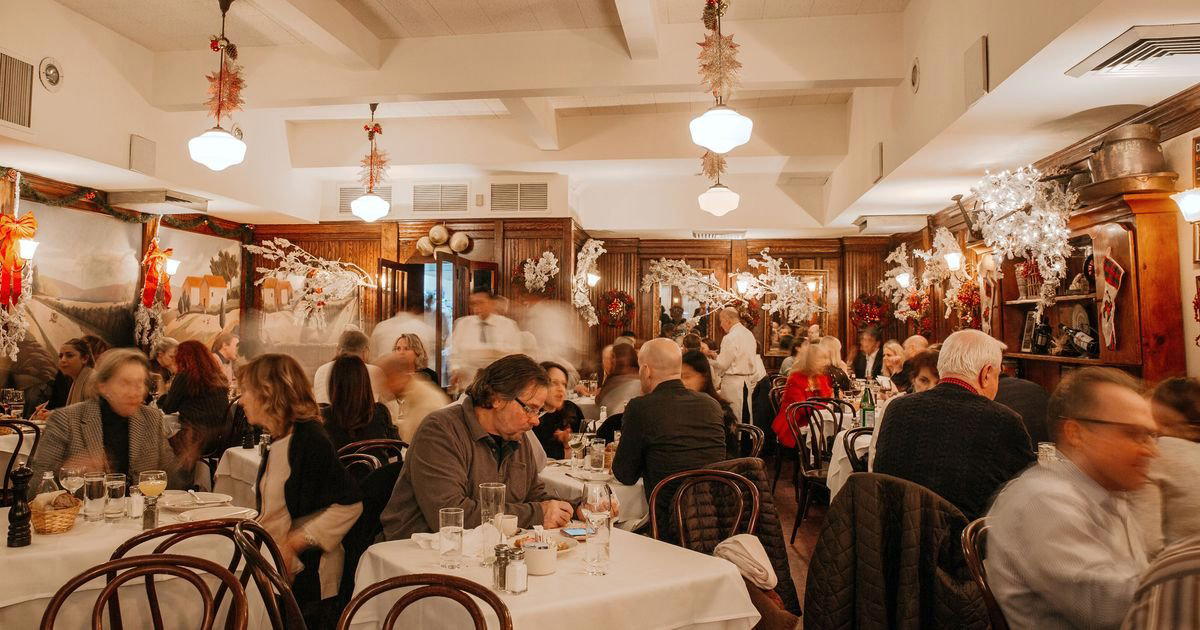
The Room Before the Food
Elio's is a classic Italian neighborhood trattoria in New York City on the Upper East Side at 1621 2nd Ave, with a $100 per person price point. Elio's, at 1621 Second Avenue on the Upper East Side, belongs to that category. The dining room operates as a social institution as much as a culinary one, its regulars cycling through with the kind of reliable frequency that signals something more than habit. In a neighbourhood that has cycled through dining trends without fully committing to any of them, that kind of durability is its own credential.
Italian-American Cooking and What It Actually Means in This City
The phrase "Italian-American" covers an enormous range in New York, from the red-gravy delis of Arthur Avenue to the hyper-regional tasting menus that now compete at the same price tier as Le Bernardin and Eleven Madison Park. Elio's sits somewhere in the middle of that spectrum, a position that requires more discipline to maintain than either extreme. At the low end, nostalgia does the work. At the high end, technique and sourcing become the story. In the middle, where the room and the cooking have to carry equal weight, the margin for drift is narrow.
What defines this tier in New York is the intersection of imported culinary grammar with locally available product. The backbone of the cooking is recognisably Italian in structure, preparations that owe their logic to the regional traditions of the peninsula, but the ingredients are sourced from an American supply chain that has changed substantially over the past two decades. Greenmarket produce, better domestic proteins, and improved access to Italian imports have collectively shifted what mid-tier Italian dining can achieve without rethinking its format. The leading rooms in this category treat that shift as an opportunity; the rest ignore it and slide toward irrelevance.
For context on how technique-forward Italian cooking has evolved in the American fine dining space, operations like Frasca Food & Wine in Boulder have demonstrated that regional Italian rigour, applied to domestically available ingredients, can anchor a serious program without importing the entire infrastructure. That argument is now well-established across the country, from Smyth in Chicago to Single Thread Farm in Healdsburg, where the local-ingredient, imported-method framework has become a credible alternative to both nostalgia and novelty.
The Upper East Side Context
Second Avenue in the upper seventies and eighties is not where New York's restaurant press tends to focus its attention. The neighbourhood draws less speculative dining capital than downtown corridors, and its regulars, largely residential, more likely to return weekly than to chase openings, create a different kind of market pressure. Restaurants here succeed or fail on repeat business, which rewards consistency over ambition and makes the room itself a more important variable than it would be in, say, the West Village or Tribeca.
That dynamic shapes what Elio's has become over its years of operation. The social legibility of the dining room, who is there, who is seated where, how the staff moves between tables, carries cultural information that food alone cannot transmit. This is a feature of a small number of New York restaurants across categories and price points, from the power-lunch institutions of midtown to the neighbourhood anchors that outlast the trends around them. It is not the same thing as quality, but it is also not unrelated to it.
Where Elio's Sits in the Broader Italian Canon
Internationally, the conversation about what Italian cooking can achieve at the table has been reframed by a generation of chefs who treat regional Italian product as non-negotiable. Atelier Moessmer Norbert Niederkofler in Brunico has built an entire philosophy around Alpine Italian ingredients; Dal Pescatore in Runate represents the kind of multi-generational continuity that gives Italian regional cooking its credibility. American Italian restaurants, including those in New York, inherit a version of that tradition filtered through immigration, adaptation, and decades of local market development.
The leading American rooms in this lineage, and the Upper East Side has historically housed several, understand that the cooking is not a copy of anything European but a distinct thing with its own logic and its own standards. The question worth asking of any restaurant in this category is whether it is developing that logic or simply trading on the associations the format carries. Elio's longevity on Second Avenue suggests it has found an answer its regulars find persuasive.
Comparable Venues
Comparable venues nearby, for context on price, style, and recognition.
| Venue | Cuisine | Price | Notes |
|---|---|---|---|
| Elio'sThis venue — the venue you are viewing | Classic Italian Neighborhood Trattoria | $$$$ | Not listed |
| DelBianco Italian Restaurant | Upscale Northern Italian | $$$$ | Midtown-Times Square |
| Harry Cipriani | Classic Venetian Italian | $$$$ | Central Park |
| Cecconi's | Modern Northern Italian | $$$$ | Downtown Brooklyn-DUMBO-Boerum Hill |
| Sistina | Classic Italian Fine Dining | $$$$ | Upper East Side-Carnegie Hill |
| San carlo | Piedmontese Osteria | $$$$ | Soho |
Continue exploring
More in New York City
Restaurants in New York City
Browse all →
Bars in New York City
Browse all →
Hotels in New York City
Browse all →







At a Glance
- Classic
- Cozy
- Intimate
- Date Night
- Business Dinner
- Special Occasion
- Standalone
- Extensive Wine List
Current opening hours
- Monday
- 5–11:30 PM
- Tuesday
- 5–11:30 PM
- Wednesday
- 5–11:30 PM
- Thursday
- 5–11:30 PM
- Friday
- 5–11:30 PM
- Saturday
- 5–11:30 PM
- Sunday
- 4:30–11:30 PM
Hours can change for holidays and private events. Last verified .
Warm, traditional atmosphere with bustling, crowded seating that creates a lively neighborhood vibe.