


1 Michelin Star · Relais Chateaux Award · Guía Repsol 1 Sol
Our verdict
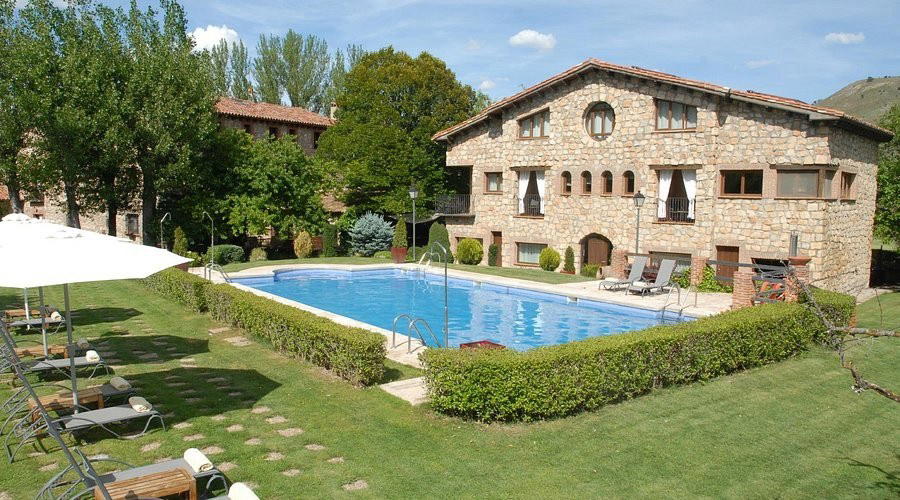
A 15th-century flour mill 6km outside Sigüenza, El Molino de Alcuneza holds one Michelin Star and one Green Star (2025) for modern cuisine that draws directly from the surrounding Castilian mountain terrain. Siblings Samuel and Blanca Moreno run both the restaurant and hotel, anchoring three tasting menus around seasonal game, wild mushrooms, and produce from the property's own garden.

Pearl is the En Primeur Club membership app, where members save venues, book tables and use the concierge.
A Mill in the Mountains, and What It Serves
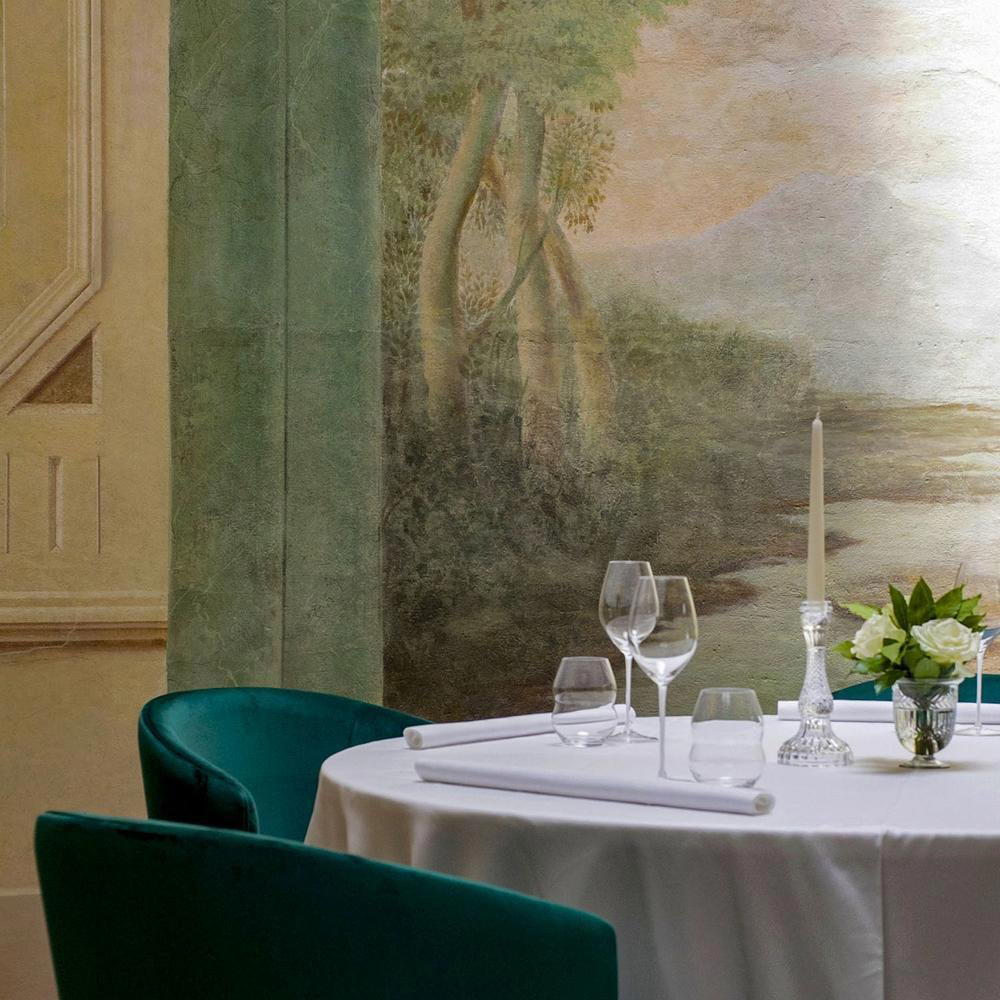
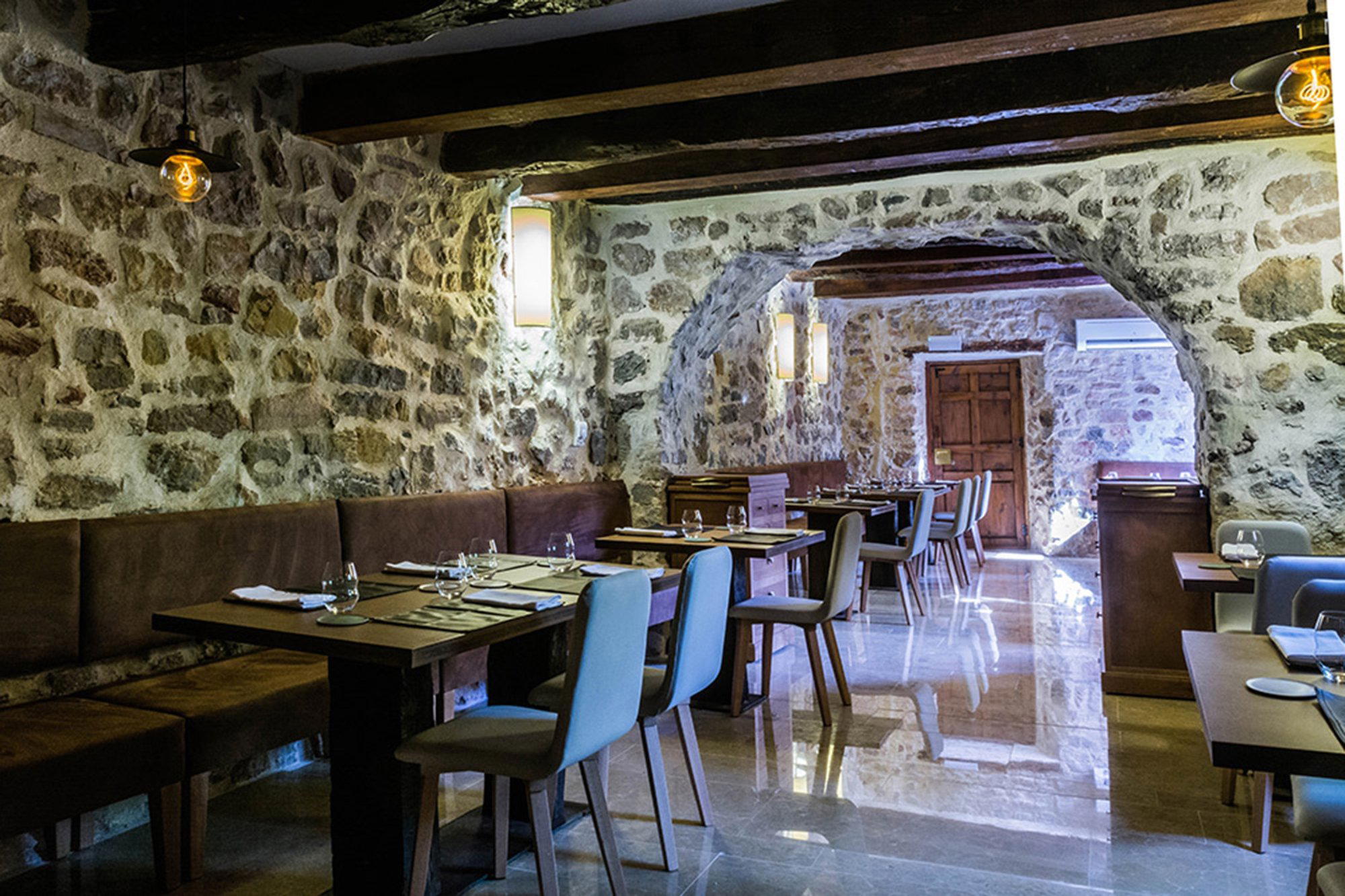
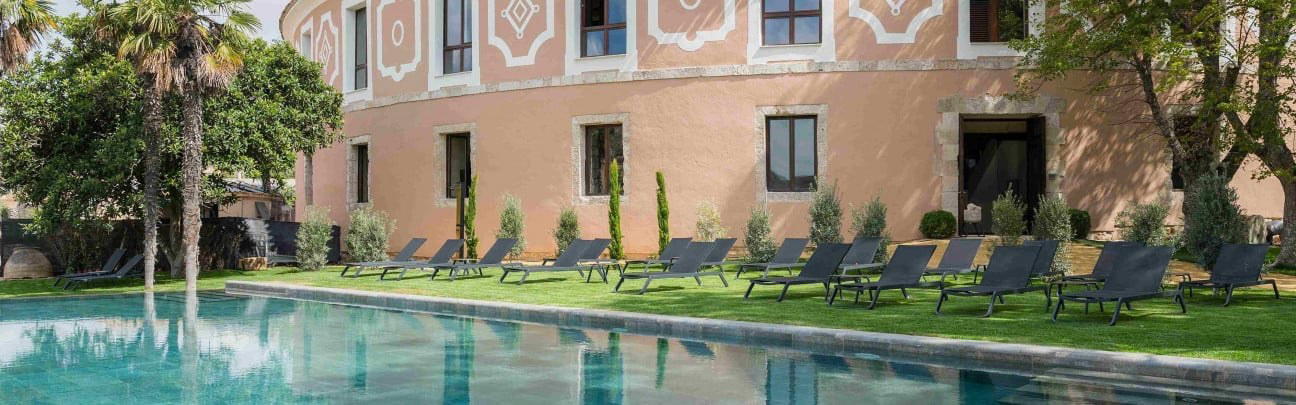
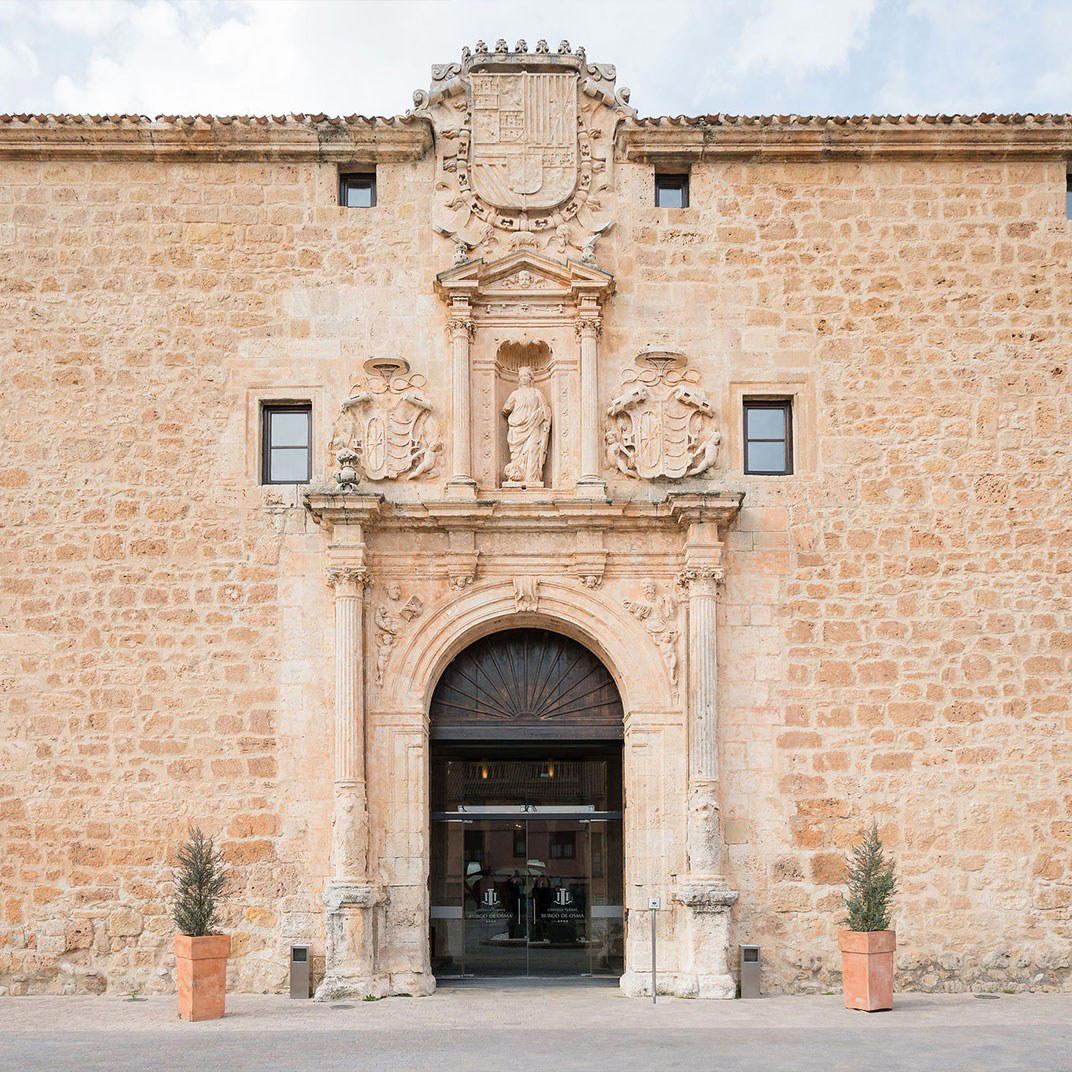
The road from Sigüenza to Alcuneza runs through dry Castilian countryside that shifts, within a few kilometres, into the quieter register of the Sierra Ministra foothills. The mill itself announces its age through stone walls and heavy timber, the kind of structure that resists renovation into something sleek and instead absorbs it, becoming somewhere that feels accumulated rather than designed. Inside, the dining rooms carry that weight: natural materials, enclosed glass terrace facing the landscape, a pace set by the terrain outside rather than by any urban rhythm. For a certain kind of traveller, arriving here from Madrid along the A2, roughly 125 kilometres, is itself the first course.
Across Spain, a generation of restaurants has staked its identity on the provenance of its ingredients, placing sourcing at the centre of the menu rather than treating it as a footnote. That movement has mostly played out in cities, at addresses like Azurmendi in Larrabetzu or Ricard Camarena in València, where chefs build relationships with producers across a wider region. El Molino de Alcuneza operates on a more compressed logic: much of what arrives at the table grows, forages, or grazes within walking distance of the kitchen.
Where the Food Comes From
The mountains around Sigüenza produce a specific kind of larder. Wild mushrooms emerge from the oak and pine forests in autumn. Game, deer, partridge, wild boar, defines the colder months. The property's own kitchen garden supplies vegetables across seasons, closing the distance between soil and plate to a degree that most urban restaurants cannot replicate regardless of how carefully they source. This is not a philosophical position so much as a geographic reality: the restaurant is located inside the terrain it cooks.
Samuel and Blanca Moreno, the brother and sister team running the kitchen and front of house respectively, have shaped a menu that treats this proximity as its primary discipline. The seasonal focus means the kitchen is genuinely constrained by what is available, which in practice produces menus that read differently in October than they do in March. That constraint is the editorial logic behind the Michelin Green Star awarded in 2025, a designation that Michelin reserves for operations demonstrating serious commitment to sustainable gastronomy. Spain has a growing number of Green Star holders, but very few sit in settings where the supply chain is this short.
The Michelin one star, carried through 2024 and confirmed again for 2025, positions El Molino de Alcuneza in the mid-tier of Spain's starred dining, below the concentration of three-star addresses in the Basque Country and Barcelona, Arzak in San Sebastián, El Celler de Can Roca in Girona, Cocina Hermanos Torres in Barcelona, Martin Berasategui in Lasarte-Oria, but in a category of its own in terms of setting. No starred restaurant in Castilla-La Mancha occupies quite the same position: a working mill conversion, hotel-attached, in open countryside, with sourcing this direct.
Three Menus, One Philosophy
The restaurant structures its offer around three tasting menus: Molienda, Clásicos, and Esencia. The names signal different entry points into the kitchen's thinking, with Clásicos suggesting a retrospective view of the restaurant's own history and Esencia pointing toward a more distilled, current expression. Molienda (the word for milling, a nod to the building's origin) sits somewhere between the two. Choosing between them requires some advance consideration, and the restaurant's own guidance at booking is worth following.
Bread programme deserves specific mention. Michelin's own notes single out the house bread as among the finest homemade artisan selections in Spain, made with organic spelt and other cereal varieties. That is a narrow, verifiable claim rather than generic praise, and it places the bread in a category that most restaurants, starred or otherwise, do not compete in. Bread of this kind functions as a declaration of intent: it signals that the kitchen's attention extends to the beginning of the meal and to grains as a craft category, not just a supporting element.
Spain's Sourcing Story at a Different Scale
Spain's most-discussed restaurants tend to occupy a different register. DiverXO in Madrid and Aponiente in El Puerto de Santa María operate as creative laboratories, their sourcing ambitious but global in scope. Mugaritz in Errenteria and Quique Dacosta in Dénia work at the conceptual frontier of what Spanish cooking can mean. El Molino de Alcuneza is not in conversation with that tier, nor does it need to be. Its peer group is smaller: mountain-territory restaurants in rural Spain where the sourcing case is made by geography as much as by technique, and where the hotel-restaurant format allows a slower, more immersive visit than a single dinner in a city allows.
Internationally, that format has precedent. Restaurants like Frantzén in Stockholm have shown that a destination-dining format, where the setting is integral to the experience, commands its own premium positioning and attracts a different kind of guest than urban fine dining does. El Molino de Alcuneza operates at a lower price point, €€€ against the €€€€ of Spain's three-star tier, which makes it accessible to a wider range of visitors without repositioning itself as casual.
The Hotel and the Wider Visit
The restaurant sits within a hotel that occupies the same restored mill building, making an overnight stay the natural frame for a visit. Sigüenza itself, 6 kilometres away, is a medieval town with a Parador and a cathedral, substantial enough to reward a half-day of walking without requiring more. The nearest major airport is Madrid-Barajas, 125 kilometres away, and the Sigüenza train station is 5 kilometres from the property, making the mill reachable without a car for those willing to arrange a local transfer for the last leg. Most guests arriving by train find that pre-arranged transport covers the gap efficiently.
For those driving, the A2 from Madrid is a direct route and the journey runs to roughly 90 minutes depending on traffic out of the capital. The GPS coordinates (41.1054, -2.6070) place the mill precisely enough that navigation apps handle the approach without ambiguity. Sigüenza itself is worth including in our full Sigüenza restaurants guide as a planning reference, alongside our full Sigüenza hotels guide, our full Sigüenza bars guide, our full Sigüenza wineries guide, and our full Sigüenza experiences guide for anyone building a longer stay in the province.
The other Michelin-starred address in Sigüenza, El Doncel, operates in town and offers a different frame for the same regional territory. Taken together, the two restaurants give Sigüenza a starred dining density that is disproportionate to the town's size, and that says something about how seriously the surrounding landscape is being taken as a culinary source.
For a rural property this dependent on repeat visitors and word-of-mouth, that consistency is more instructive than a higher rating based on a smaller sample.
Planning Your Visit
El Molino de Alcuneza is located at Molino de, 19264 Alcuneza, Guadalajara, Spain, approximately 6 kilometres from Sigüenza and 125 kilometres from Madrid-Barajas International Airport along the A2. The Sigüenza train station is 5 kilometres from the property. Pricing sits at the €€€ tier, below the top end of Spain's starred dining but above the local casual register. Three tasting menus (Molienda, Clásicos, Esencia) are offered in the main dining rooms and the enclosed glass terrace. The double Michelin distinction, one star for cooking, one Green Star for sustainability, reflects both culinary quality and the sourcing model that defines what the kitchen cooks. Booking in advance is advisable, particularly for autumn visits when the mushroom and game season draws guests specifically for those ingredients.
Frequently asked questions
Is El Molino de Alcuneza good for families?
The €€€ price point and structured tasting menu format (Molienda, Clásicos, or Esencia) make this better suited to adults and older teenagers who will engage seriously with a multi-course meal. The hotel setting within a restored 15th-century mill, 6 kilometres from Sigüenza, adds an overnight dimension that works well for families treating the visit as a destination rather than a dinner out.
What's the vibe at El Molino de Alcuneza?
Quiet, unhurried, and grounded in its physical setting: stone walls, wood, and a glass-fronted enclosed terrace overlooking the Castilian countryside around Sigüenza. This is a one Michelin Star and Green Star restaurant that leans into its rural mill identity rather than projecting urban polish, closer in register to a serious country-house table than a city fine-dining room.
Is El Molino de Alcuneza award-winning?
El Molino de Alcuneza has received recognition including: This restaurant is part of a delightful hotel situated some 6km from the medieval town of Sigüenza, where the owners have restored a 15C flour mill. Here, surrounded by stone, wood and myriad tasteful details, the brother and sister team of….
What's the best thing to order at El Molino de Alcuneza?
The tasting menu format is where the kitchen's sourcing logic reads most clearly. Wild mushrooms, game, and vegetables from the property's own garden anchor the seasonal offer, and the homemade organic spelt bread, cited by Michelin as among the strongest artisan bread programmes in Spain, is a course in its own right. Of the three menus (Molienda, Clásicos, Esencia), the choice depends on how deep you want to go into the territory's larder.
Budget Reality Check
| Venue | Cuisine | Price | Awards | Notes |
|---|---|---|---|---|
| El Molino de AlcunezaThis venue (the venue you are viewing) | Modern Spanish Farm-to-Table | $100–150 | 1 Michelin Star · Relais Chateaux Award | Not listed |
| Aponiente | Avant-Garde Marine Seafood | $200–300 | 3 Michelin Stars · World's 50 Best #84 | Progressive - Seafood, Creative |
| Arzak | Contemporary Basque Fine Dining | $300–500 | 3 Michelin Stars · World's 50 Best #31 | Modern Basque, Creative |
| DiverXO | Avant-Garde Spanish Tasting Menu | $300–500 | 3 Michelin Stars · World's 50 Best #4 | Progressive - Asian, Creative |
| El Celler de Can Roca | Creative Catalan Fine Dining | $300–500 | 3 Michelin Stars · World's 50 Best #2 | Progressive Spanish, Creative |
| Quique Dacosta | Avant-Garde Spanish Fine Dining | $300–500 | 3 Michelin Stars · World's 50 Best #65 | Creative |
Recognition history
Dated appearances from independent guides and award organizations, with the underlying list record or original source where available.
Michelin 1 Star
Michelin
Guía Repsol 1 Sol
Guía Repsol
Relais Chateaux Award
Relais Chateaux
Full recognition history (5 entries)
Michelin 1 Star
Michelin
Michelin 1 Star
Michelin
Continue exploring
More in Sigüenza
Restaurants in Sigüenza
All restaurants in Sigüenza →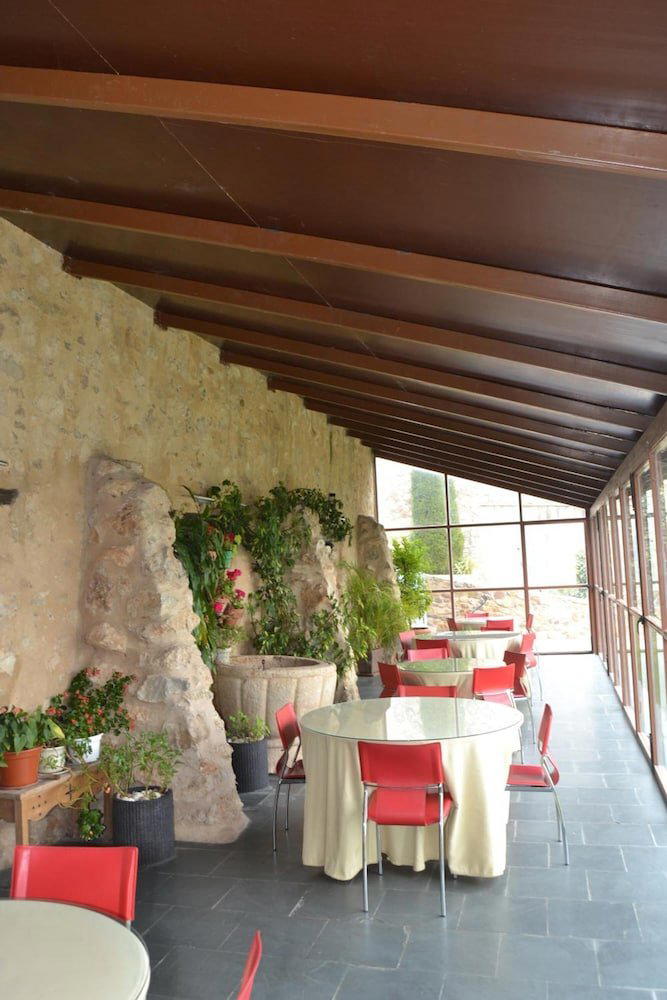
Details
- Rustic
- Elegant
- Cozy
- Intimate
- Scenic
- Date Night
- Special Occasion
- Historic Building
- Terrace
- Garden
- Extensive Wine List
- Farm To Table
- Local Sourcing
- Organic
- Garden
- Mountain
- Tasting Menu
- Vegetarian Friendly
Surrounded by stone, wood, and tasteful details in historic mill setting, with an enclosed glass-fronted terrace offering a quiet, welcoming, and relaxing atmosphere.