El Indio Mexican Restaurant and Catering
El Indio Mexican Restaurant and Catering on India Street is one of San Diego's most durable Mexican food institutions, operating in Mission Hills where the neighborhood's low-rise character and walkable streets have kept it grounded in the everyday rhythms of the city. The format is casual and counter-led, placing it firmly in a different tier from the city's tasting-menu circuit while occupying the kind of community anchor role that no amount of Michelin-chasing replaces.
Pearl is the En Primeur Club membership app — saves, bookings, and concierge access live there. Same editors, same standards.
- Address
- 3695 India St, San Diego, CA 92103
- Phone
- +1 619 299 0333
- Website
- elindiosandiego.com
- Directions
- Get directions
 Saves & bookings on Pearl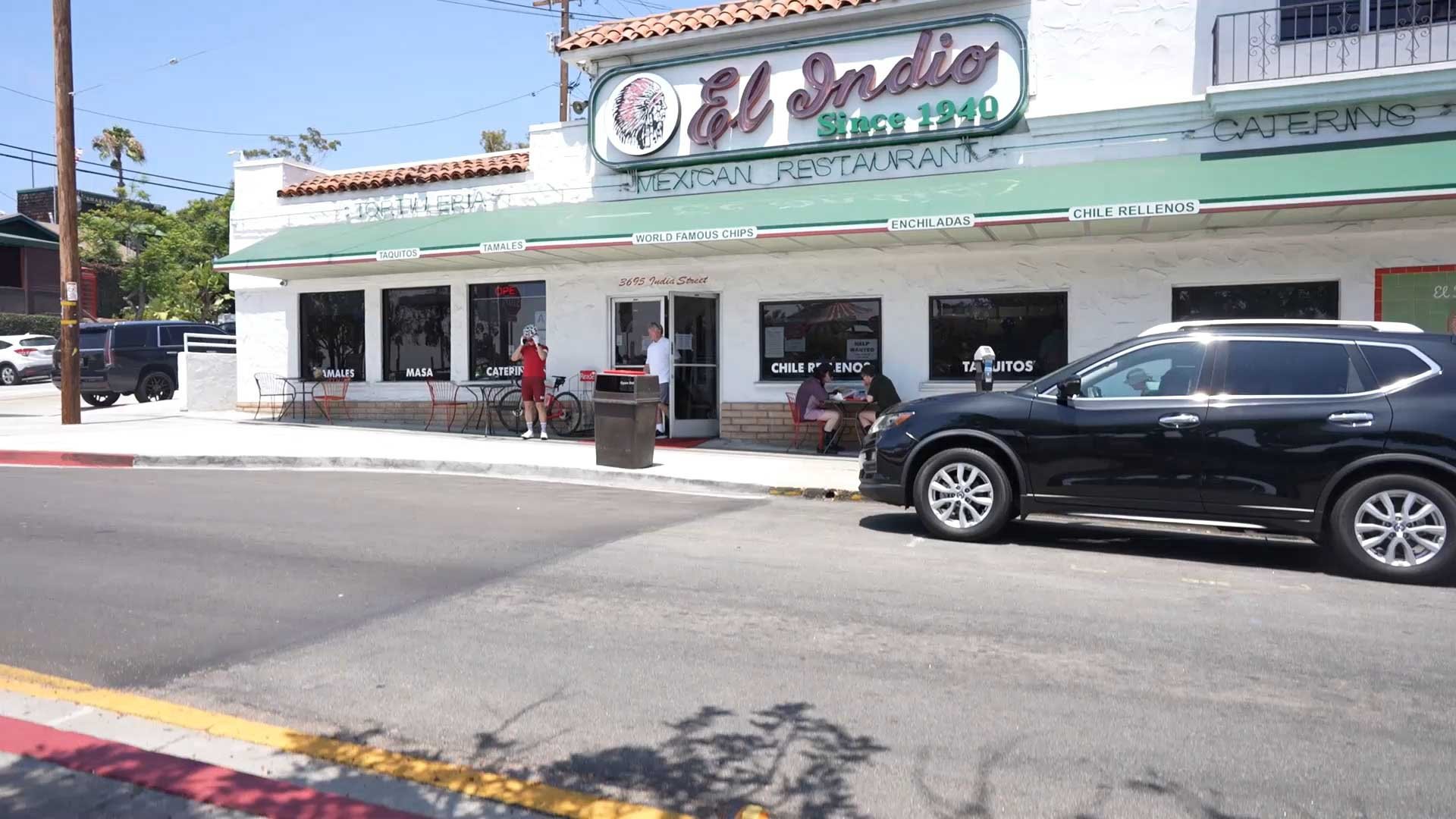
India Street and the Architecture of Everyday Mexican Food
San Diego's Mexican food scene operates across a wide register, from the prix-fixe ambition of Addison and the precision counter format of Soichi at the leading end, down through neighborhood taquerias and catering operations that have been serving the same zip codes for decades. El Indio Mexican Restaurant and Catering at 3695 India Street sits squarely in the latter category, and that positioning is not a limitation so much as a definition. In a city where Mexican food functions as both daily sustenance and cultural record-keeping, the casual counter-service format carries its own form of authority.
India Street in Mission Hills is a stretch of San Diego that resists the kind of slick redevelopment that has reshaped other corridors. The built environment here runs to low-scale commercial buildings, older bungalows on side streets, and the kind of storefront continuity that allows a restaurant to operate for generations without feeling incongruous. Approaching El Indio, the physical language is direct: a corner presence on a walkable block, the kind of space where the transaction between kitchen and diner is uncomplicated by theater or table choreography. This is part of what makes long-running neighborhood Mexican restaurants in Southern California matter as cultural anchors rather than dining destinations in the conventional sense.
Counter Format and What It Signals
Counter-service Mexican restaurants in San Diego operate differently from their sit-down counterparts in terms of how they build regulars. The format removes the friction of reservations, dress expectations, and extended service sequences. What it demands instead is consistency, because a diner returning twice a week for the same order is a stricter quality test than any critic visit. That is the economy El Indio operates in, and it is meaningfully different from the attention commanded by places like 1450 El Prado or 777 G St in the city's more formal dining tier.
The catering dimension of the operation adds another layer. Restaurants that maintain active catering programs alongside a walk-in dining room are running two distinct logistics operations under one name, which typically signals a level of community integration that purely restaurant-focused venues don't achieve. Catering demand in the Mexican food segment often reflects institutional relationships: offices, schools, civic events, and family gatherings that require volume, reliability, and familiarity over novelty. That El Indio carries both functions reflects its place in this part of San Diego.
Mexican Food in San Diego's Broader Dining Context
San Diego's proximity to the Mexican border gives the city's Mexican food a different baseline than you find in most American cities. Tijuana is approximately thirty minutes south, and cross-border food culture has shaped local expectations around ingredient sourcing, preparation methods, and what constitutes an acceptable tortilla. In this context, the bar for Mexican food credibility is set by a different peer group than in cities where Mexican cuisine arrived as a transplant tradition. Restaurants that have operated here for decades were shaped by those border-proximate standards from the beginning.
This places San Diego's casual Mexican tier in an interesting position relative to the city's broader restaurant ambitions. The market supports high-investment fine dining, as demonstrated by the kind of national-level recognition attached to 94th Aero Squadron and the tasting-menu circuit that draws visitors from up the California coast. But the Mexican food infrastructure underneath that tier is what gives the city's food culture its specific character. Comparable dynamics appear in other American cities with deeply embedded regional food traditions: the everyday register anchors identity while the fine-dining register competes for national attention. For reference points outside California, you see similar structural layering in cities like New Orleans, where Emeril's and its peers sit atop a Creole food ecosystem with its own rules and institutions.
Further afield, farm-to-table operations like Blue Hill at Stone Barns in Tarrytown and destination restaurants such as The French Laundry in Napa, Single Thread Farm in Healdsburg, or Providence in Los Angeles attract diners across the region specifically because they represent a kind of cooking that requires ceremony and advance planning. El Indio's proposition is the structural opposite: immediacy, familiarity, and the kind of food that doesn't require a reservation or a rationale beyond hunger and habit. Both ends of that spectrum are necessary for a city's food culture to function.
Planning a Visit
El Indio is located at 3695 India Street in the Mission Hills area of San Diego, a neighborhood accessible by car with street parking available on surrounding blocks, and within reasonable distance of central San Diego via public transit routes along the India Street corridor. The restaurant's counter-service format means walk-in visits are the standard approach; there is no reservation system to contend with. For those considering the catering arm of the operation, contacting the restaurant directly about volume, timing, and menu options is the appropriate path, and this is leading done well in advance for any event with a firm date. Current hours, menu details, and catering inquiry information are best confirmed through direct contact with the venue, as operational specifics for this type of restaurant can shift seasonally. For a broader orientation to the city's dining before or after a visit here, the full San Diego restaurants guide covers the range from neighborhood staples to the city's most formal dining rooms.
The Quick Read
Comparable venues nearby, for context on price, style, and recognition.
| Venue | Cuisine | Price | Notes |
|---|---|---|---|
| El Indio Mexican Restaurant and CateringThis venue — the venue you are viewing | Uptown, Authentic Mexican Taqueria | $ | Not listed |
| Lolita's Mexican Food | Kearny Mesa, Authentic Mexican Taqueria | $ | Not listed |
| Quixote | North Park, Oaxacan Mexican | $$ | Not listed |
| Las Cuatro Milpas | Not listed | $ | Barrio Logan, Traditional Mexican Taqueria |
| Northgate González Market | Barrio Logan, Mexican Market Taqueria | $ | Not listed |
| Ranchos Cocina | North Park, Vegan-Friendly Mexican | $$ | Not listed |
Recognition history
Dated appearances from independent guides and award organizations, with the underlying list record or original source where available.
Diners, Drive-Ins and Dives Featured Restaurant
Diners, Drive-Ins and Dives · 2026 Diners, Drive-Ins and Dives Featured Restaurants
Continue exploring
More in San Diego
Restaurants in San Diego
Browse all →
Bars in San Diego
Browse all →

At a Glance
- Classic
- Well Known
- Casual Hangout
- Family
- Late Night
- Historic Building
Current opening hours
- Monday
- 9 AM–8 PM
- Tuesday
- 9 AM–8 PM
- Wednesday
- 9 AM–8 PM
- Thursday
- 9 AM–8 PM
- Friday
- 9 AM–8 PM
- Saturday
- 9 AM–8 PM
- Sunday
- 9 AM–8 PM
Hours can change for holidays and private events. Last verified .
Nostalgic and welcoming casual atmosphere evoking San Diego's Mexican-American heritage.