
Michelin Plate
Our verdict
From the team trained at Arpège, Ébène operates near Tour Montparnasse with a format built around seasonal vegetables from the Oise département, large sharing cuts of meat, and a multi-course tasting menu. Jihyun Kim cooks at an open counter while Simon Plantrou handles service in a room defined by white tablecloths and pale wood. A focused, precise address in a neighbourhood that rewards the effort to find it.

Pearl is the En Primeur Club membership app, where members save venues, book tables and use the concierge.
The menu
What to order
- Langouste_grillée
- Canette_de_Barbarie
- Foie_gras_poêlé
The 14th Arrondissement's Quieter Register
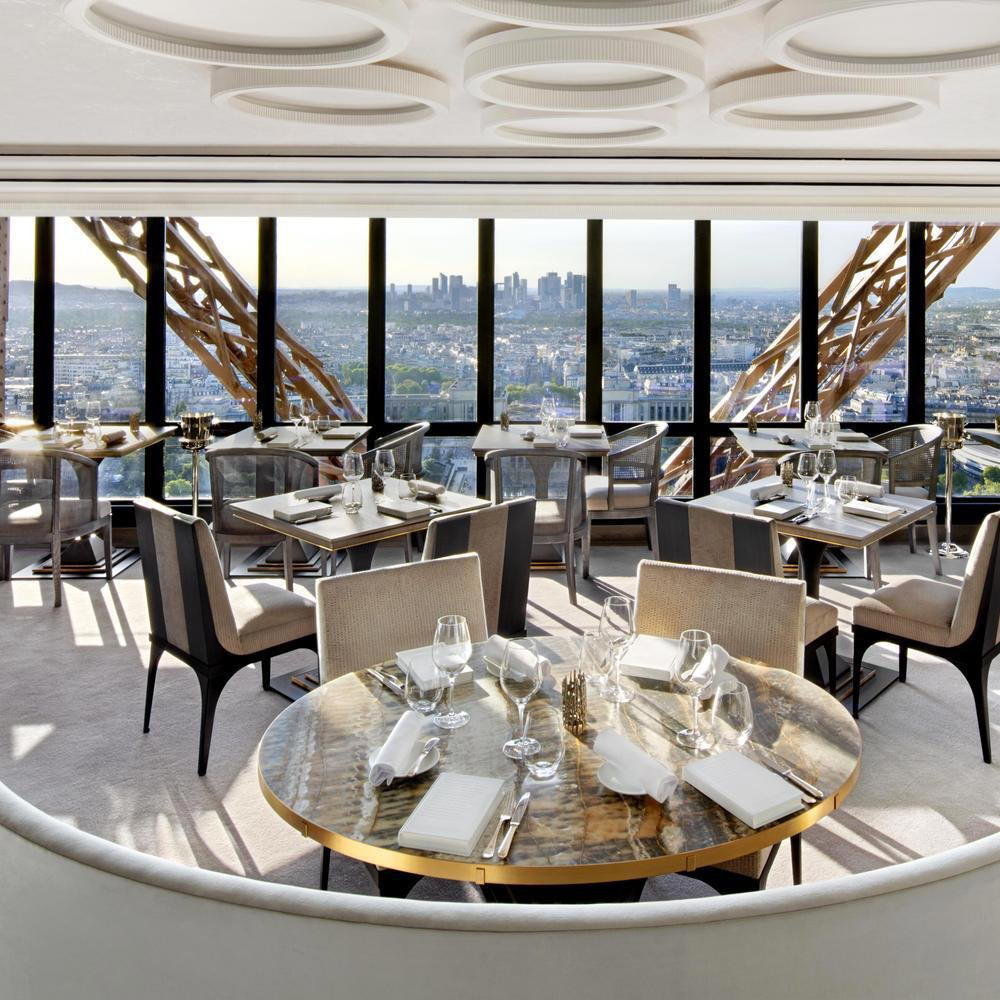
Paris dining tends to consolidate its serious kitchens along a familiar geography: the 8th, the 6th, the 1st. The 14th arrondissement sits outside that circuit, which means restaurants like Ébène, on rue Falguière a short walk from Tour Montparnasse, operate without the ambient noise of tourist foot traffic or the gravitational pull of a prestigious postcode. That context matters. The effort to reach somewhere like this is a signal in itself, and the room reflects it: white tablecloths, pale wood flooring, and a counter open to the kitchen. There is no decorative excess here, the space tells you exactly what kind of meal to expect before you have ordered a thing.
The broader shift in Paris towards smaller, cook-forward rooms has been building for over a decade. Where the dominant model once centred on grand dining rooms and brigade-style distance between kitchen and guest, a generation trained at houses like Arpège absorbed something different: the idea that restraint and ingredient precision could carry a room without ceremony. Ébène sits squarely in that current, and its pedigree is traceable. Both Jihyun Kim and Simon Plantrou built their foundations at L'Arpège under Alain Passard, one of the houses that turned vegetable cookery into a serious structural argument rather than a supporting act.
What the Menu Is Actually Doing
The format at Ébène asks the kitchen to do two things simultaneously: deliver a multi-course tasting menu and offer a small selection of large cuts designed for sharing. That combination is rarer than it sounds. Most Paris kitchens at this level commit to one register. The sharing-cut format pulls in a different direction, toward a conviviality that those rooms rarely pursue.
Ingredient logic is consistent throughout. Seasonal produce sourced largely from the Oise département, the agricultural department immediately north of Paris, provides the vegetable work, and the menu's confidence in jus as a structural element rather than a decorative finish signals a kitchen that understands classical foundations without leaning on them for prestige. Sologne mallard and rack of lamb appear as the anchoring proteins when in season, which is information worth retaining when planning a visit: this is not a kitchen that holds a static menu year-round. What arrives on the plate in autumn will not match what the room serves in spring.
Cooking, per the available record, is described as pared-back and ingredient-led, with nothing superfluous. For a city where the temptation toward elaboration is constant, see the architecture of a tasting menu at Alléno Paris au Pavillon Ledoyen or the theatre of Le Cinq, that restraint is a deliberate position, not a limitation.
The Open Counter and What It Changes
Cooking in full view of the dining room is a choice that reshapes the entire experience of eating in a space. It removes the mystification that a closed kitchen preserves and replaces it with a different kind of authority: the confidence of a team willing to be watched. Jihyun Kim at the counter is the room's central fact. This positions Ébène closer to the format logic of a Japanese-influenced Paris kitchen than to the classical French brigade model, and that connection is not coincidental given the cross-cultural paths that have shaped French gastronomy over the past two decades.
Similar open-counter formats have become a mark of a specific kind of ambition in Paris: small, focused, cook-led. The room remains the stage but the counter is where the credibility is built, in real time, during service. For diners who pay attention to this architecture, it is a meaningful indicator of kitchen confidence. For those less interested in the mechanics, it simply adds texture to the meal itself.
Planning Your Visit
Ébène sits at 8 rue Falguière in the 14th arrondissement, a neighbourhood that requires a specific decision to visit rather than a passing detour. The nearest major transport links are Falguière and Pasteur on line 12, both a short walk from the address. Montparnasse-Bienvenüe, the major interchange hub for lines 4, 6, 12, and 13, is within comfortable walking distance and connects the area to the rest of the city without difficulty.
Given the format here, a tasting menu alongside a small sharing-cut selection, cooked to order in a room that does not appear to have a large cover count, advance planning is advisable. Kitchens at this level in Paris, particularly those with a defined tasting menu structure and a following built on word-of-mouth and critical attention, tend to book tightly. Arriving without a reservation and expecting a table is a reasonable gamble only in quieter mid-week lunch slots, and even then it carries risk. The room's minimalist design and counter seating suggest a limited number of covers, which is both part of the appeal and the reason availability compresses quickly.
For visitors building a Paris itinerary around serious cooking, Ébène fits into a different bracket than the formally starred rooms of the Right Bank. It lacks the institutional weight of L'Ambroisie on the Place des Vosges or the trophy-dining logic that surrounds Le Cinq. It belongs instead to a smaller category: kitchens where the cooking justifies the journey on its own terms, and where the room functions as a transparent showcase for what the team can do rather than a stage for dining ritual. That is a specific kind of appeal, and it draws a specific kind of diner. For the broader Paris context, see our full Paris restaurants guide, and for accommodation and bar options that pair well with a 14th-arrondissement evening, consult our Paris hotels guide and our Paris bars guide. If you are building a wider France itinerary, comparable precision-led kitchens outside Paris worth noting include Flocons de Sel in Megève, Mirazur in Menton, and Bras in Laguiole, each representing a different regional expression of the ingredient-led approach that Ébène practises in the 14th.
Frequently asked questions
Where is Ébène located?
Ébène is located at 8 rue Falguière, Paris.
What's Ébène known for in terms of accolades?
Ébène has received recognition including: This duo who earned their stripes at L'Arpège have set up shop near Tour Montparnasse. Jihyun Kim cooks in full view of diners, creating pared-back ingredient-led dishes starring seasonal produce and fine vegetables sourced for the most par….
What's the signature dish at Ébène?
Rather than a single signature plate, Ébène centres its menu on two formats: a multi-course tasting menu built around seasonal vegetables sourced largely from the Oise département, and large cuts of meat designed for sharing at the table. Dishes such as Sologne mallard and rack of lamb represent the sharing cut side of the menu. Chef Jihyun Kim, who trained at L'Arpège, brings a restrained approach where the quality of the produce carries the work.
Can I walk in to Ébène?
Ébène at 8 rue Falguière is a deliberate-destination restaurant rather than a neighbourhood drop-in, and the tasting menu format typically requires advance booking to secure a seat. Walk-in availability is not guaranteed, particularly given the open-counter layout and the kitchen's tightly structured service style. Contacting the restaurant directly ahead of your visit is the practical approach.
A Pricing-First Comparison
Comparable venues nearby, for context on price, style, and recognition.
| Venue | Cuisine | Price | Awards | Notes |
|---|---|---|---|---|
| ÉbèneThis venue (the venue you are viewing) | Modern French Fine Dining | $100–150 | Michelin Plate | Not listed |
| Nolinski | Traditional French Bourgeois Brasserie | $50–100 | Michelin Plate | Palais-Royal, Traditional French Bourgeois Brasserie |
| Petrus | Modern French Fine Dining | $50–100 | Michelin Plate | 75017, Modern French Fine Dining |
| Joséphine "Chez Dumonet" | Classic French Bistro | $50–100 | Not listed | 6th arrondissement, Classic French Bistro |
| Le Christine | Modern French Fine Dining | $100–150 | Michelin Plate | Saint-Germain-des-Prés, Modern French Fine Dining |
| Prunier par Yannick Alléno | Modern French Seafood Fine Dining | $150–200 | Michelin Plate | 16th arrondissement, Modern French Seafood Fine Dining |
Recognition history
Dated appearances from independent guides and award organizations, with the underlying list record or original source where available.
Michelin Plate
Michelin
Continue exploring
More in Paris
Restaurants in Paris
All restaurants in Paris →
Bars in Paris
All bars in Paris →
Details
- Intimate
- Elegant
- Sophisticated
- Date Night
- Special Occasion
- Open Kitchen
- Chefs Counter
- Extensive Wine List
- Tasting Menu
- A La Carte
Current opening hours
- Monday
- Closed
- Tuesday
- 12–2:30 PM, 7:30–9:30 PM
- Wednesday
- 12–2:30 PM, 7:30–9:30 PM
- Thursday
- 12–2:30 PM, 7:30–9:30 PM
- Friday
- 12–2:30 PM, 7:30–9:30 PM
- Saturday
- 12–2:30 PM, 7:30–9:30 PM
- Sunday
- Closed
Hours can change for holidays and private events. Hours as of .
Cozy and enveloping with open kitchen view, soft lighting, minimalist decor, and a serene, almost recueillement atmosphere.