Duly's Place
Duly's Place Coney Island on Vernor Highway sits at the center of Detroit's long-running coney dog tradition, a format that has sustained the city's working-class diner culture for over a century. The address, 5458 Vernor Hwy in the Mexican Village corridor, places it among southwest Detroit's most historically layered eating districts. For anyone tracing how American regional food holds its identity, this counter is a reference point.
Pearl is the En Primeur Club membership app — saves, bookings, and concierge access live there. Same editors, same standards.
- Address
- 5458 Vernor Hwy, Detroit, MI 48209
- Phone
- +1 313 554 3076
- Website
- dulysplaceconeyisland.site
- Directions
- Get directions
 Saves & bookings on Pearl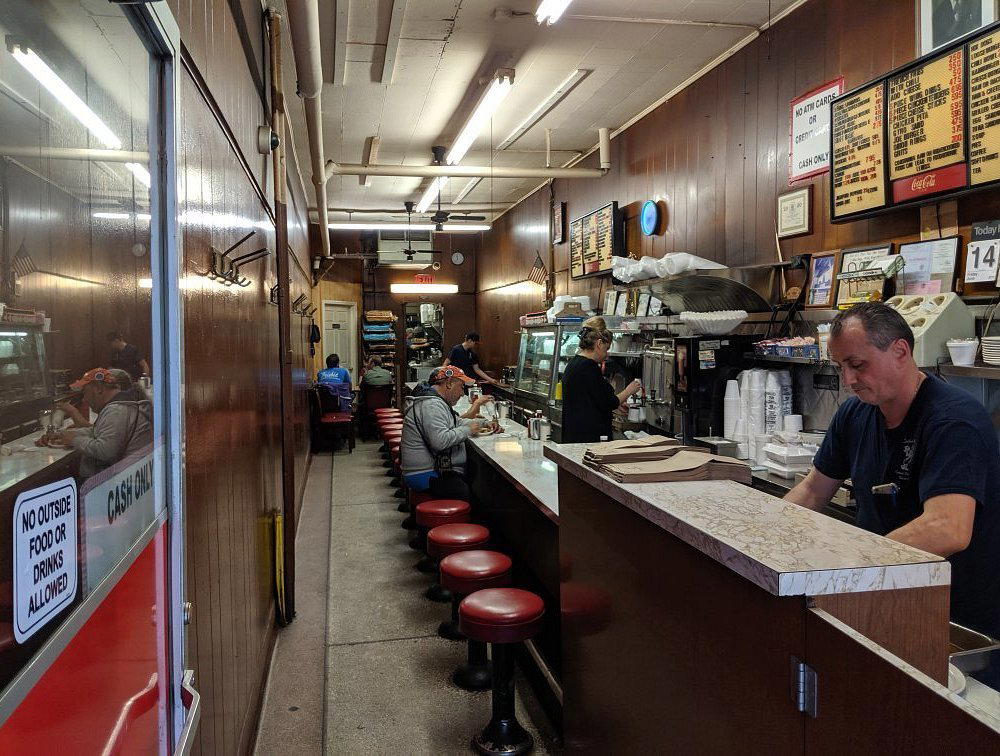
Southwest Detroit's Coney Counter and What It Tells You About the City
Vernor Highway in southwest Detroit is one of those streets that resists gentrification not through defiance but through density. Tiendas, taquerias, bakeries, and old-school lunch counters stack up along the corridor without much ceremony, and Duly's Place Coney Island at 5458 Vernor Hwy sits inside that fabric as it always has. Approaching from the street, there is no marquee performance, no sandwich board listing seasonal specials, no ambient lighting curated for Instagram. The draw is architectural honesty: a diner format that tells you exactly what it is before you open the door.
That straightforwardness is itself a statement. In a city where the dining conversation has expanded to include thoughtful New American programs like ADELINA and Alpine-inflected menus at Alpino, the continued presence of coney island diners as genuine, non-ironic institutions carries editorial weight. Duly's is not a throwback concept, it is part of an unbroken line.
The Coney Island Format and Why Detroit Owns It
The American coney dog is, in origin, a Midwest invention with roots in the early twentieth century Greek and Macedonian immigrant communities that shaped Detroit's short-order dining. The format is specific: a natural-casing frankfurter in a steamed bun, topped with a beanless meat chili sauce, yellow mustard, and diced white onion. The ratio of those components, and the quality of the sauce, is where coney counters distinguish themselves, which is why the debate over which Detroit spot gets the formula right has been running for decades without resolution.
That ongoing debate is part of what makes southwest Detroit's coney corridor culturally significant. American Coney Island downtown holds the more tourist-visible position, but the Vernor Highway corridor has long maintained its own loyal constituency drawn from the surrounding neighborhoods rather than convention center foot traffic. The distinction matters when you are thinking about ingredient sourcing and preparation culture: counters serving a neighborhood clientele on repeat have different supply-chain incentives than those oriented toward one-time visitors.
Sourcing Logic in the Short-Order Tradition
The editorial angle on ingredient sourcing at a coney counter operates differently than it does at, say, Blue Hill at Stone Barns in Tarrytown or Single Thread Farm in Healdsburg, where farm provenance is the explicit organizing principle of the menu. At Duly's and its peer counters, the sourcing logic is embedded in the recipe itself. The natural-casing hot dog, a product with specific textural requirements that distinguish it from mass-market frankfurters, and the chili sauce, which each counter guards as a closely held formula, represent a form of ingredient specificity that predates the modern farm-to-table vocabulary by generations.
The chili sauce in particular is where the sourcing conversation gets interesting. Unlike a restaurant that might rotate ingredients by season, the coney chili is built around consistency: a specific blend of spices, meat ratios, and cooking method that produces a recognizable result every time. That consistency is itself a product of sourcing discipline. A counter that has been operating on the same street for decades has, by necessity, developed reliable supply relationships. The sauce arriving in the bowl today is supposed to taste the same as it did a decade ago, and achieving that requires more supply-chain attention than it might appear.
This is the dimension of American diner culture that gets underwritten in conversations dominated by tasting menus at The French Laundry in Napa or Le Bernardin in New York City. Precision sourcing is not the exclusive property of fine dining. It is present in every short-order format that has maintained quality over time, it just operates through different mechanisms.
Where Duly's Sits in Southwest Detroit's Eating Culture
The Vernor Highway corridor is worth understanding as a food district in its own right. Southwest Detroit's Mexican Village and Mexicantown neighborhoods constitute among the more coherent ethnic food corridors in the Midwest, with taquerias and bakeries that operate on similar principles of neighborhood loyalty and recipe consistency. The presence of a coney counter like Duly's inside this corridor is not incongruous, it reflects the layered immigration history of the area, where Greek and Macedonian diner culture and Mexican community life have coexisted for generations along the same street.
Detroit's broader dining scene has diversified considerably. East African cooking has found a serious foothold through venues like Baobab Fare, and the New American format has matured at places like Selden Standard. But the coney counter has not needed to adapt to any of these shifts. Its comparable set is internal to its own format, other coney island diners, measured against each other on sauce quality, dog texture, and counter speed, rather than against the city's wider restaurant taxonomy.
For visitors building a Detroit itinerary, southwest Detroit warrants time beyond the Vernor Highway counter. The neighborhood supports a range of eating, from Amore da Roma to the vegan baking program at 313 Cinnamon Rolls. The corridor rewards walking rather than driving between destinations. Our full Detroit restaurants guide maps the wider picture.
Planning a Visit
Duly's Place operates as a walk-in counter in the short-order tradition, reservations are not part of the format, and the experience is designed around quick turnover and immediate service. The address at 5458 Vernor Hwy places it in the heart of the Mexican Village corridor, accessible by car with street parking available along Vernor and the surrounding side streets. As with most coney counters, the practical calculation is simple: arrive, order at the counter, and eat. The format has not changed because it does not need to. Visitors comparing Detroit's coney culture against the broader American diner tradition will find useful counterpoints at Emeril's in New Orleans and regional American formats covered in EP Club's guides to Smyth in Chicago and Providence in Los Angeles.
In Context: Similar Options
Comparable venues nearby, for context on price, style, and recognition.
| Venue | Cuisine | Price | Notes |
|---|---|---|---|
| Duly's Place Coney IslandThis venue — the venue you are viewing | Classic Detroit Coney Island Diner | $ | Not listed |
| The Block | American Comfort Food | $$ | Midtown |
| Dime Store | Scratch-Made American Brunch | $$ | Downtown |
| Pupuseria Y Restaurante Salvadoreno | Authentic Salvadoran | $ | Southwest Detroit |
| Supino Pizzeria Eastern Market | New York-Style Thin Crust Pizza | $ | Eastern Market |
| Marrow West Village | Modern American Whole-Animal Butchery | $$$ | Islandview |

At a Glance
- Classic
- Well Known
- Cozy
- Casual Hangout
- Late Night
- Historic Building
Current opening hours
- Monday
- 6 AM–2 PM
- Tuesday
- 6 AM–8 PM
- Wednesday
- 6 AM–8 PM
- Thursday
- 6 AM–8 PM
- Friday
- 6 AM–8 PM
- Saturday
- 6 AM–2 PM
- Sunday
- 6 AM–2 PM
Hours can change for holidays and private events. Last verified .
Timeless old-school diner with unassuming narrow space serving all-hours classic fare.