New York Times Best Restaurants in New York City
Our verdict
A cavernous Jackson Heights institution where traditional Pakistani cooking anchors a broader South Asian community table. Nihari, halwa puri, and whole-spice biryani draw regulars from across Queens and beyond, all prepared to halal standards.

Pearl is the En Primeur Club membership app, where members save venues, book tables and use the concierge.
Where Jackson Heights Eats
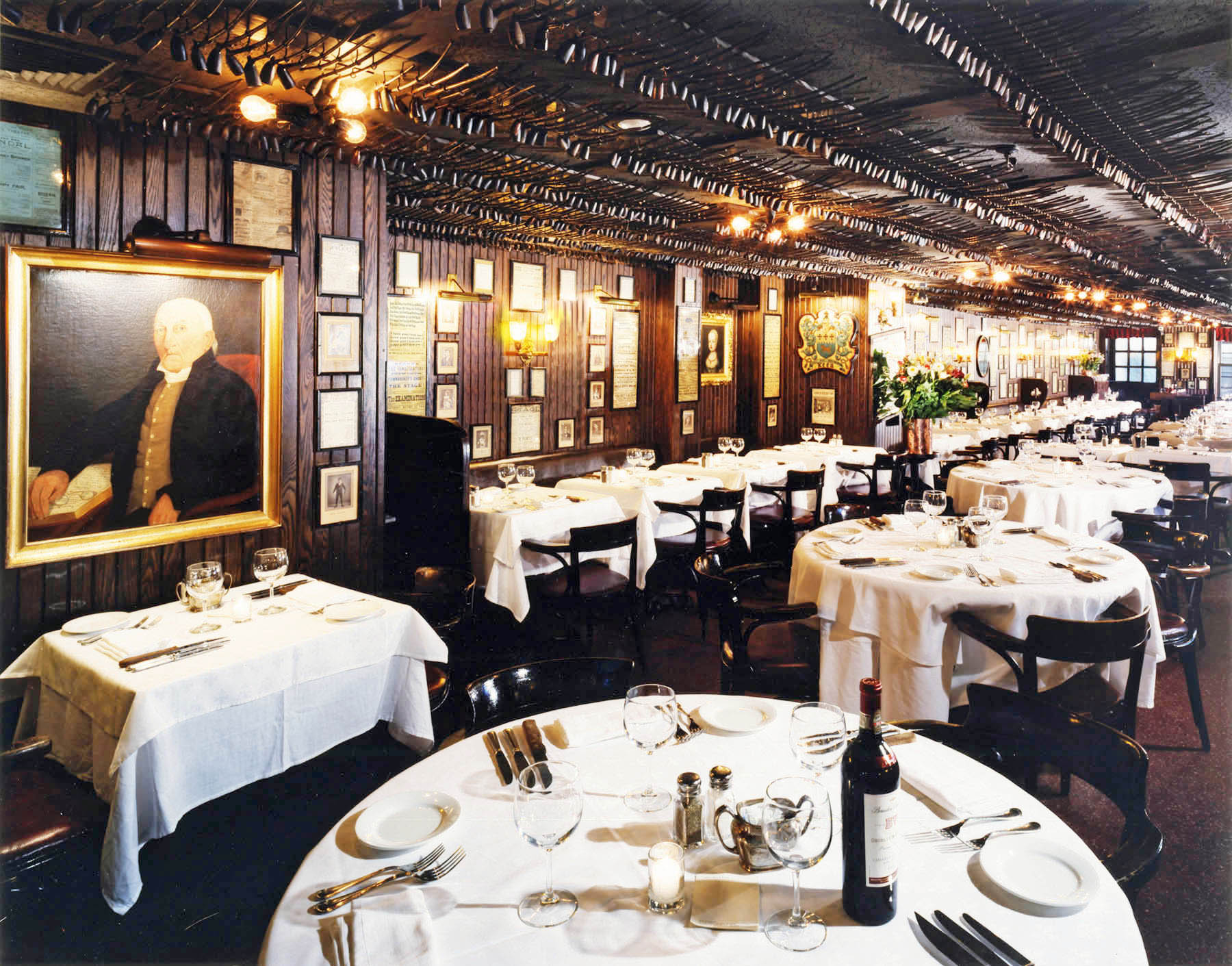
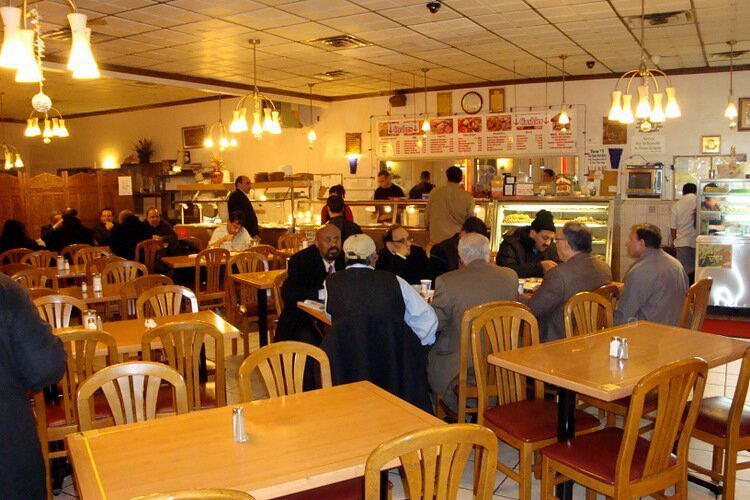
Broadway in Jackson Heights does not ease you in gently. The stretch between 73rd and 74th Street is one of the densest concentrations of South Asian commerce in the United States, and the signage alone communicates ambition: sari shops, sweet counters, and halal butchers stacked side by side, each announcing itself in multiple scripts. Dera arrives in that context with flamboyant exterior signage that signals, correctly, that restraint is not the operating philosophy inside. The dining room runs large, cavernous by the standards of a neighbourhood built on small storefronts, and on weekends it fills with extended families, groups of men sharing tea after Friday prayers, and tables of younger diners who grew up eating here and still return. This is not a destination restaurant in the Manhattan sense. It is the thing Manhattan destination restaurants sometimes claim to be and rarely are: a genuine community anchor.
The Food, Framed
Pakistani restaurant cooking in New York has historically occupied a narrow band of the city's dining coverage, despite the size and depth of the community sustaining it. The cuisines along this corridor, Pakistani, Indian, Bangladeshi, Nepali, share pantry overlap but diverge sharply in technique and in the dishes that carry cultural weight. Dera's kitchen centres on the Pakistani side of that spectrum, and the food reads accordingly: whole spices used with enough confidence that you see them in the dish and taste them in sequence rather than as a blended background. Nihari, the slow-braised meat stew that Lahori and Delhi cooks have argued over for generations, appears here in the form that defines the dish's reputation, deeply coloured, gelatinous with collagen, the kind of preparation that requires hours and does not benefit from shortcuts. Halwa puri, the weekend breakfast that functions as a social ritual across Pakistani households, is a category where kitchen discipline shows immediately: the puri should puff fully and carry no greasiness, and the accompanying chana and aloo should have the right acidity to cut through the fried dough. Biryani and kebabs fill out the menu, both registering the whole-spice approach that characterises the kitchen's style. Naan and chai anchor the table at every stage, and the chai in particular is worth noting as a calibration point, thin, tea-bag chai is the norm at many South Asian restaurants operating outside their core community; here it is made properly, with milk and spice.
Every item on the menu is halal, which is the norm for Pakistani restaurants in this corridor and carries weight for a significant portion of the clientele. It is not a marketing note; it is a baseline condition of how the kitchen operates.
Jackson Heights as a Dining Context
Placing Dera in its New York context requires stepping back from the Michelin-starred tier that dominates most coverage of the city's dining scene. Venues like Le Bernardin, Eleven Madison Park, Masa, Per Se, and Atomix represent one version of eating well in this city: tasting menus priced at several hundred dollars per head, reservation windows measured in months, service teams calibrated to choreography. Dera represents something structurally different: a restaurant where the price point sits low enough that regularity is possible, where the interaction between staff and returning guests carries genuine familiarity, and where the measure of quality is fidelity to a cooking tradition rather than innovation within it. Neither model is superior in abstract terms, they are answering different questions. But for a reader building a picture of what New York's dining ecosystem actually contains, the Jackson Heights corridor is as consequential as Midtown or the West Village, and Dera is among its more visible addresses. You can see this pattern replicated in other American cities: Emeril's in New Orleans, Lazy Bear in San Francisco, and Alinea in Chicago each sit at the formal, high-investment end of their city's spectrum; the restaurants sustaining neighbourhood life in immigrant corridors sit at the other end and are no less serious about what they do. Similar dynamics play out internationally at venues like 8½ Otto e Mezzo Bombana in Hong Kong and Alain Ducasse's Louis XV in Monte Carlo, where formal dining claims all the critical oxygen while the markets and neighbourhood kitchens around them do the actual daily work of feeding people with care.
The Room and How It Runs
The editorial angle most applicable to Dera is not the chef-driven narrative, no chef name is publicly foregrounded here, but rather the coordination between kitchen output and floor management that makes a high-volume South Asian restaurant in a community setting work at pace. Large Pakistani and Bangladeshi restaurants on this corridor typically run with a front-of-house model built around speed and informality: tables turn, chai arrives quickly, dishes come out without the pacing architecture of a tasting menu. The skill is in sustaining consistency across a menu of technical dishes, nihari cannot be rushed, biryani requires accurate spice ratios at volume, while serving a room that may be at capacity on a Saturday afternoon.
Planning Your Visit
Jackson Heights is accessible via the 7 train (74th Street/Broadway/Jackson Heights station) and the E, F, M, and R lines at the same stop, making it a direct subway ride from Midtown Manhattan. For visitors combining this area with broader New York dining coverage, the full picture is in our New York City restaurants guide, with parallel guides for hotels, bars, wineries, and experiences across the city. For context on what formal dining looks like at the other end of the New York spectrum, see also Single Thread Farm in Healdsburg, The French Laundry in Napa, and Providence in Los Angeles.
| Venue | Cuisine | Price Tier | Booking Lead | Setting |
|---|---|---|---|---|
| Dera | Pakistani / South Asian | Low | Walk-in likely | Cavernous, community-focused |
| Atomix | Modern Korean | $$$$ | Weeks to months | Intimate counter, formal |
| Eleven Madison Park | French / Vegan | $$$$ | Weeks to months | Grand dining room, formal |
| Masa | Sushi / Japanese | $$$$ | Months ahead | Minimal counter, very formal |
| Per Se | French / Contemporary | $$$$ | Weeks to months | Structured dining room, formal |
Frequently asked questions
Is Dera child-friendly?
The cavernous dining room at 72-09 Broadway accommodates groups and families with ease. The format, shared plates of biryani, kebabs, and halwa puri, suits family-style eating across ages. The space functions as a community gathering point for Jackson Heights residents, which sets a relaxed, informal tone.
What kind of setting is Dera?
Dera occupies a large, high-energy room on Broadway in Jackson Heights, announced by flamboyant exterior signage that signals what's inside. It operates as much as a neighbourhood institution as a restaurant, drawing a regular local crowd alongside visitors to the 74th Street corridor. There is nothing minimalist about the space or the food.
What's Dera known for in terms of accolades?
Dera has received recognition including: The flamboyant signs outside this cavernous restaurant foreshadow the boldness of the food within. Traditional Pakistani food (all of it is halal) is the focus, with nihari, kebabs, biryani and halwa puri that are all redolent with whole sp….
What should I order at Dera?
The kitchen's strengths are documented in its nihari, biryani, kebabs, and halwa puri, all made with whole spices that are visible in the dish and present in the flavour. Puffy naan and chai round out a full sitting. The entire menu is halal.
How would you describe the cuisine at Dera?
What's Dera's location?
Dera is located at 72-09 Broadway, Jackson Heights, NY 11372, New York City.
How far ahead should I plan for Dera?
Dera draws a consistent local crowd from Jackson Heights and beyond, and the 74th Street/Broadway stop (served by the 7, E, F, M, and R trains) makes it easy to reach from across the city. Walk-ins are typical at restaurants of this format, though arriving during off-peak hours avoids the busiest periods. No reservation or website details are publicly listed.
A Credentials Check
Comparable venues nearby, for context on price, style, and recognition.
| Venue | Cuisine | Price | Awards | Notes |
|---|---|---|---|---|
| DeraThis venue (the venue you are viewing) | Pakistani/Indian | $10–20 | New York Times Best Restaurants in New York City | Not listed |
| Saar Indian Bistro | Modern Indian Bistro | $30–50 | Not listed | Midtown-Times Square |
| Malai Marke | Modern Regional Indian | $20–30 | Not listed | East Village |
| Mughlai Indian Cuisine | Authentic Mughlai Indian | $20–30 | Not listed | Gramercy |
| INDAY | Indian-American Fast Casual | $20–30 | Not listed | Midtown South-Flatiron-Union Square |
| Bombay Grill house | Traditional Indian | $20–30 | Not listed | Greenpoint |
Recognition history
Dated appearances from independent guides and award organizations, with the underlying list record or original source where available.
New York Times Best Restaurants in New York City
New York Times