Delphi Greek
Our verdict
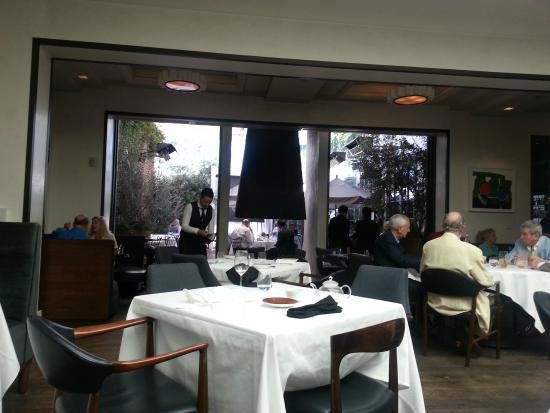
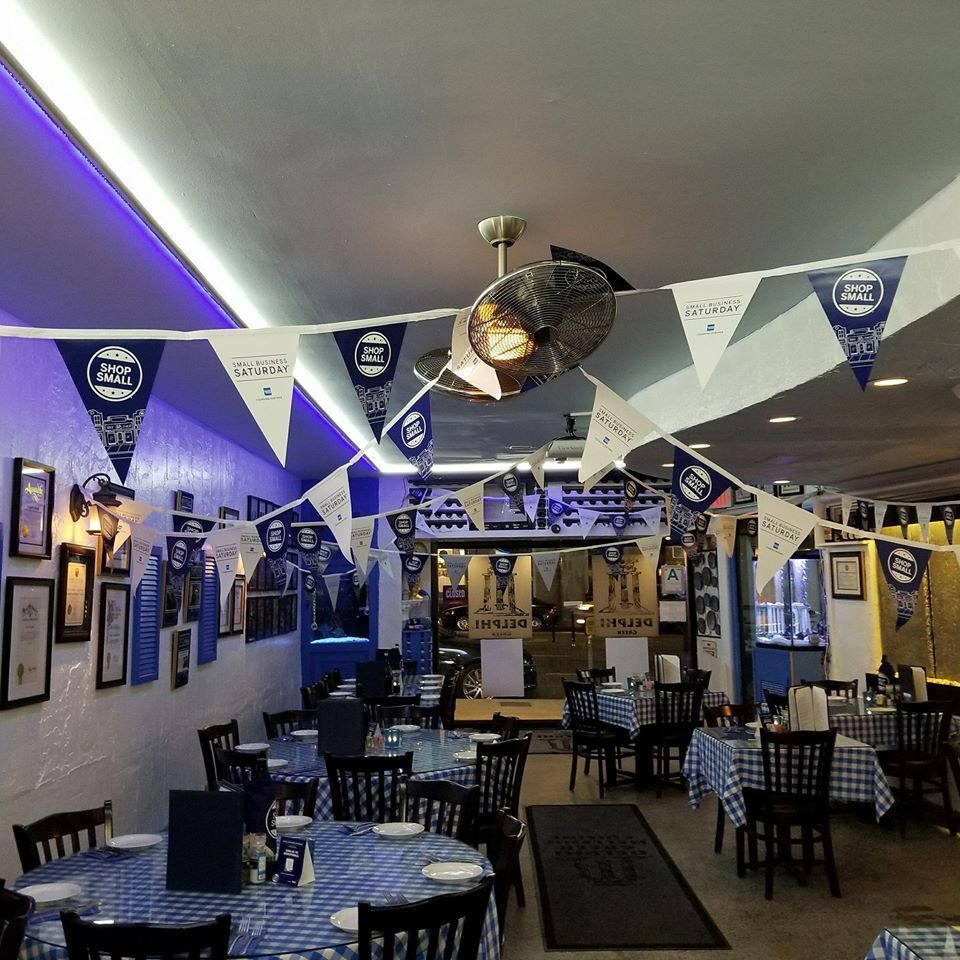
Delphi Greek sits on Westwood Boulevard in one of Los Angeles's more understated dining corridors, holding ground as a neighborhood anchor for Greek cuisine in a city that rarely spotlights the tradition at all. The address places it close to UCLA and the residential blocks that surround it, drawing a loyal local crowd rather than a destination-dining circuit. For a city that runs on novelty, that kind of staying power means something.

Pearl is the En Primeur Club membership app — saves, bookings, and concierge access live there. Same editors, same standards.
- Address
- 1383 Westwood Blvd, Los Angeles, CA 90024
- Phone
- (310) 478-2900
- Hours
- Daily 11:30 AM–10:30 PM
- Website
- delphigreek.com
- Directions
- Get directions
- Booking
- Book on OpenTable
The menu
What to order
- Saganaki
- Baklava
- Moussaka
- Pastitsio
- Dolmades
- Lamb Souvlaki
Westwood and the Case for Greek Food in Los Angeles
Los Angeles has never been a Greek food city in the way that it is, say, a Japanese food city or a Mexican food city. The Greek diaspora left a lighter institutional footprint here than in Chicago or New York, which means the restaurants that do exist tend to operate outside the critical conversation entirely — reviewed occasionally, rarely placed in competitive context, and almost never framed against what Greek cooking actually demands at its highest expression.
Westwood itself is a neighborhood that culinary coverage tends to skip over. The area around UCLA draws students and faculty, the kind of daily-use restaurant traffic that rewards consistency over spectacle. That demographic reality shapes the corridor's dining character: fewer tasting-menu formats, more rooms built around repetition and reliability. In a city where Kato and Hayato operate at a pitch of controlled intensity that demands advance planning and significant spend, and where Somni occupies the far progressive end of the spectrum, a neighborhood Greek restaurant on Westwood Boulevard occupies a different register entirely. It is not competing with those rooms. It is serving a different purpose, and understanding that purpose is the right entry point for evaluating what Delphi Greek is actually doing.
The Westwood Corridor and What It Asks of Restaurants
Greek cuisine in its more serious forms — the mezze-led table of shared cold and hot plates, the wood-fired preparations, the attention to seafood quality and olive oil provenance, translates reasonably well to the Los Angeles palate. The city's emphasis on vegetable-forward eating and fresh ingredient sourcing overlaps with certain Greek traditions more than it does with, say, the heavy cream-and-butter registers of classical French technique. The challenge for Greek restaurants in American cities has historically been one of positioning: the cuisine is either reduced to a fast-casual gyro format or placed in an ersatz Mediterranean setting that tries to do too many things at once.
Westwood's dining corridor, running through the blocks adjacent to the UCLA campus, has long functioned as a proving ground for restaurants that need to earn repeat business rather than one-time destination visits. The comparison set here is not Providence or Osteria Mozza. Those rooms operate in a different economy of attention. The relevant question for a restaurant on this stretch is simpler and harder: does it do its specific thing well enough, consistently enough, that the neighborhood comes back?
For Greek food specifically, that question carries some weight. The city's Greek restaurants are few enough that a good one on the Westside functions as a genuine anchor. There is no equivalent of, say, Los Angeles's Japanese restaurant density, where competition between Hayato-tier kaiseki rooms and neighborhood sushi counters creates a layered ecosystem. Greek cuisine in LA sits in a thinner tier, which means individual restaurants carry more representational responsibility for the tradition.
What the Location Signals About the Format
The Westwood address, combined with the proximity to a major university, suggests a room built for accessibility rather than occasion dining. This is not a criticism. The ability to serve a neighborhood reliably, without the machinery of a reservation system or the pricing of a destination room, is its own discipline. Across the country, restaurants in similar positions, the neighborhood Italian in a university corridor, the Korean spot a block from a campus library, sustain culinary traditions that the critical spotlight rarely reaches.
In the broader Los Angeles dining conversation, the venues that attract the most coverage tend to cluster in a few neighborhoods: the Arts District, Koreatown, West Hollywood, Beverly Hills. Westwood reads quieter on that map, which makes the restaurants that operate there more dependent on word-of-mouth and repeat custom than on press cycles. For a Greek restaurant in particular, that dynamic aligns well with how the cuisine actually works well: as regular eating, a table of mezze plates that becomes familiar over time, rather than a one-time performance.
For readers building an itinerary that reaches beyond the obvious Los Angeles circuits, it is worth knowing that the city's dining geography rewards lateral movement. The conversations happening at Kato or Somni are not the only ones worth having. Neighborhood anchors like Delphi Greek represent a different kind of reliability, one that matters especially when you want to eat well without the infrastructure of a major reservation. See our full Los Angeles restaurants guide for a wider map of how the city's dining tiers connect.
Greek Cuisine in the American Context
Placing Delphi Greek in broader American dining terms requires acknowledging that Greek food remains one of the more underrepresented serious cuisines in the premium restaurant conversation. The tasting-menu circuit that includes rooms like Le Bernardin in New York City, The French Laundry in Napa, or Smyth in Chicago has no real Greek equivalent in the United States. The cuisine sits outside the formats, multi-course progression, wine-pairing architecture, chef-as-auteur framing, that tend to generate award recognition and critical longevity.
That absence is partly structural and partly a matter of how Greek cooking presents itself: communal, plate-sharing, built for tables rather than individual progression. Rooms like Addison in San Diego, Lazy Bear in San Francisco, or Blue Hill at Stone Barns in Tarrytown have built award recognition partly by fitting their cuisine into a legible fine-dining grammar. Greek food, at its most traditional, resists that grammar, which is both a limitation and a kind of integrity.
For travelers who move between cities and want to track what Greek cooking looks like at the neighborhood level in America, Los Angeles's Westside is a reasonable place to check. It is not Athens or Thessaloniki, and the comparison set is not Atelier Moessmer Norbert Niederkofler in Brunico or Frasca Food and Wine in Boulder. But within the narrower frame of what an American city does with a Mediterranean tradition, Westwood's Greek presence is worth attention.
Planning a Visit
Delphi Greek is located at 1383 Westwood Blvd, Los Angeles, CA 90024, in the Westwood neighborhood close to the UCLA campus. Westwood is accessible by car with street and structure parking available along the boulevard. The neighborhood is compact enough to combine a meal here with other Westside stops, and the format, Greek, neighborhood-scale, works well as an early dinner before or after campus-adjacent activities.
Quick reference: 1383 Westwood Blvd, Los Angeles, CA 90024. Confirm hours and booking directly with the venue.
Frequently asked questions
Where is Delphi Greek located?
Delphi Greek is located at 1383 Westwood Blvd, Los Angeles, CA 90024, Los Angeles.
Is Delphi Greek a good option for a group dinner near UCLA?
The Westwood Blvd address at 1383 puts Delphi Greek within the immediate orbit of the UCLA campus, making it one of the more geographically convenient full-service Greek restaurants for groups coming from or heading to Westwood. Greek cuisine's mezze-led, shared-plate structure is inherently group-friendly — the format scales well without requiring prix-fixe coordination. Westwood is accessible by Metro and has surrounding parking, which helps larger parties arriving from different parts of Los Angeles.
What's the best thing to order at Delphi Greek?
Greek cuisine at its most honest is built around the shared table — cold mezze like tzatziki and taramosalata alongside hot preparations such as saganaki or grilled seafood. At a Westwood address positioned for accessible, everyday dining rather than occasion splurge, the mezze spread is typically where the kitchen's range shows most clearly. Without current menu documentation, ordering broadly across cold and hot plates is the reliable approach at any serious Greek table.
How far ahead should I plan for Delphi Greek?
Delphi Greek sits at 1383 Westwood Blvd, close to the UCLA campus in a corridor where foot traffic peaks around the academic calendar. Same-week reservations are often workable at neighborhood-format Greek restaurants in this part of Los Angeles, though weekends and evenings during the school year can tighten availability. Checking directly with the restaurant before planning a group visit is advisable.
What makes Delphi Greek worth seeking out?
Greek food remains one of the more underrepresented serious cuisines in the American dining conversation, and Los Angeles has fewer dedicated Greek kitchens than its size and diaspora population might suggest. Delphi Greek occupies a gap in Westwood that few restaurants in the city address: accessible, neighborhood-anchored Greek cooking rather than the gyro-counter format that dominates the lower price points. That positioning alone gives it a specific function in a city where Greek food has historically punched below its weight.
Can Delphi Greek accommodate dietary restrictions?
Traditional Greek cuisine has structural advantages for several common dietary categories — the mezze format naturally separates meat, seafood, and vegetable preparations, and olive oil-based cooking is standard throughout. Vegetarian guests generally find sufficient options across a Greek mezze table without special requests. For specific allergen needs or stricter dietary requirements, confirming directly with the restaurant at 1383 Westwood Blvd, Los Angeles is the practical step.
Is Delphi Greek overpriced or worth every penny?
Greek cuisine in the American context typically offers strong value relative to French or Japanese at equivalent quality levels, given lower ingredient cost floors for vegetables, legumes, and shared-plate formats. The Westwood location near UCLA signals a room calibrated for regularity rather than occasion pricing, which tends to keep per-head costs accessible.
Cuisine and Awards Snapshot
| Venue | Cuisine | Price | Awards | Notes |
|---|---|---|---|---|
| Delphi GreekThis venue — the venue you are viewing | Authentic Traditional Greek | $20–30 | Not listed | Not listed |
| Kato | Modern Taiwanese Fine Dining | $300–500 | 2 Michelin Stars · World's 50 Best #49 | New Taiwanese, Asian |
| Hayato | Traditional Japanese Kaiseki | $300–500 | 2 Michelin Stars · La Liste Top Restaurants | Japanese |
| Vespertine | Avant-Garde Tasting Menu | $200–300 | 2 Michelin Stars · La Liste Top Restaurants | Progressive, Contemporary |
| Holbox | Modern Mexican Seafood | $30–50 | 1 Michelin Star · World's 50 Best #26 | Mexican Seafood, Mexican |
| Sushi Kaneyoshi | Edomae Omakase | $300–500 | 1 Michelin Star · LA Times 101 Best Restaurants #24 | Sushi, Japanese |