
Gambero Rosso 1 Forchetta
Our verdict
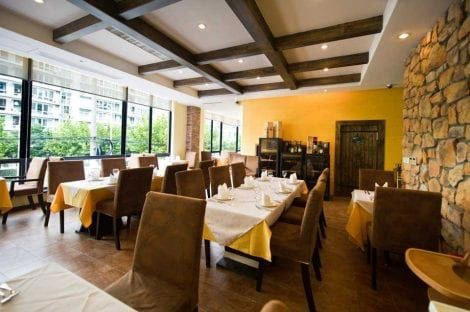
Da Marco sits in Shanghai’s Changning District with a Gambero Rosso one-fork designation, placing it inside the city’s serious Italian dining conversation rather than the generic expatriate trattoria lane. Its relevance lies in a sourcing-led Italian tradition: ingredients, regional discipline, and a room that suits diners looking beyond skyline dining and hotel polish.

Pearl is the En Primeur Club membership app, where members save venues, book tables and use the concierge.
The menu
What to order
- Impepata di cozze (peppered mussels soup)
- Chicken with home-style potatoes
- Risotto al tartufo
- Tiramisu
- Caesar salad
- Gnocchi
Shanghai puts dinner in a different register from the glass-and-river theatre of its most familiar visitor circuits or the heritage-drama dining rooms found elsewhere in the city. The approach can be urban and lived-in: restaurant culture here is shaped by residential density, international communities, business travel, and long-stay foreign demand, which makes imported culinary traditions feel less like novelty and more like routine. In that setting, Da Marco belongs to a quieter category of Shanghai dining, where the measure is not spectacle but whether the kitchen can make a steady restaurant identity hold its shape for regular diners.
Shanghai has become fluent in imported luxury formats: banquet rooms, tower dining, counter dining, tasting menus, hotel bars, and chef-branded dining rooms all compete for attention. Restaurants built around familiar international cooking occupy a more complicated lane. The food may read casual to many diners, yet serious versions depend on supply chains, handling, texture, balance, and a kitchen that knows when not to overwork a plate. The Gambero Rosso-related recognition attached to Da Marco matters here because it comes from a specialist critical frame rather than a generic luxury lens. It signals that the restaurant is being read through a defined restaurant culture, not simply against Shanghai’s appetite for international dining.
Ingredient-led cooking in a city built on imported appetites
The harder test for internationally minded cooking in Shanghai is not whether a dining room can reproduce recognisable dishes. It is whether sourcing decisions give those dishes the correct sense of weight, balance, and restraint. The city’s premium restaurants have access to global imports, but access alone does not create coherence. Ingredient-led food exposes weak procurement quickly: poor materials flatten flavour, weak handling dulls texture, and heavy execution can turn simple plates blunt. The better kitchens treat sourcing as structure, not garnish.
Da Marco’s critical interest sits there. With no need to chase a hotel tasting-menu format, the restaurant can be read through an older model of repeatability: familiar categories, disciplined execution, and ingredients doing the work. That is a different value proposition from Shanghai’s high-rise restaurants, where view, wine list, and private-room hierarchy often drive the occasion. For readers mapping the city by dining type, the contrast is useful. Shanghai’s luxury circuit includes many formal rooms, hotel-driven dining spaces, and destination restaurants. Da Marco’s appeal is less ceremonial and more habitual, which suits a restaurant when the kitchen’s priorities are consistency, balance, timing, and restraint rather than theatrical reveal.
Gambero Rosso-related recognition gives Da Marco a concrete trust signal without turning the restaurant into an awards story. The point is broader: Shanghai’s international restaurant scene is now mature enough that recognition can separate durable culinary identity from generic Western dining. Specialist recognition is not a luxury decoration; it is a cue that the restaurant has been assessed within a more focused standard of restaurant craft.
Shanghai changes the rhythm of the meal
Place matters in Shanghai because the city’s dining habits are intensely geographic, even when the useful public shorthand is simply the city itself. Some areas pull in occasion diners; others hold much of the city’s café, wine-bar, and contemporary dining energy; more residential pockets have a steadier tempo. That affects how a restaurant like Da Marco is used. The meal is less likely to be a single trophy reservation and more likely to sit within a pattern of regular dinners, family tables, business meals, and international familiarity.
That regularity is not a lesser form of dining. It is often where imported cuisines become serious in a city. Casual dining rooms, counter formats, neighborhood restaurants, and regional specialists all gain authority when diners return often enough to judge consistency. Ingredient-led cooking benefits from that cadence. The restaurant does not need to explain every reference if the room already understands why balance, texture, product quality, and restraint carry the meal.
For a broader view of how Shanghai’s dining map breaks down, Our full Shanghai restaurants guide is the useful starting point. Travellers building a wider itinerary can pair dinner planning with Our full Shanghai hotels guide, Our full Shanghai bars guide, Our full Shanghai wineries guide, and Our full Shanghai experiences guide. The comparison is not about ranking districts; it is about understanding why Da Marco answers a different need from a waterfront banquet room or a hotel dining room.
How to read Da Marco within China's wider restaurant map
China’s premium dining conversation is no longer confined to a single city. Regional cities have sharpened their own identities, from inland intensity to coastal cooking and refined local traditions. That context helps explain why a Shanghai restaurant with an international profile needs more than foreignness to remain relevant. Diners can now compare across a national field of ambitious dining rooms, regional specialists, and polished city restaurants. Against that wider field, imported cuisine has to justify itself through craft, sourcing, and consistency.
There is also a global thread worth noting. Specific culinary formats travel, adapt, and depend on ingredient discipline in many cities. Da Marco belongs to that same larger question: what happens when a restaurant identity built on particular products and techniques operates in a city whose supply networks are global but whose diners are local, international, and increasingly demanding?
The practical reading is simple. Choose Da Marco when the priority is Shanghai dining with a recognised specialist critical signal, not when the night requires skyline theatre or a chef-led tasting-menu narrative. Its Shanghai setting and its Gambero Rosso-related recognition tell most of the story: this is a restaurant to judge by sourcing, repetition, and the confidence to let restraint carry the meal.
Frequently asked questions
Is Da Marco award-winning?
Da Marco has public recognition associated with Gambero Rosso-related materials.
What's Da Marco's location?
Shanghai.
How hard is it to get a table at Da Marco?
Da Marco’s specialist recognition and Shanghai setting make planning ahead sensible for busy evenings. Its place in Shanghai situates it within a broad city dining scene rather than defining it by a single tourist circuit.
What has Da Marco built its reputation on?
Da Marco’s clearest public credential in the provided materials is its Gambero Rosso-related recognition. That points to a restaurant best read through execution and consistency, rather than through theatrics or a long list of trophies.
Is Da Marco good for vegetarians?
Restaurants with ingredient-led cooking can often give vegetarians workable choices, and Da Marco sits within Shanghai’s broader international dining scene. The available recognition suggests a kitchen viewed through restaurant standards, not a vegetarian-only concept.
Is Da Marco child-friendly?
Da Marco reads as a conventional full-service restaurant in Shanghai rather than a formal tasting-counter room. The available recognition speaks to standards in the restaurant, not a formal family policy.
In Context
Comparable venues nearby, for context on price, style, and recognition.
| Venue | Cuisine | Price | Awards | Notes |
|---|---|---|---|---|
| Da MarcoThis venue (the venue you are viewing) | Classic Italian Trattoria | $30–50 | Gambero Rosso 1 Forchetta | Not listed |
| Trattoria Palatino | Traditional Roman Italian Trattoria | $30–50 | Gambero Rosso 1 Forchetta | Huangpu, Traditional Roman Italian Trattoria |
| 扬州饭店 | Ningbo Cuisine | Not listed | Not listed | Huangpu, Ningbo Cuisine |
| LA BELLA VITA | Casual Italian Pizzeria | $30–50 | Gambero Rosso 1 Forchetta | Xujiahui, Casual Italian Pizzeria |
| Top Pot | European-Style Bakery | $10–20 | Black Pearl 2 Diamond | Huangpu, European-Style Bakery |
Recognition history
Dated appearances from independent guides and award organizations, with the underlying list record or original source where available.
Gambero Rosso 1 Forchetta
Gambero Rosso
Continue exploring
More in Shanghai
Restaurants in Shanghai
All restaurants in Shanghai →
Bars in Shanghai
All bars in Shanghai →


Details
- Classic
- Cozy
- Well Known
- Rustic
- Family
- Group Dining
- Casual Hangout
- Business Dinner
- Celebration
- Solo
- Wine Cellar
- Standalone
- Extensive Wine List
- Local Sourcing
- A La Carte
- Family Style
- Set Menu
- Wine
- Vegetarian Friendly
Current opening hours
- Monday
- 10:30 AM–10:30 PM
- Tuesday
- 10:30 AM–10:30 PM
- Wednesday
- 10:30 AM–10:30 PM
- Thursday
- 10:30 AM–10:30 PM
- Friday
- 10:30 AM–10:30 PM
- Saturday
- 10:30 AM–10:30 PM
- Sunday
- 10:30 AM–10:30 PM
Hours can change for holidays and private events. Hours as of .