Colletta
Colletta brings Italian-American cooking to Alpharetta's downtown district at 900 3rd Street, occupying a restored historic space that reads as the neighborhood's most considered Italian address. The menu draws from wood-fired and housemade pasta traditions, positioning it firmly within the city's growing dining corridor alongside peers like Cabernet and Oak Steakhouse.
Pearl is the En Primeur Club membership app — saves, bookings, and concierge access live there. Same editors, same standards.
- Address
- 900 3rd St, Alpharetta, GA 30009
- Phone
- +16787228335
- Website
- collettarestaurant.com
- Directions
- Get directions
 Saves & bookings on Pearl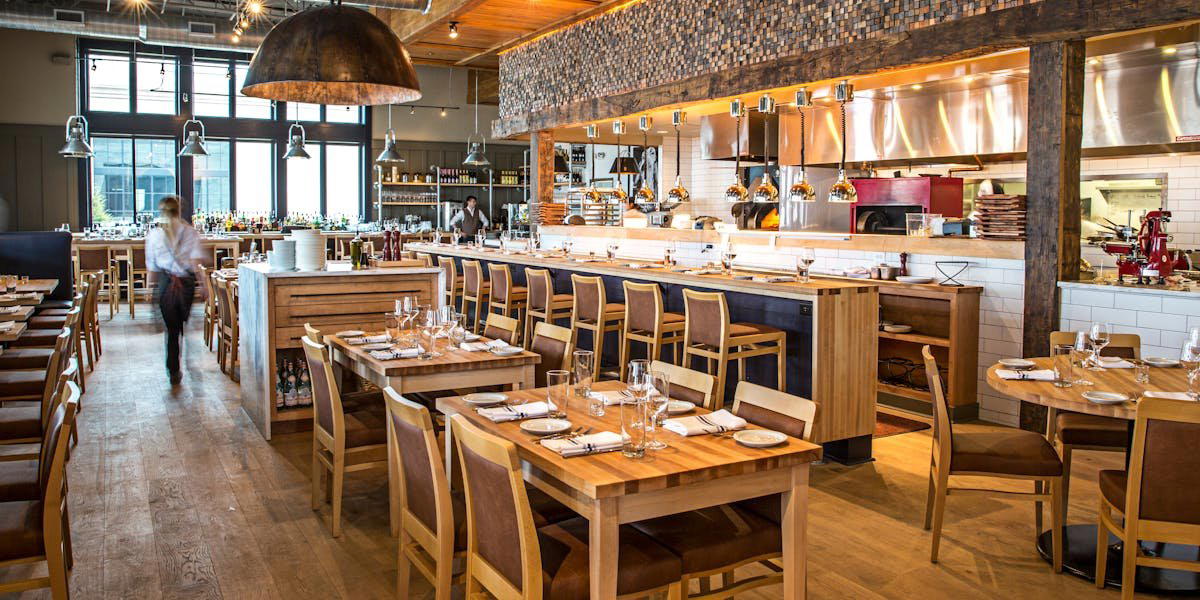
Downtown Alpharetta and the Italian Anchor
Alpharetta's downtown restaurant corridor has assembled quickly over the past decade, moving from a thin scattering of chain-adjacent options to a street-level dining district with genuine character. In that context, Italian-American cooking occupies a particular role: it tends to be the cuisine that tests whether a suburban dining scene has the confidence to do something with craft. Colletta is a restaurant in Alpharetta serving modern Northern Italian with wood-fired cooking, with a price tier around $55 per person. Colletta, at 900 3rd Street, sits at the center of that question for this city.
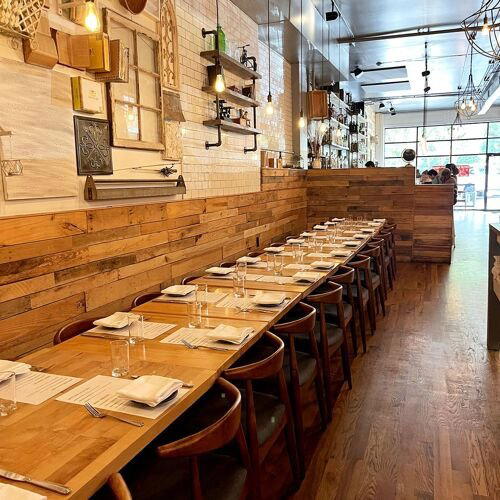
The physical setting does most of the introductory work. The space occupies a restored building with brick and wood details that the neighborhood's newer construction rarely replicates, and the wood-fired elements in the kitchen carry into the dining room's visual and aromatic register in a way that reinforces the menu's approach. Entering, you are aware of fire before you read a single menu item. That sensory orientation toward heat and wood is a deliberate structural choice, not decoration.
Italian-American Cooking and What It Actually Means
Italian-American cuisine is frequently misread as a simplified version of Italian cooking, but its cultural logic runs differently. It emerged from Southern Italian immigrant kitchens in the northeastern United States during the late nineteenth and early twentieth centuries, where available ingredients, American portion expectations, and the economics of feeding large families produced a distinct cooking tradition. Red-sauce cooking, heavily sauced pasta, the primacy of the wood oven, and an emphasis on shared abundance are not dilutions of a purer Italian original. They are a parallel tradition with their own internal logic.
That history matters for understanding what a restaurant like Colletta is doing. The wood-fired oven is not a gesture toward rustic authenticity. It is the central instrument of a cooking tradition that treats high, direct heat as the primary flavor mechanism. Pizza, roasted proteins, and charred vegetables prepared in a serious wood oven require a different technical discipline than stovetop or convection cooking, and that discipline shapes the entire kitchen's production rhythm.
Housemade pasta, the other structural pillar of this category, carries its own cultural freight. In the Italian and Italian-American tradition, fresh pasta represents the home kitchen's labor, the Sunday preparation that signaled care and occasion. When a restaurant commits to housemade pasta at scale, it is making a claim about what the kitchen values, not simply offering a premium product tier. In Alpharetta's dining market, where that commitment is not universal, it functions as a meaningful differentiator.
Where Colletta Sits in Alpharetta's Dining Structure
The downtown corridor has produced a legible set of options across cuisine types and price points. Cabernet anchors the steakhouse and wine-forward end of the market. Oak Steakhouse similarly operates in the red-meat-and-occasion-dining tier. Made Kitchen and Cocktails covers the American casual-upscale middle. Italian representation comes from multiple directions: Crust Pasta and Pizzeria addresses the more casual pizza and pasta end, and di Paolo operates with a more intimate, trattoria-adjacent format.
Colletta occupies the Italian-American space that leans toward the wood-fired, slightly more occasion-oriented tier. Its address on 3rd Street places it within walking distance of the Avalon development and the broader downtown pedestrian zone, which means it benefits from both destination dining traffic and the neighborhood foot traffic that a residential-adjacent location generates on weekday evenings.
Context Beyond Georgia: What This Category Looks Like at Its Outer Range
The Italian-American wood-fired category as practiced in suburban American dining occupies a different register from the form at its most serious. That distance is worth acknowledging not as criticism but as orientation. Restaurants like Le Bernardin in New York City or The French Laundry in Napa represent the kind of formal, multi-course, highly credentialed dining that requires years-deep booking windows and operates in an entirely different competitive and economic register. Closer to the Italian-adjacent farm-driven end, Blue Hill at Stone Barns in Tarrytown and Single Thread Farm in Healdsburg represent hyper-sourced, ingredient-led formats where the relationship with agricultural supply chains defines the entire offering.
None of those comparisons diminish what Colletta is doing in its own market. A well-executed wood-fired Italian-American kitchen in a suburban dining district serves a different social function than a destination restaurant. It is the place where a neighborhood develops a reliable relationship with a cuisine, where the cooking standard is high enough to anchor a midweek dinner or a table for eight on a Saturday, and where the format is legible enough to work for multiple occasions. That is harder to accomplish consistently than it appears.
Georgia's dining scene has produced serious ambition in other formats. Lazy Bear in San Francisco, Smyth in Chicago, Emeril's in New Orleans, Providence in Los Angeles, Addison in San Diego, The Inn at Little Washington, Atomix in New York City, and Atelier Moessmer Norbert Niederkofler in Brunico each represent the credentialed outer edge of their respective categories. Alpharetta's dining ambition is more modest in register but no less real in local impact.
Planning a Visit
Colletta's address at 900 3rd Street places it in the core of downtown Alpharetta, accessible on foot from the Avalon district and from the residential streets immediately north. The wood-fired kitchen format means that peak service times generate real wait times, particularly on Friday and Saturday evenings, and the dining room's brick-and-wood design carries sound in a way that makes it livelier than a quiet-dinner setting. Reservations are recommended, especially for Friday and Saturday evenings. The restaurant draws a consistent local crowd that uses it across occasion types, from date nights to group dinners, which gives the room a particular energy on busy evenings.
Price and Positioning
Comparable venues nearby, for context on price, style, and recognition.
| Venue | Cuisine | Price | Notes |
|---|---|---|---|
| CollettaThis venue — the venue you are viewing | Not listed | $$$ | Not listed |
| di Paolo | Rivermont Square, Northern Italian | $$$ | Not listed |
| Tarahumata Mexican Grill | Not listed | $$ | Windward, Upscale Tex-Mex Grill & Tequila Bar |
| Crust Pasta & Pizzeria | Not listed | $$ | Downtown Alpharetta, Modern Italian Pizza and Pasta |
| Ippolito's - Alpharetta | Milton, Classic Italian Pizza & Pasta | $$ | Not listed |
| Oak Steakhouse | Avalon, Modern Steakhouse | $$$$ | Not listed |
Continue exploring
More in Alpharetta
Restaurants in Alpharetta
Browse all →
Bars in Alpharetta
Browse all →
At a Glance
- Modern
- Lively
- Elegant
- Sophisticated
- Date Night
- Business Dinner
- Group Dining
- Family
- Celebration
- Special Occasion
- Open Kitchen
- Private Dining
- Terrace
- Extensive Wine List
- Craft Cocktails
- Sommelier Led
- Local Sourcing
- Farm To Table
Current opening hours
- Monday
- 5–10 PM
- Tuesday
- 5–10 PM
- Wednesday
- 5–10 PM
- Thursday
- 5–10 PM
- Friday
- 5–11 PM
- Saturday
- 11 AM–2:30 PM, 5–11 PM
- Sunday
- 11 AM–2:30 PM, 5–9 PM
Hours can change for holidays and private events. Last verified .
Welcoming and refined with white brick, butcher tables, and an open kitchen as focal point; warm lighting from wood-burning oven creates a hearth-like family atmosphere.