COFFEE Mill
A Longview institution on Gilmer Road, COFFEE Mill occupies the kind of neighborhood anchor role that chain coffee formats rarely achieve. The format leans into community rhythm over spectacle, making it a practical stop for locals who want something consistent rather than theatrical. For visitors orienting themselves in East Texas, it sits squarely in the accessible, everyday tier of the city's café scene.
 Discover on Pearl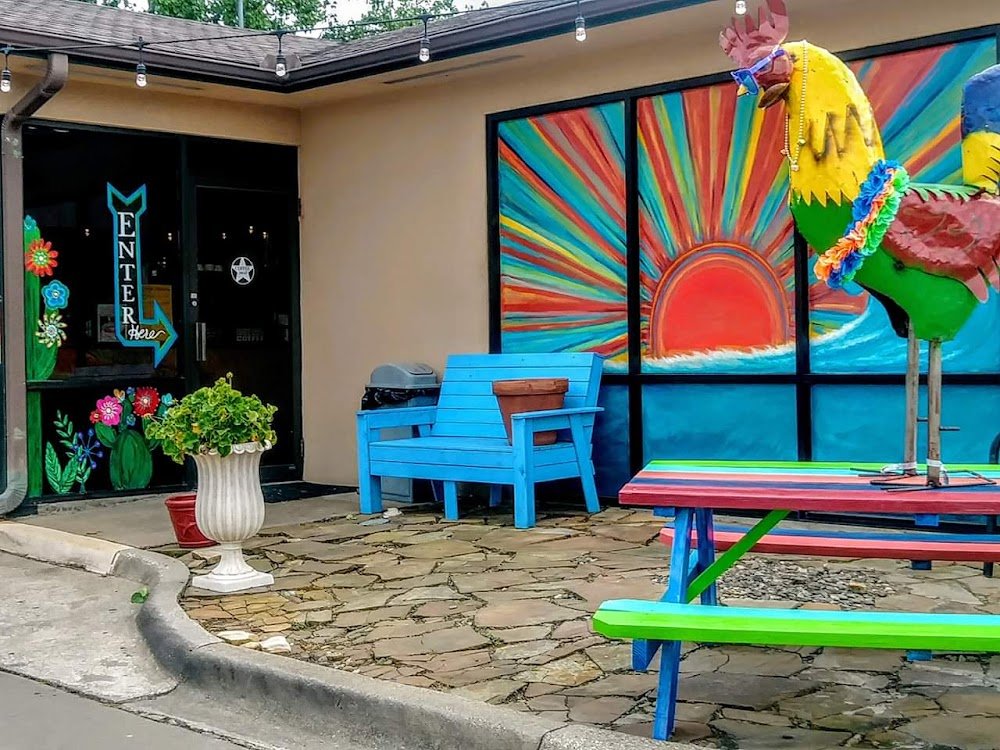
Where Gilmer Road Sets the Pace
East Texas café culture does not operate on the same axis as the farm-to-counter movement reshaping coffee shops in Austin or Houston. In Longview, the prevailing format is one of neighborhood reliability: a place that earns its regulars through consistency and proximity rather than rotating single-origin offerings or barista competition credentials. COFFEE Mill, at 2001 Gilmer Rd, sits within that tradition. The address places it along one of Longview's busier commercial corridors, the kind of stretch where the morning crowd arrives by habit rather than reservation, and where the physical environment communicates familiarity before anything else. Approaching along Gilmer, the signage and scale signal a place calibrated for the everyday rather than the occasion.
That positioning is neither a weakness nor a limitation — it reflects a specific and legitimate role in how mid-sized American cities organize their café infrastructure. Longview's dining and café scene, covered more broadly in our full Longview restaurants guide, has a clear split between destination-format venues and neighborhood anchors. COFFEE Mill reads as the latter, and understanding that distinction shapes how you approach it.
The shortlist, unlocked.
Hard-to-book tables, cellar releases, and concierge-planned trips.
Get Exclusive Access →Sourcing Signals and What They Tell You About a Café's Priorities
In American café culture broadly, ingredient sourcing has become one of the more reliable indicators of a kitchen's underlying priorities. At the high end of the national spectrum, operations like Single Thread Farm in Healdsburg and Blue Hill at Stone Barns in Tarrytown have made provenance the organizing principle of their entire format, building menus backward from what their land and local suppliers produce. Further down the price register, venues like Oyster Oyster in Washington, D.C. have demonstrated that sourcing discipline is not exclusively a luxury-tier concern — it can be the core editorial proposition of an accessible, mid-market operation.
For COFFEE Mill, the sourcing picture is not publicly documented in any detail we can confirm. What the Gilmer Road location and neighborhood-anchor format do suggest is that the operational model prioritizes throughput and accessibility over ingredient narrative. That is a legitimate and common choice in community-facing café formats across East Texas, where the working-day customer is not typically arriving to interrogate supply chain decisions. The sourcing question matters here primarily as a frame: it clarifies what tier of the market COFFEE Mill is competing in and what kind of experience it is designed to deliver.
For travelers who want to see sourcing philosophy applied rigorously at the higher end of American dining, the national reference points are useful context. Smyth in Chicago, Lazy Bear in San Francisco, and The Wolf's Tailor in Denver each represent operations where sourcing is not a marketing layer but a structural constraint on what appears on the plate. COFFEE Mill operates in a different register entirely, and knowing that helps set appropriate expectations before you walk in.
The Neighborhood Anchor Model in East Texas
The café-as-neighborhood-anchor is one of the more durable formats in American food culture, and it tends to persist in mid-sized cities precisely because the economics of a Longview are different from those of a Manhattan or a San Francisco. The cost pressure that forces a New York operator toward either the premium tier or rapid scale does not bear down the same way here, which means a café on Gilmer Road can occupy a stable middle ground that would be harder to sustain in a higher-rent market.
That stability translates into a specific kind of regularity. The crowd at a venue like COFFEE Mill is not driven by hype cycles or social media discovery , it is built on repeat visits by locals who know what they are getting. Compare that to the discovery-driven dining that defines venues like Atomix in New York City or ITAMAE in Miami, where the audience is partly composed of first-time visitors seeking a specific kind of credential. COFFEE Mill's audience is almost entirely local, which shapes everything from pacing to portion to price.
That local orientation also connects the venue to a broader tradition of East Texas hospitality , an approach to service that tends toward directness and generosity over formality. Venues operating in this mode across the region share more with Emeril's in New Orleans in terms of ethos (accessible, generous, community-rooted) than with the precision-driven, reservation-only formats of The French Laundry in Napa or The Inn at Little Washington.
How It Sits in Longview's Café and Dining Tier
Longview's café and casual dining options cluster into a few recognizable tiers. At the more experience-driven end of the casual spectrum, venues like KPOT Korean BBQ & Hot Pot offer an interactive format that functions as an occasion in itself. COFFEE Mill sits in a quieter tier, one defined less by format novelty and more by routine service of a neighborhood's daily rhythm. Neither position is superior , they serve different needs at different moments. A weekday morning coffee run and a Friday-night group dining experience are simply different decisions, and Longview's café infrastructure reflects that.
On a national scale, the contrast is even sharper. Operations like Providence in Los Angeles, Le Bernardin in New York City, Addison in San Diego, Frasca Food & Wine in Boulder, and Atelier Moessmer Norbert Niederkofler in Brunico represent the end of the spectrum where every decision, from sourcing to service pacing to plating temperature, is deliberate and documented. COFFEE Mill is not in that conversation, nor is it trying to be. Its competitive set is local and practical, and the relevant measure of quality is whether it delivers reliably on what it promises within that frame.
Planning Your Visit
COFFEE Mill is located at 2001 Gilmer Rd, Longview, TX 75604, on a commercial corridor that is direct to reach by car. Given the neighborhood-anchor format, walk-in traffic is the expected mode of arrival , this is not a venue that operates on advance reservations. Phone and website details are not publicly confirmed in our records, so confirming current hours before a visit is advisable, particularly for early-morning or weekend timing. Pricing is not formally documented, but the format and location are consistent with the accessible end of the Longview café market.
Frequently Asked Questions
- Is COFFEE Mill a family-friendly restaurant?
- For a city like Longview, where accessible pricing and casual formats dominate the neighborhood café tier, COFFEE Mill fits the profile of a place that does not impose barriers to family visits.
- What's the vibe at COFFEE Mill?
- Without formal awards or a documented price tier to anchor the positioning precisely, the clearest signal comes from location and format: Gilmer Road in Longview is a working commercial corridor, and venues here typically run on neighborhood familiarity rather than destination energy. Expect a relaxed, routine-oriented atmosphere rather than a curated or theatrical one.
- What do regulars order at COFFEE Mill?
- Specific menu items and signature dishes are not confirmed in available records. In a community café format without documented chef credentials or awards, the regular order tends to be whatever has proven consistent over time , a reliable coffee and a familiar food item rather than a rotating seasonal special.
- Do they take walk-ins at COFFEE Mill?
- Walk-in visits are the standard mode for a neighborhood café at this price and format tier in Longview. Advance reservations are not a feature of this kind of operation, and arriving without a booking is the expected approach.
- Is COFFEE Mill connected to a local coffee roasting program or specialty coffee sourcing?
- No confirmed sourcing program, roasting affiliation, or specialty coffee credentials appear in available records for COFFEE Mill. In the absence of that documentation, the venue is leading understood as operating within the standard community café model for East Texas rather than within the specialty-roaster ecosystem that defines venues in larger urban markets. If sourcing provenance is a priority, confirming directly with the venue on your visit is the most reliable approach.
Comparable Spots, Quickly
These are the closest comparables we have in our database for quick context.
| Venue | Cuisine | Price | Awards | Notes |
|---|---|---|---|---|
| COFFEE Mill | This venue | |||
| Le Bernardin | French, Seafood | $$$$ | Michelin 3 Star | French, Seafood, $$$$ |
| Lazy Bear | Progressive American, Contemporary | $$$$ | Michelin 2 Star | Progressive American, Contemporary, $$$$ |
| Atomix | Modern Korean, Korean | $$$$ | Michelin 2 Star | Modern Korean, Korean, $$$$ |
| Per Se | French, Contemporary | $$$$ | Michelin 3 Star | French, Contemporary, $$$$ |
| Masa | Sushi, Japanese | $$$$ | Michelin 3 Star | Sushi, Japanese, $$$$ |
Need a table?
Our members enjoy priority alerts and concierge-led booking support for the world's most difficult tables.
Get Exclusive AccessThe shortlist, unlocked.
Hard-to-book tables, cellar releases, and concierge-planned trips.
Get Exclusive Access →