Céna



Michelin Plate · Gault & Millau Remarkable Restaurant · We're Smart World 3 Radishes
Our verdict
At Place Pétrarque, Céna makes vegetables the structural centre of its set menu, with Clément Briand-Seurat drawing almost entirely from hyper-local Languedoc producers. The format accommodates vegan and vegetarian guests without compromise, and the sommelier pairs regional wines with authority.

Pearl is the En Primeur Club membership app, where members save venues, book tables and use the concierge.
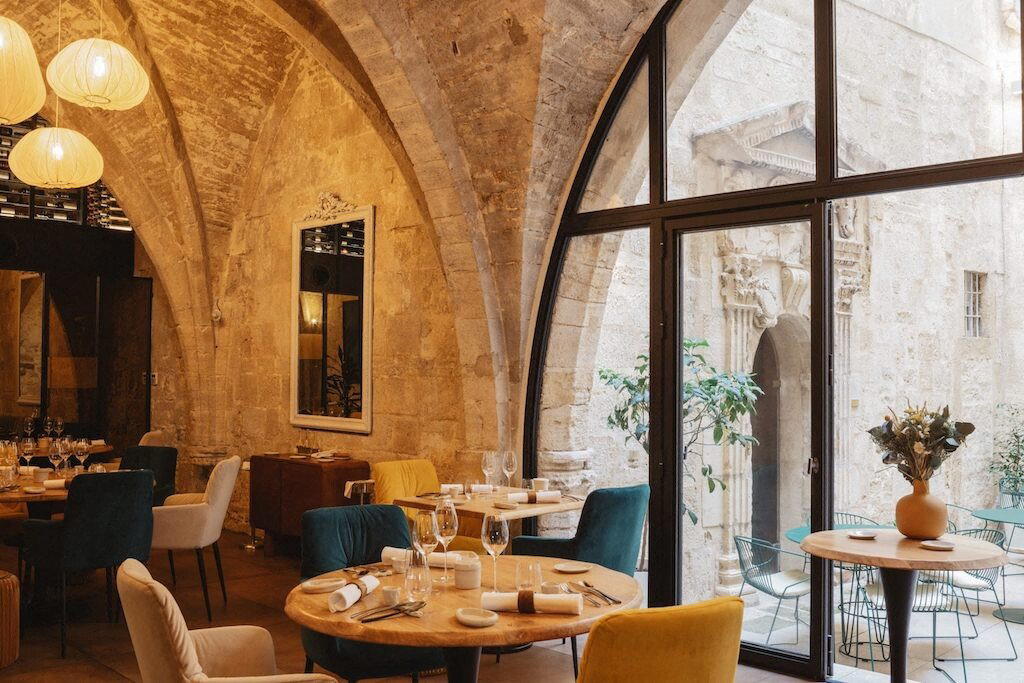
A Square, a Tradition, and a Chef Who Thinks in Seasons
Place Pétrarque sits in the oldest quarter of Montpellier, a compact medieval square where the stone is pale and the shade arrives early. The address alone signals a particular kind of ambition: cooking that earns its place in a city whose gastronomic reputation has long been tied to the Languedoc's extraordinary agricultural calendar. The Hérault department produces olives, stone fruit, wild herbs, and some of the most compelling small-plot vegetables in southern France. Kitchens that ignore that supply chain in favour of imported luxury products have increasingly looked out of step. Céna does not ignore it.
The broader shift in French modern cuisine over the past decade has moved decisively toward producer-led menus, where the chef's role is closer to editor than inventor. Establishments like Mirazur in Menton and Bras in Laguiole formalised the idea that a kitchen's identity is inseparable from its geography. That tradition now has deep roots at the southern end of France, and Céna sits squarely within it. Chef Clément Briand-Seurat works with hyper-local sourcing as a structural principle, not a marketing addendum, making vegetables the lead ingredient across the menu while using small fish and dairy in supporting roles. The result is a menu whose character changes substantially across the calendar year.
Vegetables as the Point, Not the Compromise
In French fine dining, vegetables have historically occupied the margin of the plate. Protein-centred cooking defined the canon from Escoffier through the grande brasserie era, and even the nouvelle cuisine generation, represented today by houses such as Troisgros - Le Bois sans Feuilles in Ouches or Paul Bocuse - L'Auberge du Pont de Collonges, centred vegetables as accompaniment rather than protagonist. The current generation is rewriting that hierarchy, and Céna is among the cleaner examples of the shift in the Occitanie region.
Briand-Seurat's approach means that the menu's invention lies in how vegetables are prepared, textured, and balanced rather than in the proteins that flank them. Dishes are described by EP Club sources as well-balanced and inventive, with a focus on celebrating seasonality and geographic proximity. The format includes full vegan and vegetarian options within the set menu structure, available on request at booking. This is not a fallback adaptation but a parallel format built into the kitchen's logic from the start. In a city where Michelin-recognised peers such as Leclère and Pastis Restaurant operate at the same €€€ price point, Céna's vegetable-forward positioning is a deliberate differentiation, not a limitation.
Languedoc Wine and the Logic of the Cellar
The sommelier at Céna works within the same local-sourcing framework as the kitchen, steering toward wines from Languedoc-Roussillon producers whose work complements the seasonal vegetable focus of the menu. The region produces a wider range than its international reputation suggests: garrigue-scented Grenache blends from Pic Saint-Loup, structured whites from Picpoul de Pinet and Limoux, and a growing number of natural and low-intervention producers whose wines align naturally with the produce-driven format in the dining room.
EP Club has flagged a note of particular interest here. There is an aspiration within the Céna team to develop a botanical drinks menu that would reduce kitchen waste further while drawing even more directly on the local fruit and vegetable supply. That project is not yet confirmed as current practice, but it represents a direction of travel that would place Céna in a small tier of French restaurants thinking about beverage and kitchen waste as a unified design problem. For context, international kitchens at the level of Frantzén in Stockholm have moved deepest into this territory, but French regional kitchens are beginning to follow. Reflet d'Obione in Montpellier also explores this territory at the margins of regional sourcing.
Where Céna Sits in Montpellier's Current Scene
Montpellier's restaurant scene at the €€€ tier has sharpened noticeably in recent years. La Réserve Rimbaud holds its position on the river with a more classically oriented French menu. Aliro takes a different register. At the €€€€ tier, Jardin des Sens remains the reference point for traditional gastronomic ambition. Céna's specific niche, set-menu modern French cooking with a hyper-local vegetable emphasis, Michelin recognition, and structured wine service, means it competes on identity rather than scale.
The 2025 Michelin Plate recognition and EP Club's Remarkable classification place Céna inside the tier of restaurants that are tracking upward. Among the French restaurants EP Club follows nationally, the comparison set for Céna's approach includes Flocons de Sel in Megève for its Alpine producer-led discipline, and Alléno Paris au Pavillon Ledoyen for technical ambition with French sourcing at its centre, though both operate at a different scale and price tier. At the regional level, Céna is among the more coherent expressions of the contemporary Languedoc kitchen.
Practical Considerations for Your Visit
Céna is located at 2 Place Pétrarque, 34000 Montpellier, in the historic centre. The set menu format means arriving with a clear appetite and sufficient time; this is not a restaurant for abbreviated dining. Guests planning vegan or vegetarian menus should note that request at the point of booking. The sommelier's wine guidance is built into the experience, and the regional wine list rewards engagement with it. For dinner at a €€€ Michelin-recognised table in one of Montpellier's most characterful squares, booking in advance is sensible, particularly during the spring and autumn months when the vegetable-forward menu is at its most expressive. Those planning a broader visit to the city can find further context across our full Montpellier restaurants guide, our full Montpellier hotels guide, our full Montpellier bars guide, our full Montpellier wineries guide, and our full Montpellier experiences guide.
Frequently asked questions
What awards or recognition does Céna have?
Céna has received recognition including: Young chef Clément Briand-Seurat has a passion for hyper local and makes vegetables the start from the show. Using little fish and dairy. Well balanced and inventive dishes that really celebrate the season and the proximity. The set menu is….
What should I eat at Céna?
Book the set menu, it is the only format and vegetables are its structural core. Chef Clément Briand-Seurat builds courses around hyper-local Languedoc produce, using fish and dairy sparingly as supporting elements rather than anchors. Vegan and vegetarian versions of the menu are available on request at the time of booking. The sommelier pairs each course with wines from local Languedoc-Roussillon producers, which is worth leaving to their judgment.
What's the pricing like at Céna?
Pricing at Céna is listed as €€€.
Cuisine-First Comparison
| Venue | Cuisine | Price | Awards | Notes |
|---|---|---|---|---|
| CénaThis venue (the venue you are viewing) | Modern French Gastronomic | $50–100 | Michelin Plate · Gault & Millau Remarkable Restaurant | Not listed |
| Leclère | Modern French Seasonal Tasting Menu | $50–100 | 1 Michelin Star · Gault & Millau Remarkable Restaurant | Modern Cuisine |
| Jardin des Sens | Modern Mediterranean Fine Dining | $150–200 | 1 Michelin Star · World's 50 Best #33 | French Gastronomic |
| Ébullition | Modern Mediterranean Fine Dining | Not listed | 1 Michelin Star · Gault & Millau Remarkable Restaurant | Creative |
| Soulenq | Modern French Bistro with Mediterranean Influences | $30–50 | Michelin Plate | Not listed |
| L'Arbre | Modern French Brasserie | $30–50 | Michelin Plate | Not listed |
Recognition history
Dated appearances from independent guides and award organizations, with the underlying list record or original source where available.
Michelin Plate
Michelin
Gault & Millau Remarkable Restaurant
Gault & Millau
We're Smart World 3 Radishes
We're Smart World
Full recognition history (4 entries)
Michelin Plate
Michelin
Continue exploring
More in Montpellier
Restaurants in Montpellier
All restaurants in Montpellier →
Bars in Montpellier
All bars in Montpellier →
Hotels in Montpellier
All hotels in Montpellier →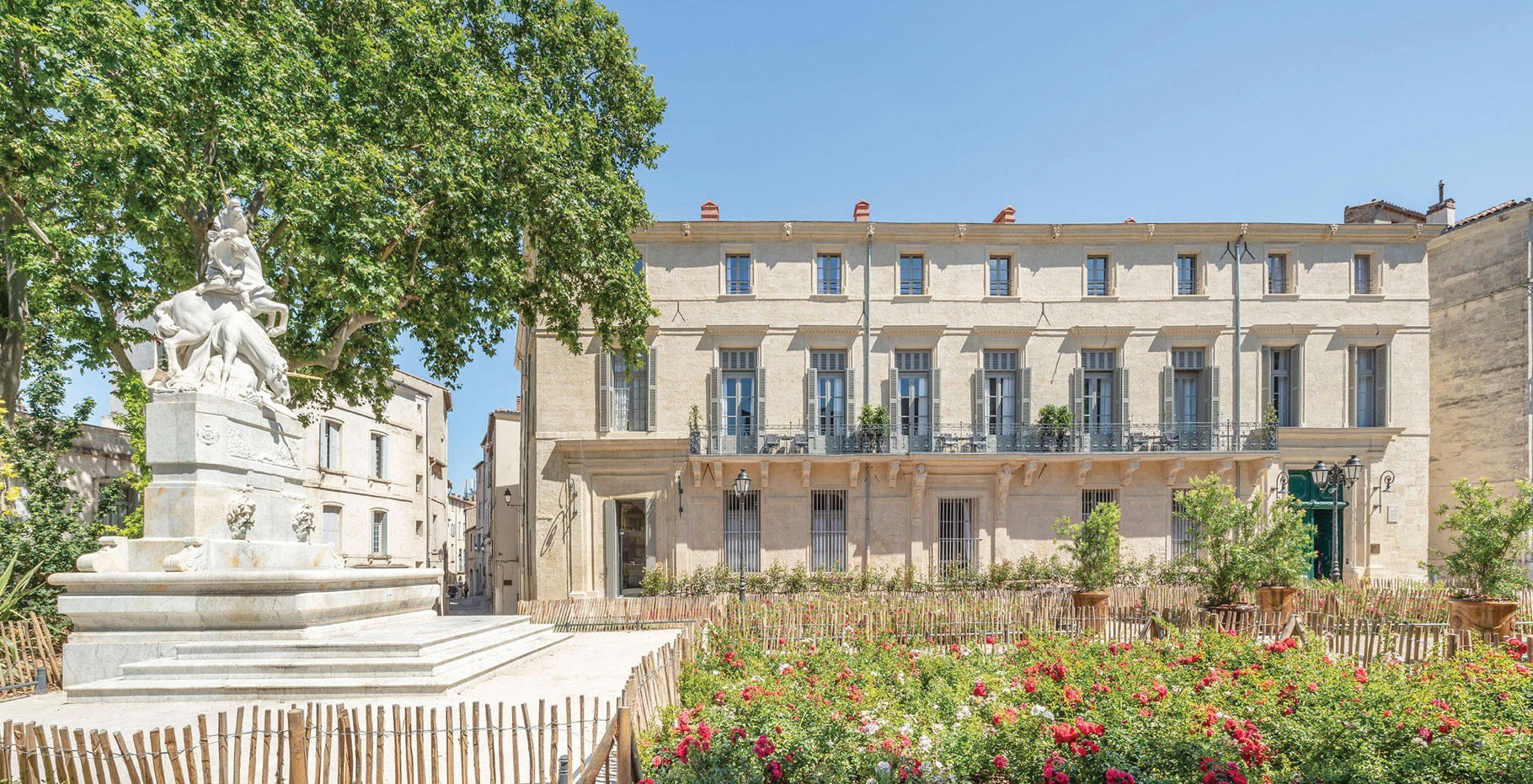

Details
- Romantic
- Intimate
- Elegant
- Sophisticated
- Date Night
- Special Occasion
- Historic Building
- Extensive Wine List
- Sommelier Led
- Local Sourcing
- Tasting Menu
- Wine
- Vegetarian Friendly
Current opening hours
- Monday
- 12–2 PM, 8–9:30 PM
- Tuesday
- Closed
- Wednesday
- Closed
- Thursday
- 12–2 PM, 8–9:30 PM
- Friday
- 12–2 PM, 8–9:30 PM
- Saturday
- 12–2 PM, 8–9:30 PM
- Sunday
- 12–2 PM, 8–9:30 PM
Hours can change for holidays and private events. Hours as of .
Intimiste and romantic atmosphere under ogive vaults with candlelit oak tables and exposed ancient stone.