CLEO cocina mediterránea serves Eastern Mediterranean food by the waterfront in Cancún, with leisurely pacing and a dinner-or-brunch rhythm that fits longer plans.
Pearl is the En Primeur Club membership app — saves, bookings, and concierge access live there. Same editors, same standards.
- Address
- Blvd. Kukulcan km 1, Puerto Juarez, Zona Hotelera, 77500 Cancún, Q.R., Mexico
- Phone
- +529986890757
- Website
- slshotels.com
- Directions
- Get directions
 Saves & bookings on Pearl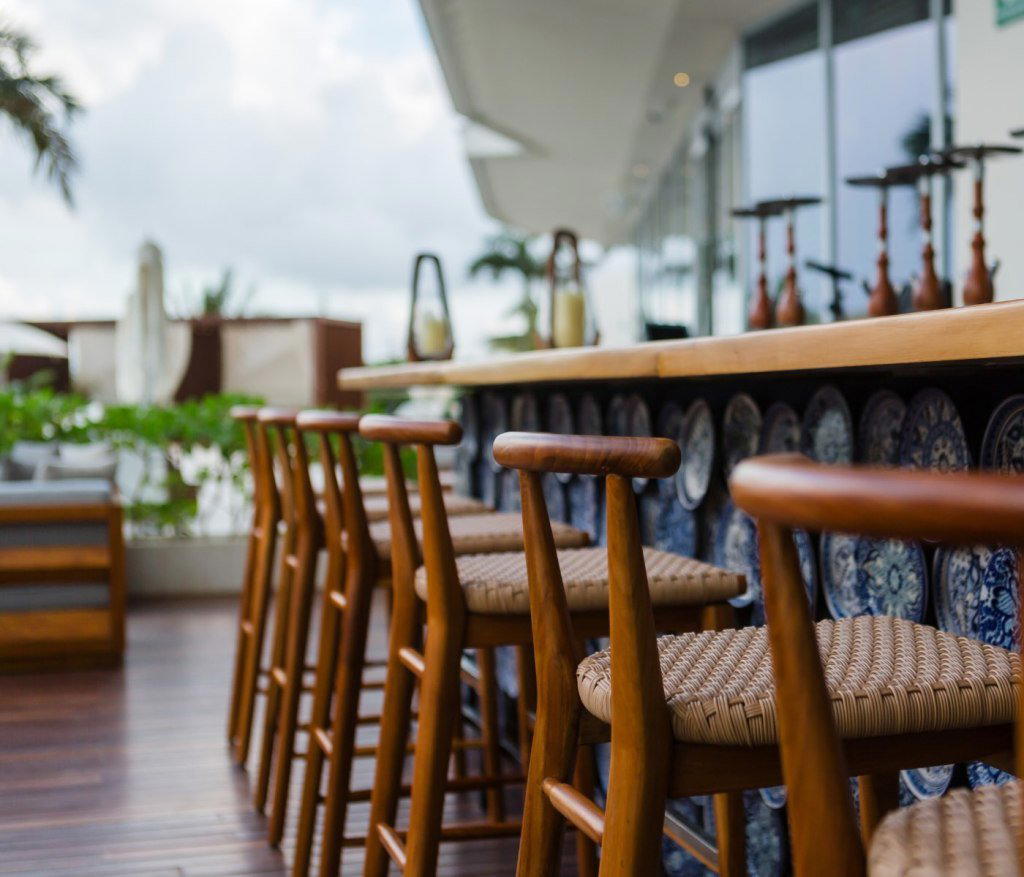
Mediterranean Light on the Caribbean Shore
The northern stretch of Cancun's Zona Hotelera, where Boulevard Kukulcan begins its long curve toward the hotel corridor, operates at a different register than the resort-dense kilometers further south. At km 1, the urban edge of the zone hasn't fully surrendered to the all-inclusive format, and restaurants here tend to draw a local and regional dining crowd alongside international guests. CLEO cocina mediterránea sits in this pocket, its name positioning it squarely within a dining category that has grown steadily across Mexico's coastal resort cities: the Mediterranean-referencing kitchen that uses the region's lighter techniques and ingredient logic as a counterpoint to the heavier, meat-centered alternatives nearby.
Mediterranean as a culinary frame is doing real work in Mexico's resort dining right now. Where Cancun's traditional competitive set has long defaulted to grilled seafood houses like Asador La Vaca Argentina, Argentine-influenced rooms like Bodega Argentina, or the steakhouse-Mexican hybrid format represented by venues like The Club Grill, a kitchen oriented around olive oil, citrus, herbs, and grilled fish occupies a distinct niche. It tends to attract guests who are fatigued by the weight of the resort buffet but want something with more architectural ambition than the beachside ceviche bar.
What the Setting Does
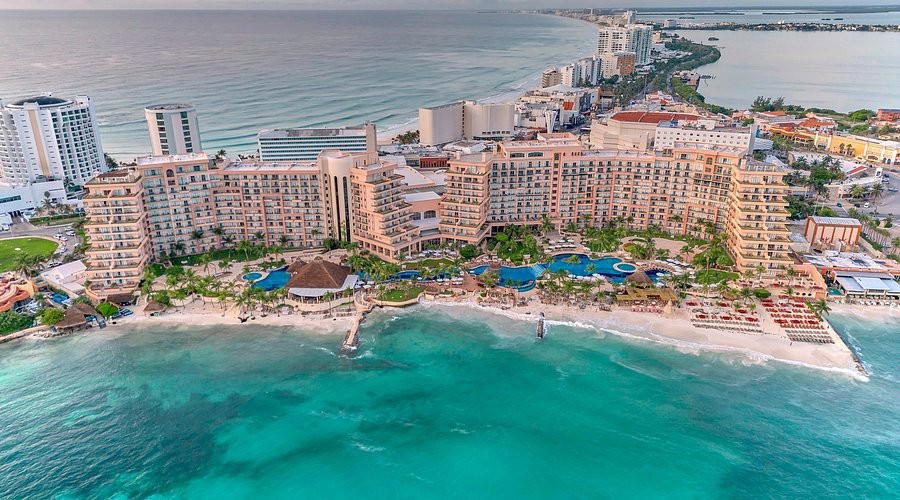
The physical address at Puerto Juarez places CLEO at the northern gateway of the Zona Hotelera, a position that shapes who arrives and how. This isn't the deep-strip restaurant that captures walk-in traffic from hotel lobbies. It's the kind of address you seek out, which shifts the room's energy toward intention rather than convenience. Mediterranean-framed kitchens have found this positioning works: guests who drive or taxi to km 1 have already made a considered choice, and the atmosphere in rooms like this typically reflects that self-selection. The crowd is there to eat, not to fill time between resort activities.
The Mediterranean reference in the name signals a particular sensory contract with the guest: expect light, herb-driven sauces rather than reduction-heavy preparations; grilled and roasted proteins over braised; acid and freshness as the primary seasoning logic rather than richness. In Cancun, where the climate itself makes heavier food harder to sustain across a full evening, that contract aligns well with the setting. The Caribbean coast has its own humidity and heat, and kitchens that have read that environment correctly tend to favor the same restraint that defines the leading tables along Spain's Costa Brava or the Greek islands.
Where CLEO Sits in Cancun's Dining Spectrum
Cancun's dining scene is frequently misread as monolithic, defined entirely by resort programming and tourist-facing seafood. The reality is more layered. The city and the zona hotelera support a set of independent-leaning restaurants that operate with genuine culinary ambition, even if they lack the formal recognition infrastructure of Mexico's major dining cities. For comparison, the kind of attention that goes to Pujol in Mexico City or Le Chique in Puerto Morelos rarely filters down to Cancun's independent mid-tier, even when the cooking merits it.
That gap matters for a restaurant like CLEO. Mediterranean-format dining in this city competes against French seafood rooms like Le Basilic, against casual Indian kitchens like Bombay Cancún, and against the Neapolitan-influenced proposition at Capri Pizza Moderna. Each of these represents a different strand of international culinary reference operating within the same resort economy. What distinguishes them is less the individual technique than the specific culinary tradition they invoke and how faithfully they commit to it. Mediterranean cooking done properly is one of the more demanding commitments: its apparent simplicity exposes ingredient quality immediately, and there is nowhere to hide a mediocre tomato under a complex sauce.
Across Mexico, the restaurants doing the most careful work with Mediterranean frameworks tend to sit in wine-forward regions or cities with direct access to quality imports. Olivea Farm to Table in Ensenada works with Baja produce and olive cultivation. Animalón in Valle de Guadalupe grounds its approach in fire and land. Café con Gracia in Cancun brings its own careful sourcing sensibility to the local market. CLEO operates in a different supply environment, one where proximity to the Caribbean coast provides access to excellent local seafood but where the olive oils, cured fish, and preserved vegetables that anchor a Mediterranean larder require import logistics that are more complicated than in western Mexico.
The Mediterranean Kitchen in a Tropical Context
What makes Mediterranean cooking in a Caribbean-coast setting genuinely interesting, rather than merely cosmetic, is the overlap between the two culinary cultures at the ingredient level. Both traditions prize fresh fish, citrus, and herb brightness. Both use technique to enhance rather than transform. The divergence comes in the fat base, the grain structure, and the role of preserved and fermented elements. A kitchen that has thought carefully about which elements of Mediterranean tradition translate cleanly to the Cancun context, and which require substitution or reinterpretation, is making meaningful choices. One that simply adopts the vocabulary without that consideration ends up with a menu that reads Mediterranean but eats like a tourist approximation.
The Yucatan Peninsula's own ingredient culture has affinities worth noting here. Achiote, habanero, and sour orange are the peninsula's primary flavor axes, and they share a brightness and acidity with the lemon, sumac, and preserved lemon that structure Levantine and Spanish Mediterranean cooking. Kitchens in this region that have found ways to let those local ingredients into a broadly Mediterranean frame, rather than treating them as contradictions to be excluded, tend to produce more coherent results. For diners coming from properties further along the zona hotelera, comparing notes with what is happening at HA' in Playa del Carmen gives useful context for how seriously the wider Riviera Maya corridor is taking the project of integrating regional and international culinary logic.
Planning a Visit
CLEO cocina mediterránea is located at Boulevard Kukulcan km 1, Puerto Juarez, in the northern Zona Hotelera. For guests staying in the hotel strip's southern or mid sections, the address requires a taxi or rideshare; the journey along Kukulcan typically runs under 15 minutes from most zone hotels, depending on traffic during peak evening hours. Without published booking data available, the most reliable approach is to contact the restaurant directly on arrival or through the concierge network at local properties, which often have direct lines to zona hotelera independents. Timing a reservation for early evening tends to work better in Cancun's resort zone, where the dinner traffic peaks sharply after 8 pm and earlier sittings move with more ease. For those building a wider itinerary of serious eating across the zona hotelera and beyond, the full Cancun restaurants guide provides the broader context for where CLEO sits alongside its peers.
Awards and Standing
| Venue | Cuisine | Price | Awards |
|---|---|---|---|
| CLEO cocina mediterráneaThis venue — the venue you are viewing | Not listed | Not listed | This venue |
| Lorenzillo's | Seafood | Not listed | Seafood |
| Kiosco Verde | Seafood | $$ | Seafood |
| La Casa De Las Mayoras | Mexican | $$ | Mexican |
| Le Basilic | French Seafood | Not listed | French Seafood |
| The Club Grill | Mexican Steakhouse | Not listed | Mexican Steakhouse |


At a Glance
- Modern
- Elegant
- Lively
- Date Night
- Special Occasion
- Group Dining
- Waterfront
- Hotel Restaurant
- Open Kitchen
- Waterfront
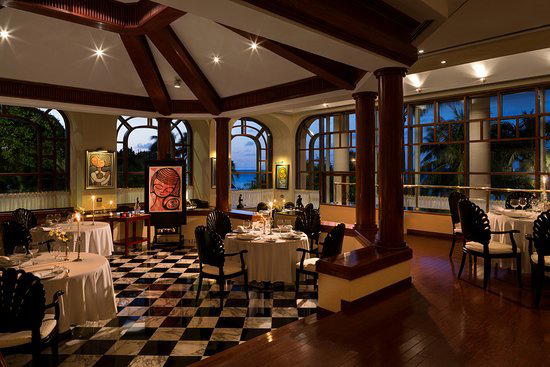
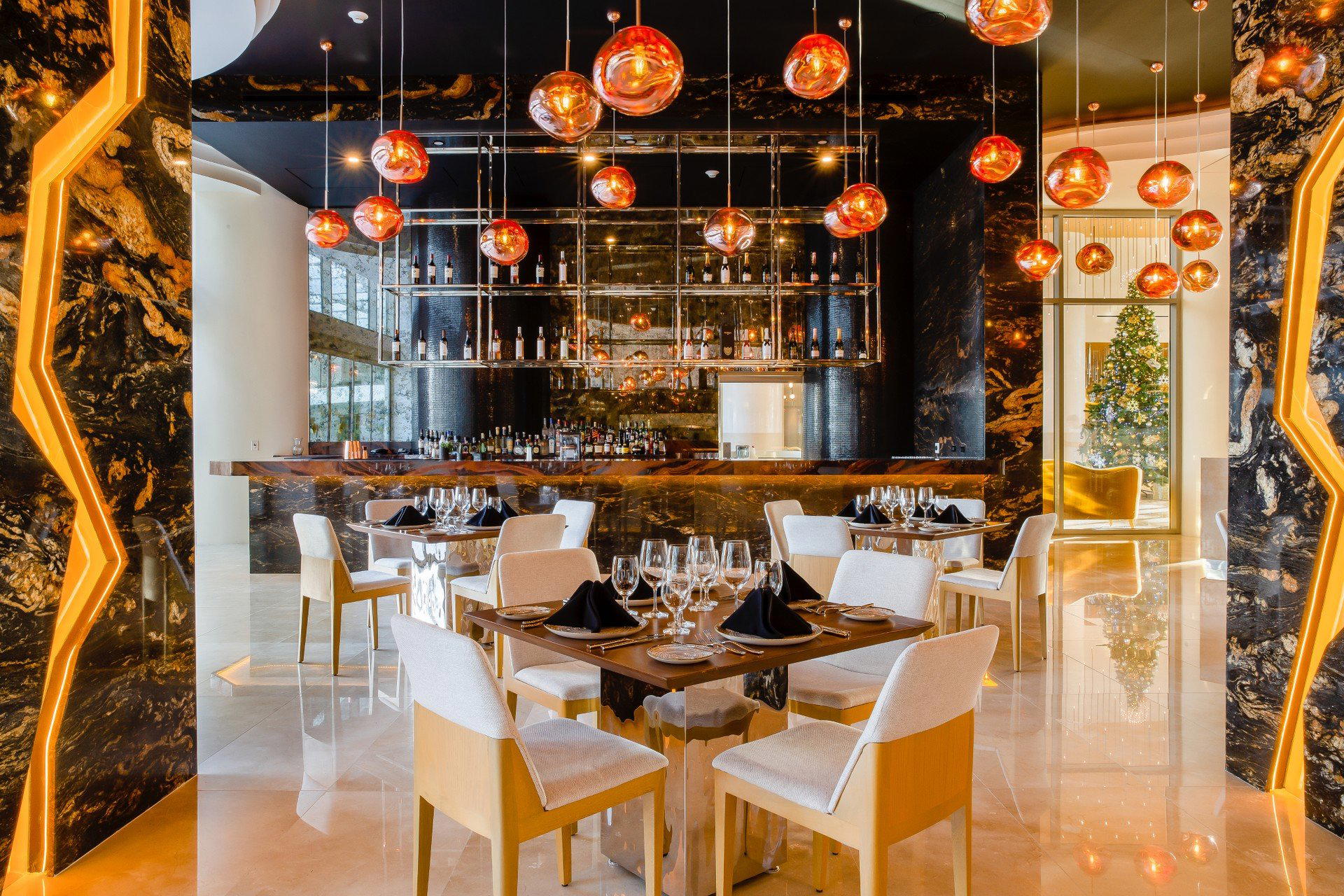
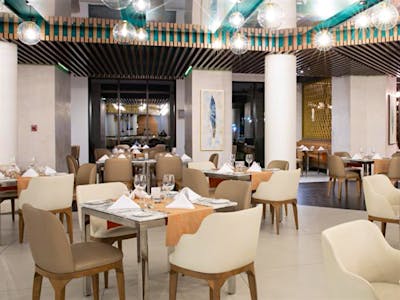
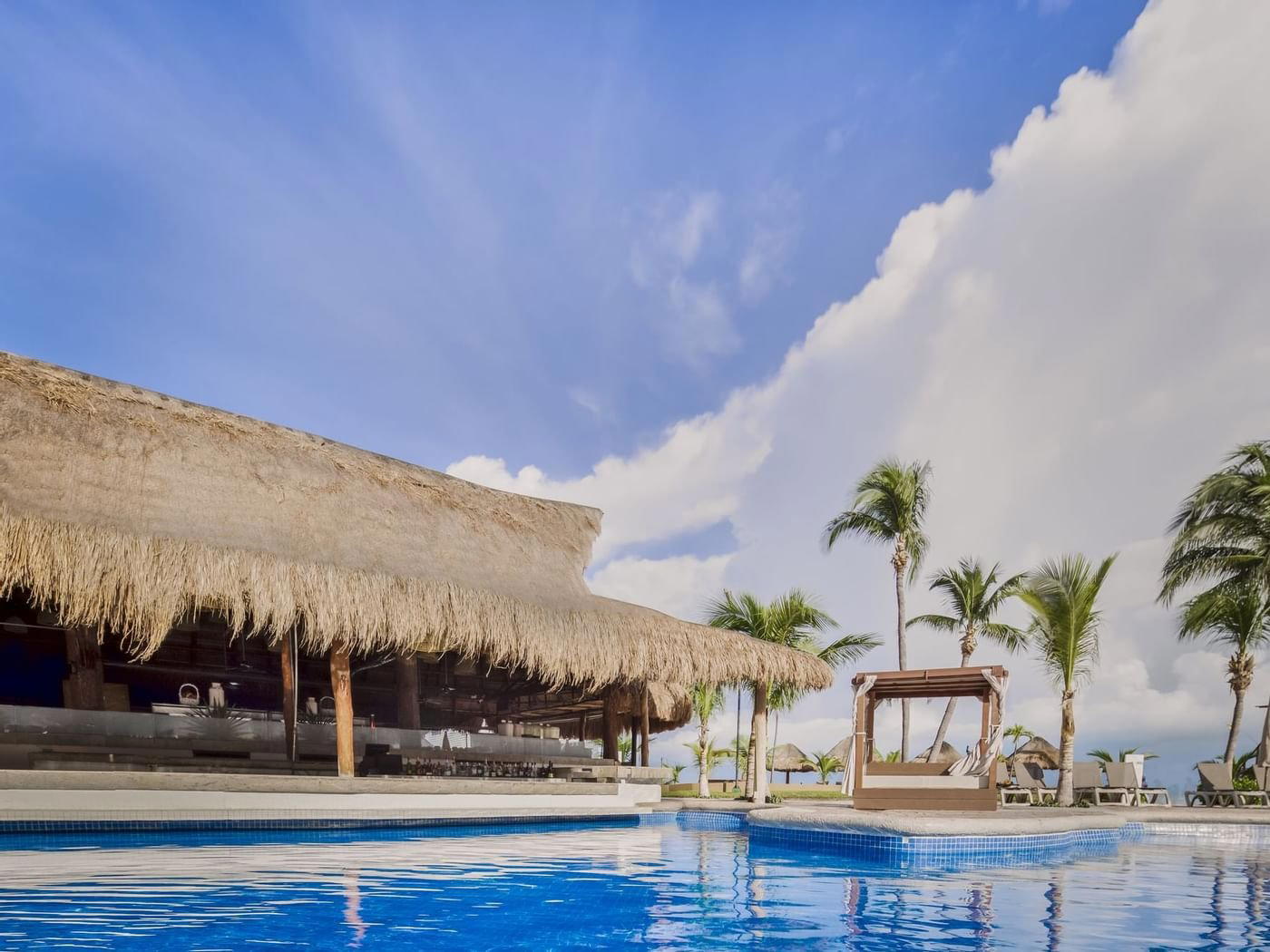
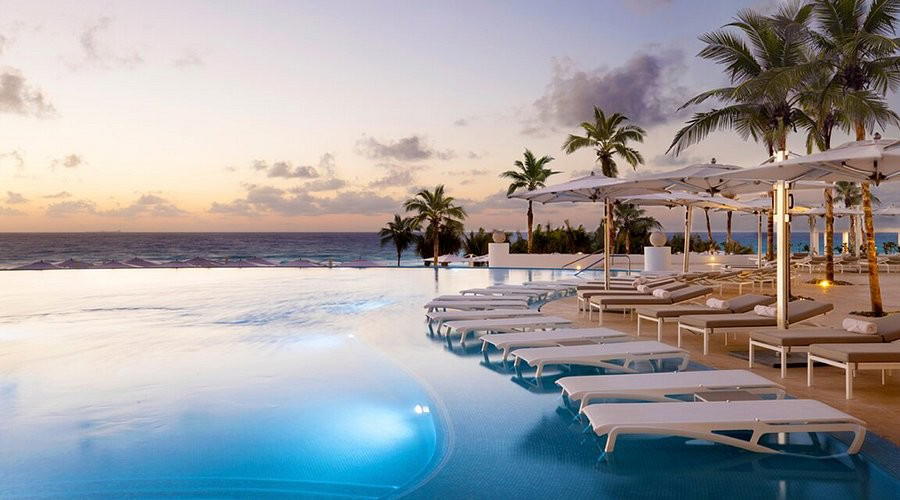
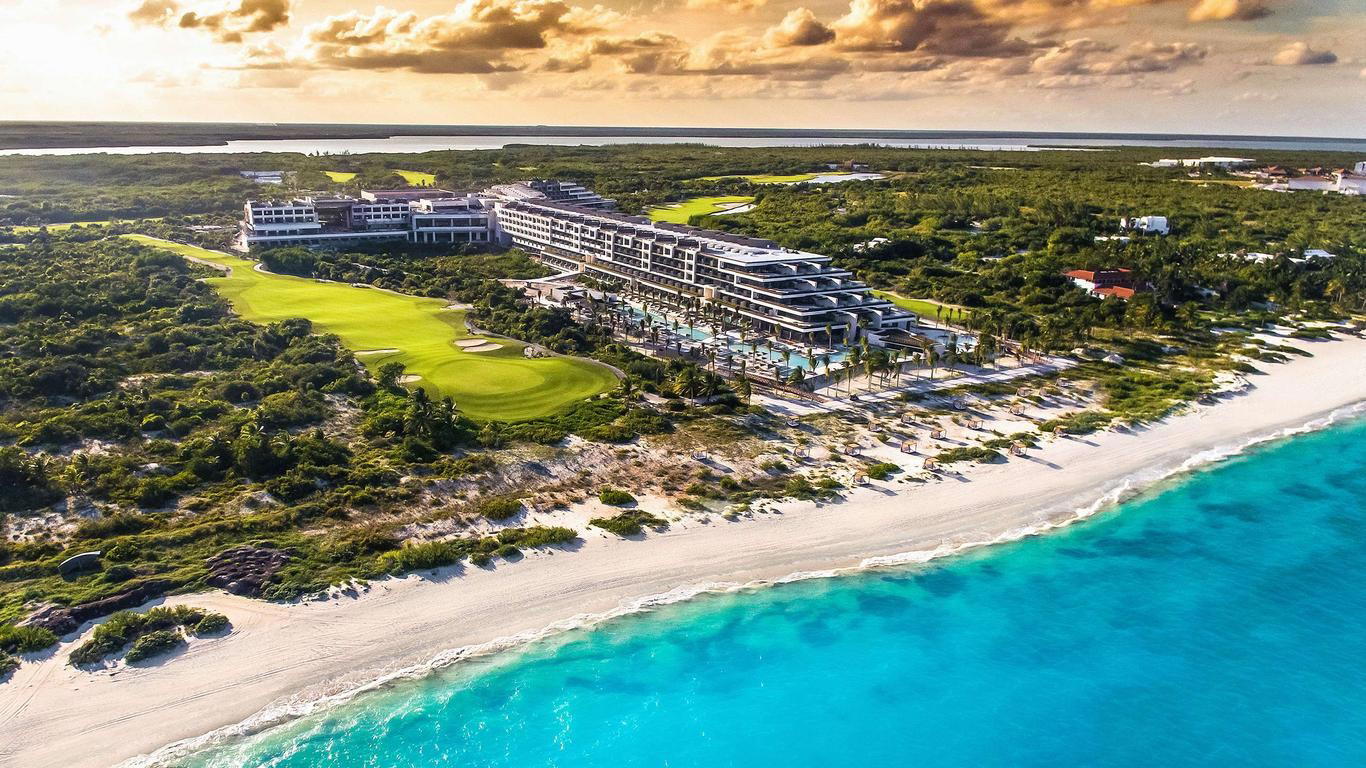
Lively and modern seaside atmosphere intertwining food, art, and community with energetic noise levels.
Know Before You Go
- Getting there
- Blvd. Kukulcan km 1, Puerto Juarez, Zona Hotelera, 77500 Cancún, Q.R., Mexico