
Tabelog 100 #77
Our verdict
Chinese Santuru belongs to Kawasaki’s practical, station-area dining culture rather than the trophy-counter circuit. Its Tabelog Chinese EAST “Tabelog 100” 2026 selection, dumpling category, shochu listing, counter seating, private-room option and cash-only setup point to a grounded Chinese table where regulars, spice, sharing and local rhythm matter more than ceremony.

Pearl is the En Primeur Club membership app, where members save venues, book tables and use the concierge.
The menu
What to order
- Sanma-men
- Tan-tan men
- Ebi fried rice
- Char siu fried rice
- Homemade pan-fried gyoza
- Homemade boiled gyoza
Ogawacho is not a stage-set version of Japanese dining. Around Kawasaki Station, restaurant culture is denser, louder and more workday-driven than the polished hotel corridors of central Tokyo, with Chinese rooms, dumpling shops, ramen counters and grilled-meat places clustered together. Chinese Santuru fits that setting: a Chinese and dumpling address with counter seating, a non-smoking room, private rooms, shochu, and enough local pull to land in Tabelog Chinese EAST “Tabelog 100” 2026.
The point is not rarity for its own sake. Kawasaki’s Chinese dining has long been shaped by appetite, speed and shared plates: cooking that satisfies office groups, friends, late dinners and repeat customers rather than tasting-menu collectors. Here, a Tabelog 100 selection is useful because it measures a neighbourhood-format restaurant against serious Chinese rooms across eastern Japan, not just casual places on the same block.
Spice, dumplings and the Kawasaki station appetite
Chinese food in Japan often splits into two traveller-friendly categories: formal, banquet-leaning restaurants with polished service, and everyday chuka rooms built around fried, steamed, simmered and wok-driven dishes. Kawasaki has natural sympathy with the second. Its industrial history and commuter density favour places that can handle groups, alcohol, dumplings and rice dishes without turning dinner into theatre.
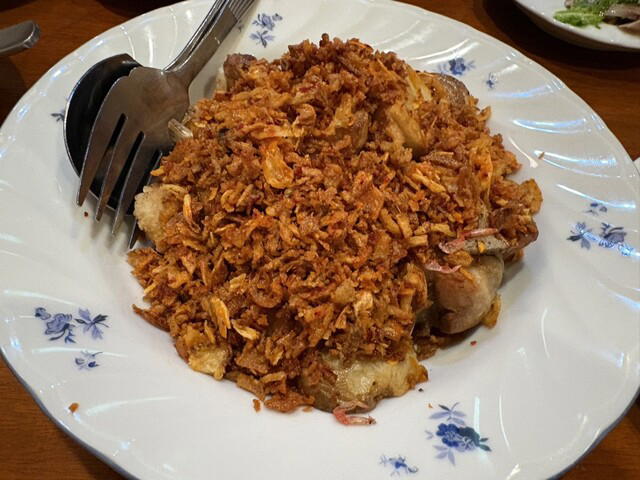
Chinese Santuru’s listed categories, Chinese and dumpling, place it in that practical lineage. Dumplings matter because they are both snack and meal anchor: easy to share, compatible with shochu, and democratic enough to sit beside spicier meat dishes or fried rice. Public remarks also point to Mao Zedong spare ribs as a regular-customer order, with leftover spicy chips used on fried rice, a detail that says more than glossy menu language. It suggests a table culture where seasoning carries through the meal and diners know how to extend a dish beyond its first presentation.
Ingredient sourcing is not framed through luxury provenance or named farms. It appears through a different, equally Japanese discipline: turning familiar Chinese-restaurant materials into repeatable, craveable combinations at a local price tier. Dumpling wrappers, pork, aromatics, chile, rice and frying technique become the test. In a premium dining city, sourcing often fixates on tuna lineage or wagyu prefecture; in Kawasaki Chinese, value comes from turnover, seasoning intelligence and making inexpensive ingredients carry weight.
That is why local comparison matters. Ramen Kan 2 Ya Kawasaki ten and Matsu no Ki sit in a lower ramen-style spend bracket, while Kerala Kitchen La Cittadella Kawasaki ra chitta derra ten occupies a similar casual-dinner range through a different cuisine. Yakiniku Jingisukan Tsuruya operates in a higher grill-house tier. Chinese Santuru is the middle lane: more communal and drink-friendly than a quick noodle stop, less expensive and less occasion-coded than a meat-focused dinner.
A Tabelog 100 signal without the ceremony of Tokyo fine dining
Tabelog’s Hyakumeiten lists tend to reward a specific Japanese restaurant credibility: accumulated local approval, category strength and consistency enough to survive regional comparison. Chinese Santuru appeared in Tabelog Chinese EAST selections for 2021, 2023, 2024 and 2026, giving the listing more force than a single-year flash. Its current Tabelog score is 3.68, meaningful in Japan’s conservative rating culture, where scores above the mid-threes can indicate serious category recognition.
The absence of chef-led biography in the public identity is part of the reading. Many notable Japanese neighbourhood restaurants do not sell personality, manifesto or origin story. They earn position through dishes people reorder, rooms that handle regulars, and details that become local shorthand. The 2024 TV Tokyo appearance on “Appearance! Ad Town Heaven” during Kawasaki’s centennial coverage adds civic recognition rather than global trophy attention.
For travellers, that distinction matters. A meal here belongs to Kawasaki’s city fabric, not the destination-restaurant loop pulling visitors toward Ginza, Aoyama or Nihonbashi. Read it alongside other local dining threads, from Vietnamese cooking at (Shoku) Vietnam and French-leaning meals at Belmatine to bakery culture at Boulangerie Metier Pa-ku shiti musashi kosugi za ga-den, pork ramen at Buta Boshi and bistro-style dining at C'EST UNE BONNE IDEE!. The connective tissue is not cuisine type; it is Kawasaki’s preference for restaurants that function hard for locals before they make sense to visitors.
How to read the room before planning dinner
The useful expectations are concrete. The restaurant lists 48 seats, counter seating, private rooms for eight, private use for 20 to 50 people, reservations, no smoking, no parking, and payment by cash rather than card, electronic money or QR code. A one-drink order per person is required. Lunch service is listed as temporarily suspended, with the dinner schedule carrying the room. These details point to evening groups and regular use rather than spontaneous luxury dining.
That format changes the meal. This is not a chef’s-counter progression where the diner submits to a fixed sequence. It is a shared-table Chinese dinner best built around contrast: dumplings, a spice-led meat dish, rice or noodles, and drinks that can handle salt, chile and oil. Shochu is listed, fitting a Japanese-Chinese room where drinking is less about pairings and more about pace.
For broader planning, use Our full Kawasaki restaurants guide to build a local food day, then treat Our full Kawasaki hotels guide, Our full Kawasaki bars guide, Our full Kawasaki wineries guide and Our full Kawasaki experiences guide as context for the wider stay. Travellers extending the route through Japan can compare regional dining styles with -Grilled beef Sukiyaki- KAMAKURA TANUKIAN 鎌倉 たぬき庵 in Kamakura. 鮪と炭火焼き うお炭 秋葉原店 in Tokyo.cafe in Osaka.know in Kumamoto, [Curry Senmon Ten] Maruyama Kyoju. in Sapporo and [ki:] in Kyoto. For a transpacific contrast in Japanese drinking and casual food culture, Jōdo Saké Bar in Los Angeles and Onigiri Time in Pasadena show how different the same references become outside Japan.
The editorial read is clear: Chinese Santuru is for diners who value local category strength over polish. The Tabelog 100 history supplies the trust signal, the dumpling-and-Chinese format supplies the pleasure, and Kawasaki supplies the reason it works. Come expecting a serious neighbourhood Chinese dinner, not Tokyo fine-dining choreography.
Frequently asked questions
Can I bring kids to Chinese Santuru?
Those details are not published. For families, the private-room setup is the clearest fit. Check the venue's official channels for the latest details.
What's the overall feel of Chinese Santuru?
Expect a compact, reservation-friendly Chinese room with counter seating, 48 seats, and a cashless policy that excludes cards and QR payments. The Tabelog 100 selection for Chinese cuisine in EAST 2026 gives it clear local credibility in Kawasaki.
What's the pricing like at Chinese Santuru?
Pricing at Chinese Santuru is listed as JPY 2,000 - JPY 2,999 - JPY 999.
What is Chinese Santuru known for?
Chinese Santuru is primarily known for its core concept and execution in Kawasaki.
How It Stacks Up
Comparable venues by cuisine and price in the same metro.
| Venue | Cuisine | Price | Awards | Notes |
|---|---|---|---|---|
| Chinese SanturuThis venue (the venue you are viewing) | Traditional Chinese with sanma-men noodles | $10–20 | Tabelog 100 #77 | Not listed |
| San San Nana | Tsukemen & ramen shop | $10–20 | Tabelog 100 #19 | Kawasaki Station area |
| Teuchi Chuka Soba Sakata | Handmade Chuka Soba Ramen | $10–20 | Tabelog 100 #80 | Kawasaki-ku |
| Match Bo Mizonokuchi ten | Wakayama-style ramen | $10–20 | Tabelog 100 #60 | Takatsu-ku |
| noodles kitchen GUNNERS | Ramen shop (clam-broth focus) | $1–10 | Tabelog 100 #26 | Nakahara-ku (Musashi-Kosugi Area) |
| Ramen Marusen | Traditional Ramen Shop | $10–20 | Tabelog 100 #27 | Musashi-Kosugi |
Recognition history
Dated appearances from independent guides and award organizations, with the underlying list record or original source where available.
Tabelog 100 #77 · No. 77
Tabelog · Tabelog 100 - Chinese cuisine - EAST - 2026
Continue exploring
More in Kawasaki
Restaurants in Kawasaki
All restaurants in Kawasaki →

Bars in Kawasaki
Browse all →


Details
- Classic
- Cozy
- Intimate
- Casual Hangout
- After Work
- Group Dining
- Solo
- Family
- Late Night
- Private Dining
- Standalone
- Street Scene
- A La Carte
- Beer
Current opening hours
- Monday
- 5–9 PM
- Tuesday
- Closed
- Wednesday
- 5–9 PM
- Thursday
- 5–9 PM
- Friday
- 5–9 PM
- Saturday
- 5–9 PM
- Sunday
- 5–9 PM
Hours can change for holidays and private events. Hours as of .
Simple, classic Chinese-restaurant interior with counter and table seating, a relaxed neighborhood feel, and a casual atmosphere suited to everyday dining rather than special-occasion formality.