
Michelin Plate
Our verdict
Where the Saône Sets the Scene Quai Saint-Vincent runs along the western bank of the Saône, where the river separates the Presqu'île from the slopes of Fourvière. It is one of Lyon's most legible addresses: facing Vieux Lyon across the water...

Pearl is the En Primeur Club membership app, where members save venues, book tables and use the concierge.
The menu
What to order
- Herbaceous_mimosa_egg
- Monkfish_with_hare_jus
- Chicken_entree
Where the Saône Sets the Scene
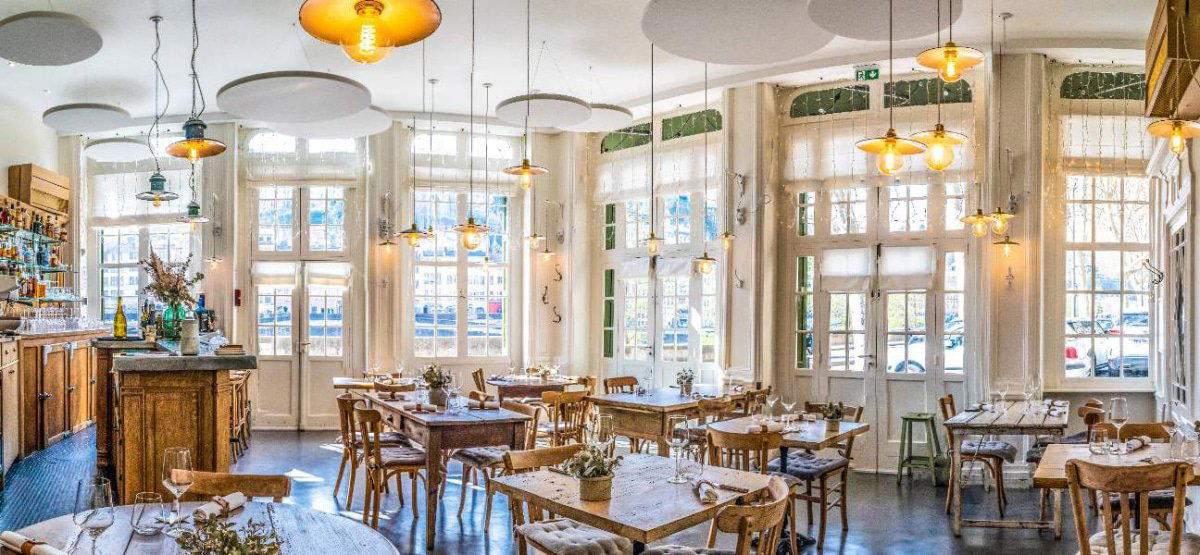
Quai Saint-Vincent runs along the western bank of the Saône, where the river separates the Presqu'île from the slopes of Fourvière. It is one of Lyon's most legible addresses: facing Vieux Lyon across the water, plane trees lining the quayside, the ochre and rust of the old town visible from most seats in the room. Chez Pimousse occupies this stretch with a dining room that reads less like a city restaurant and more like a provincial house transplanted to the riverbank, old wooden tables, classic bistro chairs, a wooden bar, dried grasses adding texture to the interior. The effect is deliberate. Lyon's most enduring restaurants tend to occupy spaces that feel earned rather than designed, and this one fits that tradition.
The Bouchon Tradition and What Comes After It
Lyon holds a particular place in French culinary history: it produced the canonical bouchon, the blue-collar lunch counter that fed silk workers and market traders, and it also produced some of the most celebrated alta cucina in France, from La Mère Brazier downward. What the city has wrestled with in recent decades is the space between those two poles, between the comfort-focused bouchon and the tasting-menu formalism of places like Le Neuvième Art or Takao Takano. Chez Pimousse sits in that middle register: it does not trade on tripe and quenelles alone, nor does it pursue the multi-course precision of the city's creative tier. Its work is market-led French cooking, technically careful, without the formality of a tasting-menu format.
That positioning matters in Lyon specifically. The city's food culture is built on produce first, the proximity of Bresse, the Dombes, the Rhône Valley, and the Alpine foothills means that any restaurant claiming seriousness here is measured against the quality of what it sources. A John Dory fillet with peas, asparagus, pickled berries, and a smoked pike roe sauce is exactly the kind of dish that signals awareness of this standard: fish from the right supplier, vegetables at their seasonal peak, a sauce that shows technical range without overwhelming the plate. That kind of cooking is harder to execute at a bistro price point than it looks, which is why the restaurants in Lyon that do it credibly earn sustained local loyalty.
Surprise Menus and the Logic Behind Them
The surprise menu format, in which the kitchen drives the selection rather than the guest, has become more common across French regional cooking over the past decade. Its logic is direct from the cook's perspective: it allows purchasing decisions to follow availability rather than obligation, which is the only way to work honestly with seasonal produce. At Chez Pimousse, this format aligns with the kitchen's orientation toward what is fresh and what is at its finest on a given day. Diners who prefer to know exactly what they are ordering before they arrive may find it less comfortable; those who extend trust to the kitchen in exchange for a more spontaneous experience will find it rewarding.
This approach puts Chez Pimousse in a different category from the prix-fixe formalism of Au 14 Février or the structured modern menus at Burgundy by Matthieu. It is less choreographed, more conversational, and depends more on the relationship between the chef and the room. Pierre-Michaël Martin, known as Pimousse, the name that gives the restaurant its identity, is present in that room, greeting regulars and occasionally joining the service. That presence is not incidental: it is part of how the restaurant works. In Lyon's bistro-adjacent register, the host who knows the room matters as much as the menu.
The Terrace and the Time of Year
The riverfront terrace, shaded by plane trees, operates as a genuinely different experience from the interior dining room. Plane tree shade on a Lyon summer afternoon, with the Saône running past and Vieux Lyon visible across the water, is a particular kind of pleasure that no interior can replicate. The terrace is worth planning around: Lyon in late spring through early autumn is warm and often sunny, and the outdoor seats here are among the more considered positions on the quai. If the visit can be timed for fine weather, the terrace is the stronger choice.
Seasonality extends into the food as well. The menu's dependence on fresh produce means that a visit in May or June, when asparagus and peas are at their peak, lands differently from a winter visit. Lyon's covered markets, particularly Les Halles de Lyon Paul Bocuse, are the standard reference point for what serious kitchens in this city are buying, and a restaurant oriented around market availability will shift character considerably across the calendar.
Planning a Visit
Chez Pimousse is at 27 quai Saint-Vincent, on the right bank of the Saône facing Vieux Lyon. The address is walkable from the Hôtel de Ville metro station and from the Presqu'île's central axis. There is no booking phone number or website in current public records; the most reliable approach for visitors from outside Lyon is to contact the restaurant directly on arrival in the city or to ask the concierge at your hotel to arrange a reservation, particularly for dinner or weekend lunch. Given the format, surprise menus, a room that depends on the chef's presence, a terrace that draws local regulars in good weather, this is not a restaurant where turning up without a table is a reasonable strategy.
For a broader view of where Chez Pimousse sits in Lyon's dining geography, the full EP Club Lyon restaurants guide covers the range from bouchon-level to the city's Michelin-recognised tier. Separate guides cover hotels, bars, wineries, and experiences across the city.
For context on where French regional cooking of this calibre sits relative to the country's broader fine dining scene, comparable reference points include Flocons de Sel in Megève, Troisgros in Ouches, and Bras in Laguiole, all restaurants where regional produce and the chef's physical presence in the operation remain central to how the food reads. At the apex of French institution-building, Alléno Paris au Pavillon Ledoyen and Auberge de l'Ill in Illhaeusern represent the formal end of the spectrum that Chez Pimousse deliberately avoids. For French culinary influence abroad, Le Bernardin in New York and Emeril's in New Orleans show how Lyon's tradition of produce-led, technically grounded cooking has travelled. Mirazur in Menton is a useful regional comparison for a kitchen equally driven by what is growing and available on a given day.
Frequently asked questions
Is Chez Pimousse child-friendly?
The setting, wooden tables, classic bistro chairs, an unhurried pace, sits firmly in the relaxed register rather than the ceremonial one, which makes it more accommodating than Lyon's formal tasting-menu rooms. The surprise menu format means children should be reasonably open to whatever the kitchen is running that day. A riverside terrace under plane trees also tends to ease the logistics of dining with younger guests. It is worth calling ahead to confirm the day's format before arriving with a group.
Is Chez Pimousse formal or casual?
Chez Pimousse reads as a serious bistro, not a formal restaurant. The room has old wooden tables, classic bistro chairs, a wooden bar, and dried grasses, think country villa rather than white tablecloth. Pierre-Michaël Martin is known to greet regulars personally and occasionally helps with service, which sets the tone. The cooking is meticulous, but the atmosphere is not ceremonial.
Does Chez Pimousse have a Michelin star or similar recognition?
Chez Pimousse has received recognition including: Pierre-Michaël Martin, otherwise known as "Pimousse", has set up shop on Quai Saint-Vincent, overlooking Vieux Lyon and the River Saône. The light-filled dining room is reminiscent of a country villa, with its old wooden tables, classic bis….
What's the must-try dish at Chez Pimousse?
The kitchen operates on a surprise menu built around daily market produce, so there is no fixed dish to order by name. The documented example from the kitchen, John Dory fillet with peas and asparagus, pickled berries, and a smoked pike roe sauce, gives a clear picture of the style: classical French structure with precise, produce-first execution. Surrendering to whatever Martin is running that day is the point of the format.
What's Chez Pimousse's location?
Chez Pimousse is located at 27 quai Saint-Vincent, Lyon.
What's the best way to book Chez Pimousse?
No reservation phone number or booking platform is currently confirmed for Chez Pimousse. The restaurant is at 27 quai Saint-Vincent, Lyon, and the most direct approach is to visit in person to enquire or check for any current contact details on arrival in the city. Given the popularity of the riverside terrace in warmer months, advance planning is advisable rather than walking in without notice.
A Pricing-First Comparison
Comparable venues nearby, for context on price, style, and recognition.
| Venue | Cuisine | Price | Awards | Notes |
|---|---|---|---|---|
| Chez PimousseThis venue (the venue you are viewing) | Modern French Tasting Menu | $50–100 | Michelin Plate | Not listed |
| Murmures | Modern French Bistronomique | $50–100 | Michelin Plate | Quartier Bas des Pentes Presqu'île, Modern French Bistronomique |
| Trèfle | Modern Vegan French Gastronomy | $50–100 | Michelin Plate | Quartier Bellecour Carnot, Modern Vegan French Gastronomy |
| Regain | Modern French Bistro | $50–100 | Michelin Plate | Quartier Ouest des Pentes, Modern French Bistro |
| Bulle | Modern French Bistronomic | $50–100 | Michelin Plate | Quartier Colline des Funiculaires, Modern French Bistronomic |
| Cafe Comptoir Abel | Traditional Lyonnaise Bouchon | $50–100 | Not listed | Quartier Bellecour Carnot, Traditional Lyonnaise Bouchon |
Recognition history
Dated appearances from independent guides and award organizations, with the underlying list record or original source where available.
Michelin Plate
Michelin
Continue exploring
More in Lyon
Restaurants in Lyon
All restaurants in Lyon →
Bars in Lyon
All bars in Lyon →
Hotels in Lyon
All hotels in Lyon →

Details
- Cozy
- Elegant
- Intimate
- Rustic
- Date Night
- Special Occasion
- Terrace
- Open Kitchen
- Extensive Wine List
- Local Sourcing
- Waterfront
- Street Scene
- Tasting Menu
- Gluten Free Options
- Vegetarian Friendly
Current opening hours
- Monday
- Closed
- Tuesday
- 12–2 PM, 7:30–9 PM
- Wednesday
- 7:30–9 PM
- Thursday
- 12–2 PM, 7:30–9 PM
- Friday
- 12–2 PM, 7:30–9 PM
- Saturday
- 12:30–2 PM, 7:30–9:30 PM
- Sunday
- Closed
Hours can change for holidays and private events. Hours as of .
Warm and cozy with rustic interior, authentic materials, and dramatic riverside views creating a sophisticated yet relaxed atmosphere.