Michelin Plate
Our verdict
In Lyon's Ainay neighbourhood, Trèfle makes a considered case for plant-based cooking without the evangelical tone that often surrounds it. Chef Emily Dader structures the menu around two set paths, 'iode' and 'rouge', that mirror the architecture of fish and meat courses through vegetables, grains, and aromatics. The result is creative, ingredient-driven cooking that sits comfortably within Lyon's serious dining conversation.

Pearl is the En Primeur Club membership app, where members save venues, book tables and use the concierge.
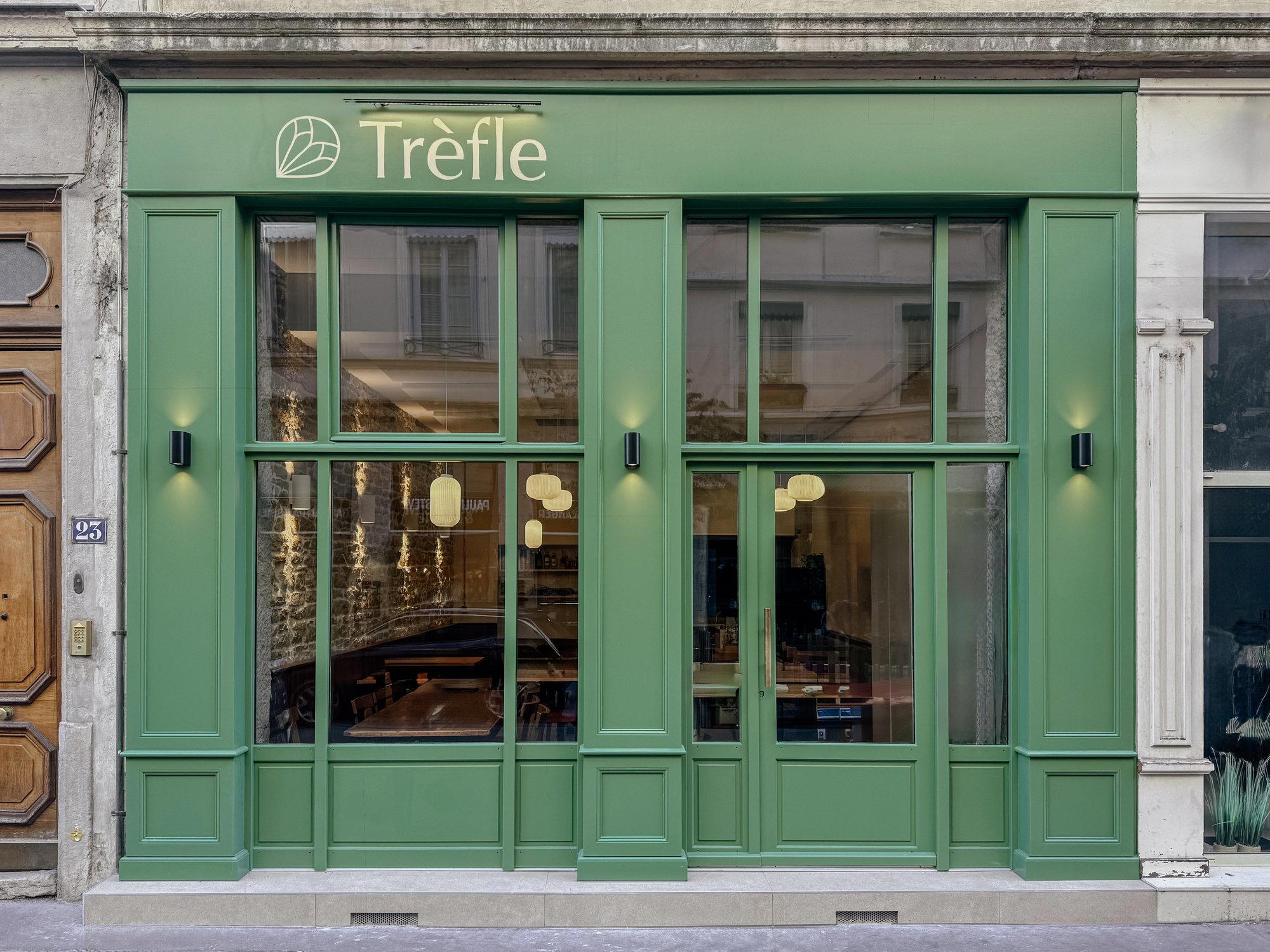
A Quiet Street in Ainay, and What It Says About Lyon's Shifting Table
Lyon's dining identity has long been anchored in the bouchon tradition and the grand classical kitchens that grew from it. Places like La Mere Brazier represent the canonical version of that story: rich stocks, organ meats, cream sauces, and the kind of cooking that treats restraint as a mild insult. That tradition runs deep, and it still defines how the city is understood from the outside. But inside Lyon, a parallel set of kitchens has been developing a different kind of seriousness, one built around plant sources, aromatic precision, and set-menu discipline that asks more of ingredients rather than less. Trèfle, on rue Franklin in the Ainay district, sits squarely in that current.
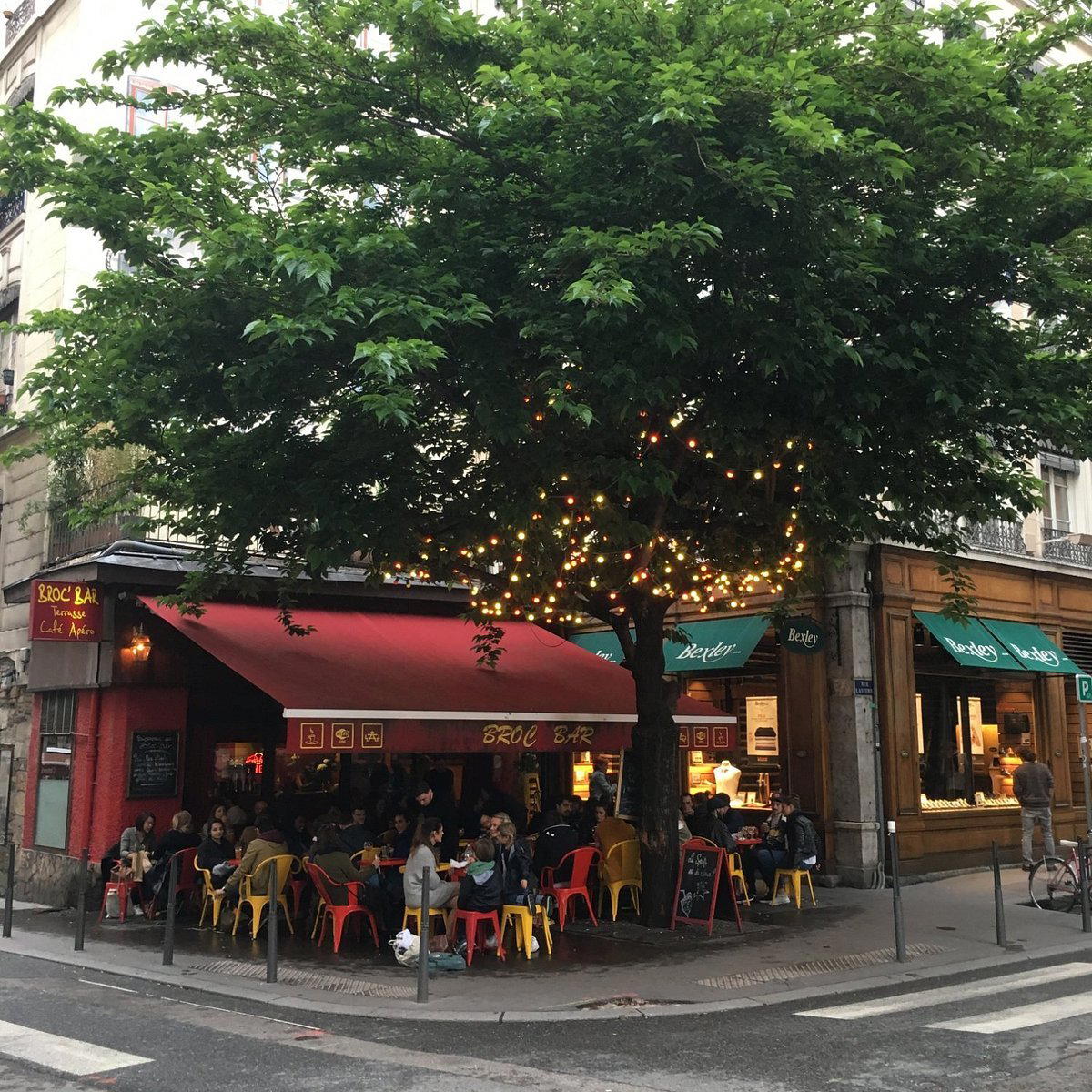
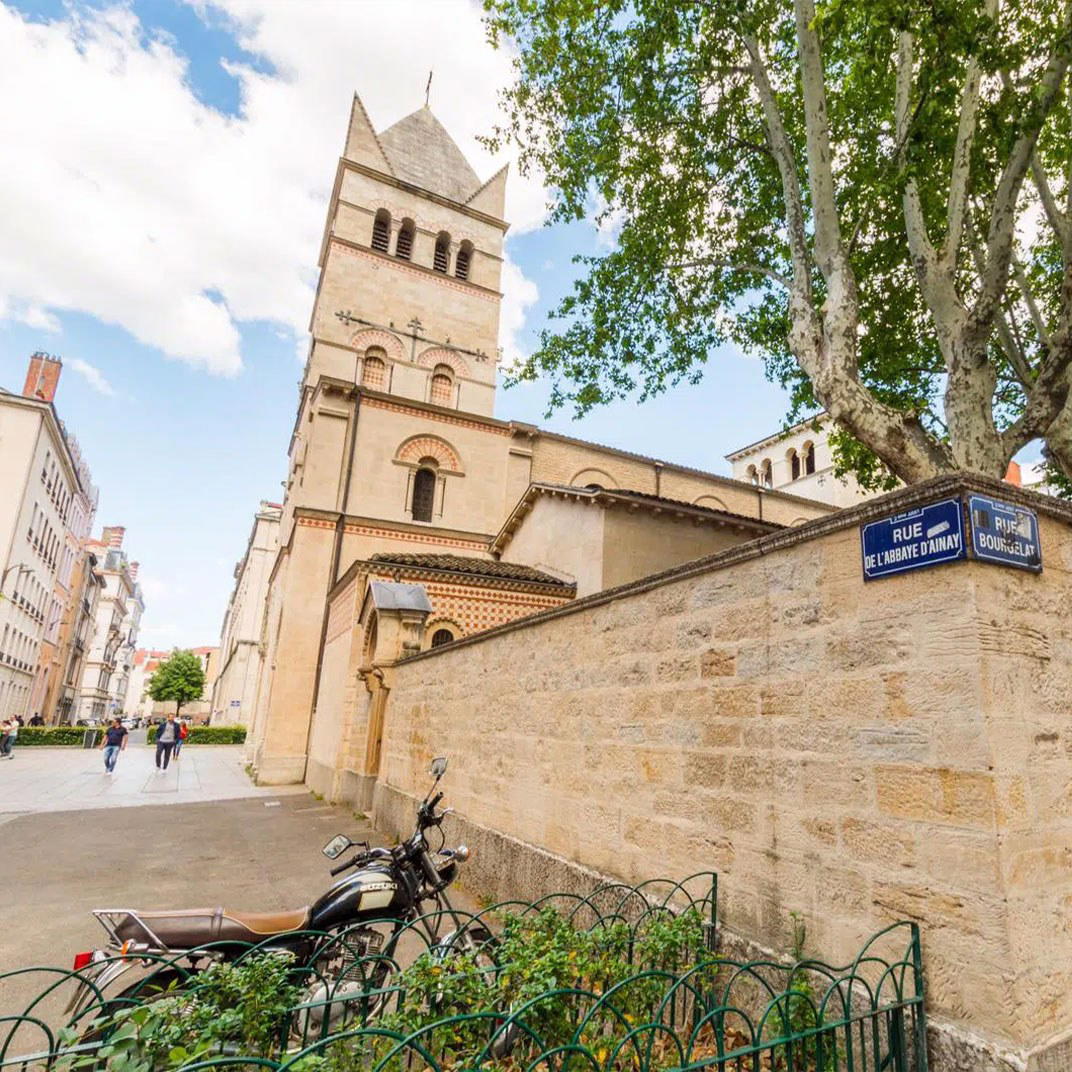
Ainay is one of Lyon's older residential peninsulas, wedged between the Rhône and the Saône south of Place Bellecour. It is not a neighbourhood that trades on spectacle. The streets are calm, the facades are 19th-century Lyonnais stone, and the dining rooms that do well here tend to earn their reputation through consistency rather than visibility. Rue Franklin itself is the kind of address that rewards people who are already paying attention to the city's mid-tier creative dining scene, the same audience that has made rooms like Burgundy by Matthieu and the more ambitious end of Lyon's contemporary French circuit into reliable reference points.
Two Menus, One Structural Argument
The organizing logic at Trèfle is worth understanding before you sit down. Chef Emily Dader has built the menu around two parallel set paths: "iode," a plant-based interpretation of a fish-course progression, and "rouge," the equivalent for meat. This is not labelling for its own sake. The framework does something specific: it gives guests who are unfamiliar with plant-forward tasting menus an architectural reference point they already understand, while simultaneously demonstrating that vegetables and grains can carry the textural and aromatic range that fish and meat traditionally provide. It is a pedagogical structure disguised as a menu, and it tends to work better than the alternative approach of simply listing ingredients and hoping the diner follows.
French fine dining has a long tradition of using the set menu as an argument, from the vegetable-led cooking that Bras in Laguiole developed over decades into a formal language, to the way kitchens like Mirazur in Menton use biodynamic sourcing as both an ethical and aesthetic position. Trèfle is operating in a smaller register than either of those references, but the structural thinking connects to the same lineage: the menu as a coherent point of view, not a list of options.
Where the Ingredients Carry the Weight
The editorial angle that matters most at Trèfle is sourcing, specifically the question of what happens to cooking ambition when animal protein is removed and the kitchen must find complexity elsewhere. Two dishes from the current menu illustrate how that question gets answered here. The hay and lovage broth served with buckwheat crackers and walnut butter draws its depth from two sources that rarely appear together in French kitchens: hay, which provides a dry, grassy base note that reads as almost smoky without any heat, and lovage, an underused perennial herb with a flavour closer to celery leaf and anise than to anything in the standard French aromatic vocabulary. The buckwheat crackers add mineral texture, and the walnut butter rounds the acidity. The dish functions because its complexity is built from sourcing decisions, not from technique alone.
The pressed squash medley seasoned with seed praline and mustard-savory condiment follows a different logic. Here the kitchen is working with sweetness, and the counterpoint comes from the seed praline's fat and the sharpness of mustard combined with savory, the Mediterranean herb that carries a peppery, thyme-adjacent edge. Squash dishes in tasting menus often flatten under their own sweetness; the seed and mustard intervention prevents that. These are dishes that reward attention to what is actually on the plate rather than what is absent from it.
This kind of ingredient-led cooking places Trèfle in a specific position within Lyon's plant-forward dining conversation, distinct from the more technique-heavy contemporary French rooms like Le Neuvième Art or Takao Takano, and equally distinct from the classically rooted kitchens that anchor the city's older fine-dining tier. Internationally, the tradition of treating vegetables as primary rather than supporting ingredients has deep roots: Flocons de Sel in Megève has long drawn on Alpine foraged and cultivated sources, and the sourcing-first approach that now defines parts of the French creative kitchen owes something to decades of chefs building relationships with growers rather than distributors. Trèfle reflects that shift at the neighbourhood scale.
Where Trèfle Fits in the Lyon Dining Picture
Lyon's serious dining scene covers a wide range of price points and formats. At the leading end, multi-course tasting menus at starred addresses absorb most of the attention from outside the city, and the classical bouchon circuit draws visitors looking for the city's signature cooking. The more interesting creative middle ground, the kitchens doing precise, ingredient-driven work at two to three courses without the full orchestration of a ten-course menu, is less visible internationally but arguably more representative of where the city's cooking is heading. Trèfle operates in that space.
For further context on where Trèfle sits within Lyon's broader dining map, the full Lyon restaurants guide covers the spectrum from classical to contemporary. If you are building a longer stay around the city, the Lyon hotels guide, bars guide, and experiences guide provide the surrounding context, and the wineries guide covers the Rhône and Beaujolais producers within reach of the city.
Trèfle also makes an interesting point of comparison for anyone building a broader French dining itinerary. The grand classical kitchens, from Alléno Paris au Pavillon Ledoyen to Troisgros in Ouches to Auberge de l'Ill in Illhaeusern, represent one arc of French cooking. Kitchens like Trèfle represent a different arc, one that is less decorated but no less deliberate. Comparable creative ambition applied to plant-forward menus can be found internationally at addresses like Le Bernardin in New York City, where sourcing and product identity carry as much structural weight as technique, or at Emeril's in New Orleans, where regional ingredient identity shapes the entire kitchen logic. At Au 14 Février in Lyon, a similarly precise creative approach runs through a different format.
Planning Your Visit
Trèfle is at 25 rue Franklin in the Ainay district of Lyon's 2nd arrondissement, walkable from Place Bellecour in under ten minutes. The set menu format means the kitchen works to a fixed pace, so arriving on time matters more than at à la carte addresses. Because the room is small and the format is fixed, tables book out at a faster rate than casual walk-in dining would suggest. For a weekend dinner, planning two to three weeks ahead is a reasonable baseline; a longer lead time is advisable if you have a specific date in mind. Lunch service, where available, often has shorter booking windows.
Frequently asked questions
Does Trèfle have a Michelin star or similar recognition?
Trèfle has received recognition including: In the Ainay neighbourhood, chef Emily Dader runs this restaurant on a mission. She cooks up creative, refined and aromatic vegan cuisine, cleverly devising a set menu with two options: "iode" and "rouge", which are plant-based interpretati….
What's Trèfle's location?
Trèfle is located at 25 rue Franklin, Lyon.
What should I eat at Trèfle?
The menu runs as two set paths: 'iode,' a plant-based interpretation of fish cookery, and 'rouge,' its meat equivalent. Documented highlights include a hay and lovage broth with buckwheat crackers and walnut butter, and a pressed squash medley with seed praline and mustard-savory condiment. Both menus reflect chef Emily Dader's focus on aromatic, ingredient-led cooking without animal protein.
How far ahead should I plan for Trèfle?
Trèfle operates a set menu format at 25 rue Franklin in Lyon's Ainay district, which limits covers per service. Given the restaurant's profile within Lyon's shifting plant-based dining scene, booking at least two to three weeks in advance is a reasonable baseline, and further ahead on weekends. Check directly for current availability.
Comparable Venues
Comparable venues nearby, for context on price, style, and recognition.
| Venue | Cuisine | Price | Awards | Notes |
|---|---|---|---|---|
| TrèfleThis venue (the venue you are viewing) | Modern Vegan French Gastronomy | $50–100 | Michelin Plate | Not listed |
| Söma | Modern Franco-Algerian Bistro | $30–50 | Michelin Plate | Quartier Quartiers Anciens |
| Cinq Mains | Modern French Bistronomique | $50–100 | Michelin Bib Gourmand | Quartier Quartiers Anciens |
| Le Grand Réfectoire | Bistronomic French | $50–100 | Michelin Plate | Quartier Bellecour Cordeliers |
| Circle | Modern French with North African & Asian Influences | $50–100 | 1 Michelin Star | Quartier Bas des Pentes Presqu'île |
| Le Garet | Traditional Lyonnais Bouchon | $30–50 | Michelin Plate | Quartier Bas des Pentes Presqu'île |
Recognition history
Dated appearances from independent guides and award organizations, with the underlying list record or original source where available.
Michelin Plate
Michelin