Chez Jules
Our verdict
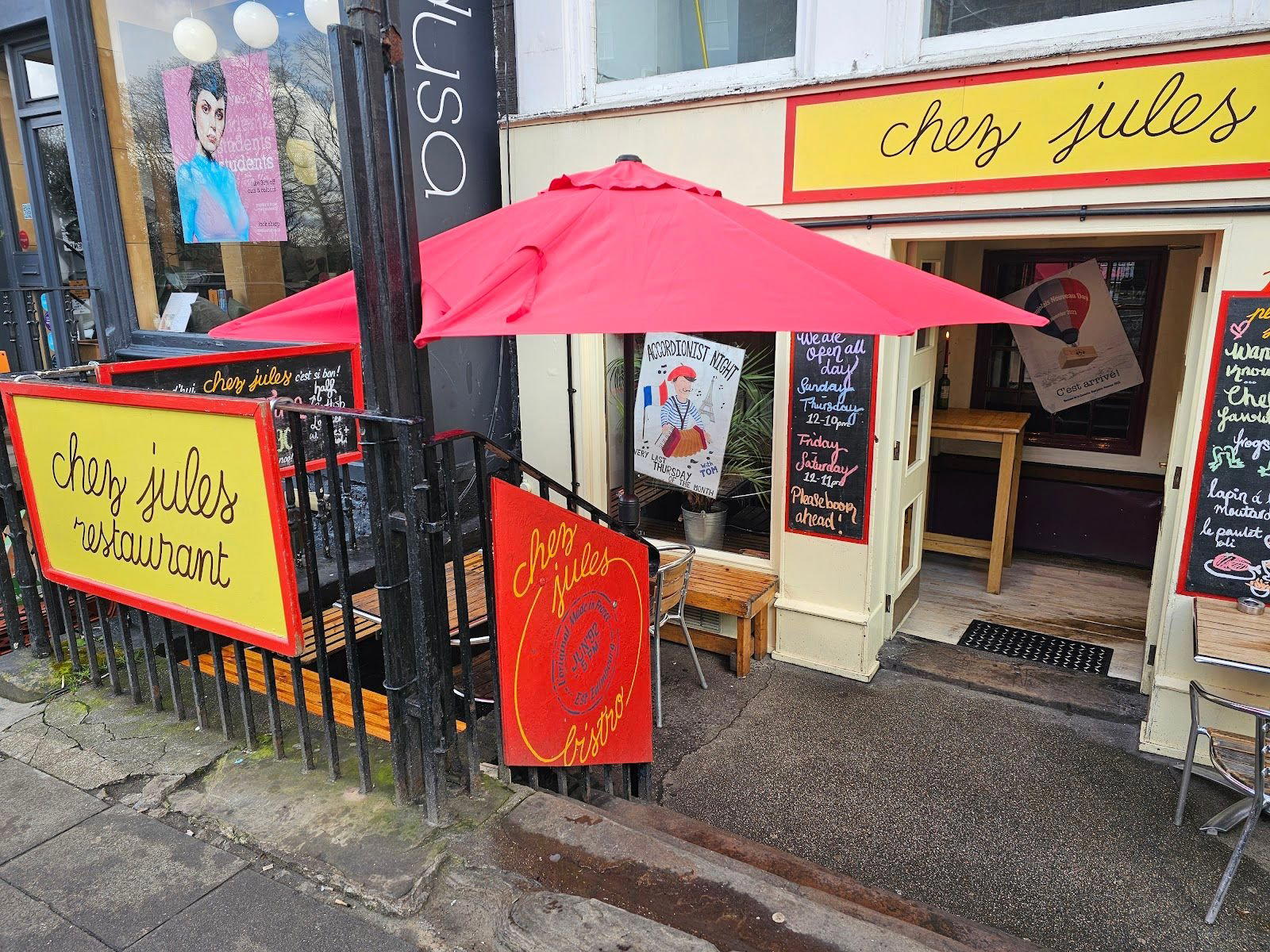
On Hanover Street in Edinburgh's New Town, Chez Jules occupies a corner of the city's French bistro tradition that runs decidedly counter to the fine-dining arms race happening a few blocks away. Accessible pricing, a relaxed room, and a menu rooted in recognisable French technique make it a practical alternative for evenings when the tasting-menu format holds no appeal.

Pearl is the En Primeur Club membership app — saves, bookings, and concierge access live there. Same editors, same standards.
- Address
- 109 Hanover St, Edinburgh EH2 1DJ, United Kingdom
- Phone
- +44 131 226 6992
- Hours
- Mon–Thu 12–10 PMFri–Sat 12–11 PMSun 12–10 PM
- Website
- chezjulesbistro.com
- Directions
- Get directions
The menu
What to order
- Moules Frites
- Steak Frites
- Lobster
- Coq au Vin
- Moules Marinières
Hanover Street and the French Bistro in Edinburgh
Edinburgh's New Town has long carried a certain architectural formality — Georgian terraces, wide streets, the kind of civic confidence that makes even a casual dinner feel like it has a dress code. Hanover Street cuts through this grid at a slight diagonal, and the restaurants along it tend to reflect the neighbourhood's character: presentable, mid-range, aimed at locals as much as visitors. In that context, Chez Jules at number 109 represents a specific kind of proposition. While much of the city's critical attention has moved toward Scandinavian-influenced tasting menus, produce-driven modern kitchens at places like Timberyard, or the formal European precision of Martin Wishart, the French bistro sits in a separate bracket entirely — one that prizes familiarity over innovation.
The bistro format itself is worth understanding before you arrive. In French tradition, the bistro occupies the middle ground between the brasserie's volume and the restaurant's ceremony. The room is meant to feel slightly worn-in, the menu reassuringly static, the service efficient rather than theatrical. Edinburgh has absorbed this format imperfectly over the decades, with many venues sliding toward either too much formality or too little care. When a bistro gets the calibration right, the result is an evening that feels easy in a way that multi-course tasting menus, however impressive, rarely do.
Sourcing Within a French Framework
The editorial angle worth applying to any French bistro operating in Scotland is the question of where the food actually comes from. France-derived cooking once implied French ingredients, butter from Normandy, duck from the Périgord, cheeses from the Auvergne. That model has shifted considerably across the UK and Scotland in particular, where access to high-quality local produce has pushed even traditionally minded kitchens to rethink their sourcing logic. Scotland's larder is, by any measurable standard, exceptional: shellfish from the West Coast, beef from Aberdeenshire, game from the Highland estates, soft fruit from Angus. The interesting question for a venue like Chez Jules is how that local abundance gets filtered through a French culinary lens.
Broader trend in Edinburgh's more ambitious restaurants has been an explicit celebration of Scottish provenance. The Kitchin built its reputation on the phrase "from nature to plate" as a sourcing philosophy. Condita and AVERY operate within a similar framework of seasonal Scottish ingredients pushed through modern technique. The French bistro tradition sits differently: it tends to foreground preparation method over raw ingredient provenance, asking whether a dish is cooked correctly before asking where the ingredients originated. That tension between classical French method and Scottish ingredient availability defines a real creative space for any kitchen operating in this city.
Across the UK, the debate around French bistro identity and local sourcing has played out in different registers. In the south of England, restaurants like Waterside Inn in Bray have maintained a rigorous French identity without compromise. Further up the country, venues in different culinary traditions, L'Enclume in Cartmel, Moor Hall in Aughton, have built reputations by folding extraordinary regional produce into technically demanding kitchens. The French bistro in Scotland has a narrower mandate, but the sourcing question remains live.
Where Chez Jules Sits in the Edinburgh Dining Picture
Edinburgh's restaurant scene in 2024 has a pronounced upper tier. The Michelin-starred and critically recognised kitchens, Martin Wishart, The Kitchin, Condita, operate at price points and booking depths that place them out of reach for casual mid-week evenings. Chez Jules positions itself in the accessible tier, where the French bistro format functions as a democratising force: lower price points, no tasting-menu commitment, the option to eat simply and leave without ceremony.
That positioning matters because it addresses a real gap. A city with five or six genuinely serious restaurants still needs the infrastructure of neighbourhood dining to function at a cultural level. The bistro, in Edinburgh as in Paris or Lyon, absorbs the demand that the fine-dining rooms cannot: the group of friends who want a bottle of wine and steak frites, the couple who want French onion soup on a Tuesday, the solo diner who wants a seat at the bar without a reservation taken three months in advance. Across the Atlantic, this same logic applies to mid-register French restaurants in cities like New York, where venues like Le Bernardin define the formal end of the French spectrum while the bistro tier handles volume at the other end.
Among Edinburgh's mid-market French options, Chez Jules on Hanover Street has maintained a visible presence. It draws a reliable local crowd rather than the tourist and critic traffic that clusters around the Old Town and Leith waterfront. That distinction shapes the room's atmosphere in ways that are harder to manufacture than good produce: the dining room operates as a genuine neighbourhood space rather than a stage set.
Planning a Visit
Hanover Street sits in the heart of the New Town, within comfortable walking distance of Princes Street and the major New Town hotels. The address, 109 Hanover Street, EH2 1DJ, is direct to reach on foot from the city centre. As with most bistros operating in the accessible price tier, the venue draws a cross-section of Edinburgh's dining public: locals, visitors staying in the area, and the kind of regulars who know what they want before they sit down.
For visitors planning a broader Edinburgh dining programme, the city's higher-end kitchens reward advance planning. Timberyard and AVERY book out well in advance, and a Michelin-starred tasting menu at Martin Wishart or The Kitchin requires similar lead time. Chez Jules operates on a different booking rhythm, the bistro format generally accommodates shorter notice, though specific booking policies were not available at time of writing. The EP Club's full Edinburgh restaurants guide covers the city's dining tiers in more detail, including seasonal considerations around the August festival period when capacity across the city tightens considerably.
For context across the UK's broader French-influenced dining scene, the range runs from the three-star formality of Waterside Inn down through venues like Hand and Flowers in Marlow, Gidleigh Park in Chagford, hide and fox in Saltwood, and Midsummer House in Cambridge. Edinburgh's own French bistro tradition sits comfortably below that register, which is precisely the point.
Frequently asked questions
What part of town is Chez Jules in?
Chez Jules is located at 109 Hanover St, Edinburgh EH2 1DJ, United Kingdom, Edinburgh.
Is Chez Jules a good option for a French bistro lunch in central Edinburgh?
The Hanover Street address places Chez Jules within comfortable walking distance of Princes Street and the major New Town hotels, making it a practical mid-day option for visitors based in the EH2 area. French bistros built around classical cooking typically maintain a lunch format consistent with their dinner offer — shorter service, the same menu framework. For a city where the lunch conversation skews toward casual independent cafés or hotel dining rooms, a dedicated bistro at this address fills a specific gap.
What should I order at Chez Jules?
The French bistro format points toward technique-driven classics rather than seasonal novelty menus. In Edinburgh's New Town context, that means dishes where execution is the point — think properly made stocks, correct knife work, and the kind of cooking that earns a bistro its regular clientele. Given Chez Jules operates at 109 Hanover Street without a documented tasting menu format, ordering along the main course and starter structure is the appropriate approach.
Do they take walk-ins at Chez Jules?
French bistros at Edinburgh's accessible dining tier generally accommodate walk-ins more readily than the city's tasting-menu rooms, where pre-booking is functionally mandatory. A phone call ahead remains the sensible option for larger groups.
What makes Chez Jules worth seeking out?
A French bistro on Hanover Street that holds to classical technique occupies a different and less crowded space in that picture, serving the part of the city's dining public that wants a recognisable menu executed correctly rather than a scored-and-reviewed progression of courses.
Quick Comparison
Comparable venues nearby, for context on price, style, and recognition.
| Venue | Cuisine | Price | Notes |
|---|---|---|---|
| Chez JulesThis venue — the venue you are viewing | Classic French Bistro | $30–50 | Not listed |
| Badger & Co | Modern Scottish Gastropub | $20–30 | New Town |
| Miros Cantina | Authentic Mexican | $20–30 | New Town |
| Spoon | Hearty British Bistro | Not listed | Old Town |
| Pizzeria 1926 | Authentic Neapolitan Pizza | $20–30 | Dalry |
| Kuzina | Greek Street Food | $20–30 | Dalry |
Continue exploring
More in Edinburgh
Restaurants in Edinburgh
Browse all →
Bars in Edinburgh
Browse all →

Details
- Cozy
- Romantic
- Classic
- Intimate
- Date Night
- Casual Hangout
- After Work
- Group Dining
- Standalone
- Historic Building
- Extensive Wine List
- Local Sourcing
- A La Carte
- Set Menu
- French Wine
- Red Wine
- Vegetarian Friendly
- Vegan Options
- Gluten Free Options
Current opening hours
- Monday
- 12–10 PM
- Tuesday
- 12–10 PM
- Wednesday
- 12–10 PM
- Thursday
- 12–10 PM
- Friday
- 12–11 PM
- Saturday
- 12–11 PM
- Sunday
- 12–10 PM
Hours can change for holidays and private events. Last verified .
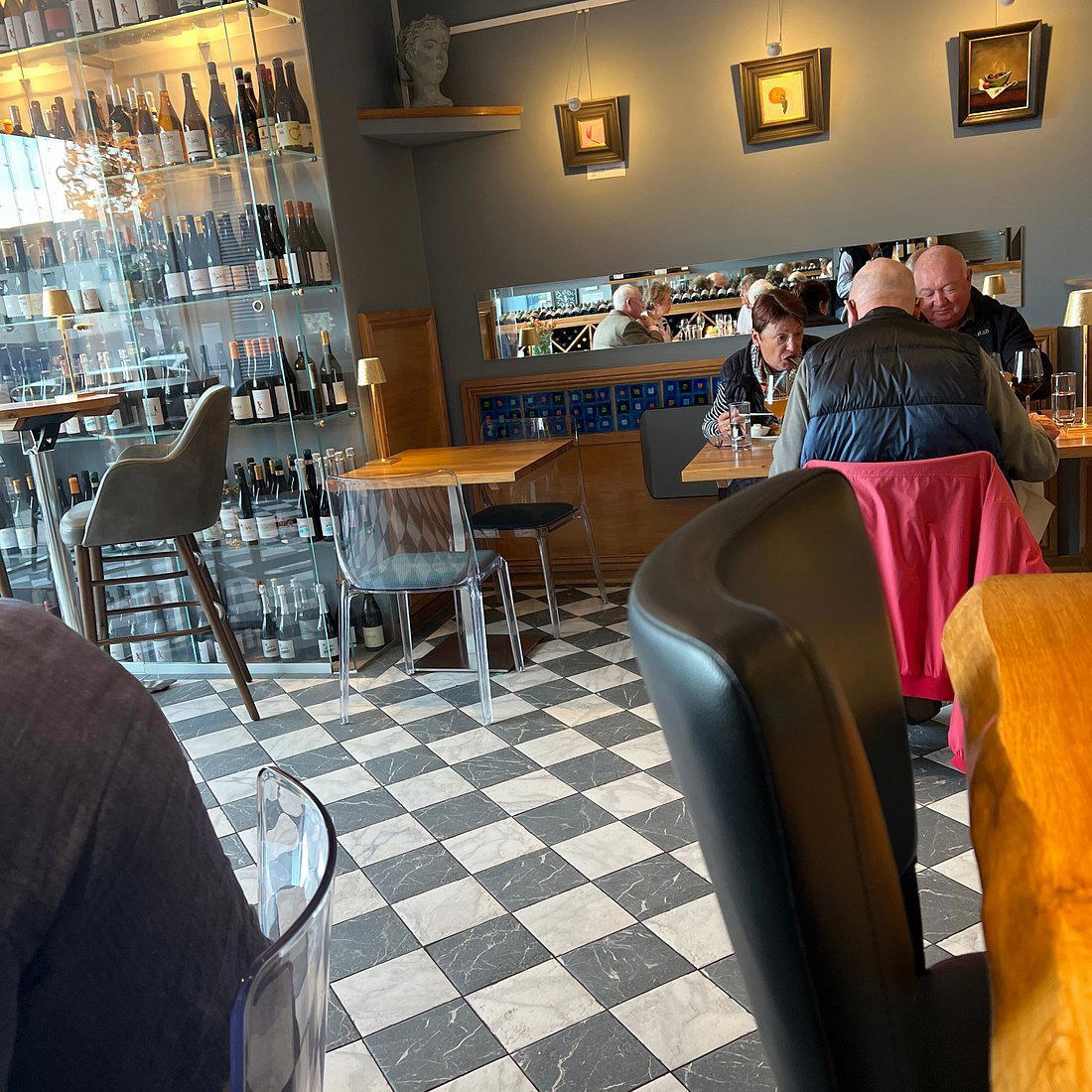
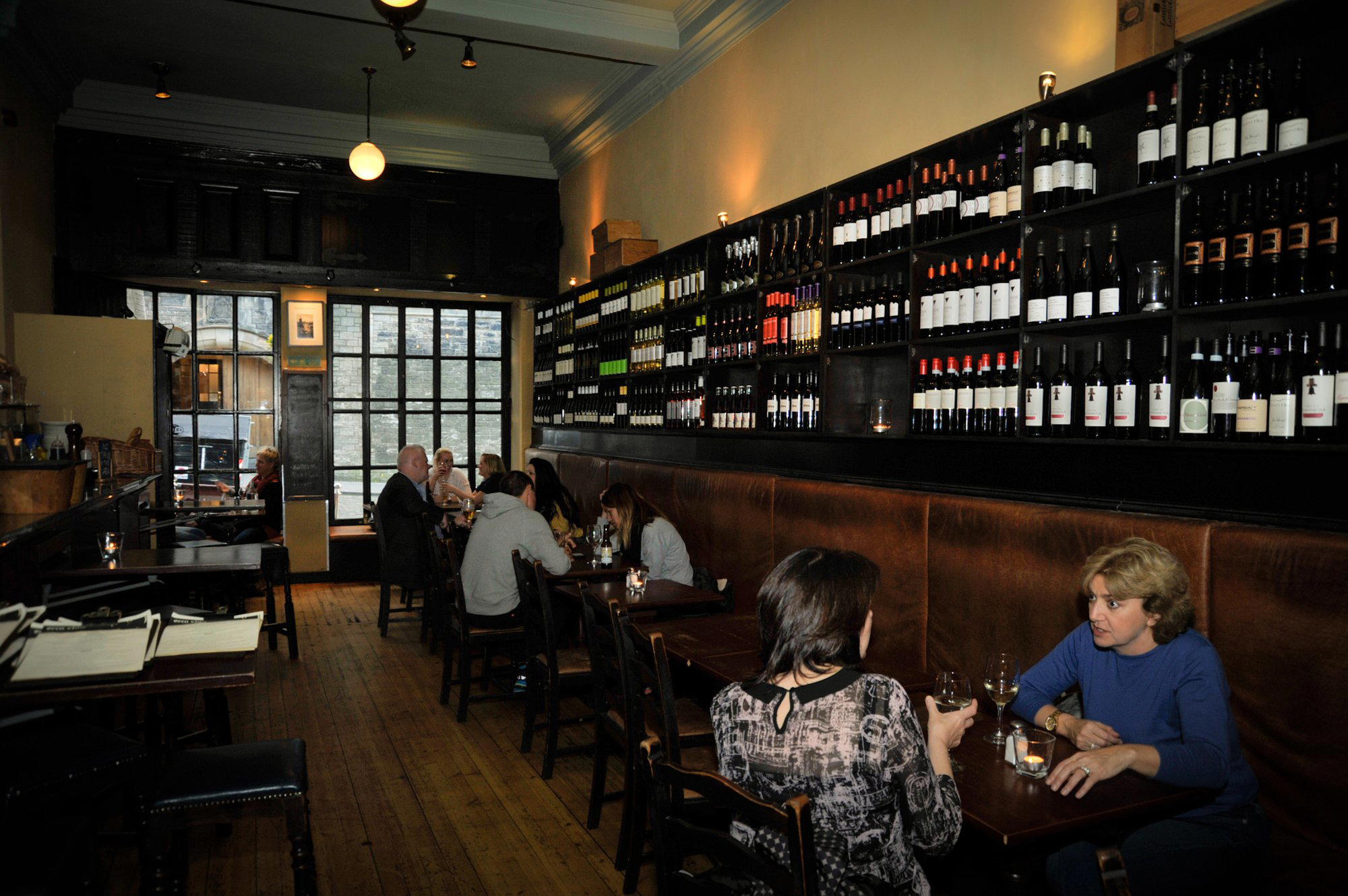
Warm and inviting interior with rustic elegance, checkered tablecloths, warm lighting, and vintage French posters creating an intimate, relaxed atmosphere reminiscent of a classic Parisian café.