Our verdict
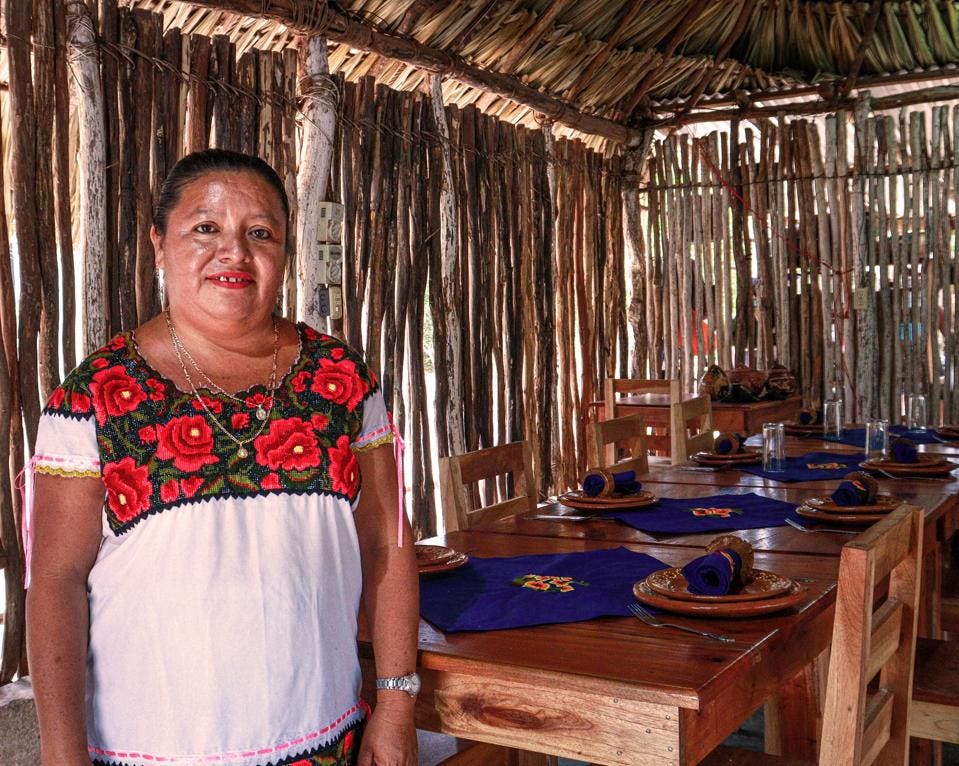
Chef Rosalia Chay operates out of Yaxunah, a small Maya village roughly an hour from Mérida, serving Yucatecan cooking rooted in open-fire technique and heirloom-corn masa, it represents one of the most geographically committed expressions of traditional Yucatecan cuisine in the region.

Pearl is the En Primeur Club membership app, where members save venues, book tables and use the concierge.
The menu
What to order
- Cochinita Pibil
- Relleno Negro
- Recados
- Tortillas
Masa at the Source: Yucatecan Cooking in the Village of Yaxunah
Most of what gets called authentic Yucatecan food in Mérida's centro histórico still happens inside a restaurant built for tourists and short-haul visitors. The cooking at Chef Rosalia Chay operates on a different logic entirely. The address is Yaxunah, a Maya community set deep in the Yucatán interior, roughly an hour's drive southeast of Mérida's ring road. The physical approach already signals what the cooking will ask of you: unpaved stretches, open sky, the rhythm of a village that has not reorganized itself around hospitality infrastructure. What you encounter when you arrive is not a curated rural aesthetic but an ongoing domestic and culinary practice with roots that predate the colonial period.
For a venue this geographically removed from tourist infrastructure, those numbers carry real weight.
The Masa Tradition This Kitchen Represents
To understand what makes Yucatecan cooking categorically different from the broader Mexican canon, start with nixtamalization and the specific corn varieties that have been grown across this peninsula for centuries. Nixtamal, the alkaline-processed corn that forms the base of masa, is not interchangeable. The variety of maize, the water source, the lime ratio, and the grinding method all produce distinct textures, flavors, and nutritional profiles. In the Yucatán, heirloom varieties including x-nuuk-nal and other local strains produce a masa with a particular density and sweetness that mass-produced tortilla flour cannot replicate.
What kitchens like this one in Yaxunah preserve is not just technique but the full production chain: sourcing from local milpa agriculture, processing by hand or on traditional stone, and integrating the masa into dishes that reflect pre-Columbian culinary logic rather than post-colonial simplification. This places the cooking in a very specific tier of Mexican gastronomy, one that is gaining recognition at the national level. Pujol in Mexico City and Levadura de Olla Restaurante in Oaxaca have built considerable international profiles around the same foundational argument: that Mexican cuisine's most sophisticated expressions come from its indigenous agricultural and culinary inheritance, not from European technique layered on leading.
In the Yucatán specifically, the masa tradition is inseparable from the wood-fire cooking that shapes nearly every major preparation. Cochinita pibil, the slow-cooked achiote pork that has become the peninsula's most exported dish, is correctly made in an underground pit (the pib), wrapped in banana leaves, and cooked over hardwood coals. Papadzules, the egg-topped enchiladas bathed in pumpkin-seed sauce, require a masa that can hold moisture without collapsing. Salbutes and panuchos, the fried masa rounds that anchor street eating across the state, depend on a dough with the right hydration and grind. These are not preparations that benefit from shortcuts. The version of this food made properly in a village kitchen, with sourced-local corn and live fire, is qualitatively different from what reaches most restaurant tables in the city.
How This Sits in Mérida's Dining Scene
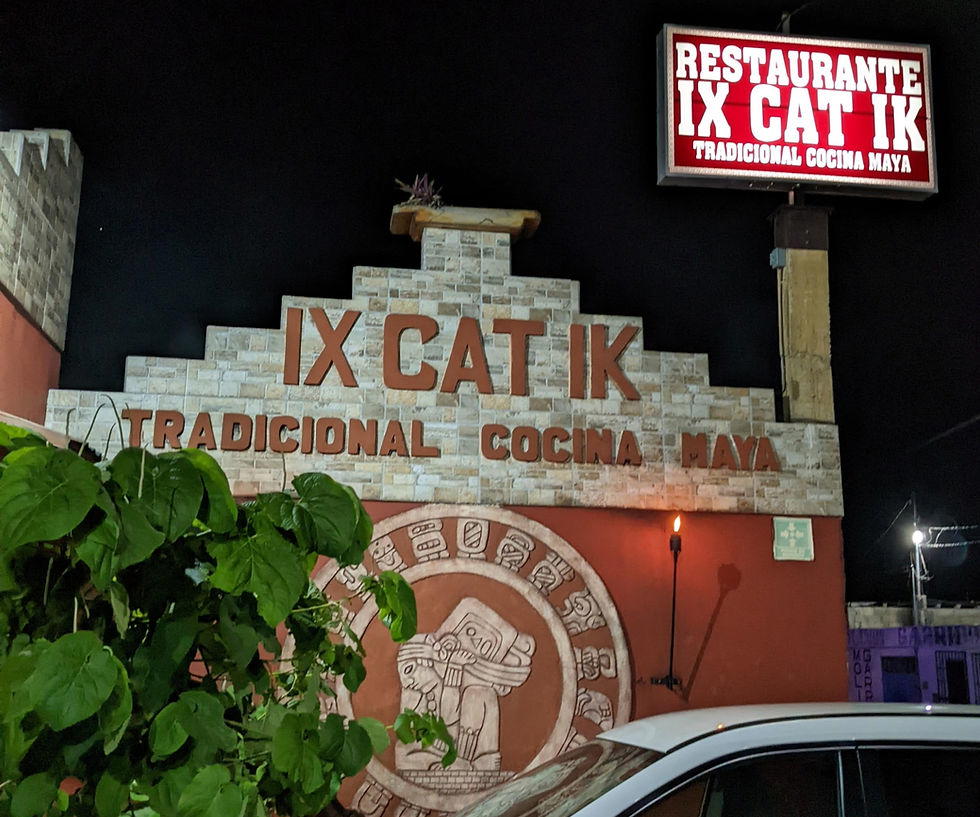
Mérida's restaurant scene has bifurcated sharply over the past decade. The city center and its surrounding barrios now house a range of contemporary Yucatecan cooking, from the refined tasting-menu format at Kuuk to the heritage-forward Yucatecan menu at Huniik, the open-fire work at Ix Cat Ik, the regional produce focus at Ixiim Restaurant, and the long-established traditional cooking at La Chaya Maya. Each of these operates within the city's hospitality economy, accessible by taxi or rideshare, surrounded by hotels and bars.
Chef Rosalia Chay in Yaxunah occupies a different category. It does not compete for the same customer on the same terms. The journey itself is part of the proposition, and the food arrives without the mediating layer of front-of-house formalism, printed menus designed for Instagram, or the subtle recalibration toward foreign palates that inevitably shapes urban restaurant cooking over time. This is food made in the place where the ingredients come from, for visitors willing to seek it out rather than stumble across it.
For visitors building a fuller picture of what Mexico's contemporary food scene is doing at the regional level, the comparison extends further: KOLI Cocina de Origen in Monterrey, HA' in Playa del Carmen, and Le Chique in Puerto Morelos all make the case, from different regional positions, that Mexican fine dining's most compelling current chapter is being written away from the obvious international reference points of places like Le Bernardin in New York City or Atomix in New York City.
Planning the Visit
For broader trip planning, see our full Mérida restaurants guide, our full Mérida hotels guide, our full Mérida bars guide, our full Mérida wineries guide, and our full Mérida experiences guide.
Frequently asked questions
Where exactly is Chef Rosalia Chay?
Chef Rosalia Chay is located at 7, x 8, 97920 Yaxunah, Yuc. Mexico, Merida.
What dish is Chef Rosalia Chay famous for?
Specific dish information is not documented in the public record for this kitchen, but the restaurant's identity is grounded in traditional Yucatecan masa preparation using locally sourced corn, a technique that distinguishes it from Mérida's more urbanized restaurant circuit.
What do critics highlight about Chef Rosalia Chay?
Pearl's 2025 Recommended designation is the documented critical recognition on record, placing this Yaxunah kitchen within a curated tier of regional Mexican restaurants worth specific attention. The recognition focuses on the integrity of Yucatecan technique rather than contemporary plating or chef-driven innovation, which sets it apart from the newer wave of Mérida dining.
How far is Chef Rosalia Chay's restaurant in Yaxunah from central Mérida, and is the trip worth the drive?
Yaxunah sits roughly 60 kilometers southeast of Mérida's centro histórico, a journey of around an hour by car through open highway and small towns. Plan the visit as a deliberate half-day, not a casual detour.
A Quick Peer Check
A quick peer list to put this venue’s basics in context.
| Venue | Cuisine | Price | Awards |
|---|---|---|---|
| Chef Rosalia ChayThis venue (the venue you are viewing) | Traditional Mayan Cuisine | Not listed | Not listed |
| Kuuk | Modern Yucatecan Fine Dining | $50–100 | Star Wine List · Wine Spectator Best of Award of Excellence |
| Huniik | Modern Yucatán Cuisine | $150–200 | 1 Michelin Star · World's 50 Best #32 |
| Ix Cat Ik | Authentic Mayan Cuisine | $10–20 | Not listed |
| Ixiim Restaurant | Modern Yucatecan Fine Dining | $50–100 | Star Wine List · Wine Spectator Award of Excellence |
| La Chaya Maya | Traditional Yucatecan | $10–20 | Not listed |
Continue exploring
More in Mérida
Restaurants in Mérida
All restaurants in Mérida →
Hotels in Mérida
All hotels in Mérida →
Details
- Intimate
- Rustic
- Special Occasion
- Group Dining
- Open Kitchen
- Private Dining
- Garden
- Local Sourcing
- Farm To Table
- Family Style
- Set Menu
- Café De Olla
- Xtabentun
- Allergy Accommodating
Current opening hours
- Monday
- Closed
- Tuesday
- Closed
- Wednesday
- Closed
- Thursday
- Closed
- Friday
- 9 AM–5 PM
- Saturday
- 9 AM–5 PM
- Sunday
- 9 AM–5 PM
Hours can change for holidays and private events. Hours as of .
Intimate, family-oriented atmosphere set in Chef Rosalia's jungle home with open-air kitchen and backyard pib oven; warm and welcoming with educational demonstrations throughout the meal.