Chapman’s Peak Hotel

Chapman's Peak Hotel occupies one of the most dramatic stretches of Cape Town's Atlantic coastline, where the road between Hout Bay and Noordhoek carves through sheer cliff face. The kitchen leans on the cold Benguela Current waters just offshore, delivering seafood that reads simply on the menu but arrives with the kind of straightforwardness that only good sourcing makes possible. It has earned a reputation as a Cape Town institution for relaxed, high-quality coastal dining.
 Discover on Pearl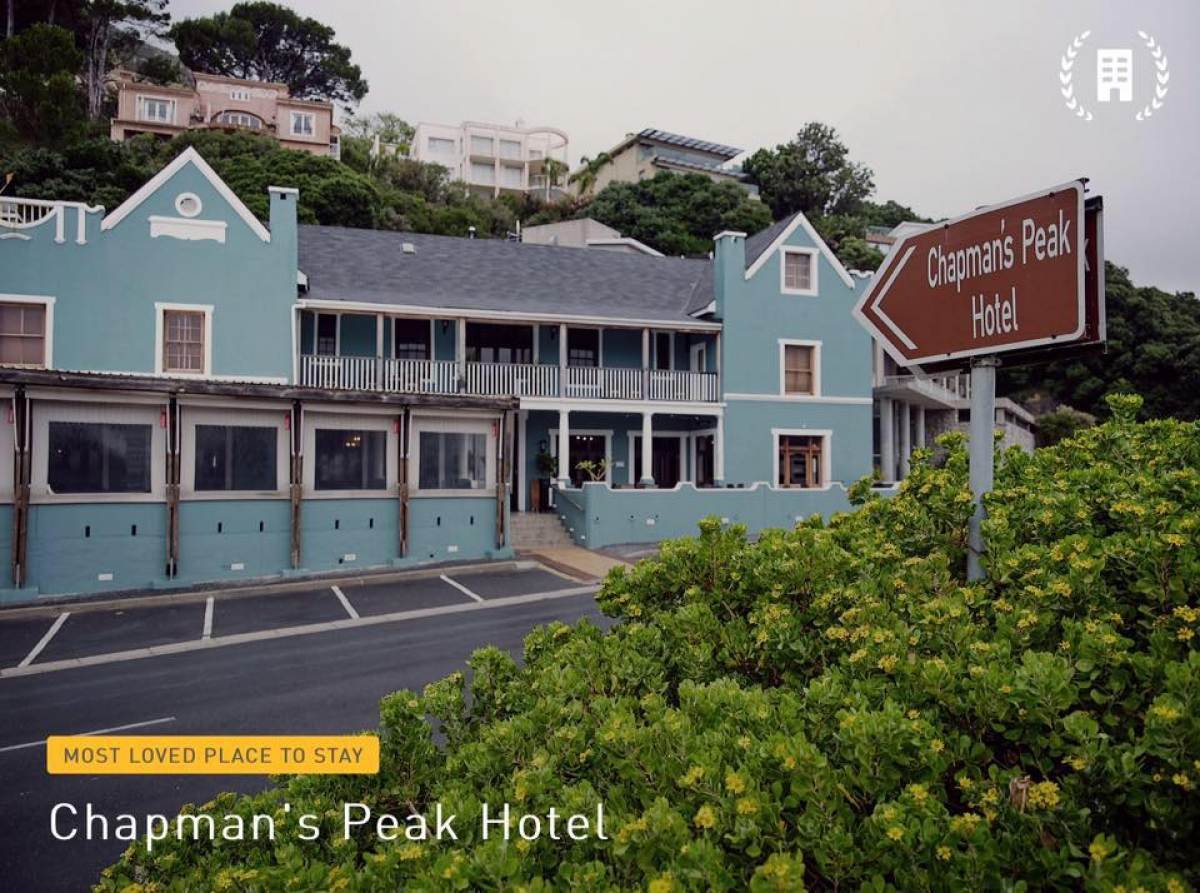
Where the Atlantic Meets the Table
The drive to Chapman's Peak Hotel sets the terms before you arrive. Chapman's Peak Drive is one of the most dramatic coastal roads in South Africa, cut into the granite cliffs above Hout Bay on one side and Noordhoek on the other. By the time you pull into Scott Estate and park, the Atlantic is already present in the air, in the light, in the particular flatness of the horizon when the wind drops. The building does not compete with any of this. It occupies its position quietly, a low structure facing the water, the kind of place that understands its setting well enough to let it do most of the work.
This physical reality is not incidental. It is the editorial context within which everything the kitchen produces should be understood. Cape Town has no shortage of celebrated restaurants operating in controlled urban environments, from the tasting menus at Fyn to the refined South African cooking at La Colombe and Salsify at the Roundhouse. Chapman's Peak Hotel occupies a different register entirely. It belongs to a longer, quieter tradition: the coastal dining room that earns its reputation not through technical complexity but through proximity to the source and the discipline to leave good ingredients largely alone.
The shortlist, unlocked.
Hard-to-book tables, cellar releases, and concierge-planned trips.
Get Exclusive Access →Seafood, the Benguela Current, and Why This Coastline Matters
The cold Benguela Current, which flows northward along South Africa's Atlantic coast, is one of the most productive upwelling systems in the southern hemisphere. It drives the extraordinary abundance of Cape waters: snoek, yellowtail, kabeljou, crayfish, linefish of several varieties, and the mussels and oysters that have fed this coastline for centuries. The local seafood tradition is not borrowed from European colonial cooking, though that influence is present. It is built on Malay spice knowledge, on indigenous smoking and salting techniques, and on the particular South African instinct for outdoor cooking over fire that extends from braai culture into how fish is handled at its freshest.
Chapman's Peak Hotel draws on this tradition directly. Its menu reads simply, which in the context of South African coastal cooking is a statement about sourcing confidence rather than culinary limitation. The ingredients take the centre position because the kitchen trusts them to do so. That approach places the hotel in a different competitive conversation from the tasting-menu circuit, closer in philosophy to Wolfgat in Paternoster, the West Coast restaurant that earned international recognition precisely by insisting on the sufficiency of hyperlocal, coastally rooted ingredients.
The comparison is useful because it illustrates something broader about the Western Cape's dining geography. Johannesburg runs on red meat and urban ambition. The Cape Winelands, home to restaurants like Le Quartier Français in Franschhoek and Dusk in Stellenbosch, builds its identity around estate dining, wine pairing, and the soft range of vineyard and mountain. The Atlantic seaboard of the Cape Peninsula runs on something older and less formal: the catch, the tide, the temperature of the water that morning.
The Institution Question
The word institution gets used loosely in Cape Town dining, but Chapman's Peak Hotel has earned it through longevity and through a specific consistency. Institutional status in a coastal dining context means something particular. It means that generations of Capetonians have driven that cliff road specifically to eat here, that the place has a local loyalty that new openings cannot manufacture, and that it has absorbed changes in the city's dining sophistication without losing the character that built its following in the first place.
Cape Town's restaurant scene has developed substantially. Venues like The Test Kitchen placed the city on the global tasting-menu map. Property restaurants at places like Ellerman House in Bantry Bay and Delaire Graff Lodges and Spa on Helshoogte Pass established a premium estate-dining tier. Against that backdrop, a place that maintains its identity as a relaxed, seafood-focused coastal room is not a relic. It is a considered position. The dining room at Chapman's Peak Hotel is not trying to become something it is not, which is a different kind of discipline from the one exercised in the test kitchen or the estate cellar.
The Context of Relaxed Coastal Dining
In global seafood terms, the relaxed coastal room has its own distinguished lineage. The clam shacks of New England, the fish restaurants of Marseille's old port, the marisquerias of Galicia, the grilled-catch restaurants of coastal Portugal: what they share is an insistence that geography and freshness are the primary event. Technical intervention is used in service of the ingredient, not as a performance layered on leading of it. Le Bernardin in New York City made this argument at the formal end of the spectrum. Chapman's Peak Hotel makes it at the informal end, with the Atlantic visible from the table and the fish sourced from waters close enough to see.
That informality is structural. The atmosphere at this kind of venue is produced by the setting, the service register, and the fact that people arrive after a coastal drive rather than after a taxi through the city. It is a specific kind of relaxation, one connected to physical environment rather than design concept. Emeril's in New Orleans built its identity around a different kind of relaxed abundance, the bounty of the Gulf Coast filtered through Creole tradition. The Western Cape version is quieter in register but equally grounded in the logic of what the local waters produce.
Planning Your Visit
Chapman's Peak Hotel sits at 2 Chapman's Peak Drive, Scott Estate, on the southern end of the Chapman's Peak toll road. The drive from central Cape Town takes roughly 40 minutes, longer during the summer season when the road attracts significant traffic on weekend mornings. The hotel is positioned for a long, unhurried lunch rather than a quick dinner, and the light on the water in the early afternoon justifies the timing. Chapman's Peak Drive itself closes periodically due to rockfall risk, particularly after heavy rain, so checking road status before departure is practical intelligence, not a caution against visiting.
For the wider Cape Town dining and hospitality context, the EP Club guides cover the full range of what the city offers: our full Cape Town restaurants guide, our full Cape Town hotels guide, our full Cape Town bars guide, our full Cape Town wineries guide, and our full Cape Town experiences guide. For something in a completely different register on the same peninsula, Arthur's Mini Super offers a further illustration of how Cape Town's dining identity resists easy categorisation. And for safari dining at the other end of the country's hospitality spectrum, Esiweni Luxury Safari Lodge provides a useful point of contrast with the Atlantic coast register that defines Chapman's Peak Hotel.
The shortlist, unlocked.
Hard-to-book tables, cellar releases, and concierge-planned trips.
Get Exclusive Access →Frequently Asked Questions
Cost and Credentials
A short peer set to help you calibrate price, style, and recognition.
| Venue | Price | Awards | Notes |
|---|---|---|---|
| Chapman’s Peak Hotel | Chapman’s Peak Hotel is a Cape Town institution, known for its relaxed seaside d… | This venue | |
| Fyn | World's 50 Best | Japanese Fusion | |
| La Colombe | World's 50 Best | South African | |
| Salsify at the Roundhouse | World's 50 Best | South African | |
| The Test Kitchen | World's 50 Best | South African | |
| Chefs Warehouse Beau Constantia | South African |
Need a table?
Our members enjoy priority alerts and concierge-led booking support for the world's most difficult tables.
Get Exclusive AccessThe shortlist, unlocked.
Hard-to-book tables, cellar releases, and concierge-planned trips.
Get Exclusive Access →