Chancery
Chancery sits on Cursitor Street in London's legal quarter, where the density of barristers' chambers and Inns of Court has long shaped the area's dining character. Positioned in EC4A, it occupies a neighbourhood that rewards those who look beyond the city's more publicised restaurant corridors, placing it in a different register from London's trophy-table circuit.
- Address
- 9 Cursitor Street, London, England, EC4A 1LL, United Kingdom
- Phone
- 020 7831 4000
- Website
- thechancery.co.uk
- Directions
- Get directions
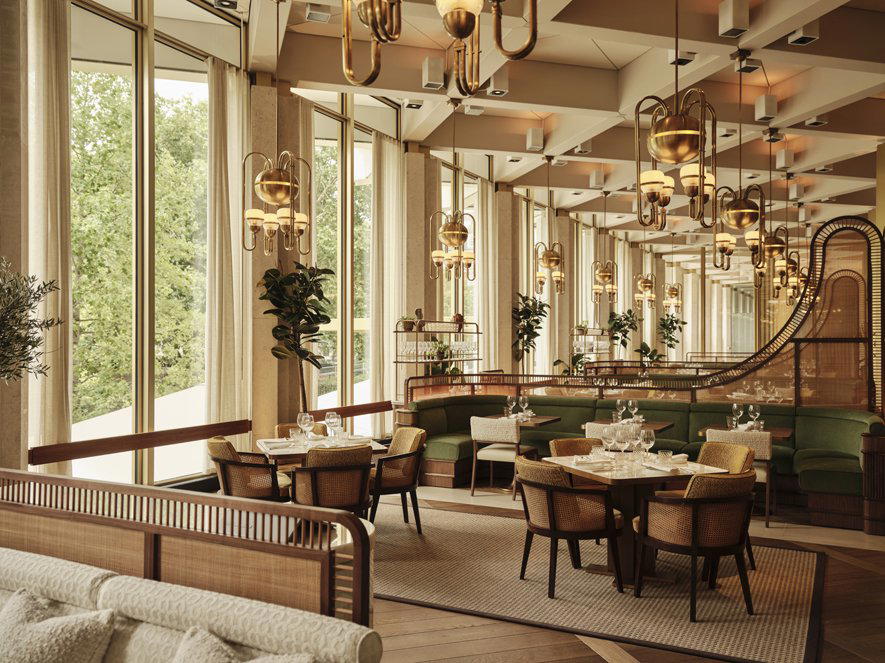
The Legal Quarter and What It Demands of a Restaurant
Cursitor Street runs between Chancery Lane and Fetter Lane in EC4A, a strip of London that has functioned as the administrative spine of the English legal system for centuries. The Inns of Court sit minutes away; the Royal Courts of Justice are a short walk east. This is not a neighbourhood that generates restaurant press in the way Mayfair or Fitzrovia does, and that gap between institutional weight and culinary visibility has historically defined what local dining looks like: functional, discreet, accustomed to a clientele that prefers not to be seen performing a meal.
That context matters when placing Chancery. Chancery is a permanently closed classic French brasserie in London's EC4A district, at 9 Cursitor Street, with a price tier of 2. London's highest-profile dining is concentrated in a handful of postcodes: Mayfair holds Restaurant Gordon Ramsay and Sketch's Lecture Room and Library, both carrying three Michelin stars; Notting Hill anchors The Ledbury and CORE by Clare Smyth. The Strand corridor and its surrounds, by contrast, attract significantly less editorial attention despite a professional population with substantial disposable income and limited lunch hours. A restaurant operating in this zone is, by geography alone, playing a different game from its counterparts in more photographed parts of the city.
Approaching Cursitor Street
The physical approach reinforces that sense of working London rather than performance London. Chancery Lane station deposits you onto a street that still operates on the rhythms of term time and court schedules. The architecture is Victorian and Edwardian in the main, punctuated by mid-century infill, the kind of streetscape that has not been softened for visitor consumption. Walking south from High Holborn toward Cursitor Street, the ambient noise shifts from the broader city into something quieter and more contained. The address at number 9 sits in that register: a building on a lane that most Londoners outside the legal profession would struggle to locate without a map.
This is a meaningful detail for the visitor calibrating expectations. The dining corridors that attract sustained attention, from Knightsbridge to Soho, share a certain legibility: signage, foot traffic, the visual grammar of a destination. EC4A around Cursitor Street does not offer that. What it offers instead is the compression of a neighbourhood that has been doing one thing well for a long time, and the kind of establishment that survives there does so because it serves the people who actually work in the area, not the people who have travelled specifically to eat in it.
Positioning Within London's Broader Restaurant Scene
London's Michelin-starred tier has expanded significantly over the past decade, and the city now holds a range of recognised restaurants from single-star neighbourhood bistros to the handful of three-star operations that price against international peer tables. Dinner by Heston Blumenthal, with two Michelin stars, sits in a middle bracket that combines culinary ambition with broader accessibility than the three-star tier. Across the wider United Kingdom, the spread extends from destination restaurants like The Fat Duck in Bray and L'Enclume in Cartmel to regionally significant operations like Moor Hall in Aughton, Gidleigh Park in Chagford, Hand and Flowers in Marlow, and hide and fox in Saltwood.
Internationally, the premium end of the restaurant spectrum that London competes with includes counters like Le Bernardin in New York City and tasting-menu formats like Atomix, which has established a Korean fine-dining language that now functions as a reference point across multiple cities. London's strength has historically been its range rather than concentration in a single style, and Chancery's EC4A location places it in a part of that range that operates outside particularly publicised circuits.
The Neighbourhood's Effect on the Dining Experience
Restaurants that occupy legal and financial districts across major cities share certain structural characteristics. The lunch service tends to carry more commercial weight than dinner; the clientele is often time-constrained; and the room is more likely to include people conducting business than people celebrating occasions. This shapes everything from pacing to noise levels to the degree to which a dining room is designed for lingering.
The EC4A neighbourhood around Chancery Lane and Fetter Lane has historically supported this model. The proximity of the Inns of Court means a client base that understands formality and has strong opinions about the practical details: whether a booking can be held, whether a table turns efficiently, whether the bill is clean. These are not frivolous concerns, and a restaurant that handles them well in this neighbourhood earns a kind of professional loyalty that is harder to build in areas where the dining audience rotates with tourist cycles.
For a visitor coming from outside the area, the neighbourhood calculus is different. The walk from the nearest tube connections at Chancery Lane or City Thameslink puts you in contact with a London that the standard tourist itinerary does not cover. The density of legal history between Fleet Street and Lincoln's Inn Fields is considerable, and a meal at a restaurant in this quarter can function as an entry point into a part of the city that has a long institutional character distinct from either the financial City to the east or the media-and-arts belt further west.
Planning Your Visit
Given the nature of the surrounding neighbourhood, weekday lunch once aligned most directly with how this part of London operated. Chancery is now permanently closed. The area quietens substantially on weekends, when the professional population disperses and the streets around the Inns of Court take on a different, emptier character. Visitors planning around a broader London itinerary would find that combining a meal in EC4A with time at the nearby Sir John Soane's Museum or a walk along the Embankment makes better use of the geography than treating the address as a standalone destination.
The Short List
Comparable venues nearby, for context on price, style, and recognition.
| Venue | Cuisine | Price | Notes |
|---|---|---|---|
| ChanceryThis venue — the venue you are viewing | Holborn, Classic French Brasserie | $$ | Not listed |
| Augustine Kitchen | Battersea, Authentic French Bistro | $$ | Not listed |
| Blanchette | Soho, Modern French Tapas | $$ | Not listed |
| Coupette | Not listed | $$ | Bethnal Green, French Cocktail Bar & Bistro |
| Cafe Boheme | Soho, Classic French Bistro | $$ | Not listed |
| Balthazar | Covent Garden, Classic French Brasserie | $$$ | Not listed |
Continue exploring
More in London
Restaurants in London
Browse all →
Bars in London
Browse all →
Hotels in London
Browse all →



At a Glance
- Elegant
- Classic
- Cozy
- Business Dinner
- Date Night
- Casual Hangout
- Standalone
- Extensive Wine List
Pleasant and pleasant with a buzzy yet quiet enough setting for conversation, featuring nice decor.