Cave Croisette sits on Rue d'Antibes, Cannes' principal retail and dining artery, positioning it squarely between the festival crowd and the city's year-round restaurant scene. The address places it within the mid-Croisette orbit, where wine-led formats increasingly operate alongside traditional Provençal tables and modern French dining rooms. For visitors oriented around the Côte d'Azur's food and wine culture, it represents a logical stop on any serious itinerary.
Pearl is the En Primeur Club membership app — saves, bookings, and concierge access live there. Same editors, same standards.
- Address
- 151 Rue d'Antibes, 06400 Cannes, France
- Phone
- +33762364360
- Website
- instagram.com
- Directions
- Get directions
 Saves & bookings on Pearl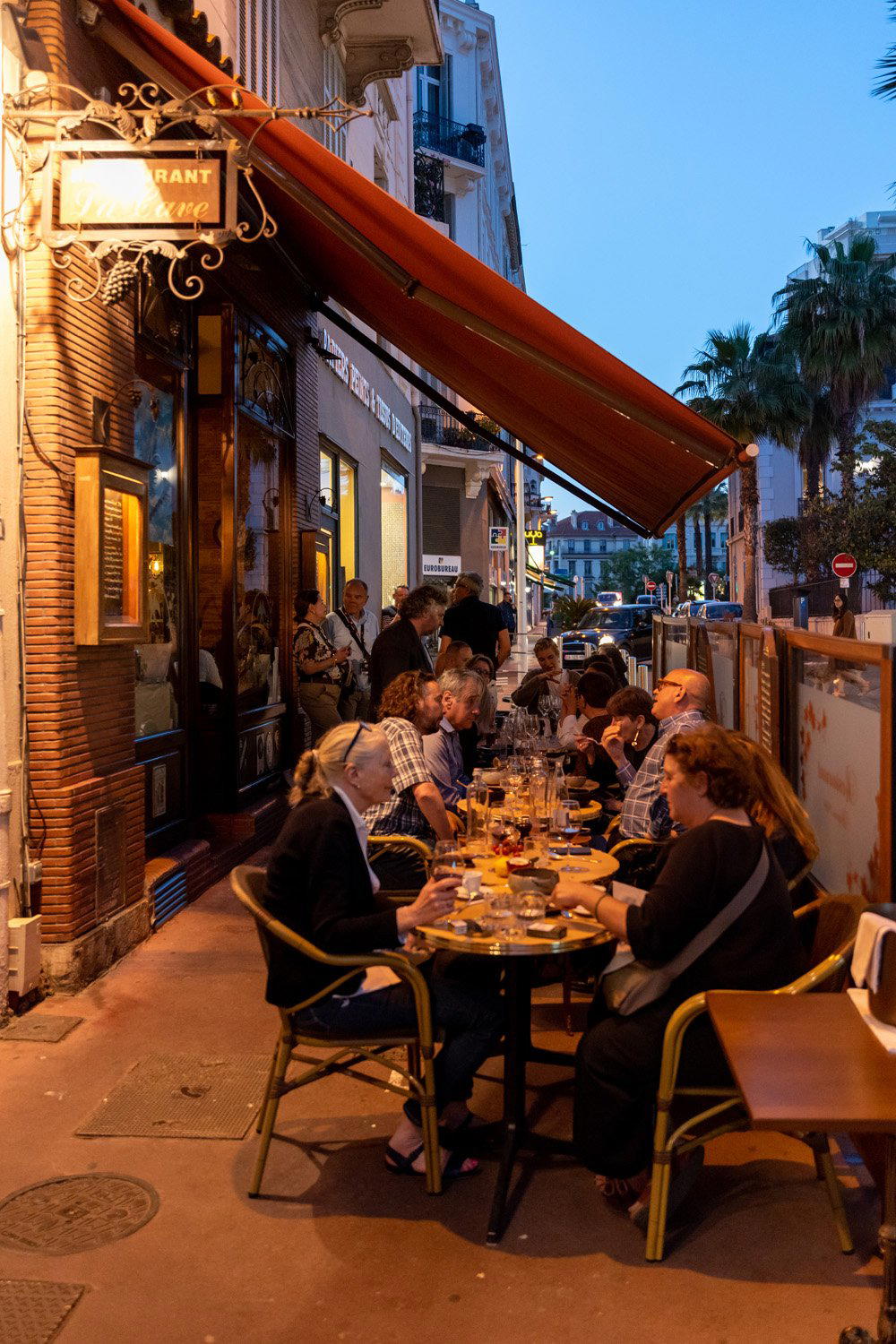
Rue d'Antibes and the Wine Bar Format in Cannes
Cannes' dining identity is often reduced to its festival season and the grand hotel restaurants that orbit the Palais des Festivals, but Rue d'Antibes tells a different story. The street runs parallel to the Croisette, roughly one block inland, and functions as the city's practical dining spine: longer operating seasons, more local clientele, and a format range that extends well beyond the white-tablecloth register. Cave Croisette, at number 151, sits in this corridor, and the address alone signals something about its intended audience. This is not a restaurant angling for the film industry expense account; it is operating in the register of the serious wine bar, a format that has found steady footing in French coastal cities over the past decade as the distinction between cave à manger and full-service restaurant has blurred.
That blurring matters editorially. In cities like Lyon, Bordeaux, and increasingly Nice and Cannes, the wine-bar-with-food model has moved from afterthought to primary destination. The logic is direct: anchor the offer around a considered wine list, build the food around what pairs well rather than around a chef's biographical arc, and let the bottle drive the evening's rhythm. Compared to the €€€€ register of La Palme d'Or at the Hôtel Martinez or the Mediterranean formality of the Riviera tier, a cave format operates at a different price point and with a different social contract between guest and room. Aux Bons Enfants, a few streets away, holds the Provençal tradition end of that spectrum; Cave Croisette appears to occupy the wine-forward middle ground.
What the Address Tells You About the Menu Structure
Menu architecture in a cave format tends to follow a specific internal logic. The wine list is the document from which everything else is derived. Rather than a kitchen-first approach, where dishes are composed and wines selected to accompany them, the cave model reverses the hierarchy: selections rotate around what the cellar is featuring, and the food card offers plates designed for maximum flexibility across styles and regions. This typically means a higher ratio of charcuterie, cheese, small plates, and shareable formats to composed mains, though better examples of the format do carry substantive plats du jour or a short rotating menu alongside the grazing options.
For a venue on Rue d'Antibes, the practical implication is that ordering strategy differs from a conventional restaurant visit. Arriving with a wine-first mindset, selecting a bottle or a sequence of glasses, and building the food order around that selection tends to produce a better result than approaching the menu as you would a bistro. This is not a criticism of the format; it is a description of how the format is designed to work. The approach aligns Cave Croisette with a broader European tradition, from the enoteca model in Italy to the wine bar renaissance visible in London and Paris, where the bottle is the organizing principle of the meal.
Cannes in the Context of the Côte d'Azur's Dining Scene
The French Riviera now carries a serious dining map that extends well beyond its historical grand hotel dining rooms. Mirazur in Menton holds three Michelin stars and ranked at the top of the World's 50 Best list in 2019, anchoring the region's claim to serious culinary attention. Further inland, La Table du Castellet in Le Castellet represents the Provence hinterland's own starred ambitions. Within Cannes proper, the range runs from traditional Provençal cooking at Aux Bons Enfants to the refined bistro registers of Affable and Bistro Les Canailles, with seafood-forward formats like Astoux et Brun and casual contemporary options at Bobo bistro filling out the mid-tier. Our full Cannes restaurants guide maps this range in detail.
Within that competitive set, the cave format occupies a gap that the city's restaurant map has historically underserved. Cannes draws a wine-literate international visitor base, particularly during MIPIM, the Lions, and the Film Festival, and yet the dedicated wine bar tier has been thinner than comparable coastal cities. A venue that addresses that gap directly, with serious cellar depth and a food offer built to support extended wine-focused visits, fills a genuine niche in the city's hospitality mix.
For comparative reference across France's broader fine-dining landscape, the country's most decorated addresses demonstrate the range of ambition available at the top tier: Alléno Paris au Pavillon Ledoyen, Troisgros in Ouches, Paul Bocuse in Collonges-au-Mont-d'Or, Bras in Laguiole, Auberge de l'Ill in Illhaeusern, Les Prés d'Eugénie in Eugénie-les-Bains, Georges Blanc in Vonnas, and Flocons de Sel in Megève. Internationally, the wine-focused counter format finds its own expression at venues like Le Bernardin in New York and the communal-table format at Lazy Bear in San Francisco, both of which demonstrate how format discipline produces distinct dining cultures.
Planning a Visit
Cave Croisette's position at 151 Rue d'Antibes places it within easy walking distance of the Croisette waterfront and the main festival and conference venues. For visitors staying along the Croisette hotel strip, the walk is under ten minutes. The venue's contact details and current hours are best confirmed directly or through a hotel concierge, as operating schedules on the Côte d'Azur adjust meaningfully between festival season peaks and quieter winter months. During major events, Cannes' dining options across all formats fill quickly; making contact with venues several days in advance during festival periods is standard practice for any restaurant in the central district.
Recognition Snapshot
| Venue | Cuisine | Price | Awards |
|---|---|---|---|
| Cave CroisetteThis venue — the venue you are viewing | Not listed | Not listed | This venue |
| La Palme d'Or | Modern Cuisine | €€€€ | Modern Cuisine |
| Aux Bons Enfants | Provençal | €€ | Provençal |
| Ondine Plage | French | Not listed | French |
| L'Affable | Traditional Cuisine | €€ | Traditional Cuisine |
| Riviera | Mediterranean Cuisine | €€€€ | Mediterranean Cuisine |
Continue exploring
More in Cannes
Restaurants in Cannes
Browse all →
Bars in Cannes
Browse all →
Hotels in Cannes
Browse all →

At a Glance
- Cozy
- Rustic
- Romantic
- Date Night
- Casual Hangout
- Wine Cellar
- Extensive Wine List
- Local Sourcing
Current opening hours
- Monday
- 12 PM–12 AM
- Tuesday
- 12 PM–12 AM
- Wednesday
- 12 PM–12 AM
- Thursday
- 12 PM–12 AM
- Friday
- 12 PM–2 AM
- Saturday
- 12 PM–2 AM
- Sunday
- 12 PM–12 AM
Hours can change for holidays and private events. Last verified .
Warm and inviting with rustic decor and a friendly atmosphere surrounded by wine bottles.
Know Before You Go
- Getting there
- 151 Rue d'Antibes, 06400 Cannes, France