Catalyst
Catalyst occupies a quietly confident position on Grays Inn Road in London's Chancery Lane, where the culinary conversation tends toward precision and purpose. Sitting at the intersection of imported technique and British produce, it draws comparison to the capital's more established Modern British and Modern European tables while charting its own editorial course through the city's dining geography.
Pearl is the En Primeur Club membership app — saves, bookings, and concierge access live there. Same editors, same standards.
- Address
- 48 Grays Inn Rd, Chancery Ln, London WC1X 8LT, United Kingdom
- Phone
- +442072428777
- Website
- catalyst.cafe
- Directions
- Get directions
 Saves & bookings on Pearl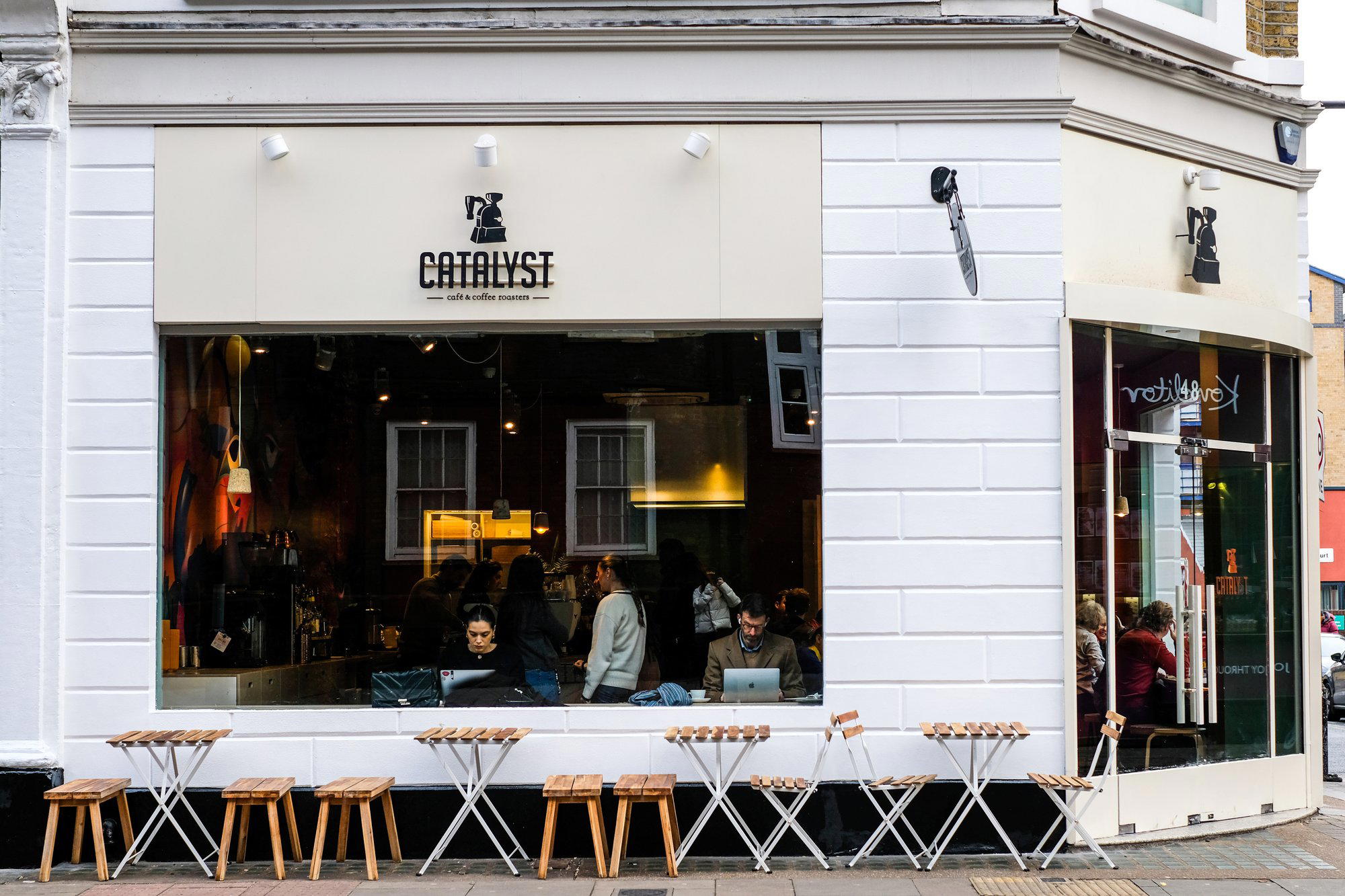
Where Legal London Meets the Dining Room
Grays Inn Road does not announce itself as a dining address. The stretch between Chancery Lane and King's Cross belongs, in the popular imagination, to barristers, civil servants, and the particular London hum of purposeful commuting. That institutional density is precisely what makes the emergence of a serious restaurant at this address interesting. In a city where dining geography tends to cluster — Mayfair for trophied rooms, Soho for trend velocity, the City fringe for expense-account protein — Catalyst positions itself at a remove from the usual co-ordinates, which carries its own editorial logic. Restaurants that succeed in locations without a pre-existing dining reputation do so on the strength of what happens inside, not the neighbourhood's ambient prestige.
The Intersection of Technique and British Produce
The editorial angle that frames serious Modern British and Modern European cooking in London right now is the tension between imported method and indigenous product. Kitchens trained in classical French discipline, or shaped by the precision-led Scandinavian tradition that remapped fine dining in the 2010s, now apply those techniques to a larder that has become, over two decades, a genuine source of pride: aged Herdwick from the Lake District, hand-dived scallops from Scottish waters, salt marsh lamb, heritage grain flours, and produce from the growing network of market gardens supplying London's leading tables.
That intersection is the story at Catalyst. The address on Grays Inn Road places it at a distance from the Mayfair rooms, CORE by Clare Smyth, Sketch, The Lecture Room and Library, Restaurant Gordon Ramsay, The Ledbury, and Dinner by Heston Blumenthal, that have come to define London's upper tier of technical cooking. But geography does not determine ambition, and the broader movement toward technique-led, produce-anchored menus has spread well beyond W1 postcodes. For broader context on how London's restaurant scene distributes across the city's neighbourhoods and price tiers, the full London restaurants guide maps the picture usefully.
A National Frame: British Fine Dining Beyond London
Understanding any ambitious London dining room requires a sense of what is happening with the same culinary grammar across the country. The British fine dining tradition has generated a set of reference points outside the capital that are now internationally competitive: L'Enclume in Cartmel operates the kind of hyper-regional, foraged-and-farmed tasting menu that influenced a generation of younger chefs; Moor Hall in Aughton has established Lancashire as a credible address for cooking of genuine precision; Waterside Inn in Bray holds the classical French line with a consistency that has made it a benchmark for longevity; Gidleigh Park in Chagford anchors the south-west as a region worth taking seriously for serious dining.
Further across the map, Hand and Flowers in Marlow demonstrates that accessible format and serious cooking are not mutually exclusive propositions; hide and fox in Saltwood shows how Kent's proximity to the Channel shapes a kitchen's ingredient logic; Midsummer House in Cambridge operates a tasting menu format that competes for recognition alongside London's recognised rooms; Opheem in Birmingham has made the case for a different kind of ingredient-technique intersection, applying classical training to a South Asian ingredient vocabulary; and Ynyshir Hall in Machynlleth pushes Welsh produce through a technique-first lens that has generated significant attention. In Scotland, Restaurant Andrew Fairlie in Auchterarder represents the northern tier of this broader British fine dining conversation. These rooms collectively define the register within which any serious London dining room now competes and against which any claim to ingredient-led cooking is measured.
The Global Technique Question
The category that Catalyst inhabits, wherever its menu lands exactly, speaks to a broader shift in how technically ambitious restaurants position themselves. A decade ago, particularly visible formal was classical French with local ingredients bolted on. The current generation is more promiscuous in its reference points: fermentation methodology borrowed from Nordic kitchens, umami architecture drawn from Japanese practice, textural contrast cues from Spanish avant-garde traditions. The result is a mode of cooking that can apply globally sourced intellectual capital to ingredients that are genuinely specific to a place. Internationally, this pattern is visible at rooms like Le Bernardin in New York City, where classical French precision anchors a seafood-forward menu with global ingredient range, and Lazy Bear in San Francisco, which applies American produce to a format shaped partly by European tasting menu discipline. The London iteration of this conversation is denser and more competitive, partly because the city's dining economy is large enough to sustain multiple points of view simultaneously.
Chancery Lane as a Dining Address
The WC1 postcode that contains Catalyst's address is close enough to Clerkenwell's established dining corridor to benefit from that area's evolved appetite for serious cooking, and far enough from it to function on its own terms. Chancery Lane station provides direct access from the west end and the City; King's Cross, a short distance north, extends the catchment considerably. Lunch trade in this part of London has historically been driven by legal and professional demand, which creates a particular audience: time-conscious, familiar with formal dining conventions, and more interested in what is on the plate than in the ambient theatre that some Mayfair rooms sell as part of the package.
That practical reality shapes the character of ambitious restaurants in this corridor. They tend toward a kind of focused seriousness rather than spectacle, a quality that, in the current dining climate, reads as a strength rather than a limitation.
Planning Your Visit
Location: 48 Grays Inn Road, Chancery Lane, London WC1X 8LT. Transport: Chancery Lane station (Central line) is the closest underground stop; King's Cross St. Pancras is accessible within a short walk or single tube stop. Dress: Not formally specified; smart-casual is the working norm for serious restaurant dining in this part of London.
How Catalyst London compares with similar nearby venues.
| Venue | Cuisine |
|---|---|
| Otto’s | French |
Continue exploring
More in London
Restaurants in London
Browse all →
Bars in London
Browse all →
Hotels in London
Browse all →

At a Glance
- Modern
- Trendy
- Brunch
- Casual Hangout
- Open Kitchen
- Espresso Milk Drinks
- Hand Brews Pour Over
- Lunch Brunch
- Pastries Snacks
- Single Origin
- Specialty Coffee
- Work Friendly
Current opening hours
- Monday
- 8 AM–5 PM
- Tuesday
- 8 AM–5 PM
- Wednesday
- 8 AM–5 PM
- Thursday
- 8 AM–5 PM
- Friday
- 8 AM–4 PM
- Saturday
- Closed
- Sunday
- Closed
Hours can change for holidays and private events. Last verified .
Bright and modern cafe atmosphere with a focus on high-quality coffee, featuring a visible roaster through a glass floor.