Casey's Pizza
Casey's Pizza at 1170 4th St sits in San Francisco's Mission Bay district, a neighborhood that has grown rapidly around the Chase Center corridor. The address places it squarely in a part of the city where casual, counter-service pizza has emerged as the dominant dining format for a fast-moving, stadium-adjacent crowd. For the broader San Francisco pizza scene, it represents the neighborhood slice shop tier rather than the tasting-menu or destination-dining bracket.
Pearl is the En Primeur Club membership app — saves, bookings, and concierge access live there. Same editors, same standards.
- Address
- 1170 4th St, San Francisco, CA 94158
- Phone
- +14158142482
- Website
- caseyspizzas.com
- Directions
- Get directions
 Saves & bookings on Pearl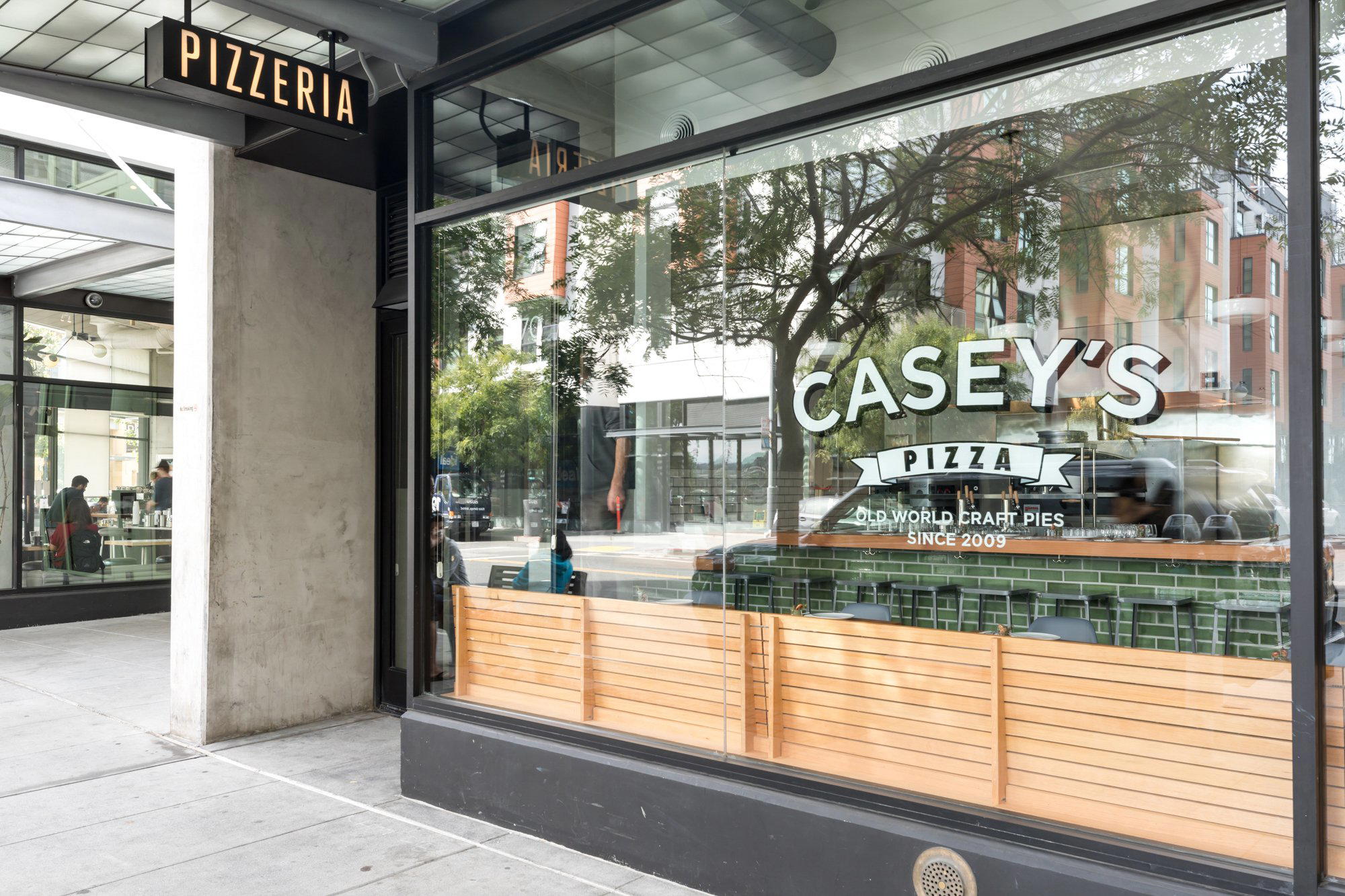
Pizza in San Francisco's Mission Bay: What the Format Reveals
San Francisco's relationship with pizza is more layered than its fine-dining reputation suggests. While the city's upper tier runs through the tasting-menu world of venues like Lazy Bear and Atelier Crenn, Casey's Pizza at 1170 4th St in San Francisco is a casual East Coast-Style Pizza spot with a $25 per-person price point. Casey's Pizza, at 1170 4th St in the Mission Bay district, belongs to that neighborhood tier.
The Mission Bay Context
Mission Bay has changed rapidly in the past decade, and the dining scene has followed that shift toward fast-casual and counter-service formats. Casey's address on 4th Street places it within easy reach of the Chase Center arena and the surrounding office and residential blocks. Pizza, by format, fits that environment better than most categories. A slice counter or a walk-in pizza shop offers the throughput and ticket-size flexibility that a stadium-adjacent block requires. Casey's occupies that position at its address on 4th Street, a corridor that connects the Caltrain station to the arena and generates consistent foot traffic across lunch and evening hours.
That context matters because it shapes the menu logic. In neighborhood pizza at this price tier and format type, the menu tends to be structured around a short list of pies built for speed and reorder consistency rather than seasonal rotation or ingredient provocation. Compare that structure to the tasting-menu architecture at Benu or Quince, where each course is sequenced to build on the last, and the difference in intent is immediate. The neighborhood slice shop is optimized for the single decision, not the arc.
Menu Architecture: What a Short Pizza Menu Signals
A streamlined pizza menu usually signals speed, consistency, and a focus on repeatable ordering. In cities where pizza has been taken into fine-dining territory, wood-fired programs with single-origin flour and 48-hour ferment schedules, the menu has expanded vertically, adding depth through provenance and technique narrative. That format now sits at a different price and occasion tier from the walk-in neighborhood shop. Casey's address and neighborhood placement suggest the latter format: a menu built around a core set of pies, likely organized by protein or vegetable load, designed for legibility at speed rather than discovery over multiple visits.
That is not a criticism. The neighborhood pizza shop serves a function that the ambitious tasting-menu room cannot. It is the format that absorbs weeknight appetite without ceremony, that works for a solo diner at the counter as well as a group of four splitting two pies. San Francisco has both tiers, and the city's dining culture is more honest when both are acknowledged. For a counterpoint on what the fine-dining end of California's food spectrum looks like, Saison in SoMa represents the progressive American bracket that operates at a different occasion, price, and booking-window entirely.
How Casey's Fits the Broader American Pizza Scene
The American pizza market has fragmented significantly across the past two decades. At the high end, venues like The French Laundry in Napa exist in a different tier entirely, but even within casual dining, pizza has split between fast-casual chains, chef-driven independent shops, and the traditional neighborhood joint. The independent neighborhood shop, which Casey's represents by address and context, competes primarily on consistency, proximity, and price. Its comparable set is not Smyth in Chicago or Providence in Los Angeles. It is the other walk-in counters within a half-mile radius that are competing for the same pre-game and post-work crowd.
Across American cities, the pizza shops that hold their position over time tend to do so through one of three routes: a signature dough program that creates a distinctive texture no nearby competitor replicates, a topping combination that becomes identified with the address, or a consistency of execution so reliable that it removes any decision-making friction from repeat visitors. Without confirmed specifics on Casey's program, the honest editorial position is that its strength or weakness will be identifiable only by what the dough and sauce deliver against those benchmarks. That is the only measure that matters for this format.
Vegetarian Options and Dietary Range
Pizza as a category is structurally more vegetarian-adaptable than most casual dining formats. A standard pizza menu at a neighborhood shop typically includes at least two to three vegetable-forward options alongside meat-topped pies. For particularly current menu details, including vegetarian availability, the venue's own channels are the appropriate reference point.
Value and Occasion Fit
In the Mission Bay neighborhood, casual pizza sits at a price tier well below the destination dining that defines San Francisco's national reputation. That gap is significant. A meal at Atelier Crenn or Lazy Bear operates on a per-head spend that can exceed several hundred dollars with wine. A neighborhood pizza counter operates at a fraction of that, which is precisely the occasion it is designed for. For travelers or locals looking to eat well without a booking window or a dress consideration, the neighborhood pizza format is the correct tier. Casey's sits in that bracket by address and neighborhood type. Comparable casual-format pizza value exists at similar addresses across American cities covered in the EP Club guide, from New Orleans to San Diego.
Internationally, the farm-to-table discipline represented at venues like Blue Hill at Stone Barns or the produce-first approach at Single Thread Farm in Healdsburg shows how different the intent and structure of a menu can be within the same broad category of American ingredient-driven cooking.
Planning Your Visit
Address: 1170 4th St, San Francisco, CA 94158. Reservations: Walk-in friendly. Dress: Casual. Budget: About $25 per person. Hours: Mon: Closed; Tue to Sun: 4:30 to 9 PM.
Budget Reality Check
Comparable venues nearby, for context on price, style, and recognition.
| Venue | Cuisine | Price | Notes |
|---|---|---|---|
| Casey's PizzaThis venue — the venue you are viewing | Mission Bay, East Coast-Style Pizza | $$ | Not listed |
| Bruno's | Not listed | $$ | Financial District/South Beach, Italian Pizza and Grill |
| Collina | Not listed | $$ | Russian Hill, Rustic Italian Handmade Pasta |
| Cioppino's | North Beach, Italian Seafood | $$ | Not listed |
| Rocco's Cafe | South of Market, Authentic Italian | $$ | Not listed |
| BETTOLA | Not listed | $$ | Inner Richmond, Casual Italian Rotisserie & Trattoria |
Continue exploring
More in San Francisco
Restaurants in San Francisco
Browse all →
Bars in San Francisco
Browse all →
Hotels in San Francisco
Browse all →
At a Glance
- Casual
- Cozy
- Casual Hangout
- Group Dining
- Standalone
- Beer Program
Current opening hours
- Monday
- Closed
- Tuesday
- 4:30–9 PM
- Wednesday
- 4:30–9 PM
- Thursday
- 4:30–9 PM
- Friday
- 4:30–9 PM
- Saturday
- 4:30–9 PM
- Sunday
- 4:30–9 PM
Hours can change for holidays and private events. Last verified .
Casual neighborhood spot with a laid-back atmosphere well-suited for game nights near Chase Center and Oracle Park.