Casa do Tó
Our verdict
Casa do Tó sits on Rua Bernardino Machado in Riba de Ave, a textile-industry town in the Minho region where the Ave River has shaped both the economy and the cooking. The address places it within a tradition of northern Portuguese hospitality that draws on the inland larder rather than the coast, making it a different proposition from the seafood-led dining that dominates Portugal's restaurant conversation.

Pearl is the En Primeur Club membership app — saves, bookings, and concierge access live there. Same editors, same standards.
- Address
- R. Bernardino Machado 290, 4765-216 Riba d'Ave, Portugal
- Phone
- +351912353876
- Hours
- Mon 12–2:30 PMTue ClosedWed–Thu 12–2:30 PMFri–Sat 12–2:30 PM, 7:30 PM–12 AMSun 12–2:30 PM
- Website
- casadoto.eatbu.com
- Directions
- Get directions
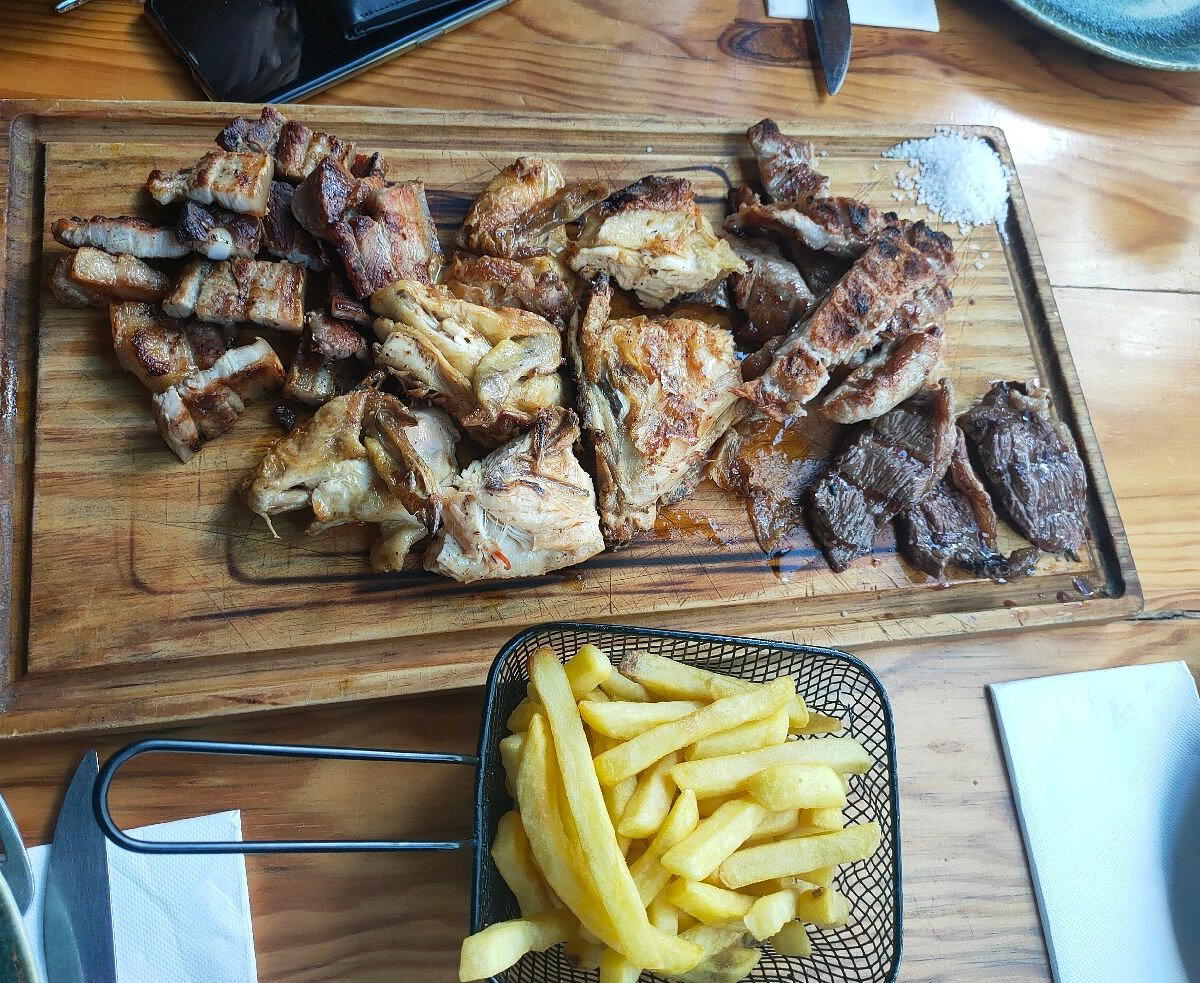
The menu
What to order
- Picanha
- Polvo à Casa do Tó
- T-Bone
- Tomahawk
A Town the Food Press Has Not Yet Caught Up With
The Ave Valley, running through the Minho interior between Braga and the coast, is not the Portugal that travel editors typically write about. The towns here, Riba de Ave among them, built their identity around textile manufacturing rather than tourism, which means the dining culture that developed was written for locals, not visitors. That dynamic shapes what you find at Casa do Tó and at the handful of other addresses worth seeking out on our full Riba De Ave restaurants guide: cooking that answers to a resident clientele with specific expectations about the northern interior larder, not to the preferences of a passing food tourist.
Portugal's recognized restaurant circuit, from Belcanto in Lisbon to Vila Joya in Albufeira and Ocean in Porches, clusters heavily around the capital, the Algarve coast, and a handful of Porto addresses. The interior of the Minho, despite sitting within an hour of Porto, operates largely outside that circuit. Restaurants in the Ave Valley don't build their identity around awards calendars or chef-to-chef networks. They build it around suppliers, regularity of produce, and a dining public that would immediately notice if something changed.
The Minho Interior and Its Larder
The cooking tradition of this part of northern Portugal draws on a different ingredient logic than the seafood-forward cuisine that defines Portugal's international reputation. Inland Minho kitchens work with pork in its many forms, corn-based breads, river fish, legumes grown in small family plots, and greens that change with the season. The Ave River itself has historically supplied freshwater species to local tables, and the agricultural land surrounding the valley towns produces much of what appears on plates within those same towns.
This is a region where the distance between a pig raised on a local farm and a plate of roasted pork is genuinely short, not as a marketing claim but as a structural fact of how food has moved through these communities for generations. That kind of supply proximity tends to produce cooking that is specific rather than generic: flavours tied to particular soil conditions, animal breeds, and seasonal rhythms. It contrasts sharply with the modernist creative format you find at places like Antiqvvm in Porto or the tasting-menu formalism of Casa de Chá da Boa Nova in Leça da Palmeira, where the sourcing story is carefully curated for the table. In the Ave interior, the sourcing story exists because it always has, not because a chef constructed a narrative around it.
What the Address Signals
Casa do Tó is located at Rua Bernardino Machado 290 in Riba de Ave, a street address that situates it within the working fabric of the town rather than a converted manor or a scenic riverside setting. That positioning is itself a clue about the kind of establishment it is. In northern Portugal, the most consistent cooking often comes from places that operate without scenic advantage, relying instead on repeat custom and the specific knowledge that comes from feeding the same community week after week.
The contrast with destination-formatted restaurants is instructive. Addresses like Fortaleza do Guincho in Cascais or Lab by Sergi Arola in Sintra are built partly around their physical settings as a component of the experience. A town-centre address in a working Minho municipality operates under a different contract with its guests: the room is not the point, and neither is the occasion. The food carries the full weight of the visit.
Northern Portugal's Broader Restaurant Tier
Within the northern Portugal dining picture, the Minho interior sits in a distinct lower-profile tier relative to Porto's more internationally visible addresses. The Yeatman in Vila Nova de Gaia and Palatial in Braga both operate with the infrastructure of formal dining recognition: wine programs, tasting menus, published credentials. The towns along the Ave Valley function in a parallel but separate register, where the points of reference are regional rather than national or international.
That said, the region is not disconnected from the broader Portuguese food conversation. The Minho is a Vinho Verde producing area, and the local wine culture, built around the light, high-acid wines made from Loureiro, Alvarinho, and Arinto grapes, pairs naturally with the food that has always been made here. At a table in Riba de Ave, that regional coherence between what is grown, what is cooked, and what is poured can be more complete than at addresses in Porto or Lisbon where the sourcing is deliberately assembled from across the country.
Restaurants in the interior of the Minho that draw on close-to-source ingredients without the mediation of a high-concept kitchen represent a different kind of argument for why Portuguese food matters. Places like Mesa de Lemos in Passos de Silgueiros and Oculto in Vila do Conde have shown that the northern interior can produce serious cooking without the Michelin framework as a prerequisite. The same logic applies along the Ave corridor.
Planning a Visit
Riba de Ave is reachable from Porto in under an hour by road, making it a viable lunch or dinner excursion for visitors based in the city. The town has no dedicated tourist infrastructure, which means approaching it the way a local would — arriving without fixed expectations about menus or formats — is the more productive orientation. For visitors who have already worked through Porto's better-documented dining options, or who have covered the coastal addresses from Al Sud in Lagos to Ó Balcão in Santarém, the Ave Valley represents the kind of detour that rewards genuine curiosity about how Portuguese food works outside the capital circuit. At the international scale, the closest analogies in terms of sourcing-led, community-embedded cooking would be places like Lazy Bear in San Francisco, where the connection between producer and plate is the central editorial premise, though the formal register is entirely different. Le Bernardin in New York City and Il Gallo d'Oro in Funchal and Gusto by Heinz Beck in Almancil sit at the opposite end of the formality spectrum, where the sourcing story is one component of a highly constructed dining architecture. Casa do Tó and its Minho-interior peers represent a different answer to the same underlying question about what gives a meal its authority.
Frequently asked questions
Is Casa do Tó suitable for children?
Riba de Ave is a working Portuguese town, and Casa do Tó sits within its everyday civic fabric at Rua Bernardino Machado 290 rather than in a formal dining district. That context generally points toward a neighbourhood restaurant register, which tends to be more accommodating for families than destination tasting-menu venues.
What is the atmosphere like at Casa do Tó?
The address on Rua Bernardino Machado places Casa do Tó inside the working residential and commercial grain of Riba de Ave, not in a tourist or gastronomy quarter. That positioning typically produces a local, low-ceremony atmosphere rather than a formal dining room. The Ave Valley town setting reinforces that register: this is not Porto's internationally facing restaurant scene.
Is Casa do Tó worth the trip from Porto as a standalone lunch destination in the Minho interior?
Riba de Ave is reachable from Porto in under an hour by road, which puts Casa do Tó within viable range for a lunch excursion. The Ave Valley sits in a distinct tier from Porto's internationally visible restaurant scene, meaning the draw here is regional specificity rather than headline credentials. Travellers already planning time in Braga or the Minho interior will find the detour easier to justify than those making the drive solely for this address.
What's the signature dish at Casa do Tó?
The broader cooking tradition of the Minho interior leans on slow-cooked meats, cured pork products, dried legumes, and broa cornbread rather than the seafood that dominates coastal Portuguese menus. Dishes rooted in that larder are the likeliest anchor of the kitchen's identity.
What's the address for Casa do Tó?
Casa do Tó is located at R. Bernardino Machado 290, 4765-216 Riba d'Ave, Portugal, Riba De Ave.
Should I book Casa do Tó in advance?
For a restaurant in a town of Riba de Ave's scale and relative low profile outside regional circles, arriving without a reservation on weekends carries meaningful risk. Checking via the venue directly before making the trip from Porto is advisable.
Side-by-Side Snapshot
| Venue | Cuisine | Price | Awards | Notes |
|---|---|---|---|---|
| Casa do TóThis venue — the venue you are viewing | Portuguese Steakhouse | $20–30 | Not listed | Not listed |
| Belcanto | Contemporary Portuguese Fine Dining | $200–300 | 2 Michelin Stars · World's 50 Best #42 | Modern Portugese, Creative |
| Casa de Chá da Boa Nova | Modern Portuguese Seafood | $50–100 | 2 Michelin Stars · La Liste Top Restaurants | Portugese, Seafood |
| Ocean | Modern Portuguese Fine Dining | $200–300 | 2 Michelin Stars · La Liste Top Restaurants | Contemporary European, Creative |
| Lab by Sergi Arola | Modern Mediterranean Fine Dining | $200–300 | 1 Michelin Star | Progressive Spanish, Creative |
| Midori | Japanese-Portuguese Fusion | $150–200 | 1 Michelin Star | Japanese |
Continue exploring
More in Riba De Ave
Restaurants in Riba De Ave
Browse all →
Bars in Riba De Ave
Browse all →
Hotels in Riba De Ave
Browse all →
Details
- Cozy
- Rustic
- Family
- Casual Hangout
- Standalone
- Local Sourcing
- A La Carte
- Set Menu
Current opening hours
- Monday
- 12–2:30 PM
- Tuesday
- Closed
- Wednesday
- 12–2:30 PM
- Thursday
- 12–2:30 PM
- Friday
- 12–2:30 PM, 7:30 PM–12 AM
- Saturday
- 12–2:30 PM, 7:30 PM–12 AM
- Sunday
- 12–2:30 PM
Hours can change for holidays and private events. Last verified .
Acolhedor (welcoming) atmosphere praised for its cozy, homey feel in guest reviews.