

Michelin Plate · Guía Repsol 1 Sol
Our verdict
Casa Brito is a Michelin Plate-recognised restaurant in Arucas, Gran Canaria, built around the grilled beef tradition and the island's native Baifo goat. The €€ price range, rustically appointed dining rooms, and a loyal local following make it one of the more serious addresses for traditional Canarian cooking outside the tourist circuit. Sourcing spans Germany, Uruguay, and the Spanish regions of Castilla, Galicia, and Asturias.

Pearl is the En Primeur Club membership app, where members save venues, book tables and use the concierge.
The menu
What to order
- Grilled beef
- Grilled Baifo goat chops
- Barbecued chorizo
Open Flame, Local Loyalty: Dining at Casa Brito in Arucas
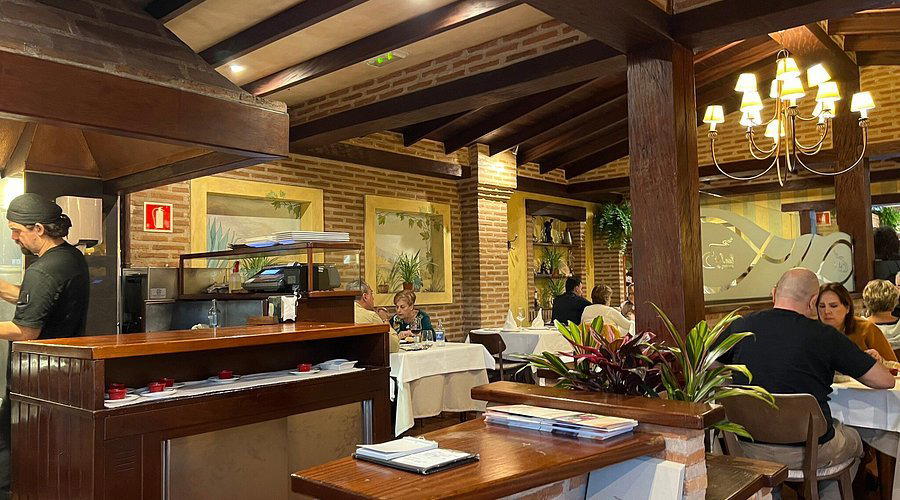
Walk into Casa Brito and the room orients you immediately: wood-beamed ceilings, the low murmur of a clientele that treats this as a regular rather than a destination, and the smell of an open grill doing serious work. This is not a dining room designed to impress first-time visitors. The two rustically appointed spaces, anchored by that central grill in the main room, communicate something more durable than trend: a kitchen that has found what it does well and has no interest in doing anything else. The private bar at the entrance reads as a social anteroom as much as a waiting space, the kind of detail that tells you the staff expect people to arrive with time to spare.
Arucas sits in the north of Gran Canaria, a town better known for its neo-Gothic church and its rum distillery than for fine dining. Yet the island has a strong tradition of wood-fire cooking, and the leading expressions of that tradition tend to concentrate in towns like this one, away from the resort strips of the south. Casa Brito sits squarely within that pattern, and its Michelin Plate recognition in both 2024 and 2025 marks it as the kind of address that the guide's inspectors return to specifically because it represents something true about how people eat here.enprimeurclub.com/restaurants/arzak-san-sebastin-restaurant">Arzak in San Sebastián and Azurmendi in Larrabetzu to progressive coastal kitchens like Aponiente in El Puerto de Santa María, the Plate designation occupies a different register entirely: not creativity or conceptual ambition, but cooking that is soundly prepared and honestly delivered. That framing fits Casa Brito precisely.
The Logic of the Sourcing
The kitchen's identity is inseparable from where the meat comes from. At most restaurants, beef provenance is a single point of pride and usually a local one. Here, the sourcing is deliberately plural: cattle from Germany, Uruguay, Castilla, Galicia, and Asturias arrive on the same grill, each bringing a different muscle composition, fat distribution, and feed profile. That kind of multi-origin purchasing is not accidental. It reflects a kitchen that has spent years learning what each breed and region produces and how those differences behave over an open flame.
The Spanish regions in that list deserve particular attention. Galicia's rubia gallega cattle are among the most prized beef animals in Europe, known for extended raising periods and significant intramuscular fat. Asturian animals, often raised on mountain pasture, carry a leaner, more mineral character. Castilian beef typically represents the broad mid-ground of Spanish grilling tradition. Placing Uruguayan and German beef alongside these is an editorial decision as much as a culinary one: the kitchen is arguing, through its sourcing, that terroir in beef functions much the way it does in wine, and that comparison across origins is the point, not a distraction from it.
This is the same sourcing philosophy that underpins the higher-concept end of Spanish cooking, visible at places like El Celler de Can Roca in Girona or Martin Berasategui in Lasarte-Oria, though Casa Brito arrives at it through a traditional rather than avant-garde frame. The intelligence is the same; the register is different. For comparable approaches to traditional cuisine done with this kind of sourcing discipline elsewhere in Europe, Auberge Grand'Maison in Mûr-de-Bretagne and Auga in Gijón offer useful reference points.
The Baifo Question
Beyond the beef, the grilled chops of young Baifo goat represent a different category of sourcing entirely. The Baifo is the native goat breed of the Canary Islands, and its presence on a menu is an indicator of how seriously a kitchen treats the food culture of the islands specifically, rather than just Iberian tradition broadly. Young goat cooked over wood fire is a preparation with deep roots in Canarian domestic cooking, and it appears at serious restaurants here precisely because the ingredient is local in a way that imported beef, however well-sourced, cannot replicate. The barbecued chorizo rounds out the grill section and sits within a long Spanish tradition of cured-pork products meeting live fire, a combination whose appeal requires no elaboration.
Who Eats Here and How to Plan
The clientele at Casa Brito skews local, and the staff are described explicitly as accustomed to working with that audience. That matters practically: service rhythms, portion expectations, and the social texture of the room are calibrated to a Canarian rather than a tourist standard. For a visitor, that is an asset rather than a complication, given that it produces a more authentic read of how people on the island actually eat out.
Casa Brito operates at the €€ tier, which in the context of Gran Canaria's north means the meal remains accessible without sacrificing quality. Arucas itself warrants a half-day: the basilica, the town square, and the Arehucas rum distillery sit within easy walking distance of each other, making a lunch here a natural anchor for the visit. The address is Pje. Given the local following and limited capacity implied by the two-room setup, booking ahead is advisable, particularly for weekend lunch, which in the Canaries functions as the week's primary social meal.
For those building a broader picture of eating and drinking in the area, see our full Arucas restaurants guide, our Arucas bars guide, and our Arucas wineries guide. If you are planning a stay, our Arucas hotels guide covers the accommodation options in the area, and our Arucas experiences guide maps the wider cultural and activity offer.enprimeurclub.com/restaurants/ricard-camarena-valncia-restaurant">Ricard Camarena in València, Atrio in Cáceres, Quique Dacosta in Dénia, Mugaritz in Errenteria, Cocina Hermanos Torres in Barcelona, and DiverXO in Madrid, though each operates in a different culinary register.
Frequently asked questions
What dish is Casa Brito famous for?
The grilled beef is the kitchen's signature, sourced from five distinct origins: Germany, Uruguay, Castilla, Galicia, and Asturias. The grilled chops of young Baifo goat, the island's native breed, are the other preparation most associated with the restaurant, alongside barbecued chorizo. Michelin's Plate recognition in 2024 and 2025 specifically notes the beef as the defining speciality.
What kind of setting is Casa Brito?
The restaurant occupies two rustically appointed dining rooms with wood ceilings and an open grill in the main room, plus a private bar. The atmosphere is consistent with a serious local house in a Canarian town rather than a tourist-facing dining room. At €€ pricing in Arucas, it sits in the accessible-but-serious tier of the island's restaurant scene, with a clientele and service culture shaped by local rather than visitor expectations.
Would Casa Brito be comfortable with kids?
Rustically furnished rooms, direct service culture, and direct grill-focused menu make the setting accommodating for families. At €€ pricing in Arucas, the meal is not a high-formality occasion. That said, the primary draw is the quality of the meat and the open-flame cooking rather than any specific children's programming, so it suits families who eat comfortably in a traditional adult-oriented restaurant environment.
In Context: Similar Options
| Venue | Cuisine | Price | Awards | Notes |
|---|---|---|---|---|
| Casa BritoThis venue (the venue you are viewing) | Traditional Spanish Grill | Not listed | Michelin Plate · Guía Repsol 1 Sol | Not listed |
| Aponiente | Avant-Garde Marine Seafood | $200–300 | 3 Michelin Stars · World's 50 Best #84 | Progressive - Seafood, Creative |
| Arzak | Contemporary Basque Fine Dining | $300–500 | 3 Michelin Stars · World's 50 Best #31 | Modern Basque, Creative |
| DiverXO | Avant-Garde Spanish Tasting Menu | $300–500 | 3 Michelin Stars · World's 50 Best #4 | Progressive - Asian, Creative |
| El Celler de Can Roca | Creative Catalan Fine Dining | $300–500 | 3 Michelin Stars · World's 50 Best #2 | Progressive Spanish, Creative |
| Quique Dacosta | Avant-Garde Spanish Fine Dining | $300–500 | 3 Michelin Stars · World's 50 Best #65 | Creative |
Recognition history
Dated appearances from independent guides and award organizations, with the underlying list record or original source where available.
Michelin Plate
Michelin
Guía Repsol 1 Sol
Guía Repsol
Full recognition history (4 entries)
Michelin Plate
Michelin
Michelin Plate
Michelin
Continue exploring
More in Arucas
Restaurants in Arucas
All restaurants in Arucas →
Bars in Arucas
Browse all →


Details
- Rustic
- Classic
- Elegant
- Family
- Celebration
- Special Occasion
- Open Kitchen
- Extensive Wine List
- A La Carte
- Vegetarian Friendly
- Gluten Free Options
Current opening hours
- Monday
- Closed
- Tuesday
- Closed
- Wednesday
- 1–5 PM, 8–11 PM
- Thursday
- 1–5 PM, 8–11:30 PM
- Friday
- 1–5 PM, 8–11:30 PM
- Saturday
- 1–5 PM, 8–11:30 PM
- Sunday
- 12:30–5 PM
Hours can change for holidays and private events. Hours as of .