Cartel Roasting Co.
Where the Third Wave Meets the West Coast Morning Los Angeles has long operated as a pressure cooker for imported ideas applied to local conditions. That dynamic is nowhere more legible than in its specialty coffee scene, where roasters trained...
Pearl is the En Primeur Club membership app — saves, bookings, and concierge access live there. Same editors, same standards.
- Address
- Los Angeles, United States
- Website
- cartelroasting.co
 Saves & bookings on Pearl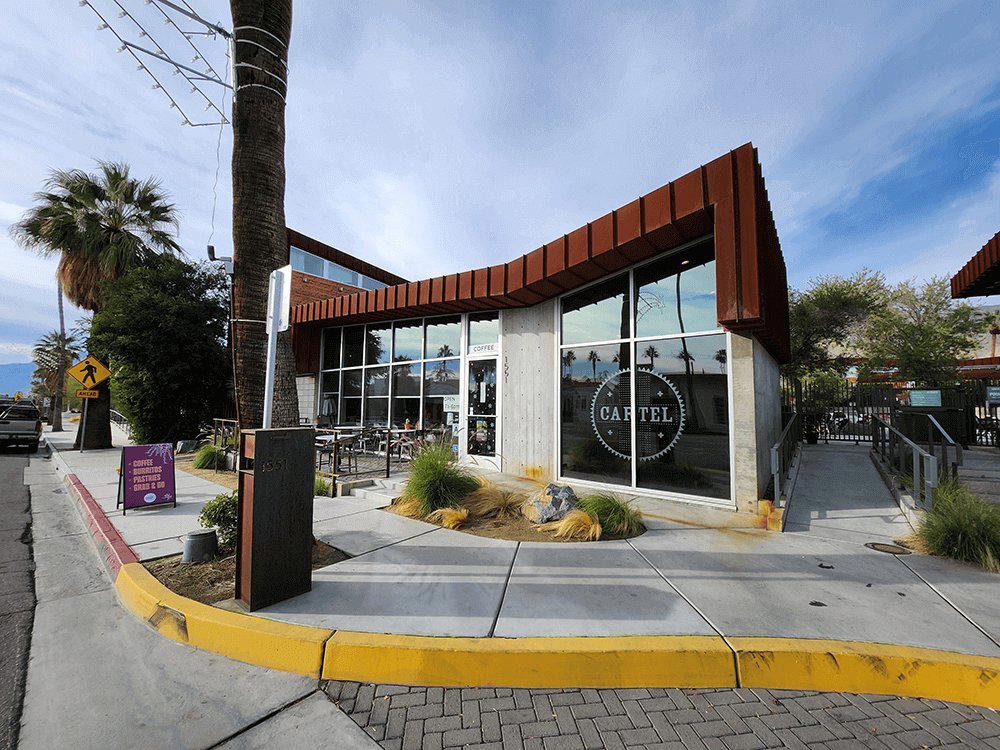
Where the Third Wave Meets the West Coast Morning
Los Angeles has long operated as a pressure cooker for imported ideas applied to local conditions. That dynamic is nowhere more legible than in its specialty coffee scene, where roasters trained in the technical orthodoxies of the Pacific Northwest and Nordic traditions have spent the past decade refining those methods against California's particular agricultural calendar and its unusually ingredient-conscious consumer base. Cartel Roasting Co. is a Specialty Coffee Roastery Café in Los Angeles, priced at about $10 per person, and it sits squarely within that pattern: a roastery built on sourcing discipline and extraction precision, transplanted into a city that now expects those qualities as baseline rather than distinction.
The broader third-wave movement arrived in Los Angeles later than in Portland or Seattle, but the city absorbed it with characteristic speed and then began pushing past it. By the time most American cities were still debating single-origin versus blend, the LA market had already bifurcated into roasteries that treated coffee as agricultural product and those that treated it as brand exercise. Cartel occupies the former camp, with a sourcing philosophy that positions origin transparency not as marketing but as operational method.
Global Technique, Local Register
The editorial angle worth pursuing here is not the coffee itself but what the arrival of technically serious roasting operations in Los Angeles reveals about how the city processes imported expertise. The approach Cartel brings, rigorous green-bean sourcing, attention to roast curve, calibrated extraction at the bar, derives from a Northern European model of specialty coffee that dominated global discourse through the 2010s. What happens when that model lands in a city with a vastly different food culture is instructive.
Los Angeles diners, shaped by proximity to some of the country's most consequential produce culture, tend to read ingredients with unusual sophistication. The same sensibility that drives demand for named-farm vegetables at places like Providence or single-source protein sourcing at Kato also inflects coffee expectations. A Guatemalan Huehuetenango lot or a washed Ethiopian Yirgacheffe is read here less as novelty and more as a category of provenance claim the customer already understands from other contexts. That fluency raises the floor for any serious roastery operating in the market.
This is the tension Cartel navigates in Los Angeles specifically: a technical program developed in one city, deployed in a market with its own reference vocabulary. The roastery-cafe format, now well-established across the western United States, functions here as both educational space and quality signal. Seeing the roasting equipment in-house communicates something specific to an LA audience that has already parsed similar transparency signals at their farmers market or neighborhood butcher.
The Los Angeles Coffee Tier
Specialty coffee in Los Angeles has stratified considerably over the past several years. At one end, third-wave independents compete on sourcing credentials, roast profile precision, and barista training depth. At the other, larger operations have professionalized their formats while sacrificing some of the sourcing granularity that defines the top tier. Cartel occupies a position in the former bracket: a multi-location operation that has retained sourcing specificity as it scaled, which is a genuinely difficult balance to maintain.
The comparison set in Los Angeles is worth mapping. Go-to references for technically serious coffee in the city include operations like Go Get Em Tiger and Verve, both of which have pushed the market's expectations for extraction quality and staff training. Cartel enters that conversation from a southwestern U.S. base, which gives it a different regional identity than its California-native peers. Whether that positioning reads as outside perspective or simply as another serious roastery in a crowded field depends on the neighborhood and the regulars who claim it.
For visitors to Los Angeles who have benchmarked against high-end coffee experiences elsewhere, say, the coffee programs adjacent to fine dining operations at Smyth in Chicago or the sourcing culture visible at agricultural-forward restaurants like Blue Hill at Stone Barns, Cartel signals a recognizable register of seriousness. The vocabulary is shared even across categories: origin transparency, minimal intervention, service calibrated to communicate rather than perform.
Reading the City Through Its Coffee
Los Angeles has never had a single coffee district the way Seattle's Capitol Hill or San Francisco's Mission once anchored their respective scenes. Instead, the city's coffee culture is distributed across neighborhoods with distinct demographics and aesthetic codes. Silver Lake, Arts District, Culver City, and West Hollywood each carry their own version of the specialty coffee conversation, with roasteries and cafes functioning as neighborhood anchors rather than destination stops.
Cartel's presence in the Los Angeles market adds an out-of-state operator's reading of where the city's coffee culture is heading. Arizona, where the brand originated, has developed its own meaningful specialty coffee ecosystem, distinct from California's but informed by similar sourcing commitments. That cross-state perspective is not irrelevant: particularly instructive moments in American food culture come when a serious operator trained in one regional context applies that knowledge to a new market. The dynamic is legible across formats, from The French Laundry's influence on Northern California fine dining to the way Lazy Bear in San Francisco repackaged communal tasting formats for a coastal audience.
Coffee specifically sits at an interesting inflection point in Los Angeles right now. The pandemic accelerated home-brewing sophistication, and a notable portion of the city's specialty coffee audience now enters a cafe with a calibrated palate and specific expectations about brew method, water temperature, and draw-down time. Roasteries that survived that shift and retained customer loyalty did so by offering something the home setup cannot fully replicate: a sourcing relationship, an educational context, and the social architecture of a well-run bar. Those elements, rather than any single drink, are what serious coffee operations in Los Angeles are actually selling.
For broader context on where specialty coffee sits within Los Angeles dining culture, our full Los Angeles restaurants guide maps the city's food and drink scene across categories, from the tasting-menu tier anchored by Somni and Hayato to neighborhood-level anchors worth building a morning around.
Planning Your Visit
Reservations: Walk-in friendly. Dress: Casual. Budget: About $10 per person.
A Quick Peer Check
Comparable venues nearby, for context on price, style, and recognition.
| Venue | Cuisine | Price | Notes |
|---|---|---|---|
| Cartel Roasting Co.This venue — the venue you are viewing | Specialty Coffee Roastery Café | $ | Not listed |
| Dans Super Subs Inc | Classic American Sub Shop | $ | Woodland Hills |
| COFAX | American Breakfast Burritos & Donuts | $ | Fairfax |
| Trejo's Coffee & Donuts | Mexican-Inspired Donuts & Coffee | $ | Hollywood |
| In-N-Out Burger | Classic American Fast Food Burgers | $ | Hollywood |
| King's Road Cafe | American Cafe | $$ | Beverly Grove |
Continue exploring
More in Los Angeles
Restaurants in Los Angeles
Browse all →
Bars in Los Angeles
Browse all →

Hotels in Los Angeles
Browse all →
Wineries in Los Angeles
Browse all →
At a Glance
- Modern
- Trendy
- Casual Hangout
- Brunch
- Open Kitchen
Bright, fast-paced café atmosphere focused on quality coffee service and community engagement.