Carlton wine rooms melbourne
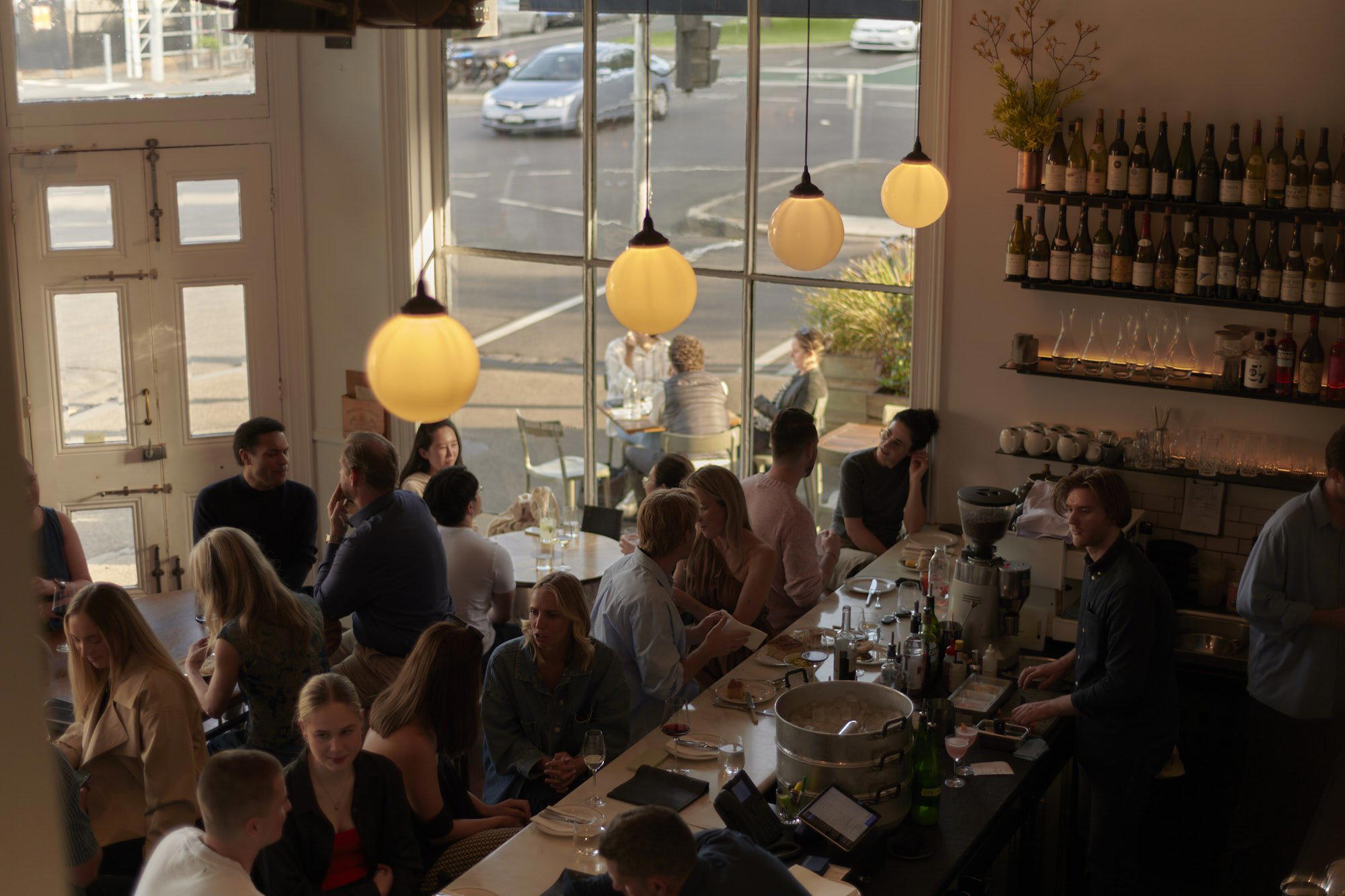
Carlton Wine Rooms in Port Melbourne occupies a corner of Melbourne's wine-bar scene where the glass and the plate carry equal weight. The list leans deep into Victorian and South Australian producers, and the kitchen treats sourcing with the same seriousness as the cellar. For those who read a wine list before a menu, this is a reasonable starting point.

Pearl is the En Primeur Club membership app — saves, bookings, and concierge access live there. Same editors, same standards.
Where the Wine List Drives the Kitchen
Melbourne's wine-bar format has matured considerably over the past decade. What began as a simple counter-and-bottle-shop hybrid has, in many venues across Carlton, Fitzroy, and now Port Melbourne, evolved into something closer to a full dining program in which the cellar sets the editorial direction and the kitchen follows. Carlton Wine Rooms in Carlton established a version of that model, and the Port Melbourne address continues in a similar register: a space where the wine list is the argument, and the food exists to make that argument more convincing.
This is a format that rewards a particular kind of guest, one who arrives with a producer or region already in mind and builds the meal outward from there. It sits in contrast to the destination-kitchen model, where a chef's tasting menu anchors everything and the wine list plays a supporting role. At venues like Attica in Melbourne or Brae in Birregurra, the kitchen is unambiguously the protagonist. Here, the dynamic is reversed, or at least rebalanced.
Sourcing as Editorial Stance
The wine-bar format only holds credibility when the sourcing decisions are visible and defensible. Across the better examples of this genre in Australia, that means a list weighted toward smaller producers, minimal-intervention winemakers, and regions that don't appear on every restaurant's by-the-glass menu. Victoria's Yarra Valley, Mornington Peninsula, and Heathcote all produce wines that reward the kind of close attention this format invites, and South Australia's Clare Valley and McLaren Vale offer contrast when the table wants something with more structural weight.
The same logic applies to the food. Ingredient sourcing at this tier of wine bar typically reflects a similar philosophy: shorter supply chains, producers whose names can be spoken aloud at the table, and a kitchen that resists the temptation to complicate what the glass is already doing. This is not the format for elaborate plating or multi-component dishes. The cooking that works well alongside a well-chosen natural or minimal-intervention wine tends to be direct, seasonally anchored, and built around a single good ingredient rather than a technique. Akasiro in Collingwood operates with similar sourcing discipline in a different culinary register, and the contrast is instructive.
Port Melbourne as a Dining Context
Port Melbourne occupies a different position in Melbourne's dining geography than Carlton or Fitzroy. It sits closer to the bay, draws a different residential demographic, and has historically supported a more neighbourhood-scaled hospitality scene rather than the destination-restaurant density of the inner north. That makes a wine-bar format here feel less competitive and more embedded, a local anchor rather than a scene player.
For visitors, Port Melbourne is accessible from the CBD without significant transit effort, and the bayside setting affects how an evening there feels. A longer format, with multiple glasses across a two-hour sitting, suits the location in a way it might not in a busier, more transient inner-city pocket.
The Melbourne wine-bar scene has strong reference points elsewhere: Bar Carolina in South Yarra and Barry Cafe in Northcote each hold their own version of this format, and comparing approaches across neighbourhoods is part of understanding what makes each one work. Internationally, the wine-forward dining room has its own established grammar, visible in places as different as Le Bernardin in New York City and Atomix in New York City, though in Australia the format tends to shed the formality and lean harder into producer relationships and casual pacing.
Comparing Formats Across the Australian Scene
Australia's wine-bar dining category is now diverse enough to segment clearly. At one end sit venues where the food program is genuinely kitchen-led, comparable in ambition to full restaurants, with the wine list functioning as a serious accompaniment. Rockpool in Sydney represents the upper register of Australian dining where wine and food are treated with equal technical rigour, though within a more formal structure. At the other end are casual bottle-shop hybrids where the food is largely perfunctory. The more interesting middle ground includes venues where the food is genuinely considered but never tries to upstage the glass.
Regionally, the Australian wine bar has benefited from the country's depth of small-producer output. What Victoria and South Australia produce across Pinot Noir, Shiraz, Chardonnay, and skin-contact whites gives any wine-forward venue a serious amount of material to work with, and the leading lists in this category use that depth to educate as much as to pour. A guest who comes in ordering from familiarity and leaves having been introduced to a producer they didn't know represents the format working as intended.
For comparison across different cuisine contexts in Australia, Jaani Street Food in Ballarat, Kulcha Restaurant Wollongong, and Hungry Wolfs Italian Restaurant in Newcastle each illustrate how regional Australian dining has developed its own character outside Melbourne and Sydney. The wine-bar model, by contrast, tends to concentrate in cities with access to both wine-literate clientele and reliable small-producer supply chains.
Planning a Visit
The practical advice is to approach a visit the way you would any neighbourhood wine room: arrive without a fixed agenda, let the list guide the sequence, and allow more time than you think you'll need. Wine-bar formats reward unhurried pacing, and the leading sessions here tend to extend well beyond what a conventional restaurant booking would suggest. For those travelling from interstate or arriving without local knowledge, the Port Melbourne setting helps calibrate expectations about the neighbourhood's overall hospitality character.
Visitors combining Carlton Wine Rooms with a broader Melbourne itinerary might consider how it sits alongside contrasting formats: bills in Bondi Beach and Bayly's Bistro in Kirribilli represent Sydney's different register, while Johnny Bird in Crows Nest and Lenzerheide Restaurant in Adelaide show how the neighbourhood-restaurant format plays out in other Australian cities. El Loco at Excelsior in Surry Hills sits at the more casual end of the spectrum, providing a useful point of contrast in terms of both format and price positioning.
Side-by-Side Snapshot
Comparable venues nearby, for context on price, style, and recognition.
| Venue | Cuisine | Price | Notes |
|---|---|---|---|
| Carlton wine rooms melbourneThis venue — the venue you are viewing | European Bistro | $$$ | Not listed |
| Callington Mill Distillery at MACq 01 Hobart | Modern Australian Whisky Dining | $$$ | Hobart Waterfront |
| Lenzerheide Restaurant | Classic Swiss-European Fine Dining | $$$ | Hawthorn |
| The Roosevelt | Americana-inspired with Seafood | $$$ | Potts Point |
| The Overlanders Steakhouse | Outback Steakhouse with Exotic Australian Game Meats | $$$ | Alice Springs |
| Agnii | Modern Sri Lankan | $$$ | Windsor |
At a Glance
- Cozy
- Elegant
- Intimate
- Sophisticated
- Date Night
- Casual Hangout
- Special Occasion
- Wine Cellar
- Historic Building
- Extensive Wine List
- Craft Cocktails
- Local Sourcing
Warm and welcoming with a serene sense of calm, comfortable neighborhood atmosphere ideal for wine-focused dining.