Carlitos Gardel

Among the few Argentinian restaurants in Los Angeles to earn Michelin recognition, Carlitos Gardel on Melrose Avenue holds a Michelin Plate (2024). The kitchen works within a tradition where South American technique meets the ingredient wealth of Southern California, placing it in a distinct tier among the city's globally-inflected dining options.
Pearl is the En Primeur Club membership app — saves, bookings, and concierge access live there. Same editors, same standards.
- Address
- 7963 Melrose Ave, Los Angeles, CA 90046
- Phone
- (323) 655-0891
- Website
- carlitosgardel.com
- Directions
- Get directions
 Saves & bookings on Pearl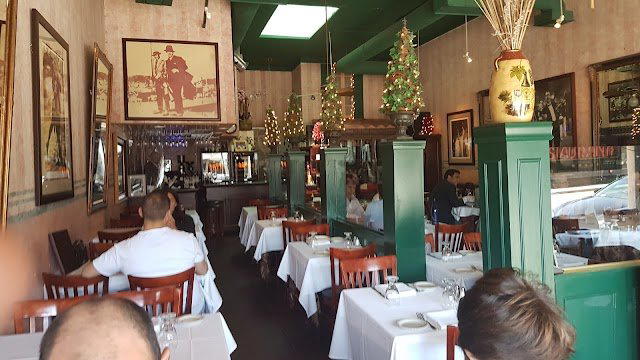
Melrose and the Argentine Counterpoint
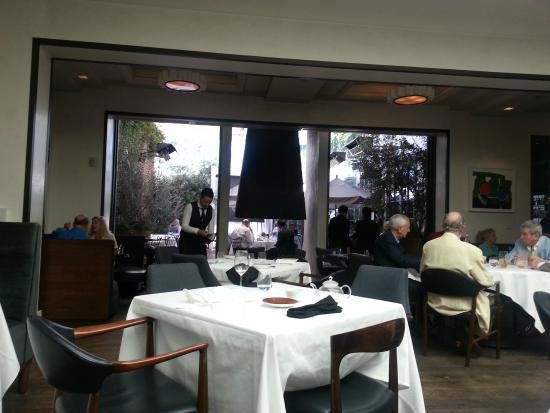
Melrose Avenue runs a long way, shifting register block by block from streetwear boutiques to design studios to the quieter, more residential stretch approaching West Hollywood. At 7963 Melrose, a narrow corridor into the Argentine tradition opens up in a part of the city where Italian-American and Japanese fine dining have historically commanded more attention. The approach here is not spectacle. What you encounter is a room that reads as considered rather than theatrical, a deliberate contrast to the performance-forward dining formats that have multiplied across Los Angeles in recent years.
Argentine cuisine in the United States occupies a complicated position. It is neither as broadly codified for American palates as Italian or Japanese, nor as aggressively championed as the more export-driven Latin American cuisines. Patagonian lamb, provoleta, and chimichurri carry cultural weight at home but land differently in a city where diners calibrate expectations through Michelin stars and 50 Best placements. Carlitos Gardel is one of the few Los Angeles addresses to work within that tradition and receive formal recognition for it: the restaurant holds a Michelin Plate for 2024, a designation that signals quality worth knowing about without placing it in the starred bracket occupied by Providence or Hayato.
Argentine Technique in a California Kitchen
The editorial angle that matters most here is not geography but methodology. Argentine cooking at its serious end draws on European lineage, specifically the Italian and Spanish immigration waves of the late nineteenth and early twentieth centuries that shaped the country's food culture as profoundly as any indigenous tradition. Beef-centric preparations, wood-fire and asado technique, and a pasta tradition that runs parallel to northern Italian form sit alongside chimichurri, empanadas, and the malbec-defined wine culture that has become especially internationally recognizable export among the pampas kitchen.
In Los Angeles, that tradition meets a specific set of conditions: year-round farmers' market produce, proximity to some of California's most productive agricultural valleys, and a dining culture that has trained its leading kitchens, from Kato to Somni, to treat local ingredients as primary and imported technique as secondary. The intersection of an Argentine framework with California's ingredient wealth produces something the restaurant's home country cannot replicate: asado sensibility applied to product grown in a climate that rarely stops delivering.
This is the same logic that has driven serious dining in California for decades, from the farm-to-table premise that The French Laundry institutionalized in Napa to the hyperlocal sourcing model at Single Thread Farm in Healdsburg. At Carlitos Gardel, the frame is Argentine rather than French-Californian, but the underlying logic, imported culinary discipline applied to notable local product, holds.
Placing Carlitos Gardel in Los Angeles's Dining Tier
The Los Angeles restaurant scene has stratified sharply over the past decade. At the upper end, multi-starred tasting menus at venues like Hayato (two Michelin stars) and Kato (one Michelin star) command price points that reflect both culinary ambition and the scarcity of their formats. A rung below, the Michelin Plate tier, which Carlitos Gardel occupies alongside a larger cohort of Los Angeles restaurants, represents places Michelin's inspectors consider worth a detour but not yet in contention for starred status.
At a $$$ price range, the restaurant prices meaningfully below the $$$$ tier of Osteria Mozza or the tasting-menu-only formats further up the range. That positioning matters for how you use the restaurant.
Within the broader North American Argentine dining conversation, it is worth noting what is happening in other cities. Beba in Montreal and Biondi in Paris both represent the Argentine kitchen transplanted into different culinary environments, each adapting technique to local ingredient availability and dining culture. The challenge in all three cases is the same: how much of the fire-and-smoke, time-intensive asado tradition survives intact when the beef is not pampas-raised and the parrilla is not outdoors over quebracho wood.
What the Michelin Plate Means in Context
Michelin's Plate designation, introduced as the inspectorate expanded its geographic coverage, functions as a quality threshold indicator rather than a ranking. It tells you that inspectors visited, found the cooking serious enough to note, and placed the restaurant in the guide's acknowledgment tier. For a cuisine category as underrepresented in formal recognition as Argentine in the United States, a Plate in the Los Angeles guide carries more signal than it might for, say, a French bistro in the same tier.
Los Angeles's Michelin guide, relaunched in 2019 after a decade's absence, has been more catholic in its category coverage than some European guides, which has created space for restaurants like Carlitos Gardel to receive acknowledgment within a framework that once skewed heavily toward Japanese and French-influenced formats. Compare the guide's trajectory to cities like New York or Chicago, where Argentine representation in formal recognition remains thin despite strong community dining scenes, and the restaurant placement reads as meaningful rather than incidental.
Planning a Visit
The restaurant is located at 7963 Melrose Ave, Los Angeles, CA 90046, in the stretch of Melrose that sits between Fairfax and La Cienega. The $$$ price positioning means a dinner here lands comfortably below the budget threshold for a tasting-menu evening at the city's starred counters, while still representing a considered dining decision rather than a casual drop-in. Reservations are advisable given the consistent review volume the restaurant sustains; a 4.6 average across nearly 700 reviews suggests demand that exceeds the kind of restaurant that absorbs walk-ins easily on a Friday evening.
For those with a particular interest in how Argentine culinary tradition travels, Lazy Bear in San Francisco and Emeril's in New Orleans offer useful comparative data points on how regional American fine dining handles imported culinary frameworks with a strong local ingredient identity.
What Carlitos Gardel Is Known For
The restaurant's Michelin Plate recognition and the concentration of its reviewers' praise point consistently toward the kitchen's Argentine grill work and its handling of the core parrilla tradition: beef preparations rooted in the asado method, chimichurri served as a working condiment rather than a decorative garnish, and empanadas that reflect the Italian-Argentine hybrid origins of the form. The restaurant takes its name from Carlos Gardel, the tango legend whose cultural reach across Argentina remains a reference point for a certain kind of Argentine pride in craft and tradition. That reference is not incidental: it frames the kitchen's orientation toward the classical rather than the revisionist, which is consistent with what the Michelin Plate acknowledgment and review profile together imply about where the cooking sits on the tradition-to-innovation spectrum.
The Short List
Comparable venues nearby, for context on price, style, and recognition.
| Venue | Cuisine | Price | Notes |
|---|---|---|---|
| Carlitos GardelThis venue — the venue you are viewing | Beverly Grove, Argentine Steakhouse | $$$ | Not listed |
| Arroyo Chop House | Downtown, Classic American Steakhouse | $$$$ | Not listed |
| American Beauty | Not listed | $$$ | The Grove, Modern neighborhood steakhouse |
| The Grill on the Alley | Not listed | $$$$ | Golden Triangle, Classic American Steakhouse |
| Katana | Crescent, Modern Japanese Robata & Sushi | $$$ | Not listed |
| Kusano | Culver City, Omakase Sushi | $$$ | Not listed |
Recognition history
Dated appearances from independent guides and award organizations, with the underlying list record or original source where available.
Michelin Plate
Michelin
Continue exploring
More in Los Angeles
Restaurants in Los Angeles
Browse all →
Bars in Los Angeles
Browse all →
Hotels in Los Angeles
Browse all →

Wineries in Los Angeles
Browse all →
At a Glance
- Romantic
- Cozy
- Elegant
- Classic
- Intimate
- Date Night
- Special Occasion
- Group Dining
- Live Music
- Extensive Wine List
- Sommelier Led
Current opening hours
- Monday
- 5–9 PM
- Tuesday
- 5–9 PM
- Wednesday
- 5–9 PM
- Thursday
- 5–9 PM
- Friday
- 5–9:30 PM
- Saturday
- 5–9:30 PM
- Sunday
- Closed
Hours can change for holidays and private events. Last verified .
Low-lit with cozy lighting, classical music or live piano/accordion, vintage decor evoking old-world Buenos Aires warmth.