Caravan Exmouth Market
Caravan in London’s Exmouth Market delivers Contemporary Global cuisine from morning coffee to late dinners. Must-try dishes include crisp chilli-baked tofu, artisan pizzas and seasonal small plates that showcase bold spices and bright herbs. The restaurant is built around house-roasted coffee, an all-day sharing menu inspired by global travels, and a lively, light-filled dining room ideal for groups and theatre nights. Expect the aroma of fresh coffee, lively citrus finishes and satisfying textures, crispy, silky and saucy, alongside attentive service and private dining for up to 50 guests.
Pearl is the En Primeur Club membership app — saves, bookings, and concierge access live there. Same editors, same standards.
- Address
- 11-13 Exmouth Market, London EC1R 4QD, United Kingdom
- Phone
- +44 20 7833 8115
- Website
- caravanandco.com
- Directions
- Get directions
 Saves & bookings on Pearl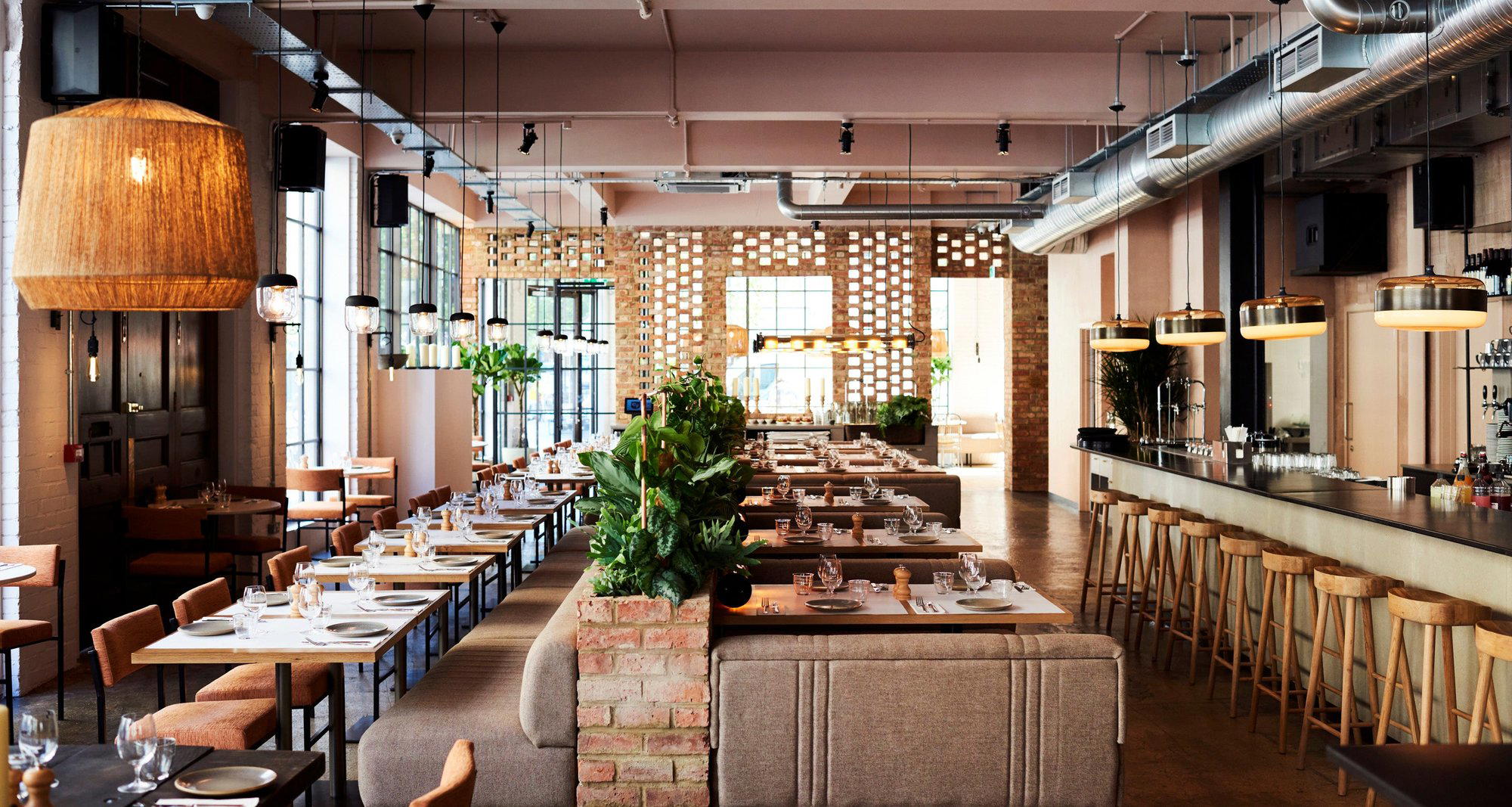
Exmouth Market and the All-Day Dining Shift
Exmouth Market is one of those Clerkenwell streets that resists easy categorisation. It sits between the media offices of Farringdon and the residential terraces of Islington, drawing a crowd that ranges from morning laptop workers to evening groups splitting small plates. The market strip has, over the past decade, become a reliable indicator of how London’s mid-market dining moves: away from rigid service formats and toward kitchens that expect guests at breakfast, lunch, and dinner without treating any of those occasions as an afterthought. Caravan, at 11-13 Exmouth Market, London EC1R 4QD, United Kingdom, sits within that shift rather than merely benefiting from it.
The Format Argument
All-day dining in London has historically sorted into two camps: the hotel brasserie model, which carries the format as a convenience obligation, and the neighbourhood cafe model, which rarely extends ambition past midday. Caravan represents a third position, one that treats the espresso program, the brunch menu, and the dinner service as parts of a single coherent offer rather than separate products sharing a room. That positioning places it in a comparable set that includes places like Riding House Cafe and Granger and Co. though Caravan’s Exmouth Market site has the added advantage of a street with genuine pedestrian character, particularly during the weekly market days that animate the outdoor space.
The all-day format also implies a particular kind of service dynamic. Front-of-house teams at venues running breakfast through dinner carry a different operational load than those working a single dinner service. The pacing, the expectation management, and the menu knowledge required across multiple dayparts demand a kind of collaborative fluency between floor staff and kitchen that single-service rooms rarely develop. At venues like Caravan, that fluency becomes the distinguishing factor more than any single dish or decoration decision.
Roasting In-House: A Competitive Signal
London’s specialty coffee scene has matured to the point where roasting in-house carries genuine competitive weight. A decade ago, stocking a respected third-party roaster was sufficient signalling for a quality-focused cafe or restaurant. Today, in-house roasting indicates a supply chain commitment, a particular kind of quality control, and a staff training investment that separates operationally serious venues from those treating coffee as an ancillary revenue line. Caravan’s coffee program, which includes its own roasting operation with beans available for retail purchase, places it in that more serious tier. This is relevant not just for morning visitors but for the evening service as well, where the espresso finish to a meal receives the same sourcing attention as the food.
The Kitchen’s Frame of Reference
The cuisine at Caravan draws from a broad pantry: Middle Eastern spicing, East Asian fermentation, North African grain usage, and southern hemisphere ingredient combinations all appear in various iterations of the menu across its London sites. This is not fusion in the 1990s sense, where combining traditions was itself the point. It is closer to how London’s most attentive mid-market kitchens now cook: with a working knowledge of multiple ingredient traditions and the confidence to deploy them without explanatory fanfare. The approach sits in a different register from the highly structured tasting formats at places like CORE by Clare Smyth, The Ledbury, or Sketch, The Lecture Room and Library, which operate at the ££££ Michelin tier with long-form menus and formal room dynamics. Caravan occupies a more accessible price point and a more informal service register, but its kitchen references are broad enough to sustain serious engagement across multiple visits.
Comparing outward from London, the format has parallels with Le Bernardin in New York City only in the sense that both take their ingredient sourcing seriously within a defined category. More structurally comparable international all-day venues include the Sydney warehouse-restaurant format that Caravan’s founders brought to London when the original site opened in 2010. That founding date gives the venue over a decade of operational experience in a format that many London openings have subsequently attempted with varying degrees of commitment.
The Team Dynamic Across a Full Day
Running a coherent service from morning espresso through evening cocktails requires a front-of-house architecture that most single-service restaurants never build. At Caravan, the floor team operates across a range that includes solo coffee drinkers, brunch tables, lunch groups, and dinner covers, often with significant overlap during midday transitions. The collaboration required between the bar, the floor, and the pass during these transitions is the less visible part of what makes the format work. When it functions well, the shift from a brunch-heavy Saturday midday to an evening service feels managed rather than chaotic. That operational coherence is what the all-day format tests, and it is the reason that many venues announce it as an intention but deliver it inconsistently.
The kitchen team at a venue with this format range also carries a different kind of load than a dinner-only kitchen. Mise en place must account for brunch egg dishes, midday grain bowls, and evening plates with more structural complexity, often with a kitchen brigade that overlaps but does not entirely repeat across dayparts. The internal collaboration between the early and late kitchen shifts, and between the kitchen and a bar program that includes both morning batch brew and evening cocktails, is the structural fact that explains why some all-day venues feel coherent and others feel like two restaurants sharing a space.
London Context and the Wider British Scene
For visitors using Caravan as part of a broader London dining itinerary, its position on Exmouth Market makes it a natural counterpoint to the more formal and expensive rooms elsewhere in the city. Caravan operates at a register where the decision to eat there is lower friction, and the format rewards dropping in rather than planning weeks ahead.
The broader British dining context is also worth noting. Outside London, venues like The Fat Duck in Bray, L’Enclume in Cartmel, Moor Hall in Aughton, Gidleigh Park in Chagford, Hand and Flowers in Marlow, and hide and fox in Saltwood define a different tier of British dining ambition, built around destination meals and extended tasting formats. Caravan belongs to a separate tradition entirely: the urban, neighbourhood-anchored, multi-occasion room that serves a local population as reliably as it serves visitors.
For transatlantic comparison, Atomix in New York City illustrates how a different city’s mid-to-upper tier handles the collaboration question in a more tasting-menu-focused context.
Planning Your Visit
What It’s Closest To
Comparable venues nearby, for context on price, style, and recognition.
| Venue | Cuisine | Price | Notes |
|---|---|---|---|
| CaravanThis venue — the venue you are viewing | Modern Fusion Small Plates | $$ | Not listed |
| Inamo | Interactive Pan-Asian Fusion | $$ | Soho |
| Doost & Amici - Flavorful Dishes of Iran to Italy | Persian-Italian Fusion | $$ | Vauxhall |
| Kaia | Asian-Pacific Poke and Robata Grill | $$$ | Cheapside |
| MBER | Pan-Asian Tapas | $$$ | Monument |
| Arcade Food Hall | Global Street Food & International Cuisines | $$ | Holborn |
Continue exploring
More in London
Restaurants in London
Browse all →
Bars in London
Browse all →
Hotels in London
Browse all →

At a Glance
- Modern
- Trendy
- Industrial
- Brunch
- Casual Hangout
- Group Dining
- Open Kitchen
Current opening hours
- Monday
- 8 AM–9:30 PM
- Tuesday
- 8 AM–10 PM
- Wednesday
- 8 AM–10 PM
- Thursday
- 8 AM–10:30 PM
- Friday
- 8 AM–10:30 PM
- Saturday
- 9 AM–10:30 PM
- Sunday
- 9 AM–4 PM
Hours can change for holidays and private events. Last verified .
Spacious and elegant with large windows, light and airy decor, NY loft-style bare walls and polished concrete floors, though music can be loud and lively.