Cap's Place
Our verdict
Cap's Place in Lighthouse Point, Florida carries the kind of institutional weight that most restaurants never accumulate — a waterfront fish house with deep roots in the coastal tradition of the region. Accessed by boat from a small dock on the Intracoastal, it occupies a bracket of American dining where history and setting matter as much as what arrives on the plate. A reference point for Florida seafood in its original, unpretentious register.

Pearl is the En Primeur Club membership app — saves, bookings, and concierge access live there. Same editors, same standards.
- Address
- 2765 NE 28th Ct, Lighthouse Point, FL 33064
- Phone
- (954) 941-0418
- Website
- capsplace.com
- Directions
- Get directions
- Booking
- Book on the venue's website
The menu
What to order
- Fresh Okeechobee Hearts of Palm Salad
- Jumbo Lump Crabcake
- Bacon Wrapped Scallops
Where the Intracoastal Meets Its History
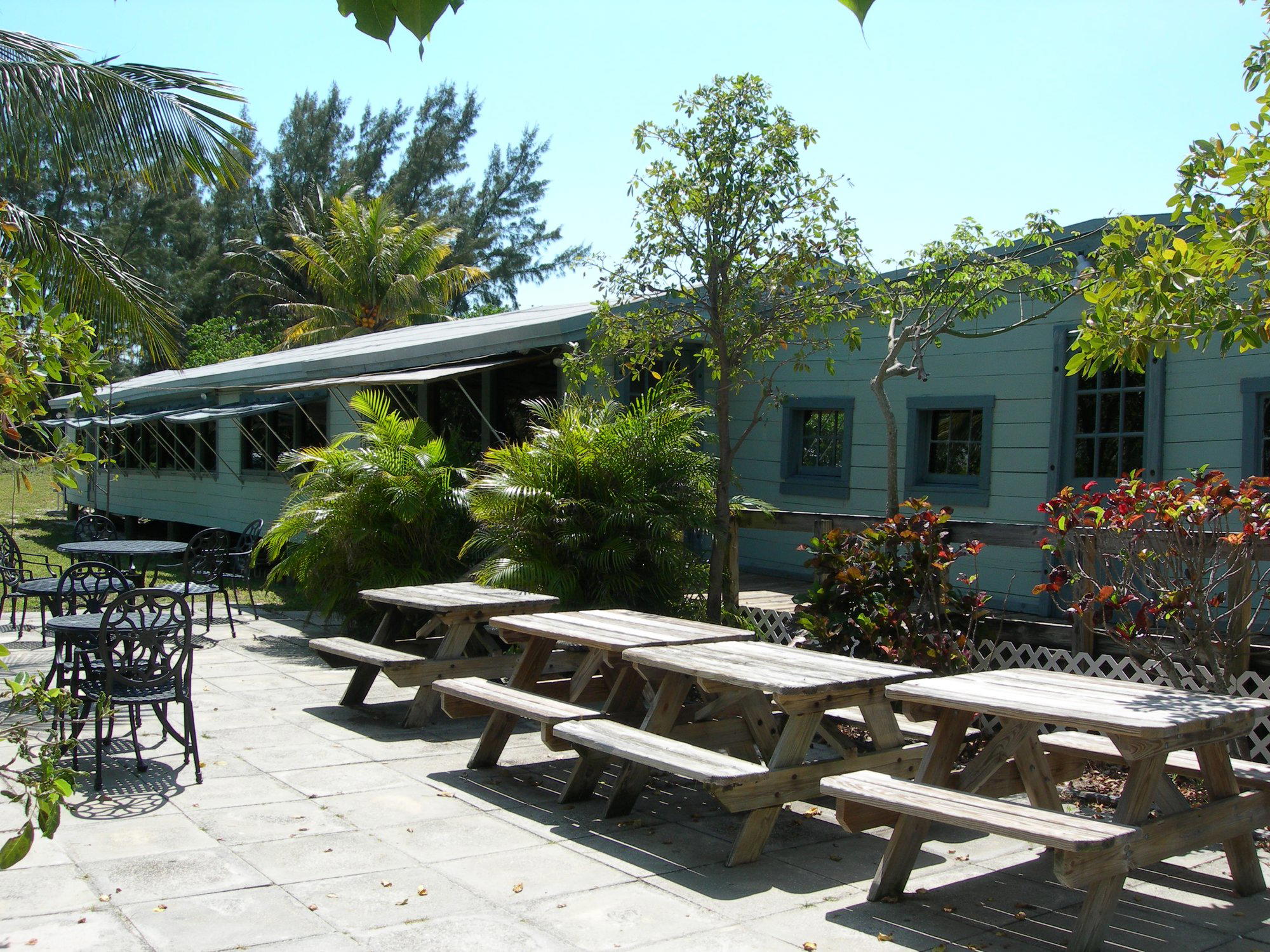
There is a particular category of American restaurant that survives not because it chases trends but because it predates them entirely. Cap's Place in Lighthouse Point belongs to that category. Situated at 2765 NE 28th Ct, the venue sits at the edge of the Intracoastal Waterway and is reached, in the old Florida manner, by a small ferry from a dock on the mainland. The approach itself signals something: this is not a restaurant that has been designed around convenience. It is a restaurant that has been designed around place.
The physical journey — crossing water to reach a wooden structure rooted in the coastal mangrove edge — frames everything that follows. Before a dish arrives, the setting has already made an argument about what Florida coastal dining once was and, at Cap's Place, continues to be. That argument is worth paying attention to, particularly at a moment when the state's restaurant culture has fragmented between high-volume tourism venues and a newer class of chef-forward destinations tracking national fine-dining signals.
The Florida Coastal Seafood Tradition, and Where This Fits
Florida's original restaurant identity was built on proximity: proximity to the Gulf, to the Atlantic shelf, to the dense marine ecosystems of the Intracoastal system. The cooking that emerged from that geography was functional and direct, fish and shellfish prepared without significant mediation, closer to the French Gulf Coast or the Carolinas fish camps than to anything that would later emerge from Miami's design-hotel dining rooms.
Cap's Place operates in that older tradition. The seafood sourcing logic here is geographic before it is conceptual: what the regional waters produce, what the seasons of the Atlantic and the surrounding estuary systems dictate, is the organizing principle. This is the inverse of how many ambitious American restaurants now work, where a culinary philosophy is established first and ingredients are sourced to serve it. At a venue like Cap's Place, the ingredients come first, and the cooking answers to them.
That model has its own rigor. For a kitchen working in this format, the quality of sourcing relationships and the accuracy of seasonal reading are the variables that determine quality. It is a discipline that restaurants like Single Thread Farm in Healdsburg and Blue Hill at Stone Barns in Tarrytown have applied at the tasting-menu tier, where provenance documentation and harvest-to-table timing are made explicit and central. Cap's Place operates in a different register, less formatted, less narrated, but the underlying logic of letting regional supply set the terms is the same.
Ingredient Provenance in a Coastal Florida Context
The waters around Lighthouse Point and the broader Broward County coastline have historically supported a specific catch profile: grouper, snapper, stone crab in season, shrimp from the nearshore fisheries. The Intracoastal Waterway and the Atlantic just east of it represent a productive margin, and restaurants that have maintained long relationships with local commercial fishers rather than shifting to broadline distribution have a material sourcing advantage in this market.
That advantage is not universal across South Florida dining. As the region's restaurant count has grown and the majority of venues operate at volume scales that require consistent, year-round supply, the hyperlocal sourcing model has become a minority position. This is worth noting because it shapes what a visit to a venue like Cap's Place delivers versus what you get at a hotel restaurant or a high-volume strip venue in Fort Lauderdale or Boca Raton. The difference is not always on the plate in an obvious way, it tends to appear in texture and seasonality rather than in elaborated presentation.
For comparison, the most explicitly sourcing-forward American restaurants, Smyth in Chicago, The Wolf's Tailor in Denver, or Frasca Food & Wine in Boulder, make sourcing a visible part of the editorial they present to the diner. Cap's Place carries that information more quietly, in the idiom of a restaurant that predates the convention of explaining itself. Nearby, Le Bistro and Manta Lighthouse Point represent different segments of the local dining options, with Cap's Place occupying a distinct historical and atmospheric position in the market. For a fuller picture of the area's options, our full Lighthouse Point restaurants guide maps the range.
What the Setting Requires of the Diner
Cap's Place asks more of its guests than most restaurants at a comparable casual price point. The ferry crossing is a logistical reality, not a theatrical flourish, and it filters for visitors who have made a deliberate choice. In a dining culture that has progressively reduced friction, online booking, delivery, standardized service formats, venues that retain physical access requirements occupy a specific and increasingly rare position.
Restaurants that have made access deliberate, whether through location, booking structure, or format, include some of the most closely watched addresses in American dining: Lazy Bear in San Francisco, The Inn at Little Washington, and at the highest tier, The French Laundry in Napa. The mechanisms of access differ entirely, but the principle is consistent: some of the most durable American restaurants are those that have never optimized for convenience. Cap's Place belongs to that tendency, even though its price tier and format are far from the tasting-menu world those venues occupy.
South Florida's dining map has diversified sharply over the past decade. Miami's evolution toward a nationally competitive restaurant scene, anchored by venues like ITAMAE in Miami, has not left Lighthouse Point unchanged. The pressure to modernize, to add cocktail programs, to redesign interiors, or to reposition around celebrity chef affiliations has reached most of the region's older establishments. Cap's Place has remained outside that current, which is either its strength or its limitation depending on what the visitor is looking for.
At the higher end of the national seafood conversation, Le Bernardin in New York City and Providence in Los Angeles represent what the seafood-focused fine-dining format looks like when applied with full technical and sourcing rigor at the four-star level. Addison in San Diego and Emeril's in New Orleans show how regional identity and sourcing can be formalized into a fine-dining proposition. Cap's Place operates at a different tier in both price and formality, but the underlying commitment to regional ingredients puts it in a conceptual conversation with those addresses even if the table-level experience is entirely different.
At the furthest end of the sourcing-as-philosophy spectrum internationally, Atelier Moessmer Norbert Niederkofler in Brunico and Atomix in New York City demonstrate how ingredient provenance can be made the explicit organizing principle of a multi-course format. Cap's Place applies no such structure, but the geographic specificity of its sourcing context puts it in that broader conversation about what it means for a restaurant to answer to its location.
Planning a Visit
Cap's Place is located at 2765 NE 28th Ct in Lighthouse Point, Florida. Access is by boat from the mainland dock, which is the defining logistical feature of the visit rather than an obstacle to it. Visitors arriving for the first time should allow additional time to locate the dock and account for the crossing. Given the outdoor and waterfront nature of the setting, weather conditions affect the experience more directly than at a conventional inland restaurant. The venue draws a mix of long-time regulars and first-time visitors, and the atmosphere reflects that combination, familiar for some, a discovery for others.
Frequently asked questions
Is Cap's Place suitable for children?
The ferry crossing from the mainland dock at 2765 NE 28th Ct is the first consideration for families: children need to be comfortable on a short boat ride to reach the island. Once there, the setting is casual and informal rather than formal dining. Parents should factor in the logistics of the water crossing and limited mainland parking when planning with young children.
How would you describe the vibe at Cap's Place?
Cap's Place reads as old Florida before the term became a marketing category: worn wood, water views, and a lack of interest in contemporary restaurant design trends. The Intracoastal setting and ferry-only access filter out foot traffic entirely, so the crowd arrives with purpose. It operates more like a destination than a neighbourhood spot, which keeps the atmosphere deliberate rather than loud.
Do you need a boat to get to Cap's Place, and how does that work?
Cap's Place is only accessible by water, and a ferry departs from the mainland dock at 2765 NE 28th Ct in Lighthouse Point, FL 33064. This is not a scenic add-on but a genuine logistical requirement for every guest, regardless of the occasion. Arriving by private boat is also an option for those on the Intracoastal. Plan accordingly for parking on the mainland side and confirm the ferry schedule before visiting.
What do people recommend at Cap's Place?
The kitchen's identity is rooted in the catch profile of the Broward County coastline: grouper, snapper, and stone crab are the historically relevant orders here. The restaurant's longevity in Lighthouse Point suggests a consistency that keeps returning guests ordering the same things rather than chasing specials. For first-time visitors, the Florida coastal seafood staples are the reference point the kitchen has built its reputation around.
Comparable Spots, Quickly
Comparable venues nearby, for context on price, style, and recognition.
| Venue | Cuisine | Price | Notes |
|---|---|---|---|
| Cap's PlaceThis venue — the venue you are viewing | Classic Florida Seafood | $30–50 | Not listed |
| Le Bistro | Classic French Bistro | $50–100 | Lighthouse Point |
| Manta Lighthouse Point | Modern Peruvian Seafood | Not listed | Lighthouse Point |
| Beach House Las Olas | Coastal Seafood | $30–50 | Fort Lauderdale Beach |
| Catch & Cut | Seafood, Steak & Sushi | $50–100 | Las Olas |
| Local House | Coastal Seafood with Italian Influences | Not listed | South of Fifth |
Continue exploring
More in Lighthouse Point
Restaurants in Lighthouse Point
Browse all →
Bars in Lighthouse Point
Browse all →

Details
- Classic
- Well Known
- Rustic
- Historic
- Intimate
- Special Occasion
- Date Night
- Waterfront
- Historic Building
- Local Sourcing
- Sustainable Seafood
- Waterfront
- A La Carte
Rustic old Florida charm with pecky cypress interior, water views, and preserved historical photos and artifacts.