Cafe Ethiopia
Our verdict
On Valencia Street in the Mission District, Cafe Ethiopia has built a steady following among San Francisco residents who return not for novelty but for consistency. The communal injera format anchors a dining experience rooted in East African tradition, and the neighborhood setting keeps the room grounded in the local fabric that defines this stretch of the Mission.

Pearl is the En Primeur Club membership app — saves, bookings, and concierge access live there. Same editors, same standards.
The menu
What to order
- Tsebhi Derho (Doro Wat)
- Kitfo
- Zigni (Kay Wat)
- Tibsie Derho (Doro Tibs)
Valencia Street and the Logic of Return
There is a particular kind of restaurant that survives decades not through reinvention but through the opposite: a reliable sameness that regulars actively protect. On Valencia Street, one of the Mission District's most densely contested stretches of dining, Cafe Ethiopia at 878 Valencia operates in that register. The room does not announce itself. There is no marquee moment as you approach, no design conceit borrowed from hospitality consultants. What the place does instead is function: it feeds people, it does so according to the conventions of Ethiopian communal dining, and it keeps bringing the same faces back.
The Mission has always operated as a pressure valve for San Francisco's dining scene. While the city's tasting-menu corridor — running through restaurants like Lazy Bear, Atelier Crenn, Benu, and Quince — occupies a price tier and format discipline that demands planning, Michelin awareness, and often multi-month lead time, the Mission has historically offered an alternative logic. Price accessibility, neighborhood familiarity, and ethnic diversity have shaped the character of the corridor, and Ethiopian dining fits that pattern precisely.
The Format That Drives Loyalty
Ethiopian dining has a structural advantage that many cuisines lack: its communal format creates social rituals around the table that are difficult to replicate elsewhere. The injera, a spongy, fermented teff flatbread used simultaneously as plate and utensil, means that eating is a shared, tactile experience rather than an individualized one. Stews and vegetable preparations are arranged on a single large piece of injera, and diners tear and scoop together. This is not a gimmick imposed by the restaurant; it is how the cuisine functions at home in Ethiopia and Eritrea, and it is why regulars at places like Cafe Ethiopia tend to bring new guests rather than returning alone.
For longtime patrons of 878 Valencia, the injera-led format is itself the draw. The knowledge that accumulates across multiple visits, which dishes balance well against each other, how to pace the meal, which combinations of lentil, lamb, and vegetable preparations work, creates an informal expertise that regulars carry. That expertise is a form of investment, and it reinforces return behavior in ways that a single-dish restaurant cannot easily replicate.
San Francisco's Ethiopian dining community has never occupied the same critical attention as, say, the city's Japanese or Californian traditions. Restaurants like Saison operate at a price point and critical scrutiny level that Ethiopian establishments on Valencia simply do not encounter, which is, in part, why the latter remain neighborhood anchors rather than destination restaurants in the conventional sense. The absence of Michelin consideration or James Beard recognition does not diminish the category; it describes its position in the city's dining structure.
The Mission's Ethiopian Context
Ethiopian restaurants in San Francisco are not evenly distributed across the city. They cluster in the Mission and, to a lesser degree, in the Tenderloin and Lower Haight, neighborhoods where immigrant communities established footholds and where rent structures historically allowed modest-margin restaurants to survive. This geographic concentration means that regulars at any one Ethiopian establishment on Valencia are usually aware of the competitive set immediately around them, and their loyalty is specific rather than incidental.
Within that context, consistency matters more than innovation. A kitchen that changes its berbere spice balance or abandons its kitfo preparation risks losing the customers whose entire point of return is the reliability of what they already know. The regulars' perspective on a place like Cafe Ethiopia is largely a conservative one, not conservative in the cultural sense, but in the sense that they are protecting something they have already found rather than seeking novelty. This is different from the dynamic at, say, Smyth in Chicago or Blue Hill at Stone Barns, where the regulars are equally invested but in forward movement, in seasonal evolution, in the kitchen's willingness to change. Ethiopian neighborhood dining rewards a different kind of devotion.
For context on how this fits within broader American dining patterns, the Ethiopian restaurant format occupies a structural niche similar to that of other communal-cuisine traditions: it draws multi-course, group-dining occasions rather than solo or couples visits, and it tends to anchor neighborhood loyalty over a longer period than trend-driven concepts. You see analogous dynamics at established community-anchored restaurants across major American cities, from Emeril's in New Orleans functioning as a civic institution to Frasca Food and Wine in Boulder cementing neighborhood identity through consistency and craft.
What the Address Tells You
878 Valencia sits in a section of the street that has seen considerable turnover in the past decade. Cocktail bars, new-wave taquerias, and coffee formats have opened and closed around it. The fact that an Ethiopian restaurant holds its position in this environment is itself a data point about how the regulars' loyalty functions as a stabilizing force. This is not a neighborhood where foot traffic alone sustains a restaurant; it is one where community repetition does.
For visitors approaching the Mission from the city's higher-profile dining circuit, from The French Laundry in Napa territory or from Providence in Los Angeles, the Valencia Street corridor reads as an immersion in how a city actually eats, as opposed to how it performs eating. The restaurant density here, the price heterogeneity, and the ethnic range create a dining environment that is difficult to replicate in cities where the middle tier has been squeezed out by rising real estate costs.
Ethiopian food also has specific timing logic worth noting. The cuisine is not optimized for speed. Injera takes time to work through, the stews reward slow eating, and the social architecture of the meal, passing dishes, tearing bread, building combinations, extends the table time beyond what a comparable spend at a fast-casual concept would produce. Regulars at Cafe Ethiopia are not there for a quick turnaround; they are there for two hours, usually with company, usually as a deliberate occasion rather than a spontaneous stop.
For the broader San Francisco dining picture, including high-end contemporaries and neighborhood institutions across the city, the EP Club San Francisco restaurants guide maps the full range. Comparable destination-level tasting experiences can be found at Addison in San Diego, Atomix in New York City, Le Bernardin, Single Thread Farm in Healdsburg, The Inn at Little Washington, and Atelier Moessmer Norbert Niederkofler in Brunico, all operating in a different tier and format, but useful reference points for understanding where Cafe Ethiopia sits in the full spectrum of dining ambition.
Planning Your Visit
| Factor | Cafe Ethiopia (878 Valencia) | Comparable Mission Dining | High-End SF (e.g. Benu, Lazy Bear) |
|---|---|---|---|
| Price tier | Budget to mid-range (est.) | Budget to mid-range | $$$$ (tasting menus, $200+ pp) |
| Booking requirement | Walk-in likely viable | Walk-in or same-day | Weeks to months in advance |
| Group format | Optimized for groups (communal dining) | Varies by concept | Counter or intimate fixed-format |
| Meal duration | 90-120 min typical | 60-90 min | 2.5-4 hours |
| Dress code | Casual | Casual | Smart casual to formal |
Frequently asked questions
What makes Cafe Ethiopia worth seeking out?
Cafe Ethiopia's position on Valencia Street places it inside a dining tradition, communal Ethiopian cuisine anchored in the Mission District, that has maintained neighborhood loyalty across a period of significant restaurant turnover on the corridor. The cuisine's inherent social format, the price accessibility relative to San Francisco's tasting-menu tier, and the Mission's established Ethiopian dining community collectively make it a reference point for how the city's immigrant-rooted restaurant culture functions. It is not competing with Atelier Crenn or Quince; it is operating in a different register entirely, one defined by repetition, community, and the specific pleasures of injera-based dining done consistently.
Is Cafe Ethiopia a good option for vegetarians visiting San Francisco?
Ethiopian cuisine is structurally well-suited to vegetarian dining: the tradition includes a wide range of lentil, chickpea, and vegetable preparations that have nothing to do with dietary trend adaptation, they are simply how the cuisine has always worked, rooted in Ethiopian Orthodox fasting practices that prohibit meat and dairy on designated days. This means that a vegetarian diner at an Ethiopian restaurant is eating from the center of the tradition rather than from its margins, which is a different experience from ordering off a vegetarian sub-menu at a European-format restaurant.
Comparison Snapshot
Comparable venues nearby, for context on price, style, and recognition.
| Venue | Cuisine | Price | Notes |
|---|---|---|---|
| Cafe EthiopiaThis venue — the venue you are viewing | Traditional Ethiopian | $10–20 | Not listed |
| Wise Sons - Square HQ | Jewish Deli | $10–20 | South Beach |
| The Crossing at East Cut | Multi-vendor outdoor food & bar venue | Not listed | San Francisco |
| bibim bar | Korean Bibimbap Specialist | Not listed | Financial District |
| Mel's Drive-In | Classic American Diner | $20–30 | Van Ness |
| Andalu | Spanish Tapas | Not listed | Mission District |
Continue exploring
More in San Francisco
Restaurants in San Francisco
All restaurants in San Francisco →
Bars in San Francisco
All bars in San Francisco →
Details
- Cozy
- Quiet
- Rustic
- Group Dining
- Casual Hangout
- Standalone
- Family Style
- A La Carte
- Tej (honey Wine)
- Vegetarian Friendly
- Vegan Options
Current opening hours
- Monday
- 5–8:30 PM
- Tuesday
- Closed
- Wednesday
- 5–8:30 PM
- Thursday
- 5–8:30 PM
- Friday
- 5–8:30 PM
- Saturday
- 5–8:30 PM
- Sunday
- 5–8:30 PM
Hours can change for holidays and private events. Last verified .
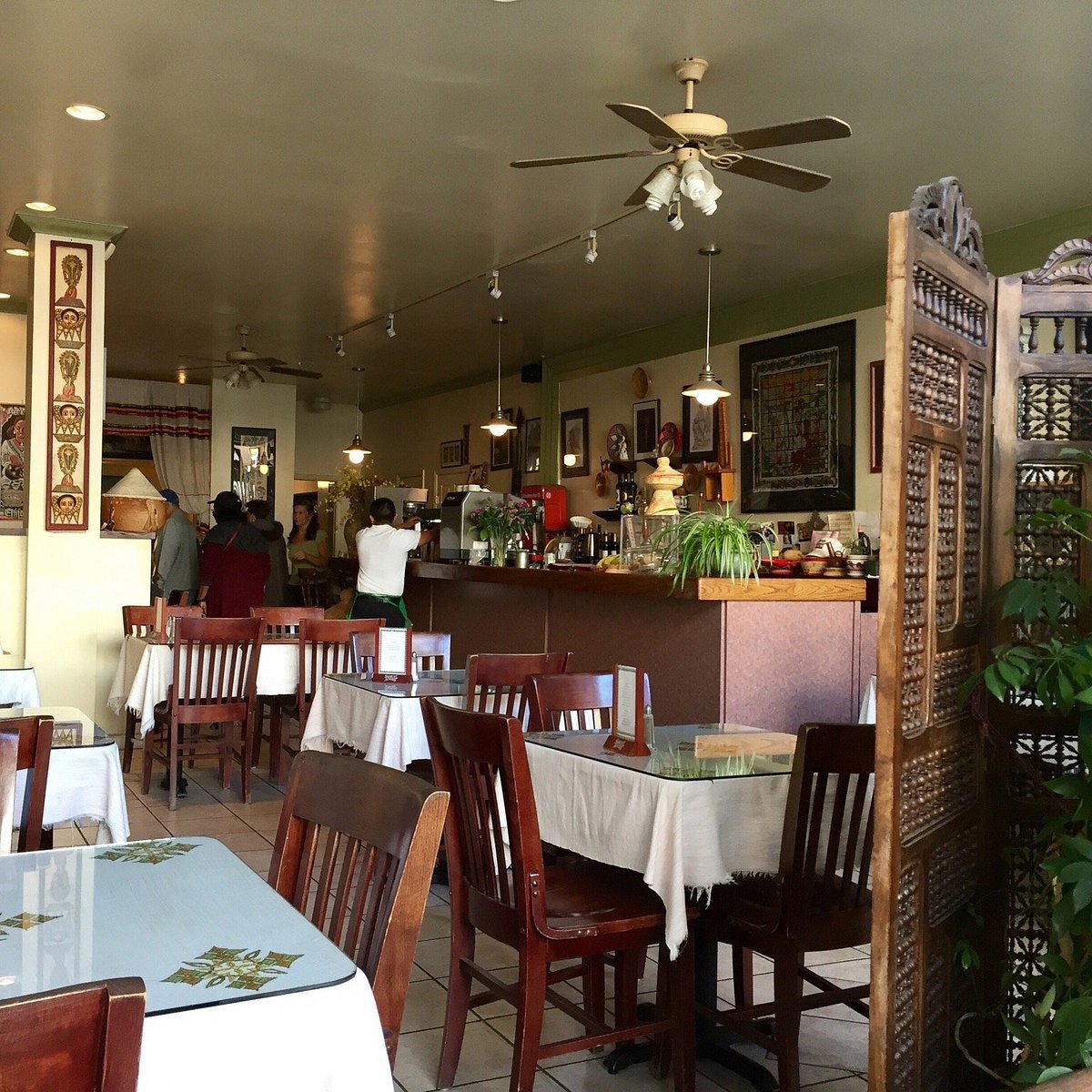
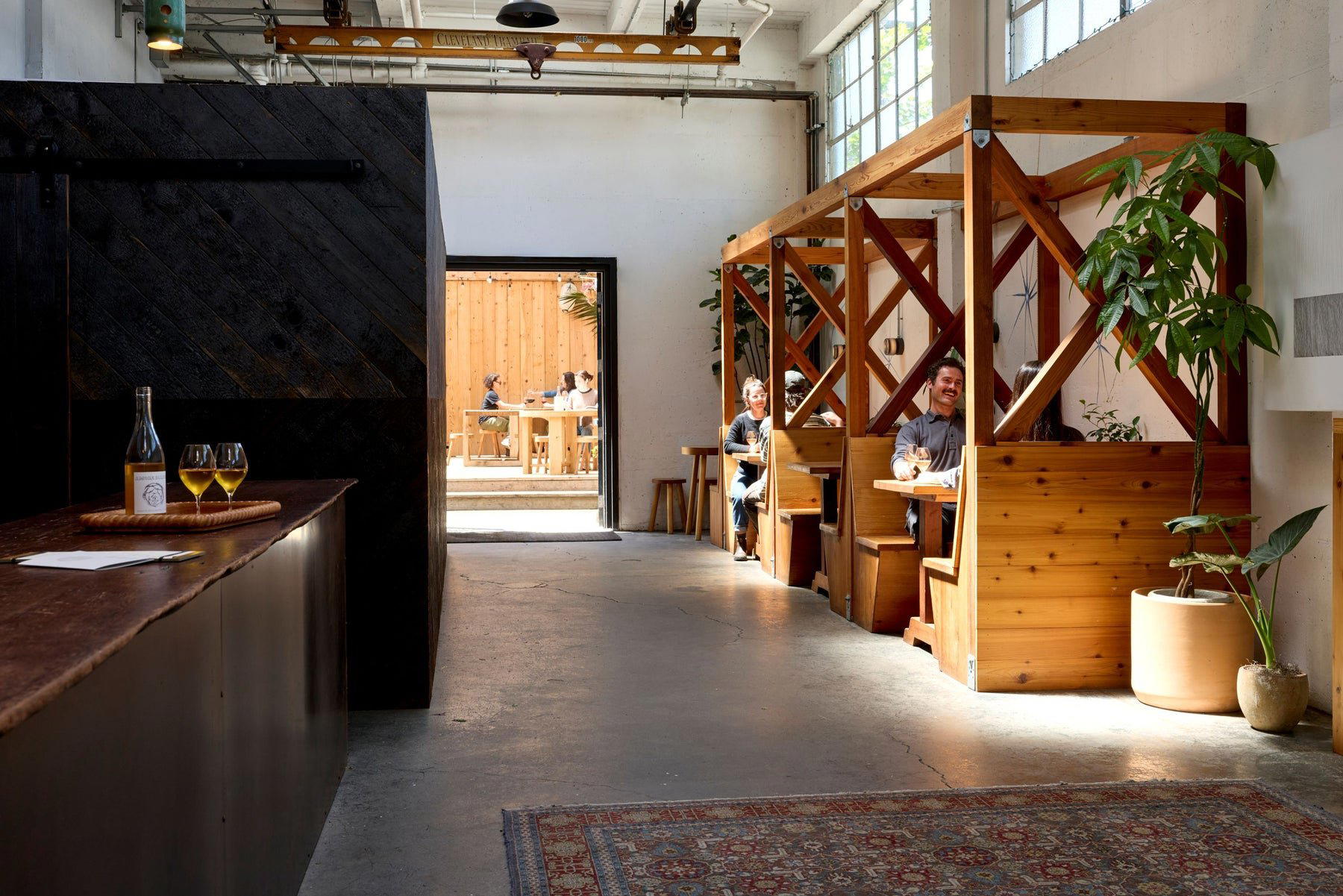
Warm and homey with woven baskets, Ethiopian paintings, postcards, and flags adorning the walls; feels like dining in a friend's apartment with a sizable collection of Ethiopian art and cultural decor.